Just 5% of beans are currently eaten outside of the home. Ambitious plans to double consumption will only be achieved if caterers step up to the plate
HARRY HOLMES
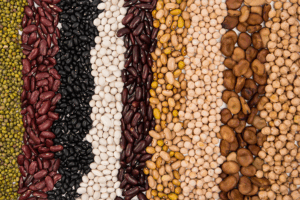
The magic of beans is no secret for those in the know. Branded by some as the food system’s “silver bullet”, advocates point to their long list of benefits: from affordability to human health, soil health to flavour.
For a long time, the wider British public showed little interest in beans – a term often used as a catch-all for leguminous crops that range from fresh peas and green beans to dried pulses like chickpeas and lentils. Only recently, have they finally squeezed themselves onto the edges of the zeitgeist; and now they have, there is a concerted effort to make sure they stick around.
The ‘Bang in some beans’ campaign is a key part, launched late last year by The Food Foundation and Veg Power to try and double British bean consumption by 2028. The movement has quickly gained momentum with foodservice companies such as Compass, Bidfood and ISS joining major supermarkets and celebrity chefs in pledging to boost their use of beans and pulses.
It’s an ambitious target, not least because the UK is far from a country of enthusiasts. Brits average just one portion of pulses a week, according to the national diet and nutrition survey, far short of the seven recommended by the EAT-Lancet report for a healthy diet for both people and planet.
“Doubling consumption is not a huge volume of extra pulses but it really does rely on a big groundswell of habitual change,” says Josiah Meldrum, co-founder of Hodmedod’s, a modern pioneer of British-grown pulses.
For foodservice, the challenge is especially acute given the sector currently makes up just 5% of Brits’ bean consumption. This isn’t, by the way, to suggest retail is doing anything special – its dominance is largely down to the many millions of cans of baked beans sold each year.
Growth engine
Although foodservice is starting from a low base, some believe the sector could actually be the greatest force in driving such a major behavioural shift.
“Foodservice is in an extraordinary position to make this happen…because the lesson from Europe is that if you change how people eat in an institutional context, you change how they eat at home,” Meldrum explains, pointing to Copenhagen’s Food House project which has transformed the health of public meals in the city since 2007.
And while there is a long way to go, most foodservice operators are not starting from scratch with many already having substituted beans and pulses for a proportion of meat in dishes like lasagne and spaghetti bolognese to help reduce costs through a period of high inflation.
“Most of the big caterers now do 50-50 blended products without people even realising,” says Chloe MacKean, food business transformation manager at The Food Foundation. “It’s become business-as-usual really.”
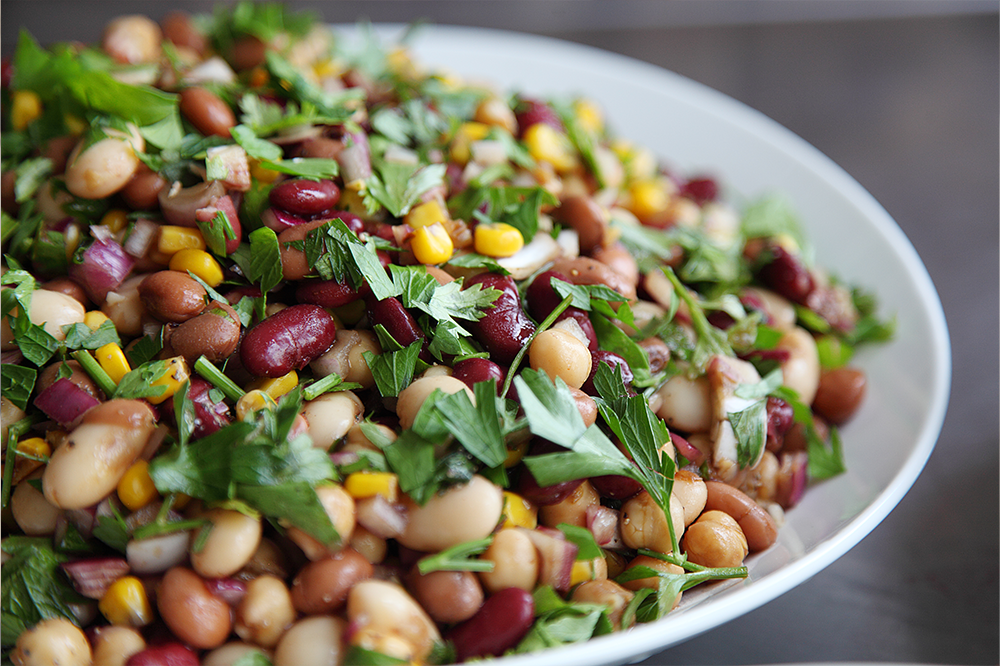
This ‘health by stealth’ approach has delivered some sizeable gains, yet most food companies and caterers recognise its limits. In order to deliver real change at scale it will be crucial to find ways to make people genuinely excited about having beans on their plate. As Heather Dolan, nutrition manager at Bidfood, puts it: “It’s about championing the bean and making them the hero of the dish.”
Few have arguably succeeded in this more than Bold Bean Co, the gourmet brand of beans which, thanks to savvy social media campaigns and enticing recipes, has seen its super-sized glass jars populate middle-class cupboards across the country.
Bidfood is hoping to capture some of that same magic by bringing Bold Bean Co on as a supplier through its ‘Open doors’ accelerator programme. “Rather than viewing them as a traditional commodity product, we want to show they can be elevated to the centre of the plate,” Dolan explains.
Of course, if Brits are to be excited about beans, they must taste delicious – that is what ultimately lies at the heart of Bold Bean Co’s success. But this typically doesn’t come cheap. Bold Bean Co retails at around £3.25 a jar – a price perhaps acceptable in premium food outlets but an impossible prospect for public sector caterers like hospitals and prisons where budgets are already wafer thin.
Back to school

In schools, for example, the government provides £2.61 funding for each child on free school meals with caterers arguing this still falls short of the average £3 each meal really costs. In this context, premium beans are clearly not the answer.
But schools feed over three million children every day meaning they are a crucial battleground for persuading Brits that beans and pulses are worth getting excited about. ISS is therefore experimenting with various tactics that help nudge children towards beans, such as creative dish names, ‘Plates for the planet’ days, and smarter menu positioning. These have led to a 56% rise in bean-containing meals since 2024, which now make up 14% of all main meals, says Lisa-Marie Huggins, head of nutrition at ISS UK&I.
Similarly, Veg Power is running ‘The big bean boost’, a nationwide programme in 750 primary schools in lower-income communities, through which it is working with school caterers to help them place more pulses on children’s plates.
It follows in the footsteps of similar schemes like ‘Give peas a chance’, which trialled the introduction of Scottish organic dried split peas into schools in Aberdeen.
As well as working with caterers to dream up new recipes, project leads also entered the classroom to teach pupils more about the pea’s journey from farm to fork.
“It not only demonstrated the power of public procurement in developing new supply chains, but the value of food education in making children’s diets healthier and more sustainable,” says Sarah Gowanlock, partnerships manager at the Soil Association’s Food for Life Scotland programme, which ran the project.
Yet persuading children is often just half the battle. Getting parents on-board can be just as challenging with school caterers often receiving push-back against what parents perceive to be punitive pulses replacing meat and vegetables.
Teachers are also disposed to suspicion. “One school chef told me a teacher where he works said: ‘is this one of your vegetarian days because if it is I’m going to the chicken shop’,” Meldrum recalls.
It points to a need not just for recipe innovation but education, making the argument to parents, teachers and children that beans can be tasty and nutritious, as well as benefiting the environment.
An updated set of school food standards could ease this battle with a government review due to report later this year. Campaigners are urging the government to insist on schools using more beans and pulses in a move they claim could be “transformative”.
“Caterers could then say to parents: ‘we have to put beans in because governments mandated it,” McKean says.
Supply strains
So, what if it happens? What if school standards change, attitudes shift, and excitement levels soar, leading to Brits doubling the volume of beans they eat over the next two years? What if Brits go even crazier for beans after that and close in on the recommended seven portions per week? Will we be healthier people living on a healthier planet? In some ways, yes. But there will also be an array of consequences – both seen and unforeseen – that will ripple out through the entire food system.
BeanMeals is a project set up by Oxford University to try and understand some of these implications and the inevitable trade-offs that will ensue. Perhaps the biggest is where all these extra beans would come from.
“We keep on saying we need to boost legume demand but nobody has really done the math on where from,” says Monika Zurek, associate professor at the University of Oxford’s Environmental Change Institute.
She gives one example of how a complex and highly political trade-off quickly emerges. “Is it Kraft Heinz doing all of this? Really great for efficiency, really bad for job creation. Or is it the Hodmedod’s of this world, where you might create more jobs but if its little local systems, you might get a very patchy system of who has access to what?”
To benefit British farmers, British soils, and minimise local carbon emissions, most foodservice operators express a desire to buy British beans and pulses where they can. However, the problem they encounter is that domestic supply is insufficient to meet demand. The UK only grows fava beans and peas at any scale and much of this output is either fed to animals or exported, while most of the haricots used for baked beans typically come from Canada, says Laura Lane, a PhD researcher looking at bean production and consumption at City St George’s, University of London.
“There aren’t really the policy incentives [in the UK] to grow more of these crops for human consumption,” she explains, noting that while existing subsidy schemes do offer support for growing legumes, this is based on their environmental benefits in crop rotations and not food production.
That means, for now at least, some farmers are hoping for support from big supermarkets and foodservice organisations to somehow incentivise British bean production. Yet that too is a model currently failing to materialise.
No-one is claiming to have this all figured out as yet. Perhaps one of the biggest assets of the ‘Bang in some beans’ campaign is its role as a central learning hub, allowing actors from across the food chain to share lessons and insights on how Brits can be encouraged to eat more beans – and what needs to change for that to be done in a sustainable way.
As Laura Lane puts it: “It’s a big, messy, brilliant, beautiful collaboration of loads of different players, just having a go. And it will be very interesting to see what works and what doesn’t. Because I don’t think we really know yet.”