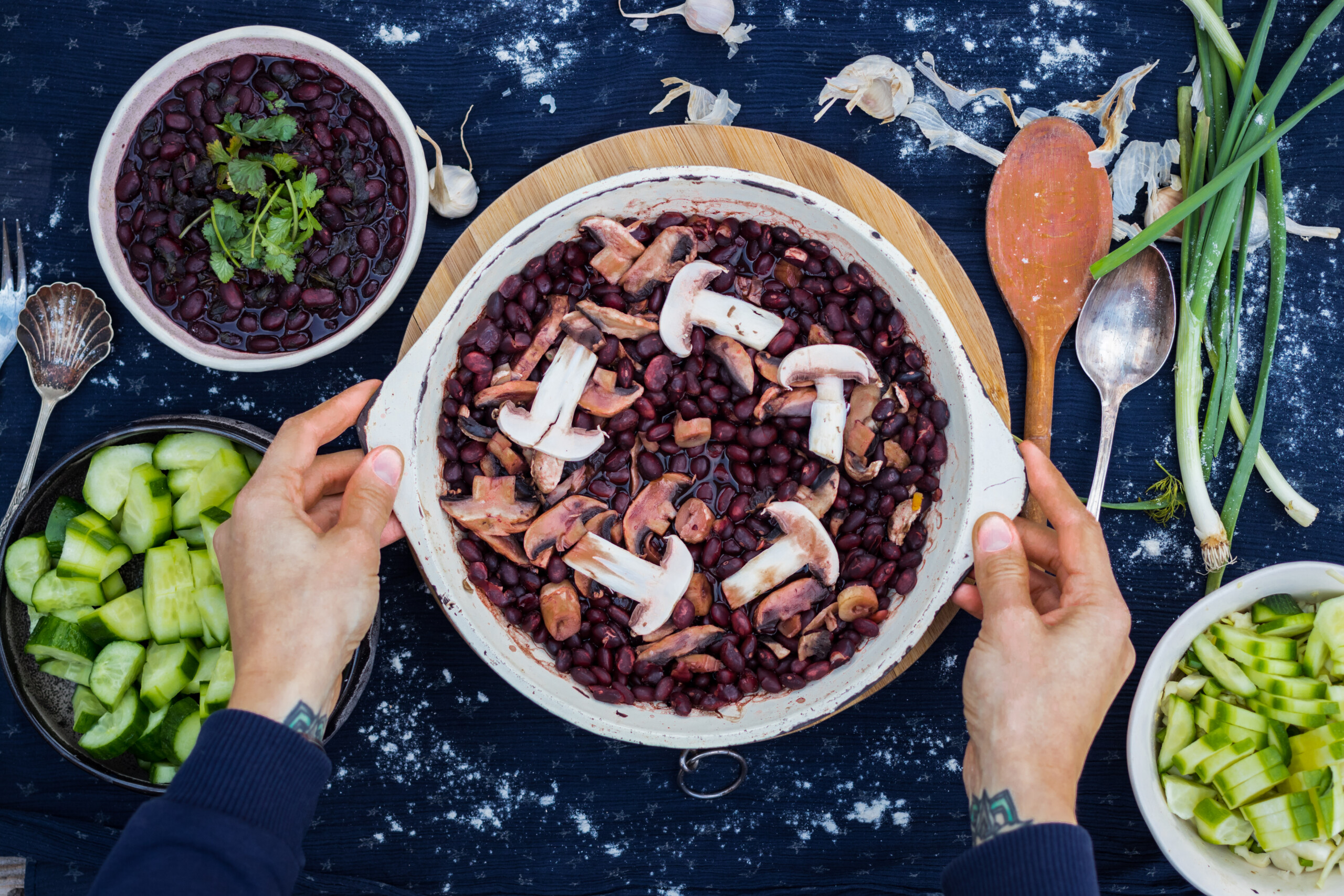
In Episode 3 of The Small Print podcast, Nick Hughes is joined by Lizzie Foskett, head of nutrition and ESG at BaxterStorey, to discuss the caterer’s pledge to double sales of beans by 2028.
Subscribe to the podcast



Further reading
Has fibre’s moment finally arrived?
For years food businesses have made protein the focus of health innovation and marketing but there are signs of a shift in focus towards a key, but under-consumed nutrient
Fibre and clean labels top 2026 health trends
M&S’s new health trends report contains few surprises but is instructive in showing where mainstream food businesses are focusing their product innovation
Transcript
Nick Hughes: Hello and welcome to the latest episode of the Small Print, a podcast by Footprint Media Group. This week we’re talking beans. The Bangin Some Beans initiative, led by the Food foundation and VEG Power, has set a target to double UK consumption of beans by 2028. Beans sit at the intersection of positive nutrition and environmental sustainability. They’re high in fibre, protein and other micronutrients, low in carbon. While growing beans as part of a rotation supports good soil health and biodiversity, they’re also a very affordable source of nutrition. Businesses are being asked to make a sales based commitment to get more beans on the menu or on shelves and report on their progress. Food service companies like Compass, Bidfood and Oaxaca have already committed to play their part and Baxter Story has just made a platinum pledge to double volume sales for all beam products by 2028. In this week’s episode, I’m joined by the caterer’s head of nutrition and esg, Lizzie Foskett, to find out how Baxter Story plans to take beans to the next level. Lizzie, great to have you join us on the small print. What has motivated Baxter Story to take part in the Banging Some Beans campaign?
Lizzie Foskett: Hi Nick, Great to be on here today and thanks for having me. Great question to kick off with and I think there’s been many things that have motivated us to join Bangins and Beans. We became part of the Beans Is how campaign three years ago. So I’ve always been aware of sort of the what is next? But I suppose the bigger answer to that question is the sort of our overall sustainable nutrition mission that we are on within that there’s loads of different ESG targets that sit under our second nature WSH mission. And obviously signing the Bang in Some Beans campaign will only help us drive that along with different external partners that we’re also working with. I think as well we saw success of, we’ve seen a lot of success from the Beans Is how campaign and what that’s driven across the business. And we were just ready to go bigger and hopefully encourage others to join us on the way.
Nick Hughes: You talked about sustainable nutrition there and it’s noticeable that your title, your role is Head of Nutrition and esg. So two disciplines that we increasingly understand are connected through things like the Eat Lancet Planetary Health diet, which obviously brings together nutrition and environmental sustainability. Does your role at Baxter Story sort of speak to the organization’s desire to treat nutrition and sustainability very much as two sides of the same coin?
Lizzie Foskett: Yeah, no, absolutely. So over the sort of two to three years we’ve been Sort of keeping a real eye on what’s going on outside of Baxter Story, to making sure we’re up there with the strategy that we put together, what we started to see. And I think like you mentioned in your question, there is nutrition and sustainability should not be siloed. And to succeed on the mission that many of us on, the two of them need to be brought together. So I’ve been with Baxter Story coming up to five years now, came in as the nutritionist, been leading on the nutrition side of things with the team, but then luckily got offered the opportunity to bring ESG into my role. And that is to do with the fact that like you say, bring sustainability and nutrition together and you are going to succeed in many more areas than siloing the two. It also then gives our food and beverage team, which I sit as part of the opportunity to work with our sustainability team very closer to really reach and drive the targets that we’ve got as a business. So, yeah, in answer to your question, we are very much bringing the two together now, rather than having two teams working towards the same targets.
Nick Hughes: And of course, beans is a great example, isn’t it, of where nutrition and sustainability do align to deliver societal benefits. We know that they’re low in carbon, that adding beans to farming rotations can have environmental benefits and they’re also a great source of nutrition, good source of protein, fiber and other beneficial nutrients. So. So this, you know, this beans campaign feels like a really nice, real life example of how those two come together.
Lizzie Foskett: Absolutely. I think as well, you know, like you just said there, beans not only are great for people, but they are great for the planet. And there’s also so many opportunities within ESG targets that many businesses have set that beans can help you achieve. Could it be something like supporting female founded business businesses like Bold Beans or ensuring that you’re working with UK suppliers? One of our big missions, and we’ll probably cover it a bit more later, is to really ensure that across Baxter Story we’re working with the right supplier partners and that we build those relationships to also help reach the targets that we want to get to. So, yeah, beans are just one we used to, you know, we call them sort of mighty powerhouses. They’re really good for people, they’re really good for planet and they allow chefs and people across our businesses, you know, baristas, to get really creative with what they’re doing. Yeah, they’ve got many positives and I think people listening to this that that may know me. There’s a lot ongoing Joke about the obsession with beans, but it’s a good one to have.
Nick Hughes: Absolutely, yes, I fully agree. And, you know, this is a very ambitious target you’ve set, isn’t it, to double volume sales of beam products by 2028. Why did you decide to go so big with your pledge? And are you confident that you can reach that target?
Lizzie Foskett: So I’m going to start with a yes, we are confident and I think that’s to do with a lot of different things. We’ve got across the team at Baxter Story and across external partners and across the great support that we’ve got from sort of WSH level as well within our supply chain. I think one point to mention here is obviously we joined the Beans Is how campaign three years ago and we’ve already seen great success in the data we’re starting to capture. So at the end of last year, we were able to see that there’s a 25% increase in where we started the Beans Is how campaign. We’re in the process at the moment of just finalising 2025 data to get that updated. But, yes, we have gone big, but we like to go big at Baxter Story, and I think with all the different parts of our strategy that are starting to build, we’re confident we’re going to be able to get there. And I think a big part of why we’ve decided to put the pledge that we have put down is it’s all about culture. So, you know, our teams on the floor are the ones that are driving this and the ones that are ready. This very much isn’t led from top down, it’s driven from the baristas, the chefs, everyone in the kitchen and on the floor of how we’re going to get there. So, yeah, I’d really look forward to hopefully talking to you in a year or so and share where we’ve got to and then, yeah, by 2028, hopefully share some good news.
Nick Hughes: And we should make clear, shouldn’t we, at this point, that the campaign uses beans as shorthand for all legumes and pulses, including peas and dried beans and chickpeas, lentils, etc. It’s not just beans, as we might envisage them as that sort of store cupboard item. So there was a report came out in November by the Food foundation, which is obviously driving the Banging Some beans campaign, that 95% of beans currently eaten in the UK are consumed at home. So I guess you could look at that two ways. On the one hand, you kind of think, well, why is that the case and why has out of home traditionally been underrepresented in driving bean consumption? But also it’s a huge opportunity, isn’t it, for the out of home sector to get people eating more beans in that food service setting?
Lizzie Foskett: Yeah, no, absolutely. I think I like the word opportunity that you use there and I think this is what we see at Baxter. We do have a massive opportunity to one, spread education around the power of beans and around, you know, that plant forward looking when it comes to what you cook and what you consume. And I think how we always, we always like this is a bit of a trickle effect is what we can cause at Baxter story. So we feed over a million mouths just at lunchtime at the moment, which is massive. And that’s not taking into account the other opportunities. Opportunities we have. So, yes, although that stat is saying 95% of beans are currently consumed at home, what we like to think at the moment and the mission we’re on is that if we can sort of give someone one piece of education or change their mind about something while they’re with us, is that for breakfast or lunch, if they then go home and talk to a friend or a family or start cooking a recipe that they’ve got from us, hopefully that stat is going to really change. So I would say we see this as an opportunity and it probably also relates back to the last question you asked me is yes, we have gone big, but actually we see it as a positive challenge and a real opportunity to drive change.
Nick Hughes: So we’ll come on to talk about chefs and recipe innovation and this sort of the demand side if you like, in due course. But obviously to deliver this uplift in bean sales, there’ll be supply chain implications as well, won’t there? Could you talk us through sort of what that procurement piece perhaps looks like and how you can align supply of beans with driving that demand side?
Lizzie Foskett: Yeah, no, absolutely, great question. And I think the first thing to mention here is the culture that we have amongst one backs of story 100%. But also the WSH team that backs the story sit under. We are very lucky that all teams work very close together. There’s always lines of communication and I think that is extremely important. And we as a food and beverage team have signed something like this, that we make sure we are closely working with supply chain and procurement all the time. So yeah, the relationship that we have as a food and beverage team is very, very close to the relationship we have with supply chain. So before we even sign the pledge or join beans is how we ensure we are working very closely with Supply Chain to make sure we’ve got that in place, that, you know, the sort of things we have in place there is to make sure one, we’re working with the right supplier partners. We’ve also made it clear of the targets we’ve got in our strategy that we’ve got as well. And Supply chain is so, so supportive of that. I’m not saying we’ve got everything absolutely correct, but one thing that we do like to make sure it backs a story is that we have really strong partners, really strong relationships with the partners we’re working with and that will help us on that mission we’re on. And I think one great thing to mention here as well is that a lot of our supplier partners are also on the same mission we’re on. So it really helped drive it for both sides as well. And again, a word that I’ll probably mention a few times today is education. So, you know, our suppliers educate us. We’ve got an amazing opportunity to go to, to visit the farms, to visit the suppliers. And that also really helps drive success when it comes to our chefs and baristas on the floor.
Nick Hughes: And yeah, I mean, education of course is absolutely critical from both sides in terms of the supply chain and the consumer. And the stats around bean consumption are quite sobering at the moment. We eat on average just one portion of beans a week according to that same Food foundation report. So, so what are your, what are the levers you can pull to encourage people eating in restaurants that you cater for to give beans a try? You know, is it a sort of a balance to be struck between incorporating beans into familiar meals, including meat based dishes, but also developing those kind of new plant forward or plant based recipes that have beans at their heart?
Lizzie Foskett: Yeah, it is pretty shocking that, you know, there’ll be people out there that one have a real perception of beans that they don’t want to eat them at all and they see them as just something that means their meat’s being reduced or they don’t have a taste, et cetera. So the biggest thing here is we have an opportunity to change people’s minds about exception of beans that they may have. And again, it goes back to the fact that beans is just such a big group of food as. Well, the thing again coming down to this is the education and awareness of people of what they, what they do think that a bean meal might have in there. One, one thing I also thought about here is again, it’s that trickle effect. So we can use the Opportunity. We’ve got a backsy story to educate our customers that we feed, but then also, what are they going to take home to encourage others to change the way they see beans? Cook with beans, experiment with them. And I think the one big thing to point out here that we are doing at backstory while we’re on this mission is we’re not forcing it on everyone. It’s all about making sure we give customers a choice of what they’re going to eat. And the biggest aim for us is that one, we delight the customer and we provide them with a really delicious plate of food or a really delicious, delicious beverage. But at the same time, it’s good for people and planet. And I think about when you talk about beans like we are today, beans have a massive opportunity here. So, yes, you could incorporate them in a dish. For example, a lasagne is always used there as an example. Or it could be a beef burger that you enhance the plant content of it with. But at the same time, we are so lucky to work with some amazing chefs and baristas that get so creative with beans that actually you don’t need the animal protein on the dish. And I think one of our big targets at the moment is we’re never. We are not demonizing the use of animal protein, but we are on a mission to reduce the amount we use it and when we are using it, make sure we are really working with the right supplier partners out there that also will help reach our targets. So I think to sort of round up that question, it is a massive opportunity to work with a diverse range of bean products out there, but let’s not force it on people. We’ve got to take people on that journey. I think one thing that we always look at doing is can we hold taster sessions? Can we get some of our supplier partners in to engage with customers? You take people on that journey, make, you know, allow them to make small, sustainable changes, and the impact later down the line is just going to grow and grow.
Nick Hughes: Yeah, that’s really interesting. And it aligns, doesn’t it, with. With so much behavior change research around dietary shifts and how just making something worthy and presenting it as worthy is not enough to drive changes in consumer habits. It’s got to look good, it’s got to taste great. It’s got to be described in an appealing way. And, yeah, it’s that kind of nudging, encouraging people to want to choose these options, like you say, not forcing them upon customers.
Lizzie Foskett: Yeah. And I think actually that you just mentioned something that’s the wording. You don’t always, you know, one thing that we do now across our business is we don’t highlight your vegan, your vegetarian options. Yes, we do need to make people aware because we know people have their choice and they want to know what they can go for. But we just hero the ingredients that are in a dish. So that might be a completely plant forward dish, but we’re just heroing what ingredients put into that dish rather than segmenting them all on the menu. And we’re really finding that, you know, that is driving success.
Nick Hughes: This year sees the launch of the first ever Footprint Festival, A two day experiential and immersive sustainability festival set on a working farm in the heart of the Hampshire countryside. Created for senior leaders across the food, service and hospitality, this one of a kind annual event takes place on September 17th and 18th. We’ll blend sensory experiences, transformative content, powerful networking and unforgettable food, drink and entertainment. Early bird tickets are now on sale. Visit footprintfestival.com for more details. You know you’ve talked a lot about chefs already, so let’s get into the details. It sounds as though Baxter Story chefs are already very confident in preparing bean based dishes and you’ve obviously been on this journey for some years already. So has this beans and plant veg forward, however you like to describe it, cooking more generally been a real focus for your chef training and development?
Lizzie Foskett: Yeah, no, definitely, yeah. We are extremely lucky to work with some amazing and loads of amazing chefs across the business. And one thing that is a massive focus at backstory is education. We have our chef academy, our beverage academy that drive absolutely amazing sessions across the business and there across those sessions is a real focus on sustainable nutrition which in hand again you look at the that we’d always look at bean grain, et cetera through that. I think one other thing to mention is recently last year we developed a three day sustainable nutrition course which has been accredited by the association for Nutrition. And we also work really closely with our sustainability team to develop this. The reason we did this is we realized the power of education and you give, like I mentioned, the chefs are driving this. You give the chefs and the baristas the tools they need and they will then have the craft, the creativity to go away and develop the dishes that we want to see across Baxter Story. So yeah, sustainable nutrition, the food and beverage strategy sitting within that and the education tools that we have across, across the business is up there as being one of the main key drivers of this at the moment. One thing just to sort of add on to that as well is what we’re really seeing is the mindset of the chefs and the teams across the floor is really changing. They’re extremely excited now to come on the journey and learn, and they just want to learn more. So, yeah, our internal platforms are a massive driver of what we’re doing, but we also work with some great external partners that are helping us on this mission as well.
Nick Hughes: We, I guess there’s a temptation, when we think about beans, to think quite narrowly in terms of baked beans, kidney beans, butter beans, and then when you expand that out to other legumes and pulses, you know, lentils and what have you. But there are so many varieties of bean, aren’t there? All with their different health profiles and sort of different environmental profiles. How are chefs stretching themselves almost to incorporate different types of beans and pulses into recipes? And can you give us some examples of what kind of things they might be using?
Lizzie Foskett: Yeah, no, great question here. And when we are on this mission, we’re on. Diversity is key for us, and that comes down to diversity is key for human health, but also diversity is key to ensure we’re always thinking about the sustainability of the project we’re on as well. I just want to give a big shout out here, one to our relationship with supply chain here again, and also to our amazing chef partners and fuel icons that we work with. And they really help us drive the area of looking into the diversity of the products we can work with Supply Chain, ensure that we’ve got the right supply partners on board, that when we’ve got a question of, can we get this slightly obscure bean onto the menu, it’s not a no. It’s always, let’s see what we can do. And then our chef partners and our fuel icons, they always come to us with the ideas of what else we can include in the larder to make sure we’re not just sticking to the butter bean and the chickpea. And, you know, the butter bean and the chickpea have an amazing place across many of our menus. But like you say, the chefs want to get creative. It’s amazing that we work with people like Hobby Dodds and Bold Bean because they help us always look at what is next. And the, you know, I’d say when you say, what are we using at the moment, the larger of beans that we’ve got out there is just growing because we want to be looking at the diversity and be able to support one the local farmers, but also, you know, support other People in the supply chain as we go. So, yeah, chickpeas and butter beans definitely use widely across our menus, but it’s very, very. It’s really quickly expanding at the moment from what we’re looking at. I’d say the UK Carlen pea at the moment is having a bit of a limelight, but there’s also a number that our chef partners are starting to incorporate into their menus that are really driving interest.
Nick Hughes: Yeah, I was going to mention the Carlin pea because that’s a bit of a hero product for bold bean, isn’t it? In particular?
Lizzie Foskett: It is at the moment.
Nick Hughes: And yeah, I’ve used them. I think they’re. Yeah, it’s. They’re great. I love the texture of them. And Hobnods as well. You know, you mentioned. And they were obviously a big supplier to the food service sector and I think those guys have a real focus on sort of heritage varieties as well, don’t they? And really trying to sort of bring British, traditional, British beans and pulses back onto the table, which is so important from a sustainability and a resilience perspective. What about you personally, Lizzie?
Lizzie Foskett: What.
Nick Hughes: What. What is your go to Bean or Pulse when you’re cooking?
Lizzie Foskett: So at the moment I definitely. I’m on a bit of a bold bean hype. So the Carlen pea is definitely up there, but I also. Because they’re how amazing their chickpeas and their butter beans are. They are definitely ones that I would use a lot and I would. You know, you can make an excellent hummus with them, but you can also put them into a. A dish to sort of look at reducing your meat content, but also still creating a really delicious end product. And the black chickpea as well is one to definitely have a look at. And that is one that we are seeing a lot across our business at the moment. But I think, Nick, when you mentioned that larder, the way we drive excitement with our teams is through the education sessions. We just get a table and you’ve probably seen pictures on social. The amount, the variety that we have access to is amazing. But I think the biggest thing that we want to do at the moment is make sure, like I say, we’re working with the right product, right supplier. And yes, we want to expand the larder, but we want to do it in a way that it’s sustainable and still supporting the suppliers we work with.
Nick Hughes: And Lizzie, is that education piece about educating your clients as well. So you obviously are, you know, catering in many workplace settings, for example, with big blue chip companies are they very much on board with the beans, you know, the shift towards beans and the embrace of beans. And are you communicating with them about what it is you’re doing and why you’re doing it?
Lizzie Foskett: Yeah, no, absolutely. Like you say, we work, we work with the vast majority of clients and we always ensure that we communicate strategy updates to strategy and take them on that journey. Most of our clients are extremely supportive of what we’re doing. They want to know more, they want to learn more. Often they come to us and they say, have you heard about this as well? There will also be opportunities where we have to take the client on that journey. But most of the time at the moment, people want to come with us and are learning with us or we learn from them.
Nick Hughes: Great. Well, look, here’s to a successful bean based future and best of luck in meeting the target. Thanks so much for joining us, Lizzy.
Lizzie Foskett: Great. Thanks for having me on, Nick.
Nick Hughes: We’ll be back next week with another episode of the Small Print. If you like what you’ve heard, please take a moment to rate, share, share and subscribe.
