A winning blend?
Quorn posted some promising financial figures this week, with stronger retail sales and a rebuilding of gross margins helping to boost revenue. But the meat substitute supplier’s performance in foodservice has left investors frowning.
“Foodservice is only 18% of the business, but it is an important business for us,” Quorn Foods CEO David Flochel said on an investor call this week. “Minus 5% in Q2, […] is disappointing. But our clear priority remains to stabilise the top line gradually over time.”
The disappointing performance in foodservice – a sector in which operators are demanding more convenient plant-based options to integrate into their menus as they look to achieve steep scope 3 greenhouse gas emissions reductions – is a reflection of a number of structural challenges facing the Quorn business. There is currently “significant cost pressure” from operators and distributors in the market, Flochel explained. There is also “lower demand” among the QSRs Quorn is working with in Europe. In the UK, meanwhile, Flochel cited challenges in the education sector where “new regulations” have been “challenging the menu cycles”. Although not specified, Flochel appeared to be referencing the new school food standards for England which place restrictions on servings of meat alternative products. “Historically, we’ve been relying too much on [the] education sector and a few limited numbers of QSRs”, Flochel added, as he set out plans to grow Quorn’s presence in the business and industry segment.
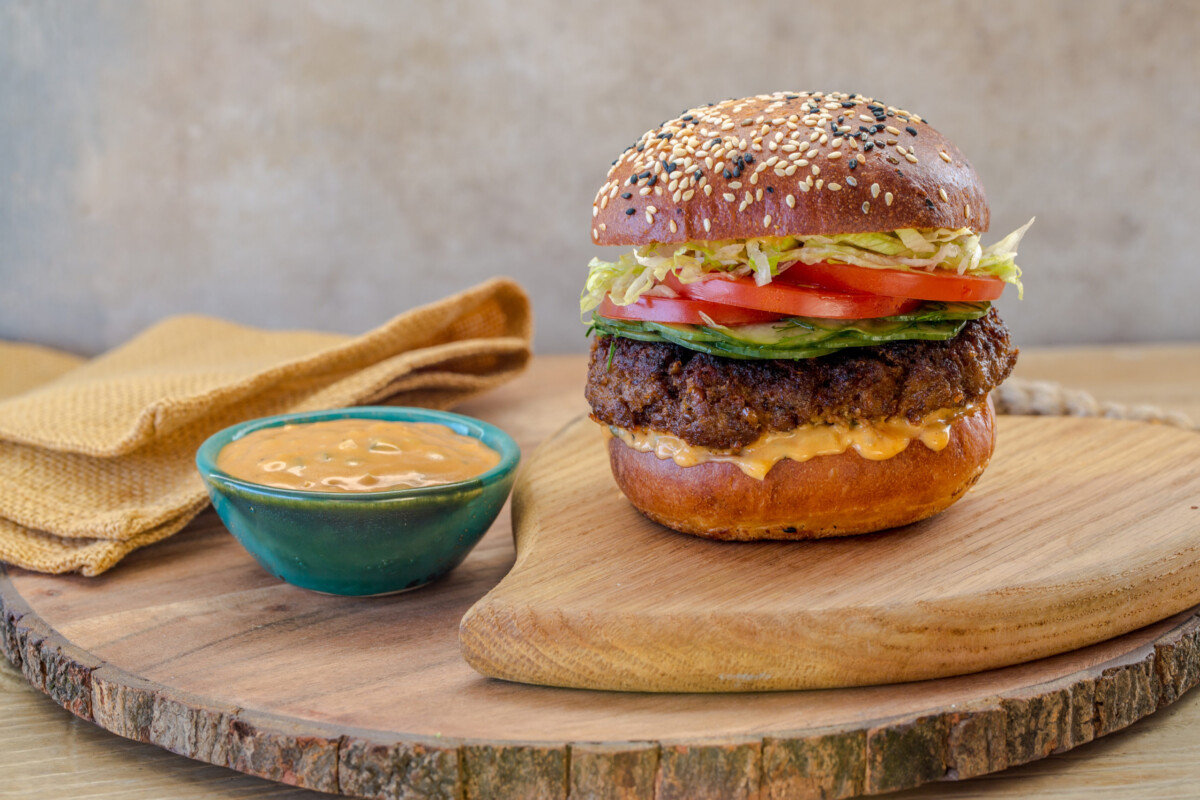
While Flochel said the company plans to “go back to basics” by focusing on execution, he also sees plenty of growth potential in some of the innovation coming through. One area Quorn will be focusing on is its blended meat offering, via its UltiMeat B2B solution for foodservice, which enables caterers to combine meat and mycoprotein to create hybrid products. Quorn’s foray into blended products started out with an NHS partnership in 2024 and sausages made from a blend of its mycoprotein ingredients and meat. At the time, then CEO Marco Bertacca said the company was evolving from competing with meat companies to collaborating with them – and catering to people looking to reduce their consumption of livestock products rather than go cold turkey.
Blended or ‘balanced’ proteins – which swap at least 30% of the animal-based ingredients for those made from plants, cultivated animal cells and/or microbial fermentation – are “gaining meaningful traction across both foodservice and retail”, with Europe showing “the strongest gains”, according to the ‘Balanced proteins: state of the category 2025’ report, published this year by Food Systems Innovations, a “philanthropic impact platform” focused on improving food systems.
Aramark UK, which serves more than 250,000 burgers annually, has for example launched the 70/30 ‘Meat Me Halfway’ burger in partnership with Fable Food Co, featuring a blend of beef and shitake mushrooms. Brakes UK has also worked with Fable to create a blended beef and mushroom burger priced below its Angus beef burgers.
Many other examples are coming to market in foodservice. “Balanced proteins are emerging as a category-level solution for institutional foodservice operators under pressure to reduce costs, deliver on taste, improve nutrition, and reduce emissions without rewriting menus,” the Food Systems Innovation report reads, adding: “Their adaptability across cuisines and age groups makes them a low-risk, high-impact lever for shifting large-scale purchasing portfolios.”
Fable Food CEO and co-founder Michael Fox told Footprint that blended proteins must be positioned as “delicious” in order for people to try them. His shiitake infused beef burger, for example, is “still a beef burger but it’s more exciting. In our experience, positioning on sustainability or health actually drives most consumers away because they intuitively expect the product will be lacking in taste,” he added.
Small Bites
High time for homegrown horticulture push
Expanding domestic horticulture to replace half of fruit and vegetable imports with homegrown produce would raise overall food self-sufficiency to a level last seen in 2000, while generating £1.9bn for British farms and requiring only 0.3% of the UK’s farmed land. The figures feature in a new briefing, published by Green Alliance, which makes several policy proposals including the development of a national spatial strategy for horticulture to unlock large scale investment in highly productive, sustainable glasshouses. The government’s upcoming horticulture sector growth plan should also encourage reliable and resilient domestic production of open field grown vegetables and pulses, the think tank said. Access to healthy, nutritious diets must be supported with mandatory targets and public reporting for UK retailers, starting with targets to reduce sales of foods high in fat, sugar and salt (HFSS) that “compete with healthier food choices”. The UK currently relies on imports for 44% of its vegetables and 86% of its fruit, leaving the country’s food supply “highly exposed to extreme weather and other disruptive events overseas”, the report said.
Acceptance of future foods is “fragile”
Consumers need to trust the food system before they are willing to accept unfamiliar food technologies, like precision fermentation, insects and cultured meats. EIT Food Consumer Observatory research, based on responses from around 20,000 European consumers and published this week, shows people are slightly more open to food innovation than in the past, however acceptance remains fragile without trust, transparency and cultural relevance. Overall openness to innovative food products increased from 28% in 2024 to 31% in 2025, according to the report, which also suggests consumers are more likely to consider new food technologies when they have confidence in those who develop, regulate, sell and communicate them. But willingness to try several specific technologies fell between 2024 and 2025, particularly for innovations perceived as unfamiliar or disruptive, such as insect-based protein, precision fermentation-derived dairy products and cultured meat. “Trust acts as a gateway: without it, innovation acceptance remains extremely limited,” the report notes. Consumers who are health and sustainability oriented are more open to innovation, but only when trust is high enough.
The green claim premium
Food and drink products that feature green claims carry a significant price premium, new research from the US has found. Academics at Purdue University, Indiana, looked at retail sales of pork, chicken and beef in 48 states that came with labels making a variety of claims, including organic, GMO-free, lower greenhouse gas emissions and the increasingly popular and contested ‘grass-fed’. “Our results showed significant premiums for almost all the sustainability claims investigated,” the team wrote in their paper for the journal Plos One. However, the size of the premium varied greatly – from an average 7% increase for “organic” labelled chicken, to an average 33% increase for “grass-fed” labelled beef. Pork had the highest premiums generally, with chicken the lowest. For beef and chicken, among the evaluated claims, ‘less greenhouse gas’ had the highest premium (interestingly, there were no pork products identified in the market with such a carbon claim). The academics did not include ‘regenerative’ in their study, despite its growing use in brand communications.


Chef’s Special
Consumers are wise to the practice of ‘shrinkflation’, which describes a reduction in quantity or size of a meal or product while the price stays the same. However, there is another, lesser-known, but increasingly popular, way to raise prices indirectly: so-called ‘skimpflation’ reduces the quality of the meal or product while keeping prices and sizes the same. So, should chefs shrink or skimp? New research by Ioannis Evangelidis, associate professor of marketing at ESADE Business School, Ramon Llull University in Barcelona, Spain, suggests skimping is far riskier. “Across a large research program[me] involving thousands of participants, I found that, once consumers become aware of reductions in quality, they judge skimpflation as especially unfair, much more than shrinkflation and price increases,” Evangelidis told Footprint. “They are also less willing to keep buying products whose quality had been reduced over products whose price had increased or whose size had decreased.” His research, published in the Journal of Consumer Research, focused on packaged goods but the reasons for people’s strong feelings towards skimpflation provide food for thought for chefs grappling with rising costs and tricky supply conditions as climate change bites. For one, the practice feels less transparent than increasing prices and shrinking sizes (though skimpflation can be an effective cost-cutting strategy if it goes undetected). Perhaps more importantly, it also “takes away the original consumption experience”, which can lead to what Evangelidis describes as the ‘skimpflation penalty’ – consumers do not merely think, ‘I am getting less’; they may think, ‘This is not what I bought.’
Last Orders
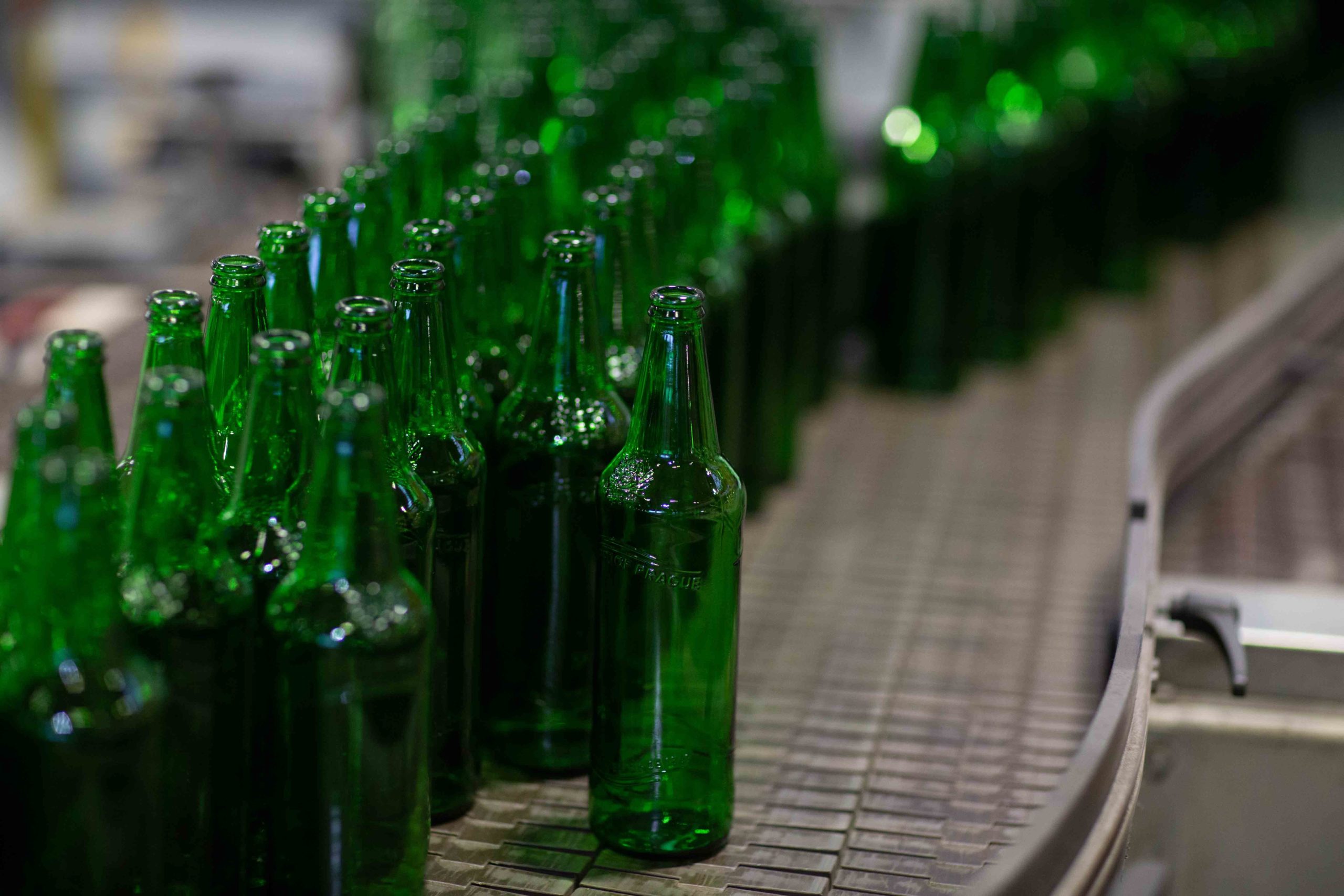
The drinks industry has warned of severe environmental consequences over the time it is taking to clarify issues businesses have with the extended producer responsibility for packaging (pEPR) rules. Miles Beale, chief executive of the Wine and Spirit Trade Association, told Footprint this week the current scheme, with “excessively high EPR glass fees”, is “driving some producers to less environmentally friendly packaging”. The disjointed and delayed approach to deposit return schemes (DRS) is also having an impact as drinks businesses look to paper-based, aluminium or plastic packaging as a means to cut costs in the short-term. Meanwhile, the government is yet to provide a solution to the issue of ‘double-counting’, whereby venues pay for commercial waste collection and also absorb passed-on EPR fees for packaging that is incorrectly classified as household waste despite never leaving the premises. The non-household exemption remains “unresolved” following the departure of Mary Creagh, who was reviewing the available options, and arrival of Emma Hardy as circular economy minister at Defra, Beale explained. The good news is that lightweighting efforts have helped reduce the impact of pEPR. Members of the Sustainable Wine Roundtable’s Bottle Weight Accord, representing 9% of wine consumed globally, have reduced average bottle weight from 550g to 430g. Scope 3 emissions reductions were the initial incentive but today the financial imperative, principally due to high material costs and EPR fees, has “become very significant”, said Peter Stanbury, SWR director for research and standards.