While the focus of attention has been on mandatory reporting, a proposed change to how the healthiness of food and drink products is assessed could have major consequences for businesses
Hospital to community; analogue to digital; sickness to prevention. Three “radical shifts” through which Labour plans to “reinvent the NHS”, as set out in its recent 10-year health plan for England.
The third of those – sickness to prevention – is where food enters the equation. The plan contains a range of measures to take “our next big leap” and end “the obesity epidemic”. Some of these measures are inherited from the previous government, including further restrictions on junk food advertising targeted at children. Others had already been announced, like plans to strengthen the soft drinks industry levy by ending the exemption for milk-based drinks.
The headline policy was the plan to introduce mandatory healthy food sales reporting for all large companies in the food sector followed by targets to increase the healthiness of sales. This is a major step forward for transparency that has understandably dominated discussion of the health plan within food policy circles.
Yet other proposals flew somewhat under the radar despite having potentially huge implications for food businesses across the value chain. One relates to long-awaited restrictions on volume-based promotions (like BOGOFs) of foods high in fat, sugar and salt (HFSS) that are finally due to come into force on October 1st this year, complementing restrictions on promoting HFSS foods at checkouts and aisle ends that have already become law.
The future of these restrictions is now in doubt. The plan states: “By introducing smarter regulation, focused on outcomes, we expect to be able to repeal legislation restricting volume price promotions and aisle placement.”
The rationale appears to be that businesses will need to shift promotional strategies towards healthier foods in any case in order to meet the new healthy sales targets, thereby rendering the legislation obsolete. But it seems a huge risk to move from a concrete ban on something we know drives unhealthy consumption (based on the government’s own assessment), to a flexible policy that can be achieved in many different ways.
A healthier profile?
The second proposal may on the face of it seem rather dry and technical, but in practice could have major implications for future product innovation. It concerns a plan to update the 2004 nutrient profiling model (NPM), which the government describes as “plainly out of date”.
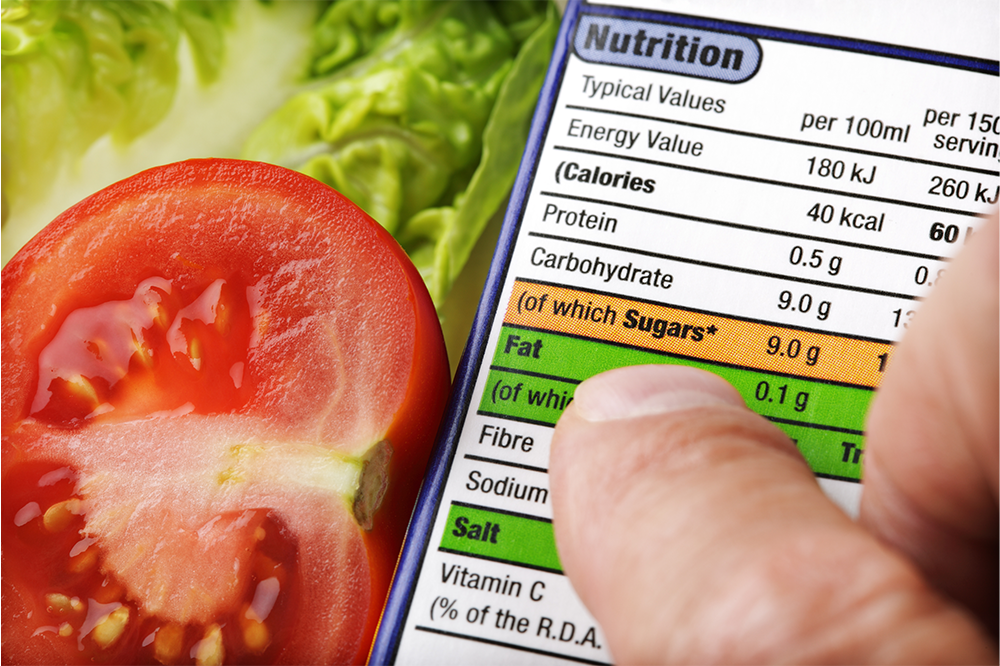
IGD has produced a useful explainer for why this proposal is potentially so significant. The NPM is the basis for much of the UK’s food regulation. The score a product receives under the model determines whether it can be advertised to children and whether it can be promoted at an aisle end or a checkout. It also forms the basis for Transport for London’s rules restricting advertising of unhealthy foods throughout its network.
The HFSS acronym widely used in food policy circles (including by Footprint) has its origins in the Food Standards Agency’s 2004 NPM. Products score points for both negative nutrients like fat, sugar and salt and positive nutrients like fibre, protein, fruit and vegetables. The positive points are subtracted from the negative points to give an overall score that classifies a product as HFSS or otherwise.
The problem is that nutrition science has moved on during the two decades that have passed since the NPM was first developed. On sugar, for example, in 2015 the government’s Scientific Advisory Committee on Nutrition (SCAN) recommended halving daily intake of free sugars and increasing fibre intake, advice that is not reflected in the current NPM.
A draft updated NPM was produced and consulted on in 2018 incorporating SACN’s advice but it received pushback from industry on feasibility grounds with businesses arguing that because there was no standardised scientific methodology for measuring free sugars it was not something they could accurately capture. (Free sugars are those added to food or drinks or found naturally in honey, syrups and unsweetened fruit juices, but not sugars intrinsic in milk and in unprocessed fruits.)
The 2018 draft remains on the shelf but if the government does decide to use it as the basis for a revised NPM it would have huge implications for businesses, potentially pulling thousands of products that sit just the right side of the 2004 NPM into the HFSS category, particularly those with a relatively high sugar content.
IGD says beverages are expected to be the most affected category, citing a study across 45,000 retail products showing a 75% drop in products passing the NPM under the 2018 model. Breakfast cereals (11% fewer products passing), yoghurts (5%), and frozen foods (6%) would also be negatively impacted.
Getting a new NPM through the consultation process and into the rule book would be a task fraught with difficulty. For starters, businesses would likely kick up a stink over the sunk costs of previous product reformulation. Although the voluntary sugar reduction programme, deployed by the previous Conservative government, ultimately failed in its ambition for a 20% reduction in sugar across a range of categories (with foodservice performing particularly poorly), businesses that did invest in reformulation to achieve the targets – and stay the right side of the NPM – would surely cry foul over ministers ‘moving the goalposts’.
More positively, IGD says a more stringent NPM could drive healthier innovation – a higher fibre content, for example, would bump up a product’s score under the 2018 model. A focus on fibre is much needed with the recently published National Diet and Nutrition Survey (NDNS) showing just 4% of adults and 4% of 11-18 year olds meet the recommendation to consume at least 30g and 25g per day respectively of fibre.
Seeing is believing
A seemingly minor change to the NPM could have an outsized impact on the food environment, yet critics of the government’s approach to tackling diet-related ill health want to see far more meat on the policy bone before they shed their scepticism.
In a report last year for the Food, Farming and Countryside Commission, Tim Jackson, director of the Centre for the Understanding of Sustainable Prosperity, estimated the “false economy of big food” costs the UK a total of £268bn every year from the direct cost of funding health and social care and indirect costs from productivity losses among others.
Responding in a blog post to the 10-year health plan for England, Jackson was wholly underwhelmed by the government’s vision. “It’s not rocket science to figure out that any sensible health plan must address the rising burden of utterly preventable chronic disease,” he wrote. “And it’s scarcely contestable that prevention here means radical change to the dysfunctional food system which burdens our diet with ultra-processed food, seduces us with sugar and saturated fats and systematically robs us of the dietary fibre and nutrients. But Fit for the Future [the plan’s title] offers slim pickings when it comes to serious change in this department.”
That may be so but in its new food strategy, published after the 10-year health plan, the government did identify the “junk food cycle” as a problem that needs solving and set the ambition of turning this cycle on its head to create a “good food cycle”.
Jackson is not alone in holding reservations about ministers’ ultimate willingness to tackle vested interests and deliver real systems change, but there’s no denying the language coming out of Whitehall marks a step change in ambition from the previous 14 years of Conservative rule.
The question now is does Labour have the gumption to turn its talk into action?
