
UK citizens get nowhere close to eating their recommended 5-a-day. Can stakeholders pull together to reverse the trend? By Nick Hughes.
Fruit and vegetables are the building blocks of a healthy diet. They contain many of the nutrients we need to keep us fit and thriving as well as bringing colour, texture and flavour to our plates and palates.
UK health advice says fruit and vegetables should make up over a third of what we eat, yet recently published data has served as a reminder of our difficult relationship with this key food group.
The latest National Diet and Nutrition Survey (NDNS) covering the period 2019-2023 found that just 17% of UK adults and only 9% of children ate the recommended five portions of fruit and vegetables each day. Children ate a daily average of 2.8 portions of fruit and veg while adult consumption varied between 3.3 and 3.7 portions depending on age.
Why is it that UK consumption of fruit and vegetables remains stubbornly low? And what can be done – by policy makers, businesses and civil society – to reverse the trend?
Structural challenges
Some may be tempted to point the finger at individuals making poor choices for themselves and their families, but such simplistic analysis ignores deep, systemic barriers to adequate fruit and veg consumption that span economics, politics and culture.
The government, in its commentary on the NDNS results, suggested a lack of availability during the covid-19 pandemic and cost of living pressures contributed to the drop off in fruit and veg consumption. Evidence certainly points to cost as being a key barrier. The Food Foundation’s latest ‘Broken Plate’ report, published in January, found that healthier foods as defined by the government’s nutrient profiling model are on average more than twice as expensive per calorie as less healthy foods, with healthier foods increasing in price at twice the rate in the past two years. The most deprived fifth of UK households would need to spend an unrealistic 45% of their disposable income after housing costs to afford the government’s recommended Eatwell diet, according to the report.
Analysis that pins the blame on individuals also underplays how diets are shaped by our environment. The Broken Plate report includes personal testimonies from those living with food insecurity about the real-world barriers they face in eating healthily, including poor local provision of fresh produce, the unaffordable cost of gas for cooking vegetables from scratch, and inadequate transport links to shops selling healthy food.
Charitable provision helps plug some of the gaps. The Alexandra Rose Charity, for example, works directly with children’s centres, community organisations and market traders to provide families on low incomes with weekly vouchers that can be spent on fruit and veg at local markets and at independent grocers.
Cultural chasm
Yet charity alone is not a long-term solution. When I asked on social media for ideas on how to boost domestic fruit and veg consumption many respondents coalesced around the need for a radical change in our food culture. Comparison was drawn between the UK’s food culture, dominated by ultra-processed and convenience foods, and those in southern Europe where freshly prepared fruit and vegetables remain the cornerstone of people’s diets.
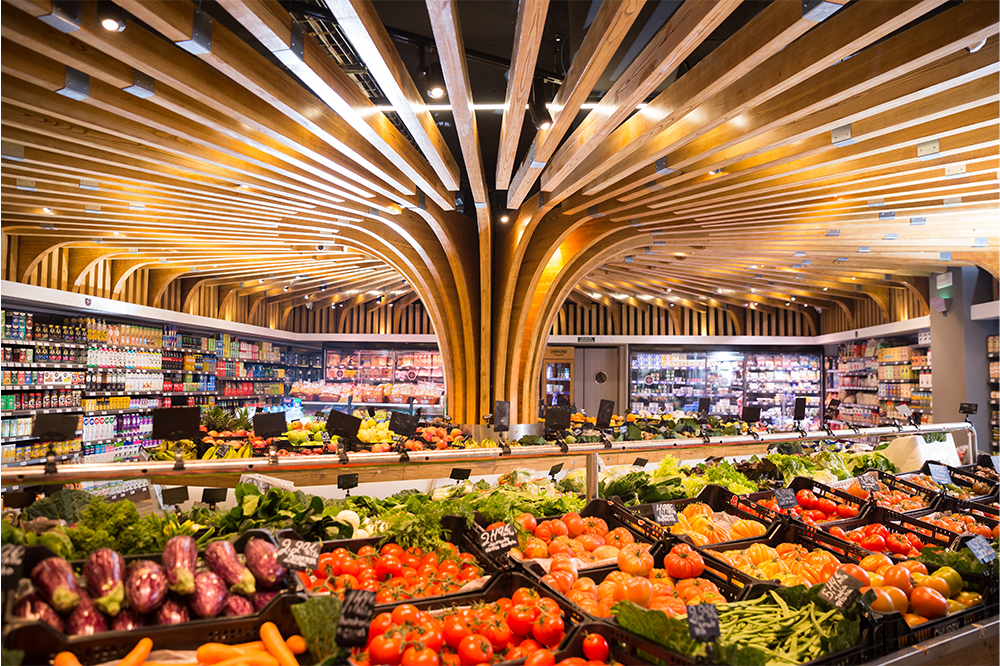
The argument goes that in Mediterranean countries like Spain, France and Italy good food habits are ingrained from birth, nurtured at school and sustained throughout adulthood. Fruit and vegetables are venerated in a way they simply aren’t in the UK – see, for example, the space dedicated to fruit and veg in continental supermarkets and the care taken to display them in an attractive way.
Cultures can’t be copied and pasted but experts believe a better UK food culture can be nurtured with the right effort and investment – with early years education providing a key opportunity for developing good habits.
School sense
The charity Taste Education (TastEd) is working with over 1,700 schools and nurseries around the UK to provide sensory food education for children. TastEd’s approach is based on repeated exposure and exploration that helps build children’s confidence and curiosity about fruit and veg. “Currently food education is patchy and often focused on increasing nutrition knowledge, which alone won’t support preference change. Sensory food education can provide a simple way for all children to have the opportunity to learn to love fruits and vegetables,” says TastEd director Fran Box.
To scale TastEd’s approach, Box says sensory food education needs to be integrated into early years foundation stage (EYFS) learning frameworks with support provided for teachers who often lack confidence or experience delivering food education. She also calls for sustained funding for fruit and veg provision for sensory food education in schools.
Public sector institutions like schools are widely recognised as key settings for improving access to fruit and veg. The NGO, ProVeg UK, notes how UK school catering accounts for 29% of the total public sector catering spend. Through its ‘School Plates’ programme, the organisation shares recipes and trains school caterers to make fruit and veg the star of the plate, and encourages greater diversity of plants on school menus.
A forthcoming government review of school food standards in England provides a fresh opportunity to put vegetables at the heart of school meals. Currently, standards in England recommend schools should offer at least one portion of vegetables to pupils at lunch every day (Scotland, Wales and Northern Ireland require at least two portions to be served in primary schools). Campaigners like The Food Foundation would like to see this increased to two portions and for the current requirement for schools to serve meat three days a week to be removed to give caterers greater flexibility in menu design.
Policy levers
Alongside its role as standard setter, the government could use fiscal levers to encourage people to eat more fruit and veg. ‘Tax foods high in fat, sugar and salt (HFSS) and use the proceeds to subsidise fruit and veg’ has been a popular refrain from campaigners for many years, yet successive governments have shied away from blanket taxation in favour of more targeted levies on products such as soft drinks.
Where some believe policy makers can have an immediate impact is on the way food is marketed. Veg Power, an organisation working to boost veg consumption among children, notes how advertising spend on food and drink is dominated by large food brands. Low-margin, mostly unbranded vegetables barely get a look in. Over the past seven years, Veg Power has secured over £20m in donated advertising space to run its ‘Eat them to defeat them’ TV campaign in primetime slots, but that figure is dwarfed by the money spent by major FMCG brands with the aim of inciting us to consume ultra-processed products.
To help redress the balance, Veg Power chief executive Dan Parker says action from the government is needed “to reduce the onslaught of junk food advertising and promotions aimed at children and to fund a major national public health advertising campaign to promote fruit and vegetables including beans”.
More peas please
Businesses will also have to accept their share of responsibility for getting more fruit and veg into people’s mouths by reformulating products and dishes and using behavioural change techniques to encourage customers to choose plant-rich foods. Between 2017 and 2023, The Food Foundation’s Peas Please programme asked businesses to commit to a range of actions to help boost veg consumption. By the end of the programme, 1.1 billion additional portions of veg had been sold or served – well short of the original aspiration to achieve 3 billion extra portions.
Although some businesses engaged fully throughout the project, others were less committed Reporting on progress was often patchy, particularly within the out of home sector. In its final project evaluation The Food Foundation noted how: “Although a number of Peas Please pledgers have made considerable progress in disclosing data and setting targets for sales of vegetables over the past four years, the overall number of food retail and foodservice businesses doing so remains low.”
Disclosing data on sales of vegetables is considered a key starting point for companies committing to increase their supply – ‘what gets measured gets done’, as the oft-cited aphorism goes. Compass Group UK & Ireland and Bidfood were both namechecked in The Food Foundation’s latest ‘State of the nation’s food industry’ report (in which companies’ health and environmental commitments are benchmarked against their peers) for their commitment to transparency. Both companies now publicly report fruit and veg data: Compass reported a 4% increase in veg portions (80g) procured across the business in 2023 compared with 2022, while between July 2023 and July 2024 Bidfood’s fruit and vegetable volume sales grew 17%. The next frontier, according to The Food Foundation, is for more food businesses to move beyond disclosure to set sales-weighted targets for vegetables against which progress can be measured.
Birds Eye owner Nomad Foods recently joined the ranks of businesses calling for the government to introduce mandatory health reporting for businesses. The business supplied 457 million portions of vegetables in 2024 via its Birds Eye and Aunt Bessie’s brands and is working to position frozen veg as a cost effective and accessible means of increasing consumption that also reduces the risk of food waste while delivering the same health benefits as fresh veg (peas, for example, are flash-frozen within 2.5 hours of being picked thereby locking in the nutrients).
Anna Owen, cluster head of sustainability at Birds Eye UK & Ireland, says the biggest challenge in growing demand for frozen veg is perception. “Many people don’t recognise frozen vegetables as being equally, and sometimes more, nutritious than their fresh counterparts,” she explains.
Sustainable supply
Should it materialise, increased demand for fruit and veg will need to be matched by sustainable long-term supply. This can’t be taken for granted. In 2023, the UK was 53% self-sufficient in fresh vegetables; for fruit it was a mere 16%.
The horticulture sector has long been denied a dedicated strategy for ensuring its long-term viability despite facing a litany of challenges including poor financial returns, shortages in labour, and ever-growing exposure to climate-related extreme weather events.
The Food Foundation estimates we need to increase the amount of fruit and veg we consume on average by 86% in the UK in order to meet dietary recommendations. Expanding domestic horticultural production across the UK to meet this demand would add £2.3bn to the UK economy, create 23,520 jobs and boost farm profits by 3% across the country, according to analysis by the Green Alliance think tank. A clear strategy is needed to grow overlooked sectors like horticulture, which are vital to public health and food security, adds Will White, sustainable farming coordinator at Sustain.
Better health, more secure livelihoods, a transformed food culture – we know what can be gained be increasing our consumption of fruit and veg. What we still don’t know is whether the will exists to achieve it.