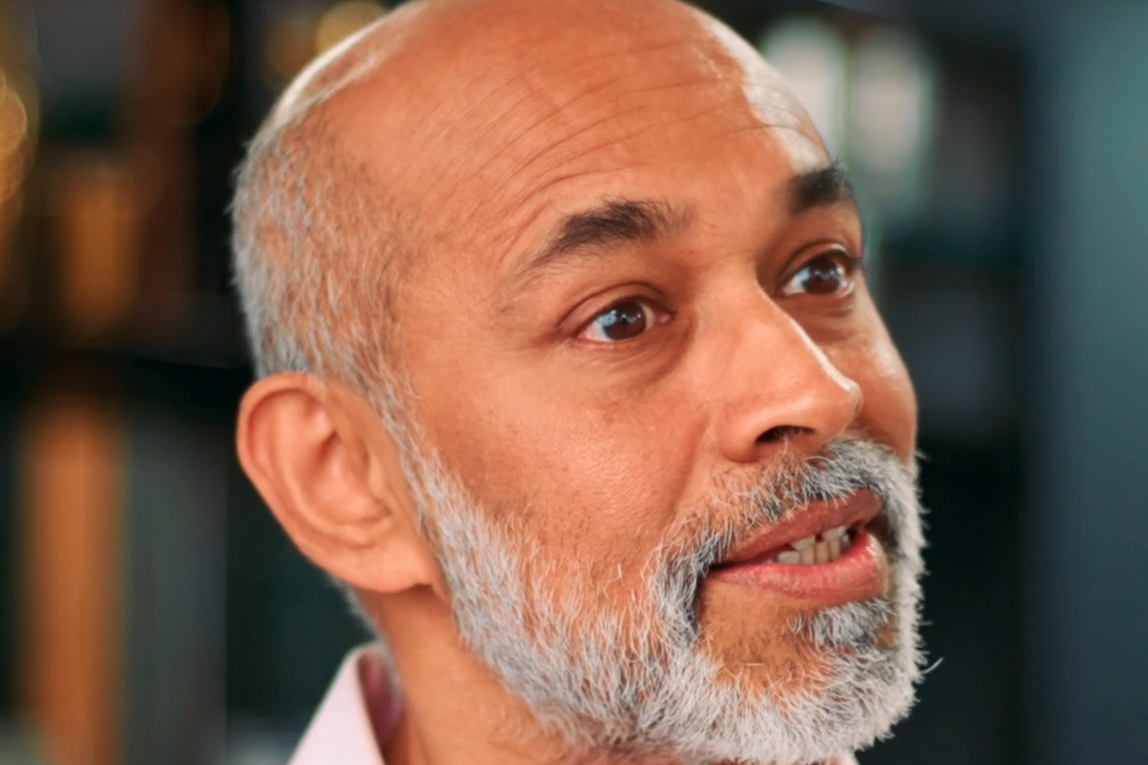
In Episode 4 of The Small Print podcast, Nick Hughes is joined by supply chain sustainability expert, Robin Sundaram.
Robin Sundaram has spent almost four decades working in sustainability roles within the food industry, including 30 years with Nestlé. In this week’s episode, Robin shares lessons from his career to-date including how a role working in sustainability has changed since he started in the sector, why resilience is the current industry watchword, and how collaboration with suppliers is key to delivering a company’s environmental ambitions.
Subscribe to the podcast



Further reading
The food sector has reached a critical fork in its sustainability journey. Doing ‘less bad’ is no longer a credible strategy for the future
Growing regenerative agriculture
Evidence continues to mount over agriculture’s vulnerability to a warming planet

Footprint Further is a practical sustainability training programme for the UK foodservice and hospitality sector, developed by Footprint Media Group in partnership with Robin Sundaram, drawing on his decades of senior supply chain and sustainability leadership in the food industry.
Transcript
Nick Hughes: Hello and welcome to episode four of the Small Print, a podcast by Footprint Media Group. This week we’re reflecting on a career spent working on food sustainability with Robin Sundaram. Robin has spent almost four decades working in senior supply chain and sustainability roles within the food industry, including 30 years with Nestle. There are a few more qualified people to discuss how the work of a sustainability professional has changed in that period and share insights into how to engage suppliers with your environmental ambitions and bring leadership teams with you on the sustainability journey. Robin, great to have you join us on the Small Print. You’ve recently left Nestle after 30 years working on supply chain sustainability. How, how does it feel to be able to take a breath and reflect on what you’ve achieved in your career to date?
Robin Sundaram: Yeah, it’s been really nice actually, just to be able to take a few months off, relax, take it easy. I can’t remember the last time I was able to just do nothing and feel okay doing nothing. But it’s allowed me to just focus on my health a bit, getting down to the gym, focus on cooking more and just doing and just catching up with people and all of that. So it’s that it’s been really relaxing. But since the new year I’ve taken the opportunity to look back, reflect on what I have enjoyed in that not only 30 years at Nestle, but seven or eight years prior to that, again within the food industry. I was at Marks and Spencer’s for a while and I was at Safeway for nearly five years as well. And just to look at what I achieved, which I do believe has been pretty good overall, but also just the people that I’ve worked with over the years and the impact people have had on me and also the feedback I got when I left Ness Laser have had some positive impact on other people as well. So it’s really nice just to reflect on all that and now we’ll probably get onto it later. Maybe towards the end is I’ve set up on my own just to see how I can use my experience, particularly my lived experience of having been in, in a large corporate organization like Nestle, but working with lots of suppliers, lots of companies that I’ve collaborated with as well outside of Nestle, to, to try and help other businesses around some of the challenges we have around. How do you implement sustainability in a way that is right for the business, but also right for society and for the environment?
Nick Hughes: Yes, well, we’ll certainly come on to future plans a little bit later, but you, you touched on your breadth and depth of experience working in the food industry within sustainability roles, you’re as best placed as anyone to tell us how. How do you see the work of a professional working in food sustainability has changed in the time you’ve been working within the food sector?
Robin Sundaram: Yeah, I, I think when I started, when I, When I look back, yeah, 30 years or whatever, we don’t. We weren’t even really talking about sustainability. We, there was, there was always, I would say, people who were passionate about the topic, but it was a bit of a niche area, I would say. When I look back, we did have a term which was csr, Corporate social responsibility. That’s been around for a long time. So there was, there were businesses that were working in that space, but it wasn’t really. It was, it was more about, well, what can we, what’s the bare minimum? Or what can, what can we do as a business to make sure that we are doing the right things to help local communities or society or, you know, how can we make sure we’re minimizing our impact in terms of environmental impact? But it was, I think it was very much about, yeah, going back to what’s the, what’s the bare minimum we need to be doing as a business? Whereas sustainability is about how can you make positive good, how can you help regenerate, you know, farms and regenerate communities, that kind of thing. So that sort of thinking wasn’t really around, I would say, at the time. What I did find interesting when I think about it, is particularly in supply chain. We did have initiatives that were sustainable, but we didn’t necessarily realize they were at the time. So when I think about, for instance, logistics, we’re always on a crusade to how do we reduce empty running of vehicles or, you know, make sure that they’re full. And that was. It was all about reducing cost. But actually what we’re also doing was actually we’re being sustainable at the same time. Similarly, when we, I think back, we were one of the first companies to start working with food, with Fair Share, particularly the first big company. And that came about because we wanted to. We had this food waste in our factories and we didn’t want it going to landfill. And we’d made commitments about zero to landfill, and therefore we had to come up with new ways to, to do something with that. And then we, we realized there was this company called Fair Share that were just starting and maybe they could take our product. And. And so overnight we became a company that was helping to tackle food poverty in the uk, but that wasn’t the initial intention, it was about how can we, you know, get rid of this waste and not put it into landfill. So when I look back, there were, there was activity that was under the banner of sustainability, but it was actually, it was more about cost saving and we weren’t even recording the sustainability benefits.
Nick Hughes: Yeah, interesting. So it was almost a byproduct of the commercial imperative.
Robin Sundaram: Yes.
Nick Hughes: Yeah, interesting. So it feels like certainly that sustainability is much more centered now within organizations, albeit not necessarily strategically at a board level still with some organizations, I know it certainly is with others. But, but do you feel like both from, in terms of organizational structure and the influence that teams have, that sustainability is now much more embedded within the organization?
Robin Sundaram: I think in general we’re, we’re, yeah, we’re in a much better place than we were. When I look back, I agree with you. I don’t think it’s embedded in the way that it, that it needs to be. And we’ve got, and I’m not the only person talking about this. I think the general view is that we’re creating sustainability teams, but organizations are thinking, well, it’s that team’s responsibility to then deliver against all the sustainability targets. And actually it should be, in my mind it should be no different to something like health and safety when we, you know, health and safety is huge and it’s particularly in sort of FMCG manufacturing companies and that yes, you have a health and safety team, a very small team, but actually it’s the responsibility of everyone to make sure that the working environment is safe all the time, that no one ever gets hurt. Sustainability needs to be exactly the same. Every single person doesn’t matter what their, their role is. They need to be thinking about these decisions that I’m making. Are they the right decisions in terms of the long term from an environmental and social perspective. But what makes it difficult and makes it a bit different to health and safety is that often there are trade offs. You have to make a decision that, you know, sometimes the short term decision isn’t particularly sustainable, but because of the commercial reality of what you’re living in right now, it is the right decision right now. Whereas when it comes to something like health and safety, safety always comes first before everything else. So yes, I think there’s still a lot of examples where sustainability team just sort of expected to just get on and do it. And I’m sure we’ll come onto it later. But a lot of that seems to be the reporting burden that comes around sustainability. I think. I mean, my experience at Nestle. And I think it was very interesting. What Nestle went through is they got attacked by Greenpeace back in 2010, I think it was, and it was around deforestation in Indonesia and Malaysia. And it’s because of Nestle was buying palm oil and it was going into KitKat. And what Greenpeace did was they, they were able to use orangutans as the kind of the, the, the way to show what Nestle was doing. And off the back of that, I think what was so positive is that Nestle sat down with Greenpeace and said, okay, we need to try and figure out a way forward here. To cut a long story short, not only did they develop a relationship with Greenpeace, which is still, I wouldn’t say it’s a particularly warm relationship, but I think that’s right because I do believe actually that organizations like Greenpeace have got a role to play. They do need to hold businesses to account around what they’re doing. And whether it’s, whether you agree with their tactics or not, we need organizations that do that. And the, the upshot to all of that is that Nestle ended up creating a global responsible sourcing program around this. And, and Nestle has been talking about creating shared value, which is about this idea of how do you create value for the shareholders of the business, but at the same time create value for society. And have been doing that, been around for more than 150 years, been doing that in some form. But this was the first time where they were able to say, okay, well we actually, we can create this responsible sourcing program, a global program. And actually we can, we can link it to creating shared value, which is what we’ve talked about for a long time, and actually develop something that is something that, that they could then take forward as an ongoing approach and that’s then expanded into, well, sustainability really in, in all its forms, not just about responsible sourcing. But I was lucky because I was in. By that point I’d moved into procurement, having spent many years working with our customers, with Sainsbury’s and Tesco’s and food service customers. And I was able to sort of bring that experience says, okay, well this is what our customers are asking for. We can do the same with our suppliers and we can try and make sure that the end to end supply chain is linking up and we’re able to look at all of the different impacts right from farming all the way through to. Again, at the time we didn’t really think about circular economy. We didn’t think about what happens to our packaging and after it goes to our customer. And then suddenly that all became part of everything. So. So I guess it’s a long answer to your question, but I guess what I’m trying to say is that what used to be disparate things happening in different parts of the business, we’re able to then start to bring it all together under one banner, which now we call esg, but able to. So all these disparate bits come together and you have an overall strategy about what do you need to implement, what do you need to do to implement sustainability? Which means that, yes, you have individual sustainability teams, but more and more the different functions, whether you’re in procurement or sales or marketing or supply chain or HR as well, you have a role to play and people are realizing that. And that’s the big difference to before.
Nick Hughes: Yeah, no, and it’s really interesting what you’re saying about the Nestle and Greenpeace example and how that campaigning pressure almost acted as a catalyst for Nestle to step up its actions on responsible sourcing. I Wonder, fast forward 15 years to 2026, what the catalyst now is for that boardroom urgency. To my mind, it is food price inflation, challenges with availability, supply chain volatility, driven by climate extremes and crop failures, et cetera. And we’ve heard a lot recently this word resilience and the importance of building resilience into businesses, almost overtaking. Sustainability is the kind of sort of word of this generation to describe what it is that we’re doing on the environment. What do you see as the key messages that are starting to land with senior leadership when it comes to really focusing sustainability efforts and ensuring that they are a central part of business strategy?
Robin Sundaram: Yeah, it’s a really good question. And what I see is that. And what we need to see more of is that the term sustainability and particularly things like ESG are probably. They’re putting some people off and of course, some of the things that are going on in the US and everything is also impacting. And what we don’t want to happen is everyone gets bogged down in the terminology around sustainability. The reality is this is about business. You made the point earlier. This is about how does your business still thrive in the years to come in the long term. And so any business, any business that’s particularly successful is always looking five, 10 years out, probably longer in terms of planning. So you’re looking at, you know, what, what kind of product are you going to be selling? What, what’s, what’s, what Consumer society going to be looking like. So you look at all the big picture stuff, you look at, you know, pastel, you look at political, economic, social technique, technical. So you do this kind of big picture projection forward and then from that you’re able to say, well, what does that. What do we need to be doing in our business to make sure that we’re still around and making profit? But at the same time, I think different to in the past is, but also having a positive impact when it comes to environment and society and also your own people in the organization. And that’s where businesses are realizing, yes, climate change is having an impact. You have to. Not only is it about supply of the product that you want, having enough, but also you’re seeing massive increase in costs because of all sorts of input costs, energy costs. Obviously there’s a lot of political things going on and of course energy costs just this week have been hit again with what’s happening in the world. But with I think businesses, the businesses that are going to really move forward when it comes to sustainability are those that are seeing it as within the context of resilience, within the context of investment decisions, long term versus short term, within the context of reputation. What, you know, impact on the company within the context of their own people and things like talent attraction. A lot of people want to move to companies now more that they see are doing the right thing, talent retention. When people want to feel proud for the company that they’re working for. And actually when, when they can see that they, they’re doing volunteering, when they can see the positive impact their business is having on farmers, when they can see the positive impact they’re having on communities, that all of that makes you proud to feel to work for your company. And that stuff is important for boards. So you’ve got those kinds of things happening and then on top of that you’ve just got this general move around. Well, for instance, companies have made net zero commitments and I know some of them are starting to backtrack a bit around that, but actually I think a number of businesses are going to stick to those commitments and they’re still going to work on how we going to deliver those commitments. There’s a growing need still around customer expectations. So the big retailers, the big food service companies, hospitality more and more, they still have an expectation that organizations like Nestle and other suppliers are able to help them achieve their commitments. So there’s that pool. The NGOs will aren’t going away and the UK specifically has a lot of the NGOs headquartered around, around there, so they’re not going away. And then government regulation is continuing to come through. And not only the UK government, you’re seeing it with EU and broader, so that’s just accelerating. And then on top of that, investors as well, you’re seeing a change in the investment community. So all of these things are happening. So when you’re sitting in the board, you’re having to think about way more than you ever did before. But let’s not forget, ultimately it’s still about achieving your growth targets, achieving your, your profit targets and all the rest. But now more than ever, they’re having to do that within this broader context, which maybe they weren’t thinking about as much a few years ago.
Nick Hughes: Yes. And what it strikes me links a lot of these issues around net zero targets, around volatility is, is the need, more so than ever, to be working collaboratively within the supply chain and not pushing dictats down the supply chain or, you know, trying to push, push up the supply chain. It’s about collaboration, isn’t it? And you’ve obviously spent much of your career working within the supply chain on responsible sourcing. What have you learned about how best to engage suppliers with an organization’s own environmental objectives and how to work together to deliver those?
Robin Sundaram: Yeah, I mean, it’s. Collaboration is huge. It’s absolutely huge. And it, from my experience, I’m quite, I’m pleased that I spent so long working directly with customers because you kind of. So I’m used to collaborating with the customer, with customers and therefore when I went across to procurement and, and start working with suppliers, you take that learning. And one of the things, I have to admit that slightly frustrates me, it frustrated me at Nestle and probably it’s the same in other organizations is that you learn so many skills as a, on the sales team and in the supply chain team that are facing directly into customers and I don’t think they do a good enough job of taking those people and then putting them into procurement, you know, because you learn how to collaborate when you’re in sales. You learn how to, because you have to be able to work with your customers. And that collaboration, those skills that you learn, are absolutely perfect for when you take them across to working with suppliers. And what, what I saw at Nestle, I think has changed a lot over the years, but initially is that it was still very old school around, well, you know, I wouldn’t say you bashed your head, bashed the suppliers over the head, but you, it was still Very much about how can you get the best price. Yeah. And, and, and other things. Ultimately you have to be able to make sure that the factories get the, don’t get the right service from your suppliers, the right quality, all of that, that hasn’t changed. But, but when I came into it, because I had the, that experience of working with customers and collaborating, one of the first things I did around the whole responsible sourcing is to try and get to a point where this isn’t something we’re doing to suppliers, it’s something we’re doing with suppliers. Yeah. And right from the beginning to be able to say, let’s work together because ultimately this is for our mutual gain, whether it’s achieving environmental targets or human rights changes, whatever. The thing is that we wanted to work on and getting them to really. But it’s more than just saying it, it’s about, you know, walking the walk as well. So when I started, for instance, working with First Milk, on the milk, what we ended up calling the Milk Plan, right from the very beginning, when we said we wanted to develop a, an approach that made our dairy farming in the UK more sustainable, the first thing we did was involve farmers in the conversation. And, and that’s something that, the reason I wanted to do that is I went to. I can’t believe this must have been about 2014, 2013. I went, I got invited to the Houses of Parliament, some big, Some big launch of a program around farming in the uk, around how can we improve soil health, improve biodiversity, reduce water usage, all of this. And because I was new, I’d literally just moved into the role. I took three of our farmers with me because I didn’t know anything really. And there must have been about 150 people, great and good, from far from the industry. And at the end, when they came to the Q and A, I kind of said, I put my hand up and said, how many farmers are in the room? And the only three farms in the room were the three that I’d taken. And that was the realization for me, the penny drop moment when there’s a lot of talk about farming without involving farmers. And so, but that’s one example. But what, what we’re able to do is, is, is. And the approach we took. And it, it’s. I’ve used this a lot in a lot of the things I’ve worked on is you go where there’s an open door. So some suppliers genuinely want to work with you and can see the benefit of doing it. Some of them really don’t so they, and some of them are really big suppliers but you know, you go where there’s an open door because once you can start to implement something that, where you can show you’re starting to make a difference, it then makes it easier to then roll out to others and before you know, you get to a point, tipping point where if you’re a supplier that’s not doing, doing it and everyone else is, you basically have to join in.
Nick Hughes: This year sees the launch of the first ever Footprint Festival, a two day experiential and immersive sustainability festival set on a working farm in the heart of the Hampshire countryside. Created for senior leaders across food service and hospitality, this one of a kind annual event takes place on September 17th and 18th. We’ll blend sensory experiences, transformative content, powerful networking and unforgettable food, drink and entertainment. Early bird tickets are now on sale. Visit footprintfestival.com for more details. And what skills do you feel are most highly valued within businesses in the present day?
Robin Sundaram: I think in this whole area there’s a lot of talk about green skills and I see more and more discussion around this and I think we, there is going to be a requirement in the future for people to have skills that are a bit different to what we have now. But, but then, but at the moment I think a lot of people think of green scale skills as being sort of technical, technical expertise. So I was lucky, I worked with farmers, I built some expertise around what regenerative agriculture means. You’ve got people working on plastics and packaging. You got, so there’s, but they, they can be very technical. I actually believe that the, the skills that we’ll need in the future is, is around how do you green current skills that, that aren’t going to disappear. So we’ve already touched on it but things like if you’re a salesperson and you’re going and you’re talking to your customers, you’ve got to be able to talk eloquently and hopefully with a compelling reason for why your customers should buy your products because of all of the environmental and social impacts within that you’re working to. If you’re in marketing, this is all about circular economy now. You can’t create, you can’t a product that is going to end up in landfill or bits. Yeah. You know, that is going to result in excessive food waste or whatever. So marketing skills have got, you know, marketing people got to be thinking about holistically what they’re creating. HR we’ve touched on before as well. Is that how do you, when you’re going out and you’re trying to recruit talent, how do you make sure that you’re doing it in a way that really sells the sustainability credentials of the business that you have? And I think if you’re a leader and the leadership teams, more and more they’re going to need to, they want people that can really understand that some of the complexities that are involved when it comes to this. So this, you know, you want, when you’re making financial decisions now, you can’t just think about, okay, well the return on investment is going to be three years and if it’s not, we’re not going to do it because return on investment on soil health isn’t going to be three years. So you got to be thinking about long term investment versus short term investment. You’ve got to be able to have people that can work through the different trade offs, people that can work, understand more and more of the different functions. I don’t think that siloed functions is going to work as well as it used to in the past. You need to have people that understand the implications of decisions across the different functions and across the broader business.
Nick Hughes: I want to pick up on a couple of points you raised earlier, Robin, in passing. The first one’s reporting. One of the biggest complaints I hear from people working in sustainability roles is that so much of their time is taken up reporting, whether that’s mandatory reporting, voluntary reporting, and it just leaves so little time for actually delivering. Do you think we’ve reached a point where the balance has gone too far towards reporting as important as it is for transparency and not leaving enough time for the actual delivery? Or do you think the balance is about right?
Robin Sundaram: So my personal view is I think we’ve gone too far on the reporting for two reasons. Firstly, it’s the time and secondly is the cost as well of doing that. Uh, but at the same time I do really understand why, because so much of this where, where it’s. If you were just left to, if, if companies were expected to just voluntarily do a lot of this work, a lot of them won’t. Yeah, it’s as simple as that. So we do need to have some sort of regulation that is there to ensure that companies are working on, whether it’s deforestation or due diligence, you name it, human rights. I think where we’ve got the balance wrong though is that there’s a whole army of businesses now out there that are just offering software solutions and we can sort this out and sort that out and it’s become a mini industry in itself. And it does mean that you’re. You. We sort of. I guess it’s easy to. We’ve all become. It’s all. It’s becoming about tick box. And I’m not the first person to say this, it’s about tick box exercise. And are you genuinely making a difference by doing this? And a few examples come to mind. I mean, one of them is that, you know, again, we had a. The response sourcing audits. You go out, we did a whole bunch of audits with coffee farmers in various countries and then there was a TV program went and found some children working on a farm that we’d. The audit had said was fine. And the reality is if you. These audits, I’d say 99% of audits are. They’re prearranged so the supplier, whoever they are, knows when the auditor is arriving. So if you are basically up to no good, you just make sure that’s not evident when the auditor turns out. It’s pretty straightforward. So are you genuinely finding. So those comp. Those businesses that are, I would say, not doing the right thing can cover it up? Having said that, a lot of businesses hadn’t even thought about things like the safety and health side of things, things like what we used to call business integrity. So things like, like bribery, corruption or all of those kinds of things we did do. You know, you do make a positive impact with a lot of. With quite a bit of what you do, but I don’t think you really get to the bottom of if somebody is up to something that’s not quite right, you’re not going to necessarily find that.
Nick Hughes: Yeah. And I wonder whether this tension in a slightly different way is. Is sort of starting to play out where regenerative agriculture is concerned. Because you’ve. You’ve got on the one hand those saying we need standardization, we need certification, which obviously adds, you know, a compliance burden, a time burden, a cost burden. And on the other hand, those that think this is actually, this is more of a philosophical movement almost and it needs to retain flexibility and context specificity and we don’t want to get too deep into the kind of, you know, weeds of reporting and numbers and compliance. So, yeah, where do you stand? Because I know you’ve obviously been heavily involved in Nestle’s investment in regenerative farming. Where do you stand on that question?
Robin Sundaram: Yeah, again, it’s a really tricky one. My view on it is that a lot of the. Particularly when it comes to Regentify culture and farming is that we have to just crack on and do stuff. We have to just make sure and then, so which is the approach we took with the milk plan is let’s just try, let’s get our farmers on board, see what works for them. Let’s just try stuff and then, and then we can think about how we going to measure and track and, and. But we do need standardization where we can around how do you having, you know, things like soil health and I know there’s no, at the moment there isn’t the soil code like there is with the carbon code and some of the others. So if we can have more standardization, that’s going to be so helpful if we can. But until then my view is that we’ve got to invest and we’ve got to work on just trying things. As I said, there’s a lot more and more evidence coming through about what works and what doesn’t as well. So let’s utilize what evidence that we have. Agriculture is so difficult though, because, you know, even a lot of the sort of, for instance the emission factors that are used when we work out carbon, the carbon impact of various ingredients and things, they are standardized kind of global numbers. And the reality is not only between countries do you have differences, but within countries you’ve got massive differences around soil, different types of soil, different weather conditions. There’s so many things that are variable that it’s, it does make it very, very difficult to be able to measure apples for apples, if that makes sense again, but we still need to continue to focus on that and see where we can get to.
Nick Hughes: The other area I wanted to come back to, which we touched on briefly is policy and regulation which links somewhat to reporting. But we’ve obviously, we’ve seen all kinds of delays to EU regulations, in particular around deforestation and sustainability reporting and sort of backtracking efforts to water down proposals. I wonder for a large business how challenging that lack of stability and certainty is when it comes to policy and how difficult it is to manage that.
Robin Sundaram: I, yeah, I actually think for large businesses, yes, it’s difficult, but I actually, it’s not as difficult as it is for the smaller businesses. And that’s just due to the function that you’ve got more people and you can therefore put more resource into this work. So what I’m seeing, and I know my experience in Nestle is that the work will still continue because business can see that, you know, this is the direction of travel, this is the. So it may not, you know, the regulation may not come in next this year or next year, whatever. But it’s the general direction of travel, particularly things that you can see happening. Regulation that’s happening in lots of different countries or across the EU and others. So. And we had, we had similar issues. If you look back at Brexit and all of the implications that had in terms of supply, supply chain and movements and how you, you know, goods going through the, with all the paperwork that’s involved and all of that, that took a while to happen. But companies like Nestle and other large companies were able to at least, at least prep, get the preparation right. But there were loads of suppliers that Nestle had who had no idea what was coming, weren’t, didn’t have the resource. And then when it did finally hit, they were like, okay, well we’re stuck. So Nestle could do everything they could and other big companies. But actually if your suppliers aren’t ready, then you still kind of caught out. And I think potentially that’s what could happen here, is that those smaller businesses that’s still part of the supply chain, still going to be impacted by the regulation may find it harder to respond. Really? Yeah, that’s my concern.
Nick Hughes: Well, you’ve been very generous, Robin, in sharing your insights on the sustainability landscape. So now’s the time for a plug to plug. Robin Thunderham, what does the future hold? What’s next for you personally? You mentioned consultancy earlier. What have you got planned?
Robin Sundaram: Yeah, so yeah, I’ve set up on my own. I’m calling it Robin Syndrome because that’s my brand. But really, in a nutshell, what I’m looking to do is what I’m saying. I’m looking to build practical sustainability and supply chain capability. That’s what I’m looking to do. And the key word there is practical. Because my experience and what I’ve seen is that there’s a lot of sustainability training out there and, but a lot of it is top line. This is what it’s about. It’s environmental, social. These are things that companies are doing. These are the kinds of things that you can do as a business. This is the regulation that’s coming in. This is what you need to do to be compliant, which is all good stuff. But my experience of being in a business is, and back to the point I made right at the beginning is what does this mean if you’re in hr, if you’re in finance, if you’re in sales, marketing. And I think the businesses that are really going to make a difference are those that can understand the implications for the different functions and how they can work together. So the decisions that are made by maybe one department don’t have negative knock on impacts like later on because the decisions, those trade offs and it’s always about trade offs, those trade off decisions that are made are made within the context of everybody having an input and understanding of what’s available. So I’m looking to build, I’m talking about, it’s not training, it’s about building capability. And that capability is as I said throughout the organization looking to do things like what is it, you know, not have workshops and have not necessarily role play but example situations where people that come on the training are able to not only understand top line but able to understand okay, well for my part of the business, the function that I’m working in, this is what I can do and this is the impact it will have on other functions. And also this is how I can talk about what I do because there’s also actually it’s a very, sustainability can be very technical. We talk about terms like net zero and, and, and other terminology that when you’re talking to your friends and you’re talking to your family can be quite hard to talk about. So we, I want to bring in language that makes it more accessible to, to, to people in general. So the combination of my training programs and I’ve developed five different programs at different levels, but also just general advisory, you know, helping advise businesses leaders around what, what it means for them and where they can focus their energies and just give, you know, any advice that I’ve got from my experience.
Nick Hughes: Well, best of luck with that. I’m sure there are many people that can benefit from your wealth of experience. And Robin, thanks so much for joining us on the Small Print.
Robin Sundaram: Thank you very much.
Nick Hughes: We’ll be back next week with another episode of the Small Print. If you like what you’ve heard, please take a moment to rate, share and subscribe.
