

With just a year to go until deposit return schemes launch across the whole of the UK, businesses need to start figuring out how they will be impacted by this transformational change in how drinks packaging is managed
To say the UK’s attempts to start a deposit return scheme (DRS) have been a protracted affair would be an understatement. After eight years – and counting – of delays, political feuding and industry lobbying many other environmental policies would have been chucked in the Defra dustbin.
But not this one. DRS has refused to RIP.
From a resource efficiency and environmental protection perspective this is good news (even if DRS will arrive four years later than promised).
A further delay to the policy to keep shopping baskets “affordable” was considered by the Starmer government earlier this year, but the reality is that in 12 months’ time hospitality companies, pubs, bars, restaurants, coffee shops and hotels in the UK will need to be ready for the launch of the scheme.
Or should that be ‘schemes’ plural: because for all the benefits of a UK-wide scheme – collecting the same materials from the same network of collection points – that is not what businesses are preparing for. Officially there will be “three schemes” across the UK, one for England and Northern Ireland, one for Scotland and one for Wales, noted a July briefing published by the House of Commons library.
Whether many businesses yet know about the imminent launch of DRS let alone what it means for them is unclear. Awareness across hospitality “still appears surprisingly low”, explains Veronica Chambers, quality and technical manager at glass packaging manufacturer Croxsons. Communication is going to be critical if this scheme is going to stand up, she adds.
So, how will DRS impact hospitality and is the sector ready for the changes?
This in theory should be the simplest of sustainability policies – the application of a small returnable deposit (20p in the UK’s case) on drinks containers to encourage recycling and reduce contamination of this material stream to almost zero. Many other countries have had some form of DRS in place for a number of years, and successfully so.
“Just two years after a deposit return scheme was launched in Latvia, the number of drinks containers being found on the coastline of the Baltic Sea had reduced by half,” explained Shehab Choudhury, the former DRS stakeholder engagement and business readiness team leader at Defra, in a January 2025 blog. “During a clean-up of the Gauja river (the country’s largest), volunteers looked for drink containers eligible under the return scheme – they found zero,” he added.
Choudbury said DRS is a “simple” way to reduce litter and ramp up recycling and use of recycled content in packaging (which reduces material use and in turn greenhouse gas emissions per bottle or can). Recycling rates of these packaging items have flatlined – 6.5 billion of the 25 billion single-use drinks bottles and cans used every year in the UK go to waste rather than being recycled – which makes a deposit scheme “common sense”, he added.
The UK Government says the scheme in England and Northern Ireland will cost £632m to set up and £1.1bn to run annually; however reduced litter, lower greenhouse gas emissions and material revenue will bring annual benefits of £1.6bn.
Securing cleaner, higher volume streams of aluminium, steel and in particular PET plastic will also help the domestic market for material reprocessing. And the sooner the better. Plastic recovery sites have been closing their doors as the sector rides a crisis on the back of higher energy and labour costs and a shift from recycled content back to cheap virgin plastic for packaging.
However, making sense of DRS has become a headache. As one citizen put it in a response posted just last week to that Defra blog: “Why has it taken so long and why so complex?”
Cost and complexity
The same question is on the lips of many in the hospitality sector. “It’s imperative that the final scheme minimises any administrative and cost burdens on hospitality businesses that are already under pressure from all sides and we will continue to push for this,” says Jack Quick, policy manager at UKHospitality (UKH).
DRS in England, Northern Ireland and Scotland will include single-use drinks containers from 150ml to 3 litres. Materials included are polyethylene terephthalate (PET, a type of plastic), steel and aluminium drink containers. In Wales, controversially, glass is also included in the scheme.
The pros and cons of all this have been widely – and repeatedly – picked over. Discussion over the glass issue continues in Wales among officials and the likes of UKH and the Wine and Spirit Trade Association (WSTA). “The inclusion of glass will have a huge impact on the hospitality sector as it will add another layer of complexity and costs to the day-to-day running of their pubs and restaurants,” WSTA chief executive Miles Beale, who has been vocal in his opposition to the Welsh DRS, tells Footprint. “It will mean extra staff training, finding storage space, managing waste collections and IT changes to incorporate new barcodes.”
Critics of the Welsh scheme argue that glass takes up more storage space and is heavy to move. They also claim the scheme will incentivise hospitality to use larger vessels, increase stocks of drinks supplied in plastic or cans, and supply more drinks on tap. The latter removes single-use altogether – which is a good thing. Unpicking the pros and cons of shifting from one single-use material to others is a little more nuanced – the debate more bad-tempered.
Carbon, chemicals, cost, energy, production, reprocessing and geopolitics are all factors that play into such decisions; not to mention brand positioning, consumer expectations and protection of the beverage. Major decisions are likely to be delayed by businesses until the true cost and administrative expectations of DRS materialise.
While NGOs are itching for this all to get going, there are considerable impacts for hospitality companies to consider. Indeed, scratch beneath the surface – as hospitality representatives have been asking the various administrations to do – and problems with the schemes begin to emerge. These, say supporters, are outweighed by the potential benefits, one of which is the ability to capture better quality materials for reprocessing.
Tender time
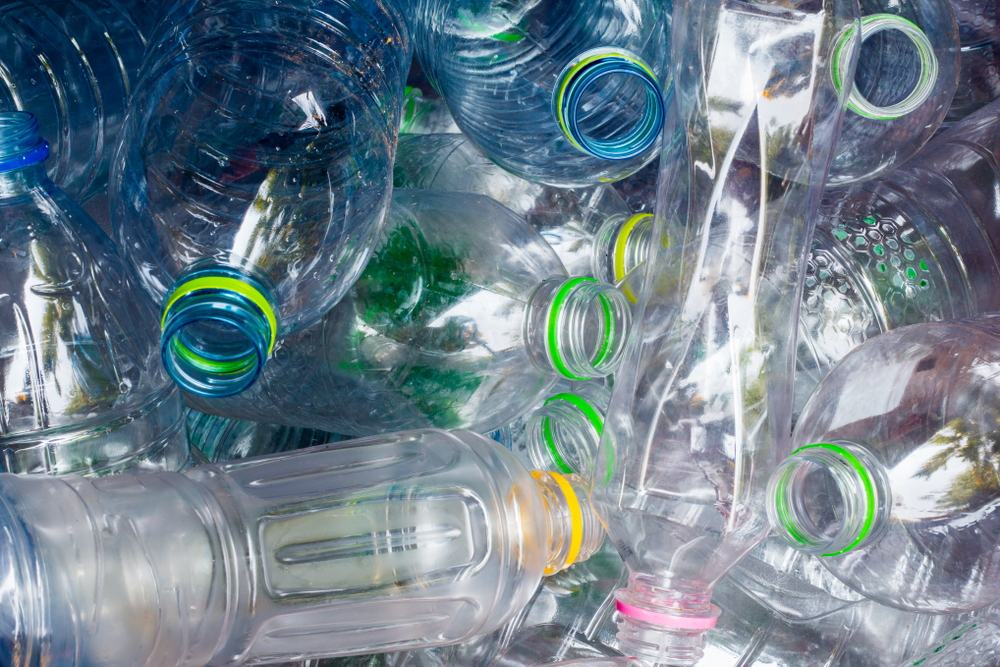
Last week, five recycling providers were appointed to deliver the infrastructure needed to support DRS across 10 regions of the UK. Suez, Cirqlr, Re.Group, Bywaters and Re-Gen will between them be responsible for collecting the returned bottles and cans from return points and processing them so that the material can be recycled into new drinks containers.
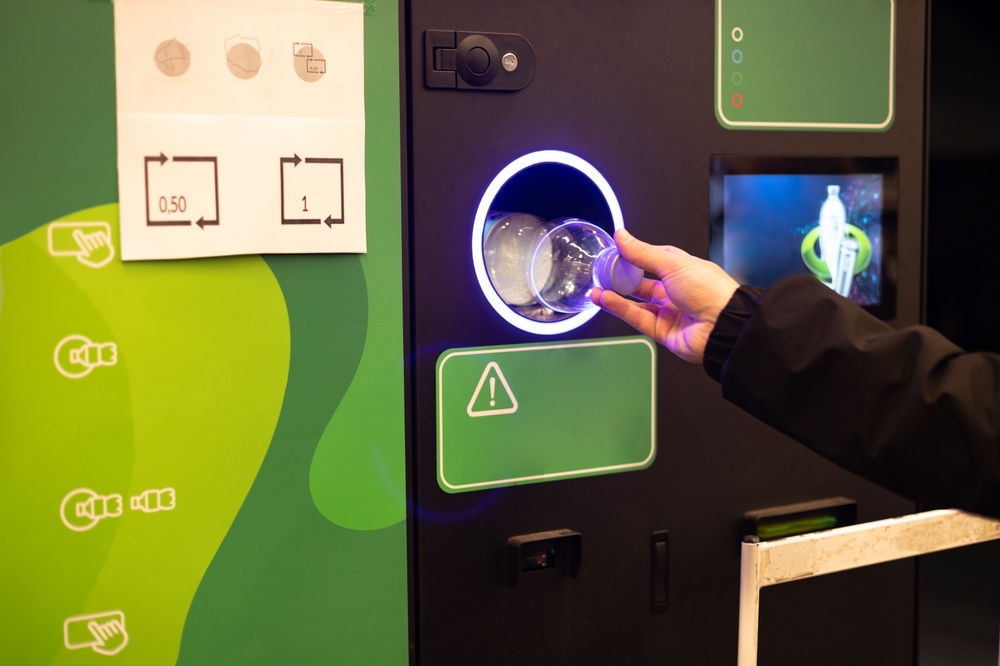
Footprint understands that organisations tendered against some information on points to collect from, along with expected volumes and numbers, however exact locations of all points are yet to be fixed. Where the capacity level for DRS collections starts and where it is expected to head is also unclear. Commenting on the provision of return points in 2024, the House of Lords secondary legislation committee called for “a comprehensive network” of return points. Most will be in supermarkets to start with, with hospitality offered some flexibility (as we discuss below).
Eleni Iacovidou, a senior lecturer in environmental management at Brunel University of London who has been following DRS developments closely, told Footprint that many other countries have boasted about the success of their collection rates but these numbers should always be taken in the context of the capacity of the schemes. To maximise the scope and success of this scheme, “we must be thinking about collection points in high rises and communal buildings too”, she says. “People also need to know how they can get their money back.”
National, well-resourced and inspiring marketing campaigns will be essential. Poll after poll has shown the public have bought into the concept of DRS but many will need a nudge or two to engage fully with the scheme. When push comes to shove, so too will businesses.
Devolved and diverse
Exchange for Change (EfC), the industry-led organisation that will act as administrator for each of the UK schemes, will begin communications with hospitality businesses next year.
In England and Northern Ireland the businesses impacted by DRS are “well underway” with their preparations, says Quick at UKH.
In Scotland, a number of elements of the scheme have been aligned with the rest of the UK. For example, any drinks sold for consumption off the premises must have a deposit charged to the consumer, who will then have to take the container to a return point to receive a deposit refund. For those that sell drinks for consumption both on the premises and for takeaway, the former can be sold without the 20p deposit but the latter must have the fee applied.
However, Scotland has also deviated in certain areas. For example, containers from drinks that have been consumed on site must be collected by the venue and returned to EfC. This presents practical concerns across food safety, space and cash flow.
Meanwhile, in England and Northern Ireland there is a choice: those who decide to charge the deposit to consumers drinking on site do not have to collect any of the containers; those that don’t must communicate their position as an ‘opt-out’ venue and ask people to leave their empty containers at the venue for collection (or risk losing the 20p deposit that has already been applied to the cost of purchasing the container from their supplier). Some will want to keep things simple and just charge the 20p automatically to consumers; others will see becoming a return point operator as a natural extension to their environmental responsibilities.
For those who do choose to host a return point, EfC will be providing a collection free of charge, with containers taken for counting and verification before the deposit is reimbursed to businesses. EfC continues to discuss with Scottish ministers whether the same flexibility afforded to those in England and Northern Ireland can be applied: that is, businesses choose whether or not to apply a deposit at point of sale for drinks sold for immediate consumption in the bar or restaurant.
Right now, stores and outlets of all sizes are weighing up the right solutions and balancing those with how to make best use of valuable space, estimating what sort of volume their returns will be, deciding between manual and automated take-back and looking at how they integrate these plans with their current operations.
Passing the buck (or bottle)
There is certainly much to do with only 12 months to go until the go-live date. Businesses will need to train staff, manage empty vessels and store them for collection, return deposits to customers, integrate new electronic data (EDI) such as new barcodes and systems, and reclaim their deposits from EfC. This is a sector that is already accustomed to distinguishing between eat-in and takeaway transactions, but the bigger challenge, according to Chambers at Croxsons, is “what this means in practice day after day across potentially thousands of transactions”.
The bottom line for all in-scope businesses is this: they will be charged 20p for every in-scope drinks container they purchase. Internal conversations and discussions with suppliers around cash flows for deposits have been “happening for some time”, says UKH’s Quick, “and we are pleased that our conversations with the UK government resulted in the decision to not designate hospitality businesses as mandatory return points [in Northern Ireland and England]”.
UKH, which with WSTA has just produced the latest iteration of its DRS guidance for the sector, continues to argue for a “pragmatic approach” in Scotland, allowing hospitality businesses the flexibility to not take back any containers, irrespective of where the beverage is consumed. Pragmatism, however, has been hard to find in this particular packaging policy.
With a year to go until the launch of the UK’s deposit return schemes, we need to “be honest” about what DRS is and what it is not, says Tim Etherington-Judge, founder of Alkatera, a boutique sustainability consultancy for the drinks sector. “It is a recycling scheme,” he says on a video call, before reaching behind him for two bottles he recently “dug up” in his back garden. One is a glass soft drinks bottle embossed with the words: ‘This bottle is the property of Corona’. The other is a glass Unigate milk bottle. Both are representative of times past when a circular system for bottles was embedded within everyday life for generations of Brits, operated at extraordinary scale and required no legislation. We had something “considerably more ambitious than this DRS […] that we quietly allowed to disappear”, says Etherington-Judge.
A UK DRS – or DRSs – is here to stay. So too is the debate that swirls around this controversial approach to the circular economy.
Further reading
A landmark announcement on the journey to launching the first ever UK deposit return scheme (DRS) for drinks containers

Nicky Amos of Business Benchmark on Farm Animal Welfare tells Nick Hughes how foodservice businesses are progressing on animal welfare and why the focus must shift from targets to delivery



Leave a Reply