Burn baby Burn
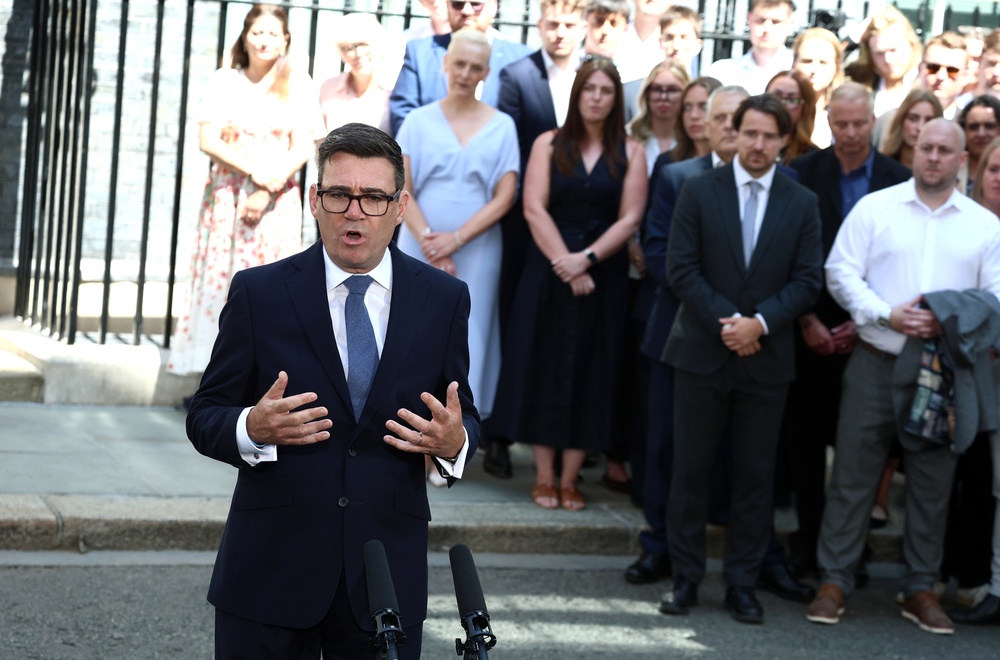
The UK has its fifth prime minister this decade in the shape of Andy Burnham. The former Mayor of Manchester hit the ground running this week with a blitz of policy announcements including a VAT cut on electricity bills, a £2 limit for bus fares and, most significantly for the hospitality sector, a 20% cut in business rates for pubs, clubs and live music venues, albeit not for restaurants, cafés and hotels (see Last Orders).
Burnham has also set about building his new cabinet with former defence secretary, John Healey, installed as chancellor, Jonathan Reynolds returning as business secretary and outgoing foreign secretary Yvette Cooper moving to the Department of Health and Social Care. Former Labour leader Ed Miliband has replaced Cooper in the Foreign Office and has in turn been succeeded at the Department for Energy Security & Net Zero by Miatta Fahnbulleh.
Elsewhere, the Defra merry-go-round jolted back into action with Angela Eagle appointed secretary of state just weeks after leaving her post as minister for food security and rural affairs. Eagle’s then replacement, Stephen Morgan, has been reappointed to his role.
Eagle becomes the eighth MP to take the reins at Defra since the turn of the decade but will at least offer a degree of continuity especially within the food sphere. Prior to her departure, Eagle was talking up her intention to develop an action plan for the organic sector, the prospects for which have now surely improved. Her presence in March, meanwhile, at a Westminster reception in support of a Good Food Bill for England has raised hopes that Eagle is favourably disposed towards having food system targets written into legislation. She has also been one of the strongest supporters of the shift to a new nutrient profiling model (NPM) proposed under Wes Streeting’s 10-year plan for the NHS, The Grocer reported.
Other notable ministerial changes include the appointment of Paul Waugh as a minister in the Department for Education. Waugh has previously championed the expansion of free school meals and called for a new auto-enrolment scheme. However, another champion of school food and children’s health, Sharon Hodgson, has lost her job as public health minister.
Business groups and NGOs have been quick to offer the new prime minister advice on where he should focus his attention regarding food policy. The Food Foundation called for Burnham to “form a credible plan on tackling the cost of living and ensuring everyone across the UK can afford to put food on the table” after the latest results from its food insecurity tracker showed 12.2% of households are currently experiencing food insecurity.
Food and Drink Federation (FDF) chief executive Karen Betts said food and drink manufacturers “stand ready to work with the new prime minister and his team to ensure that together we are building the resilient, cutting-edge food system our country needs”. Last month, the FDF called on the government to abandon its plan to adopt a new NPM, claiming the proposal would have a multi-million-pound economic impact.
In a letter to Burnham, the National Farmers Union (NFU) acknowledged the emphasis he recently gave to protecting the UK’s sovereign manufacturing and production capabilities in critical sectors, including food and farming. “As he takes office, Prime Minister Burnham has an opportunity to turn Labour’s commitment in its manifesto that ‘food security is national security’ into meaningful action,” said NFU president Tom Bradshaw. “With the right policy framework, farmers and growers can drive growth in every constituency, strengthen the UK’s resilience and help ease pressure on households.”
Meanwhile, in a blog considering what the new PM should do about food, Sustain CEO Kath Dalmeny argued that Burnham doesn’t need to start from scratch but pick up strategies that have either been developed, like the new Farming Roadmap 2050, or are under development in the case of the Food Strategy for England, “finish them properly, and put the Food Strategy on a statutory footing through a Good Food Bill”. This, she said, would give them the same permanence as the other crises Burnham has promised to fix (including housing and social care). “If the new prime minister wants a reset that reaches everybody in Britain, food cannot be the afterthought it has so persistently been in British politics,” Dalmeny concluded pointedly.
Small Bites
Wales gets its own food strategy
The Welsh Government has announced plans to create a new National Food Strategy for Wales which will cover the entire food system from farm to fork. The cabinet minister for rural resilience and sustainability, Llyr Gruffydd, made the announcement at this week’s Royal Welsh Agricultural Show. He promised a strategy that transforms the way Wales thinks about food by taking a whole-system approach that will span production, processing and retail, and consider how the food produced in Wales factors into health, education, public procurement and the circular economy. Simon Wright, who has over 30 years’ experience working in the hospitality sector in Wales, has been appointed to chair the expert working group that will advise the government on the strategy’s development. Wales’ food and drink supply chain is worth over £28bn and employs one in six workers across the country. As well as supporting Welsh producers, the strategy will also seek to promote food literacy and healthy eating. “This strategy will bring together the whole food system; from our farmers and fishers to our retailers, schools and communities, so that we can make better, more joined-up decisions for the benefit of everyone in Wales,” said Gruffyd.
Food giants sue to block health policies
An investigation has uncovered evidence of major food companies deploying tobacco-style lawsuits to block public health policies. Led by public interest newsroom Lighthouse Reports in collaboration with global media organisations including The Guardian, investigators identified 239 lawsuits filed between 2010 and 2025 across Mexico, Colombia, Brazil, the US, the UK and India against public health policies targeting food and beverages such as front of pack labelling, regulating advertising junk food to children, soft drink taxes, and taxes on ultra processed foods. Of the cases brought by private companies where the plaintiff was identifiable, more than 1 in 3 came from just nine parent groups, including Coca-Cola, PepsiCo, and Mondelez. Although the food companies lost more than 80% of cases, public health experts say many of the lawsuits delayed the implementation of some public health measures for years – a tactic historically deployed by tobacco companies. “Food companies are well trained. They follow the tobacco industry playbook to the letter. When all else fails, sue,” Marion Nestle, professor of nutrition, food studies and public health at New York University, told The Guardian. A Coca-Cola spokesperson told the paper: “We believe public health challenges are best addressed through collaboration among governments, public health authorities, the private sector and civil society. We engage constructively on topics affecting our business and respect the role each stakeholder plays in advancing public health goals.”
Money-saving food behaviours pose risk to safety
Cash-strapped households are taking steps to make food go further that may increase food safety risks, according to new data. Results from the Food Standards Agency’s (FSA) latest consumer insights tracker found that 64% of respondents surveyed in March said they eat food past its use by date, 60% eat leftovers that have been kept in the fridge for more than two days, while 39% reheat leftovers more than once to avoid throwing them away. It also found 52% of people are cutting down on the amount of food they buy and 33% turn off an oven or hob earlier to finish cooking in residual heat. The risky behaviours reflect the pressure being placed on household incomes from food and energy price inflation. In March, 91% of people said they were concerned about food prices, with levels ranging from 86% to 92% since tracking began in July 2023. “This latest data shows that food prices remain a top concern this year for most people we surveyed,” said Katie Pettifer, CEO at the FSA. “Many people said that to save money they’d done risky things, like eating food past its use by date. So, this summer we’re once again running a campaign to help with advice on how to keep yourself and your family safe when cooking and preparing food at home.”
Chef’s Special
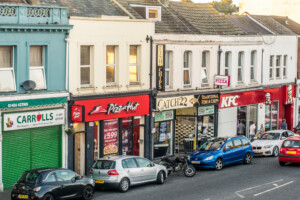
The British public’s passion for a takeaway is legendary but new analysis suggests that, on one measure at least, takeaways rank bottom of the class. 5.3% of the 56,749 takeaways registered across England, Wales and Northern Ireland are rated 0-2 for food hygiene, about double the industry-wide average of 2.6%. That’s according to Paddl, a compliance platform for hospitality businesses, which analysed the Food Standards Agency’s full food hygiene ratings dataset. Takeaways and sandwich shops came out worst of any business type with only 56.1% holding a top 5-star rating, against 68.8% nationally. The average rating for these premises is 4.33, against 4.65 nationally. Schools, colleges and universities emerged as the best performers, with 87.9% achieving the top 5-star rating. Display of food hygiene ratings in England remains voluntary despite long-standing campaigns to make it mandatory as is already the case in Wales and Northern Ireland (Scotland runs its own separate system).
Last Orders
The pub sector received an early filip from the new Andy Burnham-led government with the news that pubs, clubs and live music venues in England will receive a 20% cut to their business rates bills from April. The government said the measure, which is on top of the 15% relief off 2026/27 bills announced in January, would save a typical pub an estimated £1,100 next year. Burnham said his government “will back the businesses that people want to see in their communities”. There was however no relief for restaurants, cafés and hotels which are not covered by the policy, although the government has pledged to announce reforms to the wider business rates system at this year’s budget. The move was described as a “welcome first step” by Allen Simpson, chief executive of UKHospitality, who added that “the rest of the sector now needs to see the same ambition”.
Main photo: Fred Duval / Shutterstock.com