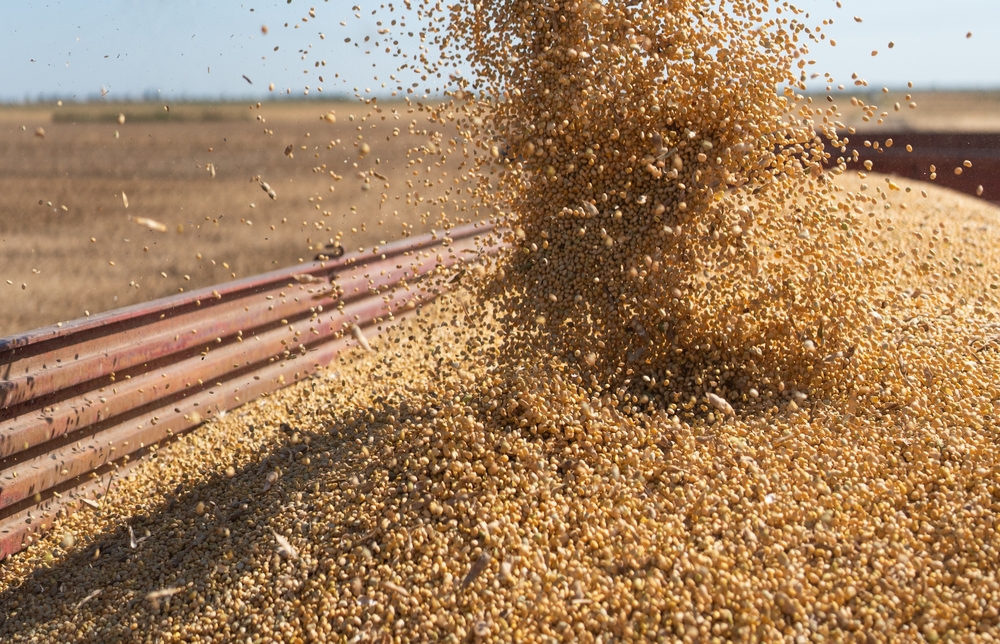
The humble soybean plays a major role in powering the global food system as a key source of animal feed. But with industry targets for sourcing verified deforestation- and conversion-free soy having been missed, and with the landmark Amazon Soy Moratorium on the brink of collapse, is sustainable soy still within reach for UK food businesses? In this week’s episode, Nick speaks with Jonathan Gorman from Efeca which heads up the UK Soy Manifesto to delve into the complexities of soy supply chains, highlight the current risk to businesses sourcing from the key Amazon region, and explore alternative feed sources and their potential to replace soy at scale.
Subscribe to the podcast



Further reading
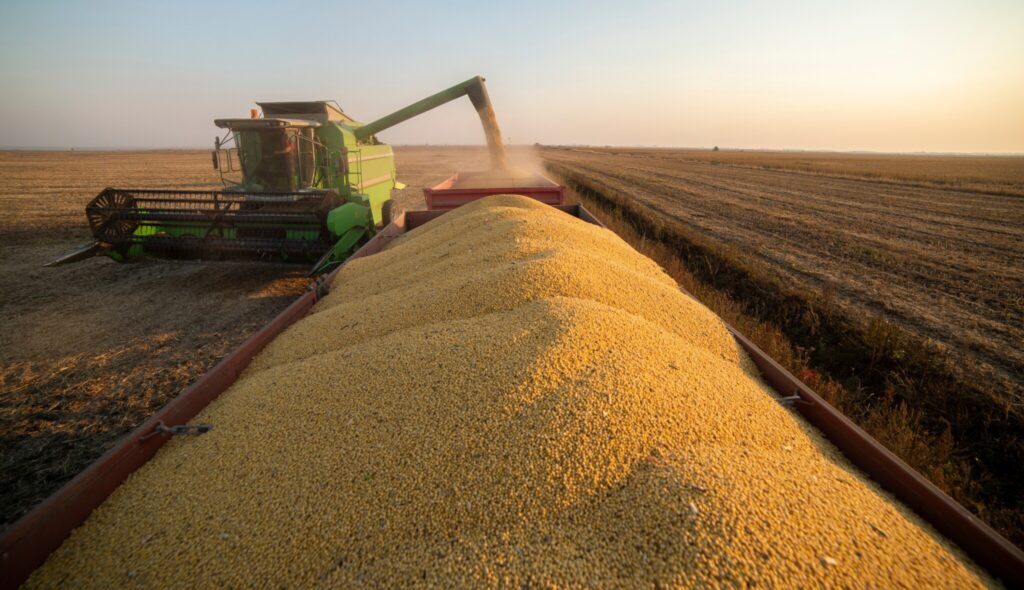
Food giants urged to boycott soy pledge breakers
Leading food businesses like McDonald’s and Burger King should stop working with suppliers that have abandoned their commitment to the Amazon Soy Moratorium (ASM), campaigners have urged
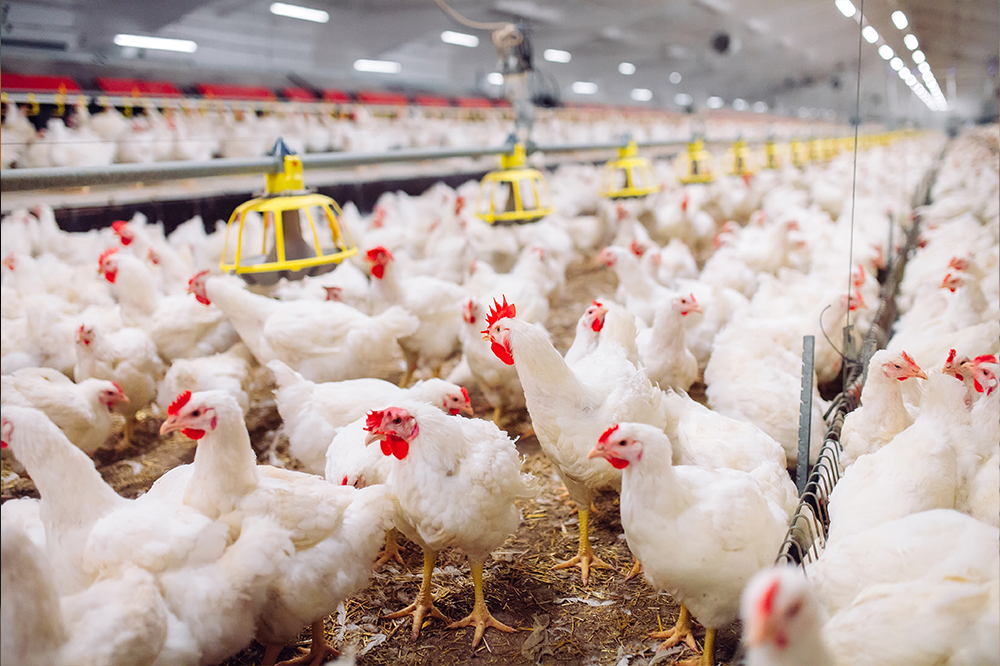
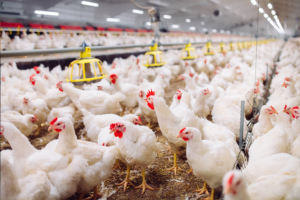
One of Europe’s biggest chicken producers brings a fresh dimension to the debate, unveiling new measures that will have the effect of partially decoupling higher welfare outcomes from higher emissions
Transcript
Nick Hughes: It’s the ubiquitous commodity that hides in plain sight within meat and dairy supply chains. But can soy ever be sourced sustainably? Hello, and welcome to the Small Print, a podcast by Footprint Media Group. I’m Nick Hughes, Footprint’s Editorial director. Each week we delve beneath the headlines of an issue impacting the hospitality and food service sector through our unique lens of environmental and social affairs. The humble soybean plays a disproportionate role in powering the global food system as a key source of animal feed. But with industry targets for sourcing, verified deforestation and conversion, free soy having been missed, and with the landmark Amazon Soy Moratorium on on the brink of collapse, is sustainable soy still within reach for UK food businesses? In this week’s episode, I speak with Jonathan Gorman from efica, which heads up the UK Soy Manifesto, to delve into the complexities of soy supply chains, highlight the current risk to businesses sourcing from the key Amazon region, and explore alternative feed sources and their potential to replace soy at scale. Jonathan, good to have you join us on the Small print. So you’re here to talk about soy and in particular, the current risk to the Amazon soy moratorium. But before we do so, it would be useful to set the scene, I think, by talking a little bit about soy’s status as a key commodity for food businesses. Why has this particular bean become such a mainstay of the modern food system?
Jonathan Gorman: It’s a very good question. Thank you, Nick. Thanks for the opportunity for coming on and talking about this. I think soy is a fantastic sort of source nutrition for kind of our key livestock animals, poultry, pork, et cetera, et cetera. It’s a great source of protein. I don’t think there’s any kind of really easy substitute for it right now. We can get the right quantities, the right volumes we need at the right cost, and it means that we can, you know, provide customers with poultry, pork, dairy products, eggs, you know, at an affordable cost. So it’s become. It has become the kind of the source of protein that really is optimal for animal diets and for, you know, supply chains. So, yeah, it’s become that, and I
Nick Hughes: know myself from having written about soy, that there are challenges around tracing it from source to shelf.
Jonathan Gorman: What.
Nick Hughes: What would a typical supply chain look like for soy being used by a UK food business? And would that depend on whether it’s being used directly as an ingredient in tofu, for example, or whether it’s used, as you said, as a feed source in animal protein?
Jonathan Gorman: Yeah, I mean, I think the kind of the bulk of soy coming to Europe and the UK is from north or South America. That’s where the kind of major producing countries are. It’s produced on very large farms, it’s brought to those ports, it’s often mixed in silos. We often buy certainly for animal feed, which is where the bulk of soy is used. That’s crushed in the countries of origin and it’s exported to us as kind of meal. So it’s been through some quite, you know, complicated logistics by the time it leaves Latin America, which is part of the issues around traceability. Soy is often bought as soy of any origin. That means we’re just interested in protein content, cost, you know, safety, et cetera, et cetera. But it can come from any one of those countries. In order to provide the right mix at the right value and the right, and the right cost for the UK market, we’ll buy meal. Sometimes we bring in beans themselves, we use the oil, we use the hulls. All of those can go into kind of animal feed. And that’s probably 70 plus percent of the soy that is used and consumed in the UK will, will come in as, you know, as soybean meal or hulls, et cetera. It arrives at the port in the UK and then it’s taken through and the feed industry then take it, mix it up with other ingredients, produce something called compound feed and that’s fed to, you know, to, to, to animals. And then, you know, much further downstream, the retailer or the food service company is not likely to see any of that soy. They’ll see the, the produce of it, they’ll see the pork chop, they’ll see the eggs and others. So it’s, it’s quite invisible in that sense to many supply chains. So when somebody, you know in a restaurant or in a retailer further downstream says, okay, am I, am I exposed to soy? Is soy in my supply chain? It’s not immediately obvious. So that, that’s the kind of, I guess, the animal feed supply chain, but you’re right. There is soy used directly as a, as a food ingredient. So you know, edamame beans and your tofu and soy lethargy and that kind of stuff that has, for various historical reasons made more commonly required to be non genetically modified. So non GM for reasons going back kind of 20 years. So that has a pretty good traceability system because it’s often already certified and verified to be non genetically modified. So slightly different supply chain coming from the same places. Historically it’s had a greater level of traceability because customers have wanted to know that if we are saying it’s not genetically modified, it is indeed that. So, yeah, that’s kind of where the bulk of soy coming into the UK comes from. But we should also remember that we import dairy products, egg products, meat products from around the world. So that might be poultry produced in Thailand imported into the UK that’s fed on soy in Thailand. Again, that soy is likely to come from the same countries, from Latin America, but we’ll also import a proportion of our soy footprint through imported livestock products as well. You can imagine there’s an extra level of complexity when you are potentially going to a supplier of poultry from Thailand to say, where do you get your soy from? There’s, there’s. In the supply chains, perhaps just to finish off. It’s a kind of hourglass, as I kind of see it. So there’s a lot of people using it, there’s a lot of farmers producing it. It comes really across the world and around the world through a small number of global shippers of soy. Probably just kind of half a dozen will supply most of the soy for animal feed around the world. So although it’s complex downstream and it’s complex upstream, at the point it’s produced, the global trade of it comes through a relatively small amount of companies. So that means we’ve got somewhere to focus and some people to talk to as well in this, in this discussion on soy.
Nick Hughes: Yes, absolutely. And the fact that, as you say, supply is funneled through these key traders is important when we come on to talk about the. The risks of the Amazon soy moratorium. Of course. So, okay, so. So when we think about soy through a sustainability lens, and we tend to think about the risk of deforestation, land conversion to create new land for producing soy, that leads us neatly onto the UK Soy Manifesto and what that is trying to achieve from a sustainability perspective. So do you want to give us the sort of potted summary of what is the UK Soy Manifesto? How did it come about and what does it require of signatories?
Jonathan Gorman: Yeah, sure. So it was formed in around 2021. It came out of a broader platform on soy which had been established a few years before that, when very large companies looked at their soy supply chains and their solutions and thought, I can’t do this on my own. We need to sit in a group of companies because we are all users of soy, some quite large users of soy, but very small in global terms. So that gap, that sort of platform, became the UK Soy Manifesto. Fifty companies representing about 60% of UK soy consumption got together and said we’d like to know more about the traceability of our soy, physically, the status of that soy, how much could be linked to deforestation arriving in the ports in uk, because that then tells me something about the soy that’s going into my products. So it was kind of a subset of the leading companies who thought we need to move a bit further and a bit faster. We’d like to set ourselves a deadline, we’d like to set a date. And it was end of last year, end of 2025, by which we can be confident that all the soy coming into our supply chains, into the UK was deforestation and conversion free. And that’s a, that kind of terminology. Just to, just to kind of quickly explain deforestation, think forests, think the Amazon conversion, think a non forest kind of landscape, maybe savannah grasslands. And in Brazil that might be the cerrado, which is equally biodiverse, equally important in terms of carbon and carbon storage, but isn’t exactly a forest. So we call that land conversion. Deforestation is what you might think of deforestation in the Amazon. So that group wanted to come together to move a little bit further and faster and to create that kind of clear market signal. Those companies wanted to ensure and speak to the major shippers, the global traders, and say, we would like greater transparency on where our soy comes from and we want it to be, to be verified as deforestation conversion free. There were some clear commitments or signatories. Put your public, your policy in the public domain, report annually, make sure that you’re cascading your requirements in commercial contracts down your supply chains. So how do you convert something that’s a sort of public commitment to something that actually impacts on commercial discussions all the way kind of down to the shippers? And I think, why did we need that? I guess up until that point, the primary way that a company could act on soy if they knew they had soy in their supply chain, and still is today, was by buying certified soy, which in practice means you pay a soy farmer in Latin America for producing more soy, more sustainably. And you do it through something like the roundtable, unresponsible soy, which is a certification standard. So if I buy a hundred thousand tons of soy, if I know it’s in my supply chain, I can buy a hundred thousand tons of certified soy, I know it’s produced somewhere in the world to a certain standard. The difficulty with that is that that doesn’t necessarily change the physical flows of soy. Coming into the UK, I could buy 100 tons of certified soy. I know it’s been produced somewhere, but that doesn’t mean it’s coming to me into the uk. And we wanted to get the visibility of what’s coming in to the UK. Could we be confident by the end of 2025 for all soy coming in? So it was partly, partly those 50 companies acting in their own supply chains, but also partly about changing the market in the UK so that really you could only buy verified deforestation conversion free soy. And just one point, Nick, just to be clear, is that we didn’t think, and we still don’t think the majority of soy coming into the UK is linked or driving deforestation conversion. We’ve always been told, and we always believe that it’s actually quite a small percentage, but we need to see evidence of that. And that’s really what we wanted to do. We wanted to understand and make sure that that was verified coming into the uk because that’s something we’ve been told. But when you’re facing an individual company’s commitment to deforestation free, they wanted to be a little bit, a little bit more confident. And we could see things like the EU deforestation regulation coming up, the UK regulation coming up, so could perceive that actually this would be important in potentially demonstrating commitments to future legal requirements to manage deforestation risk within your own supply chain. So there’s a little bit of that coming along the line as well. And you know that many companies have science based targets on carbon and you know, if you’re a livestock producer, the soy footprint is a big, big part of your scope 3 emissions. So tackling deforestation also can have a big benefit in terms of reducing your carbon footprint. So lots of kind of reasons really that it came about.
Nick Hughes: Yes. Okay, and just to be clear on that headline target for which the deadline was the end of last year, was that met?
Jonathan Gorman: No, it was not met. And we can go into kind of why that’s the case and what our plans are now, because the signatories said we wanted to continue with this. We don’t want to set another deadline, but we do want to continue with the plans that we’ve got to achieve that. So no, it wasn’t.
Nick Hughes: Okay, so yes, you’re right. We’ll come back to some of those questions later. But that links onto this question of the Amazon soy moratorium, which has been a key, I guess, foundation for trying to ensure that soy is verified deforestation and conversion free, but is currently under threat. What is the moratorium and why is it considered such an important agreement?
Jonathan Gorman: It’s a, I Mean, it was a. It’s a sectoral agreement, so dates back to 2006 in which the commodity traders. So names your, the listeners might be familiar with people like Cargill and ADM and Bunge agreed to avoid the purchase of soybeans from Amazon land areas deforested after July 2008. It came about partly as a result of the Greenpeace campaign that really called attention to the role of soybean cultivation in deforestation in the Amazon. But it was landmark. It was a landmark agreement has remained that case partly because it involved multiple stakeholders, government, civil society, industry, coming together with a consensus to do something recognizing the kind of global significance of the Amazon biome as it, as it is today. That’s always difficult to achieve, to get people with potentially different, different interest. And I think the objective was to eliminate deforestation linked to soy. And there’s a general consensus that it’s been highly successful. It’s dramatically reduced deforestation in the Amazon as a result of soy cultivation. But it’s also enabled soy to expand within the Amazon on land that had been previously deforested. So the case that is often made is that it did reduce and it has reduced deforestation, but it hasn’t prevented soy from being cultivated in the Amazon. So really, it’s been really quite iconic in terms of the environmental movement that that was pulled off and achieved. And the Amazon is, you know, the size of Western Europe. It’s a big place. So, you know, to achieve that and to get all those interested parties together. But yeah, you’re right, it is under threat.
Nick Hughes: And why is it under threat?
Jonathan Gorman: I guess it’s been under threat for quite a long time, but I guess in the last kind of year we’ve seen some particular actions being taken. It’s quite complex, but at the moment there’s an investigation by the Brazilian competition authorities and they are concerned that the shippers, the traders that I talked about, are acting as a cartel and imposing the requirements of the Amazon soy moratorium. So acting as a group. So that is an ongoing and live investigation. From 1st of January this year, one of the major soy producing states, Ato Grosso, introduced a law which removed the tax incentives from shippers that were asking for soy in compliance with the Amazon soy moratorium. So that has meant a financial penalty for shippers. So those two things happened. And although there’s lots of ongoing challenges within the Supreme Court, et cetera, et cetera, it’s all going on. I think it’s fair to say that soy farmers and their sort of representative Organizations have always been unhappy with the Amazon Soy Moratorium because under the Brazilian legislation, which is the Forest Code, farmers are legally entitled to convert a proportion of their land. But the Amazon Soy Moratorium prevents this, and they don’t feel like they’ve been properly compensated for that kind of lost opportunity. So there’s always been that underlying sentiment, and I guess the political kind of context has moved about, and I think it’s very strongly with the agricultural sector at the moment, which is perhaps why we’ve seen some of these challenges arise. But they’ve been successful. And actually the shippers and Abiovi, who are their representative organization, withdrew from the Amazon Soy Moratorium. They are the Amazon Soy Moratorium. So in effect, it is still there, it still exists, but it doesn’t operate anymore. And that’s the challenge. An underlying sentiment, but some specific legal actions in the last year. So if you’re a shipper in Brazil, there are some legal challenges that you have to face right now. And that’s the reality of it.
Nick Hughes: Okay, so the UK Soy Manifesto is one of a number of European national soy initiatives that are calling for action regarding the Amazon Soy Moratorium and looking to reverse the decision of these traders members to withdraw from it. And we should point out, shouldn’t we, at this point, that UK Soy Manifesto, some of the membership includes the likes of McDonald’s, KFC, Nando’s, big meat suppliers like 2 Sisters and Cranswick. So some really, from a UK perspective, some of the biggest businesses buying and supplying meat in the uk. So. So what is it that those organizations and the national soy initiatives are calling for, specifically?
Jonathan Gorman: I think two. Two things, really. One is for the shippers to honor the individual criteria of the Amazon Soy Moratorium. So the cutoff date, for example, because they can still potentially say, this is what we require. They have their own policies, they have their own deforestation commitments. And the second thing is recognizing that, and we have to face into the kind of challenge that the ASM is under at the moment, is to join and be part of dialogue to consider what follows the Amazon Soy Moratorium. If it’s going to emerge into a different shape, then we’d like then to be actively part of that dialogue and that conversation. So one is, can you maintain your commitment to the criteria of the Amazon Soy Moratorium not to source soy on land after DeForest, after 2008, and to be part of the discussions on what do we do, what do we do now? And that was a call from, as you said, from European National Soil Initiative, which is Norway, Denmark, Sweden, Netherlands, Switzerland, France, Germany. So a broad kind of swathe of companies, some of which have company members that are also in the uk, you know, that are kind of pan European. So that, that’s what we’ve been asking for. We think it’s possible to source for an individual shipper to continue to source to those right criteria on an individual basis. Although we recognize that the legal challenges on talking about the Amazon soy moratorium, while all these legal challenges are going on in Brazil. But I think it’s our role as groups of companies and what we can do is to send that clear signal to the shippers. They’re our bridge to the Amazon. They’re the ones that bring the soy into Europe to say we still want the ASM to continue. Obviously they’re involved directly in those discussions. So, you know, we can ask, and we can ask for that dialogue. We recognize there’s a lot of uncertain uncertainty still in this kind of space, but we need to keep discussing, we need to engage, we need dialogue to see what do we do, what do we do now. So that, that’s, yeah, that’s kind of what we’ve been asking for. And it’s a live, It’s a live process, Nick. So there’s stuff going on on a daily basis and they understand a lot of that and their representative organizations understand a lot of that. So, yeah, so that’s kind of what we’ve been asking for.
Nick Hughes: Yes. And I suppose given the nature of the supply chain, as you described it, lots of farmers, lots of users, very few traders in the middle. It’s not simply a case of an end user saying, we’re going to go and source our soy from elsewhere. This has to be a dialogue.
Jonathan Gorman: That’s the tricky bit with soy. It’s not as if you can just switch suppliers. You’re talking broadly to the same set. You’re absolutely right. And you know, and the Amazon soy moratorium came about because there was agreement between a group of, of, you know, of different stakeholders and that we still need to hold those, those group of stakeholders together. We kind of need to recognize what are the challenges, what are the underlying concerns. Some of it’s, you know, technical, some of it’s political. You know, we have to be kind of conscious that in the current, you know, geopolitical upheaval that we’re in, that’s, that’s where the supply chains have to act. And we’re not immune from politics in Latin America over here. And we’ve seen a great shift in that in the last few years. But we know all the right people and we need to keep engaging.
Nick Hughes: This year sees the launch of the first ever Footprint Festival, a two day experiential and immersive sustainability festival set on a working farm in the heart of the Hampshire county countryside. Created for senior leaders across food, service and hospitality, this one of a kind annual event takes place on September 17th and 18th. We’ll blend sensory experiences, transformative content, powerful networking and unforgettable food, drink and entertainment. Early bird tickets are now on sale. Visit footprintfestival.com for more details. Is it fair, Jonathan, to say that soy is a uniquely challenging commodity where sustainability is concerned? You know, we’ve covered the WWF Basket report that it puts out regularly assessing retailer progress towards their environmental targets. And soy is always such a sticking point with regards the percentage that is currently verified deforestation and conversion free against, for example, palm oil, where the percentages tend to be much, much higher. What is it about soy that makes ensuring it is deforestation and conversion free so challenging?
Jonathan Gorman: It’s a really good point because if you look at palm and the way that palm oil sustainability is developed, something like 95 plus percent of palm oil coming into the UK is certified to sort of equivalent standard, the roundtable, unsustainable palm oil traceable back to groups of mills and that’s developed, you know, over probably 20 years. And perhaps, maybe naively, we thought that soy might develop the same way, but I think something less than 5%, even, maybe even 3% of globally produced soy is actually certified. So we’ve not seen the increase of certification. And to be fair, the UK has been buying certified soy. In that sort of theory of change, the more certified soy, the more farmers will produce certified soy. And therefore your supply base of sustainable soy grows we’ve been purchasing for kind of many years. I think UK is actually one of the biggest purchases of certified soy, but it hasn’t changed physical flows, it’s acted slightly separately to the physical flows, the verification, you know, the soy flows into the, into the UK haven’t change much and the proportion of total soy that is certified has, has remained relatively small. So it’s been, it’s been a different beast. I think it’s partly due to the, the, the, the fact that palm oil often in a product is a very small percentage of that product. So if there isn’t a rise in the cost of palm oil, if sustainable palm oil costs a little more, it tends not to have such a significant impact on the final cost of the product. I think that’s part of the reason why that has developed. Whereas if you look at the cost of a chicken on the shelf, a much more significant proportion of the cost of that comes from the soy. So if you start tinkering around with soy, adding extra requirements on it, it is felt very quickly throughout the supply chain, potentially on the cost of that final product. I think the challenge for individual companies kind of remains. How do I ensure I’m not contributing towards deforestation and how do I use my leverage, my, you know, a thousand tons, a hundred thousand tons to change soy production? And that’s the challenge with all of these commodities. We’re all tiny parts of big global supply chains. How do I change things and influence things? And I think probably the only way we’re going to change this is acting collectively and at scale. And certainly when you speak to the global, you know, traded soy supply chains can only really change if things happen at scale. Otherwise you start getting into something that’s niche, something that’s bespoke to a particular market or a particular supply chain. And, you know, we talked about the silos, the crushers and everything else. Once you start separating, segregating within those supply chains, you have a problem. I think the eudr, and we’ll get onto this maybe in a minute, will be an enabler, potentially, because it changes things at such a big scale. 38 million tons of soy are consumed in Europe, 2 and a half, 3 million tonnes in the UK. So suddenly we’ve got potentially a much bigger change and within that change, you can start to potentially change soy production. It’s still only 10% of global soy, but it’s an important market, Europe. So I think scale is an issue and I think there are some sort of suggestions that if some of this legislation comes into force, we’ll see things change at scale. And that’s something which global shippers can and are preparing for. And that will increase traceability, that will increase the level of verification. So perhaps it’s a different way in which soy needs to move and change than it has been for palm. And I think that’s. That’s likely, but we also obviously need to see things change in producing countries as well. So supporting governments in Brazil and Argentina to enforce what is already some strong laws in place, supporting farmers to want to do this. Why, if I’m in Brazil and I’m a farmer, would I want to supply to Europe? If you’re making life harder for me, I can supply to other markets. So there’s a degree of kind of also how do you provide a stronger incentive? And we’ve seen that in palm. Palm. Palm oil producers have had incentives and have benefited from that. But yeah, so sorry, that’s quite a long answer. But it’s a great question and it’s definitely not been the same theory of change that we’ve had with palm oil, that’s for sure. And it’s not really a consumer facing issue either. You couldn’t look like you can at coffee and seafare trade, Rainforest alliance and all those kind of things. It is very much B2B. There aren’t many consumer facing organizations that talk about soy and have a label and want to tell customers. Because I think for most customers their first question might be, well, I didn’t know there was soy in there.
Nick Hughes: Absolutely.
Jonathan Gorman: Really? So it’s been something that’s largely been a B2B kind of discussion as well, which, which I think is, you know, has made it perhaps more difficult. Yes.
Nick Hughes: And I think if you, if you put yourself in the shoes of a restaurant brand or a contract caterer, you know, right at the consumer end of the supply chain, many steps removed from, from those, you know, tropical forests in South America, the question of what agency I, as a business, and, you know, maybe a reasonably small business in the grand scheme of things, has to affect change, you know, in another continent, you may, you may feel relatively powerless. And I guess that’s partly the role of alliances such as the UK Soy Manifesto to build that consensus and build that collaborative effort. Let’s touch on regulation a bit more, Jonathan, because as you said, we’ve got the EUDR coming into force that has been in the pipeline for a while and it’s been subject to a few delays and redrafts. But as it stands now, do you feel that legislation is pretty well aligned with the aims of the UK Soy Manifesto and will help shift the market in the right direction? And also, do you want to see the UK go ahead and deliver its own forest risk commodity legislation? Because as much as the UK might be a small cog in a huge machine, the right, the kind of signals it sends to the market are still important, right?
Jonathan Gorman: Yeah, yeah, no, absolutely. I think they are pretty well aligned. The UK SM Soy Manifesto is looking for that traceability back to farms. That’s what the EUDR is also looking for. I think the EUDR is more onerous. It asks for geolocation for every farm for soy shipments of soy coming into Europe. And that’s been one of the more contentious issues about that. But let’s say the UDR is asking for greater traceability for physical soy flowing into Europe. Yes, that’s kind of broadly aligned. The UK soy Manifesto goes a little bit further because we’re asking also to avoid conversion, whereas the EUDR is just deforestation. But in all honesty, once we get that level of traceability back to demonstrate deforestation, most of the shippers already have commitments to conversion free that could be provided. So I think, I think the EUDR could be helpful. It will change soy supply chains for Europe, give that greater traceability. It’s been challenging over the last two or three years, and one of the reasons why we haven’t achieved our manifesto goal by the end of next year is because we’ve had the EUDR delayed twice. And because it’s been such, and it will be such a massive change for Europe, it’s very difficult for the UK to move on its own. So that’s been a challenge. And you know, whether it will go ahead this year. You know, there’s still, there’s still time for, for, for there to be blockages and challenges on that. But I think it, if it goes ahead, then it will definitely help shift the dial. And question is, what will the cost, what will the impact be of that? We still don’t know that. But I think one thing that’s interesting is that we’ve seen changes in producing countries already as a result of the eudr. So in Argentina, there’s a platform called visec, which is effectively the Argentinian feed industry, organizing themselves to provide all the compliance you need in one system to demonstrate compliance to the eudr. So that’s happened without the EUDR coming into force, and I think that’s been really positive. Brazil is doing similar things with their own kind of platforms. So the delay has been challenging for us because it’s difficult for the UK to act without the rest of Europe acting. But hopefully in the next six months, we’ll see that happen. UK’s regs. That has also been one of the reasons why the manifesto has struggled, because we have not been clear. It’s been five years since the Environment act said that there will be forest risk commodity regulations, and we still don’t have those announcements. We’ve got the King’s Speech in the next few days, so let’s see. I think there are mixed opinions on regulations, but most would agree that it can and should provide a level playing field. It raises the bar for everybody, not just the 50 who are interested and leading on this and spending time and money in the manifesto, but everybody else. And there’s a lot of companies, you know, within retail, within food service, who, you know, look at this complexity and think, where do I start? Well, legislation provides that level playing field and it also means that you start to get collective solutions. And that’s what the UK has been trying to do. We’d much rather have a system where you could audit and check at the point of import, when you’ve got four suppliers of all the UK soy, than have every single person further downstream try to work back through their supply chains and figure out, where does my soy come from? So I think companies have struggled with the uncertainty of both of those regulations. Most companies have invested already in the eudr, so there’s a reasonable argument to be made that even if the UK regs did come in, it wouldn’t and shouldn’t add great additional cost because those preparations have already had to be made. The question is, can the UK government ensure that those regulations are, are developed in line with and aligned with EU requirements? And that will be. You know, that’s a political discussion, but it’s also a very practical discussion. And that’s what UK industry would like to see as much alignment as possible. If we’re asking for something slightly different to what the EUDR requires and you’ve got an extra bit of paperwork, a different IT system, then that will be an additional cost. But the investment has been made. Voluntary commitments like UK Soy Manifesto. We know broadly what we need to do and so nobody, I don’t think, fears these regulations. They see it as an opportunity for all of the competitors and everybody else to be doing exactly the same thing. And you’re right, to send a really clear signal across the world that UK supply chains also require evidence of deforestation and conversion. Free soil.
Nick Hughes: Yes. Before we end, I’d like to touch Jonathan on alternatives to soy, particularly with regards animal protein. Sorry, animal feed.
Jonathan Gorman: We.
Nick Hughes: Last week, I think it was Two Sisters Food Group announced a decision to scale up its sourcing of British grown protein. So peas, seeds, beans in poultry feed as a substitute for imported soy meal. Are you seeing more movement within the UK food industry towards alternative feed sources like plant protein, even insect protein? Potentially. And what are the barriers to scaling these as a replacement for soy?
Jonathan Gorman: Yeah, I mean, I think what Two Sisters have done is great and we have seen some substitution in the past. We saw it in dairy feed a few years ago where some of the retailers came out of soy for dairy feed. I honestly don’t think it’s something that can be scaled at a national level level significantly to reduce you know, to massively reduce our reliance on imported soy. I think for reasons of cost there are competing demands for the alternatives, for rapeseed, for, you know, for beans and, you know, the markets can go up and down, demand for, can change for those, which means one year they’re available at a reasonable cost, the next year they’re not. There’s also competing demands for, for limited land within, within uk. So I don’t, I don’t see that as something that is realistic in the foreseeable future to provide that level of, of substitution. I think what companies are interested in is, is certainty, security of their supply chains and if this provides that, then that’s helpful. But most are working on the basis that they need to understand where their soy comes from, be confident that, that soy is being produced in a way that is sustainable. Not just sustainable from a climate change point of view, but sustainable from. I know in 10 years time I will still be able to get soy from Brazil. And at the moment things like the Amazon is at a tipping point. We’re seeing droughts in the cerrado as a result of less rainfall, so that directly impacting on the security of supply of soy from the biggest soy producing country in the world. So I think whilst those challenges exist, I think the focus of companies is making sure that they absolutely are confident through these commitments and others that those supply chains of imported soy are secure, are resilient, where we can we substitute? And I think, you know, there are bigger, broader debates about, you know, the sustainability of growing meat consumption globally. They’re all kind of valid in this debate. What is the right diet, the most sustainable diet for global populations in 20, 30 years time? How much soy should we be eating directly? How much soy should we be feeding to animals? So we are definitely still focused on doing what we’re currently doing more sustainably, as sustainably as possible. But there are planetary boundaries to consider as well. So this becomes quite, quite meta, this kind of debate. And I think the manifesto has been saying we are reliant on a lot of imported soy. That’s not a bad thing. It provides incomes, it provides trade, you know, et cetera, et cetera. It’s the right protein for the animals that we’re producing. And substitution is valid where we can, but we really need to be confident in those supplies because we are going to be reliant on those for some, for some time to come.
Nick Hughes: So we’ve tried over the course of half an hour or so to demystify soy supply chains, to address some of the challenges around, you know, ensuring you’re sourcing, verified deforestation and conversion free soy touched on some of the political dynamics regarding the Amazon Soy moratorium. If I’m a business sat here listening to this podcast based in the UK at the consumer end of the supply chain, what’s your succinct message to me in terms of how I can keep moving forward on the sustainable soy agenda?
Jonathan Gorman: Well, I think it’s really important that companies keep demanding, keep asking, keep requesting in their supply chains. We’re working in the manifesto on tools that will enable you within these very complex supply chains to specify, to ask for and see sustainable soy audited. So we’re working with an organization called aic, who are the animal feed industry representative body on a standard which will come out this year which will enable you in the middle of that complex supply chain to be able to say I would like deforestation free soy and know that that has been audited at the point of importance. So keep, keep demanding, keep being involved in discussions but also in practical development of practical tools that enable you to be able to specify this and get assurance of what you’re buying. What’s coming into your supply chain is, is deforestation free? And the manifesto is helping to do that. I also think keep the, keep the pressure on policymakers because the governments have a role, UK Government, Commission and others. Industry can’t do this on its own. So I think also be involved in those policy discussions. Hopefully this year we’ll see something from the UK government get involved in those discussions, shape this regulation so it’s right for business and that ultimately will enable us to be able to be confident in 2, 5, 10 years time that the soy we’re continuing to buy we are confident of we can talk to our consumers about it’s low carbon and it supports farmers in Brazil and Argentina and elsewhere. That wasn’t very succinct, Nick, but there you go.
Nick Hughes: Well, I’ve certainly learned a lot more about soy today. I’m sure businesses listening have as well. Jonathan, thanks very much for joining us on the Small Print.
Jonathan Gorman: Thank you very much.
Nick Hughes: We’ll be back next week with another episode of the Small Print. If you like what you’ve heard, please take a moment to rate, share and subscribe.


Leave a Reply