
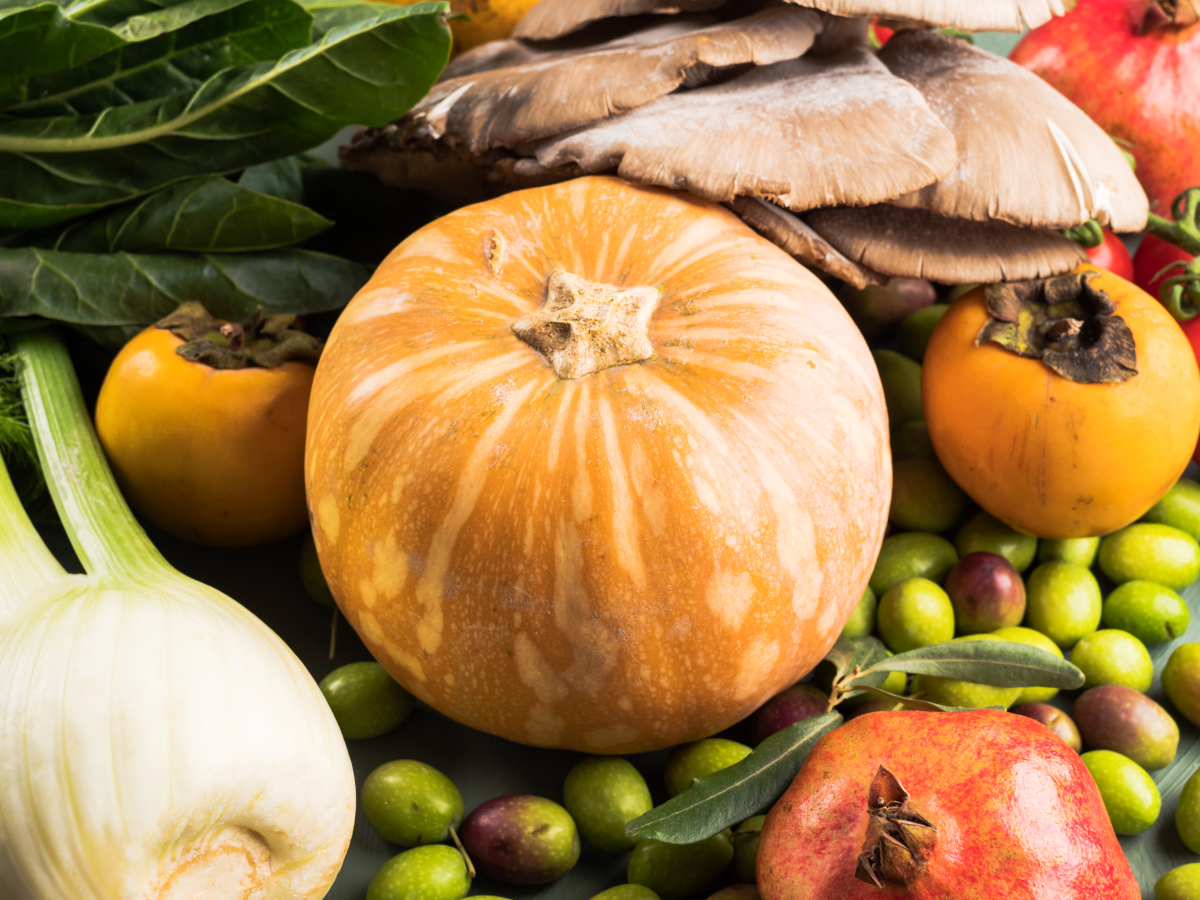
Chantelle Nicholson is a champion of veg-forward cooking through her work as a chef, author and advocate. In this first episode of The Small Print, Chantelle tells Nick Hughes what inspired her love of fresh produce, how plant-based cooking and eating can go mainstream, and why she advocates for seasonality, circularity and regenerative practices in the hospitality sector.
Subscribe to the podcast



Related articles

The food sector has reached a critical fork in its sustainability journey. Doing ‘less bad’ is no longer a credible strategy for the future

Has fibre’s moment finally arrived?
For years food businesses have made protein the focus of health innovation and marketing but there are signs of a shift in focus towards a key, but under-consumed nutrient
Transcript
Nick Hughes: Hello and welcome to the Small Print, a new podcast by Footprint Media Group. My name’s Nick Hughes, Footprint’s Editorial Director. And in each episode we’ll take you on a journey beneath the headlines of recent developments impacting the hospitality and food service sector through our unique lens of environmental and social affairs. So what can you expect from the Small Print? Well, perhaps the best, most succinct way to describe it is news analysis in podcast form. So one week, for example, we may be assessing the significance of a new government, food or farming report, then the next we may find ourselves exploring a game changing piece of packaging innovation, or an emerging dietary trend, or a striking new piece of academic research. Our aim is to be as flexible as possible in responding to the current news agenda and we’ll unpick these stories in the company of leading experts and commentators with the conversation packaged up in an accessible 30 minute episode perfect for consumption during your lunch break or morning dog walk. We’ll also from time to time feature a conversation with a leading industry light to hear what’s on their agenda, what’s giving them cause for hope, excitement, exasperation or perspiration. And in that spirit, I’m delighted to welcome our inaugural guest on the Small Print. Chantal Nicholson. Chantelle is a multi award winning chef, restaurateur, author and advocate. She is the founder of Apricity Restaurant in London’s Mayfair which holds a Michelin green star and is a passionate advocate for seasonality, circularity and regenerative practices. Chantelle, welcome to the Small Print. It’s great to have you as our inaugural guest. How are you and what’s been keeping you busy during these first few weeks of the new year?
Chantelle Nicholson: Thanks, Nick. I’m really delighted to be, to be here. The year has been off to a very, very busy start. I was cooking in Davos in January and then I was, yeah, I’m kind of back in the kitchen pretty much full time as my head chef’s gone on Matt leave and obviously we had Valentine’s Day on Saturday, so it’s, it’s been a busy one.
Nick Hughes: Yes, indeed we did. Yep. Davos sounds fascinating. What did you, what were you preparing for the great and the good in Davos?
Chantelle Nicholson: Yeah, Davos is an interesting one, but something I really, really enjoy. It’s a fourth year, I’ve done it actually and I do the private dining suite for cnbc. So many interesting, wonderful people around the table actually and I get to be in the room so hear the conversations, which is wonderful. And I also, they’re Very keen for me to. Well, the reason I’m there is obviously cooking within my ethos so as much kind of local seasonal produce. So I’ve come to know some of the farmers that are around the area over the years and it’s just an opportunity to kind of, yeah. Plant some seeds about perhaps a more conscious way of doing things over there.
Nick Hughes: Well, we’ll certainly come onto your ethos and your, your sourcing principles shortly but, but we’re very mindful that the sustainability conversation can often take place in a bit of a bubble outside the commercial context. And so we want to ensure that we have that clear economic lens present throughout footprints coverage. There’s obviously lots in the news about what a hard time the hospitality sector is having at the moment. How are you finding current market conditions? What impact is sort of a growing cost base through taxes and higher ingredient and labor and policy costs having. And how are you sort of managing those?
Chantelle Nicholson: I think sum it up, it’s in one word is brutal. I think it’s incredibly tough for our industry right now and it just seems to be getting tougher. There’s not really any let up and I think, you know, we had the perfect storm of COVID and Brexit and I think now it just feels like there hasn’t really been much of a let up since. And you know, rising costs are, you know, the number one risk factor, I would say to, to our business, to our businesses as a hospitality industry. I think, you know, just the increase in rates costs that we had last year and is about to hit us again in April, the extra NI costs and just those as a baseline just make it really, really tough to actually be able to make a profit in today’s, today’s world really. And I think that yes, there’s rising staffing costs but that’s not necessarily a bad thing. I think it was needed. However, there’s been nothing to allow businesses to be able to kind of navigate that. So from that perspective I think that’s really tricky. I think from an ingredients perspective, yes, that’s increasing but again I don’t think that is. I think that’s correct. The we know farmers are on their knees in this country and we should be paying. If we looked at the true cost of food, it’s a very different scenario than what actually you see on a balance sheet or a profit and loss statement. So from that perspective I think that’s really tricky. And then you’ve also got obviously the cost of living so people have got less disposable income to spend. So again, it feels like we’re kind of in this perfect storm and I feel like the relief that could have been offered to us as an industry hasn’t. I think the vat cut would have made a huge impact. So it’s just, yeah, thinking outside the box from, from here on in, really.
Nick Hughes: So you’re known for plant based cookery and doing creative things with veg. I know. Albeit, you know, you’re not exclusively a plant based cook.
Chantelle Nicholson: But.
Nick Hughes: But where does that passion for fresh produce in particular come from?
Chantelle Nicholson: I think if I was to, yeah, give it an origin, I think it would be my childhood growing up in New Zealand and just being surrounded by incredible produce constantly and as a child, not understanding how privileged and amazing that was. I think that for me, we always grew things. I had my aunt and uncle and now cousin had a stone fruit orchard. So I firsthand was able to taste the difference of really good produce and also then see how hard they worked to be able to create that produce. So I think the respect for a, the flavor and the taste and also the hard work goes into it very much stems from that kind of upbringing really.
Nick Hughes: And how do you feel plant based cookery is now perceived within the chefing community? I’ve been a long time sort of avid viewer of MasterChef, the professionals, and it always used to annoy me how the challenges and menus were almost always based around meat and fish and plant based dishes were almost seen as a novelty or even an oddity. I think that’s perhaps starting to change for the better. But. But generally, is plant based cooking slowly seeping into the mainstream or is it still seen as a bit of a niche preserve for specialists like, like apricity?
Chantelle Nicholson: I think it has. There’s a number of nuances on it and I think if we look at veg forward cooking, I think for me that’s probably become more popular than plant based. I think we had, you know, things like veganuary and obviously the vegan movement I feel has definitely slowed down. So I feel like that exclusive plant based versus veg forward, and by that I mean probably inclusion of dairy and eggs is, is shifting. I think, you know, there’s been some, obviously with plates opening in restaurants like that. I think there is still demand, but I feel like it’s more flexitarian, for want of a better word. So I feel like vegetables are becoming more appreciated in some ways, but I still think that there is a, you know, a. I mean, it’s different at Pricity in some ways, but I Think people also, because eating out is a treat and it’s probably more of a treat than it used to be that people want something they wouldn’t necessarily have or would cook at home. And probably that is more along the kind of, you know, the meat and fish protein. So perhaps that’s kind of slightly shifted it in that way. However, I think there is still a demand for people that want, you know, that do want to eat more plants. And I think that also the prevalence of, or the more people are aware of upfs, that that has also really potentially in a positive way pushed people more towards thinking about whole foods, which obviously includes things like whole, you know, kind of more vegetables, pulses, grains, as well as the, the kind of the meat proteins as well.
Nick Hughes: Yeah. And just, just to be very clear, veg forward, it really means putting vegetables as the, the star of the plate, but not excluding meat, dairy for added flavor and texture. But perhaps they’re not the centerpiece of dishes.
Chantelle Nicholson: Yeah, exactly, exactly.
Nick Hughes: How about, how do you feel when you see young chefs coming into the sector? Is there a greater appetite to learn how to do creative things with veg? Are they being given the opportunity at training colleges to develop their plant based cookery skills or as far as you’re aware, a sort of a training program still largely dominated by those classical skills of preparing meat and fish?
Chantelle Nicholson: Yeah, I think there’s some organizations that probably focus a bit more on it and there’s some that focus a bit more on the classics. I think it’s all really important. Like it’s important to understand fish and meat cookery and in prep, but it’s also really important to understand the veg. But I think if we look at, you know, a classically a classic vegetable prep education is, is kind of different cuts of veg and doing kind of basically what I would term making a vegetable not look like a vegetable, which obviously has many implications in terms of waste as well. So I think that there’s, there’s kind of, many think a number of facets kind of flying around, which is kind of low waste and kind of veg forward. I think those definitely need more attention, I would say in terms of what young cooks are looking to kind of learn. I think we touch. We’re quite lucky at a brissey. We have a lot of people approach us wanting to come and either spend time with us for work experience or to actually to work with us. I think because of that ethos that we have. And it’s probably less of the norm, I would say.
Nick Hughes: Yeah. And any Visitors to Footprint Events at Apricity will know what marvelous things you can do with cabbage and lettuce and kale.
Chantelle Nicholson: Oh, they will indeed.
Nick Hughes: I know you’re a big supporter of seasonal British produce. We’re approaching the hungry gap where British produce becomes scarcer for several months as those kind of winter vegetables run out. And we’re still awaiting the late spring veg. What kind of challenge does that present for you as a chef and how do you manage it?
Chantelle Nicholson: I really enjoy it. I think for me, the challenge of being able to work with what you’ve got versus what you hope to have is where the innovation really can kick in. I think it spurs a lot of extra creativity because it’s thinking, okay, you know, we’ve kind of got cabbages, you know, brassicas, and we’ve got Jerusalem ashtray and celeriac and the end of the squash. But we do have the green shoots of wild garlic, purple sprouting broccoli, and the beautiful pink hue of forced rhubarb. So there’s always, for me, there’s always something positive in that. And as I say, it does create a bit more innovation. And then you’ve got your kind of staples to fall back on of the pulses and the grains. And yeah, being able to have a readily supply of those from our wonderful friends at Hold Me Dods is really kind of supports us in our menu development and growth. So from my perspective, it doesn’t feel like we’re kind of missing out on anything. And perhaps there are a few more repetitions than there are come, you know, kind of late march on the menu in terms of brassicas, et cetera. But I think it’s, yeah, it’s up to us as chefs to be able to use that and create something that is delicious from it.
Nick Hughes: Pulses and grains really seem to be having, I hate the expression a moment, but they do seem to be having a moment. I think you can always tell when the mainstream national newspapers start talking about beans and pulses and fiber maxing and all these different terms that we’ve sort of been aware of in our sector for a little while. What. What do you think sort of driving that? And it’s. It’s good, right? I mean, we know beans and pulses are at the sweet spot of health and, and sustainability, so it feels like a positive movement. But what do you. What is your take on it and also how widespread this, this, this can go?
Chantelle Nicholson: I think from my perspective, it’s. It’s a really positive thing. I think I’ve kind of Been saying for years that chefs need to put more pulses on their menu because many reasons. A, they’re a great flavor carrier, B, they are incredibly inexpensive, and C, yeah, we all need more fiber in our diets. It’s just a fact. I think people are kind of slowly coming around to that. I did also see it’s the year of the cabbage, which I, I think every year is the year of the cabbage. But I’m also excited to see that my favorite vegetable is also having its moment. But I think, yeah, the pulses and the grains, I think, you know, and it’s so from a, you know, a home cooking at home perspective, it’s super easy. Like, even if you don’t want to go through the process of soaking and cooking them yourself, like a tin of beans is not an expensive commodity and just adds so much to any dish that I’ve, I’m, I’m really happy that it’s kind of becoming a bit more mainstream. And I think that even from a environmental perspective, beans are great nitrogen fixes. So it’s kind of just a win win for everybody. So hopefully it continues to have its moment.
Nick Hughes: This year sees the launch of the first ever Footprint Festival, a two day experiential and immersive sustainability festival set on a working farm in the heart of the Hampshire countryside. Created for senior leaders across food, service and hospitality, this one of a kind annual event takes place on September 17th and 18th and will blend sensory experiences, transformative content, powerful networking and unforgettable food, drink and entertainment. Early bird tickets are now on sale. Visit footprintfestival.com for more details. You talk a lot about heroing regenerative products, including meat, not. Not just plants. Obviously there’s a lot of debate around what regenerative farming is, how it should be defined, whether it should be defined at all. It’s a debate we’ve been having within the footprint community for some time. As a buyer of food produced in regenerative systems, what are you looking for in new suppliers? Do you want to see that kind of hard evidence of positive environmental impact in stats and data, or is it more about how you connect personally with the growers and feel a sense that they are committed to doing things the right way?
Chantelle Nicholson: That’s a really good question, and I agree it’s a bit of a minefield. I think that from my perspective, a regenerative mindset is that it is something that is regenerating something. So you’re not sustaining it, you’re not keeping it the way it is. You are improving it in some way and giving back to it. And for me, that’s what I look for. And it is very much, you know, looking at, I guess, putting myself or a prestige next to a, you know, a larger group or operational hospitality operation where they want the facts and the figures. I want the. The understanding and the trust. And that comes from relationships. And I think if you are aware of, you know, the how and the why, I think the what kind of falls into place. So I think understanding, you know, where things come from, what the ethos is in the mindset is of the people that are producing it or growing it or rearing it and then working backwards from there as to, yeah, that connection, that trust element, that this is what the ingredient or the product that we’ve got in has been created in that way or grown in that way or, you know, and even to the extent that it’s how it gets to us is really important. So it’s kind of the 360 of that approach. And I personally am less. I probably have less time to look at the kind of data side of things. I would say, therefore, for me, it’s the intuition in the relationship part that is really important.
Nick Hughes: And what do you think your customers want to hear about your suppliers? Do they want to know that X Cabbage has a, you know, 10% lower carbon footprint than Y cabbage? Or do they want stories and narratives built around people and farms and, you know, again, that sort of sense that they are supporting people who were doing things the right way?
Chantelle Nicholson: That is a really interesting one as well, I think. I often have this internal debate as to how much to talk about kind of what we do and why we do it. And for me, at the end of the day, dining out should be a really enjoyable experience and it should be tailored to each guest as much as possible. I think that no one wants to be preached at. No one wants to be, you know, kind of told that this is the only way or the right way to do things, necessarily, especially when you’re kind of there to enjoy a meal. I think that for me, it’s very much about that fine line of giving enough information. That is, people can kind of garner what’s. What’s going on or where it’s come or where something has come from. And then if they do want to know more, that’s when there’s an opportunity. And whether that’s from one of the team explaining or whether it’s information on our website, I think it’s something that it’s there if people want it. But it’s not in your face. And we offer. We have a chef’s table where we. We talk a lot more about what we do, probably, if people want it, and there’s a kind of question on when they’re booking is, you know, how much interaction do you want. Do you want to just, you know, enjoy the company of your guests? Is it a business meeting? Or do you want to hear from us about kind of, you know, a bit more in depth about where things come from, what they do. And, yeah, I’d say probably 75% want to know more. So that’s a really great opportunity where that’s our chefs, not our front of house team actually explaining, you know, where our lettuces come from and how they grow in or, you know, our mushrooms or anything. That’s kind of a bit more information than. Than the kind of just standard menu where something is from.
Nick Hughes: And you touched earlier on waste and kind of the notion of getting as much as possible out of ingredients, whether they’re vegetables or cuts of meat. What does that look like in a kind of restaurant and a commercial context as well, and what are the challenges of building that circularity into the business of running a restaurant?
Chantelle Nicholson: It’s something that I think is. It needs quite a lot of thought and attention from. From the outset. And there’s a number of, you know, operational issues. Obviously, space is one of them. Things like space, to be able to preserve, whether that’s freezing, whether it’s pickling, whether it’s dehydrating, you’ve got to have the space and the resource to do that. I think in terms of labor, costs are a lot higher because you’re spending more time with something rather than just discarding bits of it. But on the flip side, your ingredients costs can be a lot lower because you’re effectively getting out something out of a part of an ingredient that potentially others would have just discarded. So it’s kind of a bit of swings and roundabouts, and it takes a bit of balancing to get that into an equilibrium that’s economically viable, I would say. But again, it also is from my perspective, it’s just a messy city. So it’s. Rather than just thinking we’re too busy for. To deal with that right now, we’re just going to discard it, actually. It’s saying, right, let’s pop it in somewhere or freeze it, and then we can look at it at a later date. And it does. Yeah, it seems like having a bit more of an organized system. And in terms of ordering, sometimes it’s having space to store. So buying in bulk versus buying kind of little amounts of things or meaning that you can get things in, you know, know, not on plastic, if you buy them by larger amounts of things. So there’s many, many facets to it, but at the end of the day, yeah, for me it’s just the right thing to do. And, you know, there’s a lot of organizations out there that have a lot of barriers to that, I think, because of the way they’re kind of legacy barriers, I would say. Whereas a pricity was set up only four years ago, so it was set up with that intention in mind. I think it’s much harder to kind of adjust later. But there are some, you know, many organizations that are starting to get on that path. It just probably will take a bit longer for some of them to get there than others.
Nick Hughes: Yes, absolutely. Yeah. I was wondering the other day whether this kind of thing is feasible for a large chain restaurant, for example, with very standardized menus, you know, built for efficiency, built for uniformity, and whether you can possibly, you know, upcycle stalks and trim and all these different things and create. Make use of them in dishes. And I guess I concluded probably not. But do you think that’s where the industry needs to try and go as far as possible?
Chantelle Nicholson: Yeah, I think. I think there’s this, I guess quicker wins than others. And I think sometimes it’s. It’s maybe not looking at the micro, which are things sometimes that are talked about in PR statements, et cetera. I think it’s a bigger picture piece. And I think the actual, you know, looking at portion sizes, looking at waste from that side is probably a prioritization. And then I think it’s. It’s kind of filtering down into the kind of. Yeah. Reuse of or repurposing of certain elements. I do feel that there is a. With all this, you know, with all these technological advances, I feel like there’s. There will be something that comes along that then kind of can facilitate that a bit easier. Whether it’s, you know, in an organization that takes something to create something out of that waste. So they need a huge amount of something which could only come from chain of restaurants. So I feel like there’s. There’s a huge amount of scope and it’s a really interesting prospect as to how to get there. I think it’s. It needs to be at the forefront of agendas in terms of business. Businesses moving forward. Because also waste is costly to get rid of. Right. So if you can find a way to Use something that then doesn’t. That diverts that waste. It’s, it’s, it’s worth thinking about.
Nick Hughes: Yeah, absolutely. I liked your description of regenerative insofar as it actually means giving back to living systems. It’s not just keeping things as they are or doing less bad. It’s being actively regenerative. And I touched on this in an article on Monday arguing that sort of policy of doing less bad is no longer viable for food businesses, that future businesses will need to be actively regenerative. Do you think this is quite a philosophical question, but a future food system can be designed to be actively regenerative or by its nature, will the food system always be somewhat extractive?
Chantelle Nicholson: Gosh, that is quite philosophical. My. The optimist in me says it should be disputed. Designed that way. The realist says perhaps not. But then on the flip side, it is possible. I think it, you know, it’s proven in certain places how possible it is. And I think that yes, we are extracting something, but not necessarily, but we can give back from that. And I think, you know, the things that nature or, you know, nature or producing plants or animals needs, you know, a vast majority of that is a natural resource that we don’t have to do anything with, which is, you know, sun and rain, if you think about it. So I think to be able to then. And there is, as there’s been a number of studies, as you all know, in regenerative farming and agriculture in particular, where, you know, you can, there is hard evidence of improvement of soil health. And I think at the end of the day that’s where that’s a really great sign and dictator of what’s, what’s possible. So I think that we should all be working harder to create that system. It’s going to take a long time. Absolutely. But I think you, yeah, that phrase of doing less bad needs to go because it’s not enough anymore. And yes, there are decisions sometimes that I make that I’m like, well, what’s the least bad decision in this scenario? Because none of them are good ones. But at least they’re, you know, the good ones are more, definitely more prevalent.
Nick Hughes: And at least you’re in that mindset to question what is the least bad option. And I suspect, you know, quite understandably, there are lots of businesses perhaps who aren’t quite in that mindset yet. It doesn’t feature high on the list of considerations and priorities. So, yeah, perhaps we just for starters need more businesses to be asking themselves what is the least bad option. If there isn’t a actively sort of regenerative approach, we’re keen to make this as news focused as possible. This podcast going to be a weekly podcast, so I’m interested. Is there anything on your agenda that you’ve seen in the news that you’ve. Has got you thinking about food, food sustainability, food and health?
Chantelle Nicholson: Many things. I think the one thing that I always come back to in this is I feel could have a really big impact on the food system, on health, is the lack of food education in schools. I think that the one thing that we all need to do as humans is be able to nourish ourselves, otherwise we will die. Like it’s that black and white, yet we don’t learn how to do that at school. And that to me is just the most bizarre concept because if every, if, you know, potentially 20%, not even less than that of the curriculum right from day dot was spent on food, I think we would all be in a different place because it would be about where food comes from, how you prepare it, how you cook, like basic cooking skills and what certain, you know, nutrition in terms of, okay, if you eat or if you have beans over rice, what’s the nutritional value? Like, what’s gonna. What’s gonna help you as a human be your best self and take care of yourself? And I just feel that it’s the most bizarre concept that we learn things in school that we never use again in our lives, yet we’re not taught the most basic of ways of how to, you know, how to nourish ourselves and how to feed ourselves. So that would be my one wish for kind of big change. It’s not necessarily been the news, but I feel like with UPFS and everything and just the obesity crisis, GLP1s, like, I feel like that would be a much better starting point is if we kind of went back to basics and just put. Put food on the curriculum.
Nick Hughes: Yes, absolutely, you’re right. It’s not been in the news as such, but there are tangential things happening in terms of, like you say, the backlash against UPFs. There is, I believe, a review of school food standards currently underway with the intention that, that it. Those are in place by September when the extended universal free school meals policy comes into force. So there is stuff happening, but it’s just bringing it all together, isn’t it, and building a food culture within schools, which I know there is for some schools. I think you’re an ambassador for chefs in schools, aren’t you, who do a fantastic job in that regard. In sort of building that all school approach to food, but it feels like it’s still the exception rather than the norm.
Chantelle Nicholson: Yeah, exactly.
Nick Hughes: Chantal, it’s been a delight talking to you. Thank you very much for joining us on the Small Print.
Chantelle Nicholson: Thanks, Nick. It’s been a pleasure.
Nick Hughes: We’ll be back next Wednesday with another episode of the Small Print. Please remember to, like, follow and subscribe.
