The Business Benchmark on Farm Animal Welfare (BBFAW) ranks 149 leading food companies, including many in the hospitality and foodservice sector, on their policies, practices and performance. This year’s report highlights pockets of good progress, including a UK-led reduction in reliance on animal-sourced foods, yet overall food companies are struggling to match ambition with action on farm animal welfare. In this week’s episode, Nick Hughes speaks with Nicky Amos from the consultancy Chronos, which oversees the BBFAW, to drill down into the key results for the UK foodservice sector, explore current barriers to change and hear why a lack of investment in animal welfare should be viewed as a systemic risk to the future food industry.
Subscribe to the podcast



Further reading

The battle for the future of chicken welfare
The decision by leading hospitality brands to quit the ‘Better chicken commitment’ resurfaces age-old questions over the challenge in marrying commerciality with ethics
Willing to pay for higher welfare
New research used by Defra in its animal welfare strategy suggests farmers should not fear higher production costs
Transcript
Nick Hughes: A new benchmarking report shows an ongoing gulf between business commitments towards better animal welfare and their actual achievements. What will it take to close the ambition action gap? Hello and welcome to the Small Print, a podcast by Footprint Media Group. I’m Nick Hughes, Footprint’s editorial director. Each week we delve beneath the headlines of an issue impacting the hospitality and food service sector through our unique lens of environmental and social affairs. This week we’re looking at business progress towards better animal welfare. The business Benchmark on Farm Animal Welfare is the world’s most comprehensive annual assessment of the food industry’s farm animal welfare policies, practices and performance, ranking 149 leading food companies, including many within the hospitality and food service sector. This year’s report found pockets of good progress, including a UK led reduction in reliance on animal sourced foods. But overall, food companies are still struggling to match ambition with action on farm animal welfare. For this week’s episode, I spoke with Nicky Amos from the consultancy Kronos, which oversees the BB4 to drill down into the key results for the food service sector, explore current barriers to change and hear why a lack of investment in animal welfare should be viewed as a systemic risk to the future food industry. Nicky, thank you for joining us on the small print. So the latest benchmarking report was only officially launched last night as we speak, so this is all very fresh. Before we get into the key findings, do you want to start by explaining why, what the business benchmark on farm animal welfare is and the role of Kronos in managing the secretariat?
Nicky Amos: Okay, yes, sure. Thank you, Nick, and great to be on this podcast with you. So the business benchmark on farm animal welfare, or BB4 as it tends to be referred to, is really about shining a light on how food companies are managing animal welfare. But crucially, it’s a way that’s useful for investors as well as the companies themselves. So the BB4 was launched back in 2012, so we’re now in year 14. And it was brought to really introduce consistency and transparency to what was at the time a pretty opaque issue. Companies were clearly not talking about animal welfare. They may not actually have been actively managing it, but they were certainly not publicly disclosing details of their approach to farm animal welfare. So the benchmark really does three things. First, it gives an independent, data driven view of performance across the sector using a single score, which is our tier ranking, so that investors and other stakeholders can easily see who’s leading, who’s lagging and where the risks and opportunities sit. Second, it provides companies with a practical framework for how to manage and improve animal welfare rather than simply making commitments and public statements. And third, because it’s repeated every one to two years, it creates accountability. So we’re able to track whether companies are actually delivering progress over time, whether they are following through on their stated commitments. And that’s really critical from an investor perspective. In terms of Chronos, Kronos, or at least the founders of Kronos, Rory Sullivan and myself, we’ve been involved with the BB4 since the very beginning. So BB4 predates Kronos, but we acted as the key architects of the program, working with compassion in wild farming and wild animal protection, who began the benchmark. And we have consistently delivered the research process, the secretariat, we’ve engaged with investors as part of the BB4 investor collaboration since the very beginning and that now forms part of the work that is delivered through Chronos today.
Nick Hughes: Super. Okay, great. So let’s get into the headline findings then of this year’s report. Where has progress been strongest overall and where is there still room for improvement?
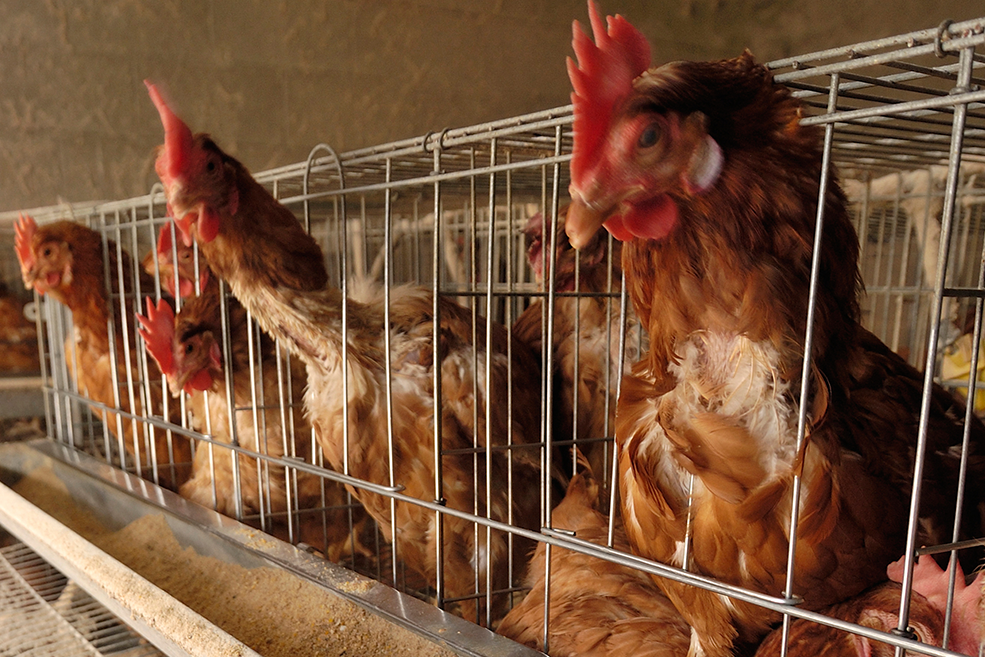
Nicky Amos: So the headline is that companies are still engaged, which is a good thing, but progress is slower than it needs to be. Most companies have set some form of target, some commitment to continuous improvement, but only a small minority have actually delivered them in full. So let me expand on this point by giving one example. Of the 96 companies that we measure, we in the latest benchmark in 2025, we evaluated 149 companies globally. And of the 96 companies that have set a cage free target for laying hens, only 33 of these targets are universal in scope, which means that they cover all egg products and all geographies. But only 17 companies have succeeded to date in eliminating cages from 100% of their supply chain. The reason why the focus is on laying hens is that eggs are a very prominent ingredient and food source provided by a majority of the companies globally. And it’s considered not necessarily easy, but one of the kind of critical points of where animal welfare is more prominent. It’s more, I suppose, understood by consumers. Consumers don’t like to think about laying hens being in cages where they can’t move around, they can’t express their natural behaviors. So it’s a really important entry point for companies to demonstrate that they can deliver welfare improvements at scale. But as we’re seeing, whilst the commitment is there, the actual follow through, it’s happening, but it is taking time and there are reasons for that. And I’m sure we’ll get into that discussion during this session. But overall, I would say in terms of the results that we revealed yesterday, the direction is positive, but the pace is the real issue. We have only an overall average score of 18% across all companies in the benchmark, but that’s really masking a lot of the progress that we’re seeing. So the highest score of any company in the 2025 benchmark was 73% and the lowest was zero. And there are companies that are scoring at very low percentage points overall, which is dragging down that overall average score. I think overall we’re seeing a positive trend. Animal welfare is not dropping off the business agenda. And as we saw and heard at the launch yesterday, it remains very much on the investor agenda. Investors are interested, they understand that there are risks associated with animal welfare and this is an issue that is not going to go away.
Nick Hughes: Okay, terrific. Well, we’ll certainly come back to that point around the ambition action gap that you’ve identified and some of the drivers behind that later. I think the point about coverage of commitments is really important as well, isn’t it, both geographically and in terms of what within the operational mix they cover. And eggs being an example of where you’ve got shell eggs on the one hand, and you’ve also got liquid eggs, which is a big product within the food service sector. And I know that commitments sometimes only cover shell eggs rather than liquid eggs as well. How, how has the food service and hospitality sector, particularly the UK sector, specifically performed this year?
Nicky Amos: It’s a good question and it’s an interesting one. So the UK overall is outperforming all other geographic regions globally and that’s always been the Trend in the BB4. The UK is a very mature market where there is high consumer interest and concern about animal welfare and where companies have for many years, and I would say predominantly led by the supermarkets, the retailers, 20 years ago when there were initiatives that were designed to really drive progress on animal Welfare. This predates BB4. So UK overall is a strong performer. And in fact the overall average score for all UK companies was 43%. That’s versus the global average of 18%. But within that, the restaurants and bars sector, which in other words is food service and hospitality, the overall score is 36%. And that compares to retailers which are the strongest performing category at 48% and producers at 44%. So restaurants and bars does trail the other two subsectors. But we also have to be mindful that we’re talking about rather small samples here. We only have 17 companies overall in the BB four that are in the UK that are domiciled in the UK and the restaurants and bars comprises five companies and we have six in both the retailer and producer categories. So while the sample size is low, I think we can see that UK restaurants and bars is showing some real strengths. So, for example, they do outperform the retailers and producers on their animal welfare targets, particularly on cage free commitments. And I think that’s really important. The other area they appear to be performing strongly on is reducing reliance on animal sourced food. So this was a new section of the benchmark that we introduced in 2020 12. It wasn’t considered particularly popular when we introduced it, but I think as we discussed as part of the panel yesterday at the launch, you know, understanding that the planetary capacity to support the needs, the nutritional needs of the population is at risk, that, you know, we can only improve animal welfare if we reduce reliance on animal sourced foods because we are beyond the capacity, both from an environmental perspective and a social perspective and a planetary perspective, to really continue to produce foods at the scale that we do and still expect animal welfare to be a feature of that. So having some questions in the benchmark on reducing reliance on animal source foods is not suggesting that we should all go vegetarian or vegan. It’s simply saying how do we relieve the pressure and the intensity on animal food production so that those animals that are farmed for food can have a life worth living? So I would say that the restaurants and bar sector are leading on their farm animal welfare targets. So they’re stated public commitments and they are leading on reducing reliance on animal sourced foods within the uk. The one area that is quite notable is that restaurants and bars are underperforming quite significantly on performance impact. So whilst it’s great to have those commitments, what we’re not seeing yet, and it might just be a timing issue, is the actual evidence that those commitments have been implemented and are resulting in positive impact for animals on the ground.
Nick Hughes: In the press release for this year’s benchmarking report, you highlighted Greggs as one of the companies that is among the top global performers. Can you expand a little bit on what they are doing particularly well?
Nicky Amos: They’re one company that, you know, put in a huge amount of commitment and time to improving their animal welfare. But it’s very much treated as a strategic business issue by the organization. And if you think about Greggs, you know, and where they are, where they sit in the food service, you know, sector, you know, their price points are very sensitive. Their customers are not going to be prepared to pay A premium for higher welfare. So they want to make it mainstream. And we heard that yesterday with Carrefour as well. So, you know, Carrefour is saying it’s not about creating a premium product for our consumers. What we want to do is make sure that animal welfare features across all of our products.
Nick Hughes: This year sees the launch of the first ever Footprint Festival, a two day experiential and immersive sustainability festival set on a working farm in the heart of the Hampshire countryside. Created for senior leaders across food service and hospitality, this one of a kind annual event takes place on September 17th and 18th. Will blend sensory experiences, transformative content, powerful networking, and unforgettable food, drink and entertainment. Early bird tickets are now on sale. Visit footprintfestival.com for more details. Okay, well, that’s a really nice segue into a deeper dive into this ambition action gap because it’s something we see across various environmental and social issues within the food industry and within the hospitality sector. More specifically, from progress towards net zero commitments to plastic reduction. It’s all very well setting targets, but making the changes necessary to deliver them is often where the sticking point is. If you like, why do you think there continues to be this pronounced gap between ambition and action on animal welfare? And how within the benchmark are you trying to differentiate between those businesses that are actually delivering their commitments versus those that are still stuck in the policy setting stage?
Nicky Amos: Okay, so I think first we need to remind ourselves that what we are trying to do here is drive systemic change in a key industry sector. And that’s tricky. You know, it’s not easy and it does take a concerted and coordinated approach. I think we also have to recognize that companies across the sector have different levels of influence and levers that they can use to really drive progress. And not all food companies are in the same position, so they have to adopt different approaches. So, for example, you know, I think restaurants lag in their ability to deliver on performance against their stated targets for, you know, a number of reasons. But, you know, let’s focus on, say, three. You know, for one, they’re further from the supply chain. So their distance from the supply chain means that they, you know, have potentially less direct control or influence over the producers. There’s a lot of intermediaries typically involved. I think second, they face less direct consumer pressure compared to, say, retailers and some brand manufacturers. And I think the third is their business models. You know, there’s more complexity potentially in food service. We have lots of different business models, but franchise models, for example, means that it is more difficult to have a consistent approach to following through and implementing some of these global commitments that do require that level of standardization. And of course, we’ve got things like, you know, sensitive margins mixed into that. So there are multiple reasons. I’ve only cited those for restaurants and bars. But there are multiple reasons and challenges for companies in terms of implementing their commitments. And I suppose our reflections on that are that companies can do so much, and companies do a lot to try and implement these commitments through their supply chain, through their engagements with suppliers and consumers. At the end of the day, they need that demand to be there to really have that strong incentive for higher welfare. But, you know, a coordinated approach is really needed to deliver change at scale. And that’s why a lot of the hospitality sector and food service companies are coming together through coalitions, through collaborations, through working groups, to try and work pre competitively and collectively to address some of the structural barriers that they face as organizations, and that collective action can be more powerful and more effective than companies working entirely independently.
Nick Hughes: Yeah. Okay, so let’s touch a little bit on the business case for investing in higher animal welfare. Companies might argue, particularly in the current inflationary environment, that there’s little evidence that a critical mass of consumers, particularly when they’re eating outside of the home, are prepared to pay a premium for high welfare meat and dairy. But then when we price in the costs of industrial farming in terms of biodiversity loss, antibiotic resistance, et cetera, perhaps that business case does become stronger, albeit may be harder to articulate in pure financial terms. So how do you express that business case for investing in farm animal welfare when you’re engaging with companies?
Nicky Amos: Okay, well, I think it starts with the very real issue here, and we heard very clearly yesterday from the speakers at the launch as to, you know, we’re not just talking about a commodity here, animals as commodities. We’re talking about sentient beings. And, you know, in many of the conversations that we have with companies covered by the benchmark, I think it’s fair that, you know, companies genuinely do want to do the right thing when it comes to animal welfare. Clearly, there is an expectation amongst many of their consumers, perhaps an unrealistic expectation sometimes, that animal welfare is an intrinsic part of a company’s responsibility to provide, you know, products and ingredients that really meet key welfare standards alongside quality standards and safety and all of those other hygiene factors. But, you know, I think that there are intrinsic risks for businesses associated with animal welfare. So, aside from the ethical argument about doing the right thing, there are three main risk areas if you like. So the first I would say is economic. Companies face economic risks. They have a lot of capital invested in production systems and they need to be sure that those systems are resilient and sustainable over the longer term. So a company that has invested in enriched cages faces a risk from any regulatory intervention that might be looking to ban close confinement systems, including cages. So that’s a risk that a lot of supply chains are currently exposed to, and it’s only a matter of time before those regulatory levers are enforced. And that leads me to policy. You know, that there are uneven standards in animal welfare policy for a global company working across multiple geographies. And there’s an inconsistent approach both to the policy and the enforcement. But most consumers would assume that a company will have standards of its own that not just meet those minimum requirements, but are actually going beyond that and ensuring a consistent approach across their global operations. And that’s where the BB4 is really a key framework. It acts as a key framework for companies to go beyond minimum legislative requirements and ensure a good level of welfare. And I think the third is around consumer care consumer expectations. Now, sometimes that’s explicit. There are markets where consumers have a very clear voice on what they expect of companies on animal welfare. And in others it’s more implicit. But a big challenge for companies is being able to manage that expectation gap. So what consumers believe is happening within food animal supply chains and what is actually happening in practice is one of the, you know, the key risks for companies. And they have both an opportunity, but a responsibility to try and manage that gap, manage that expectation, but also educate and inform consumers about what is realistic. You know, we don’t have to portray a romantic view of how animals are produced for food. There does need to be that element of realism, of course, but it’s also not about shock tactics either. I think it’s about saying that, you know, this is an industry where animals are farmed at scale. Is it possible to ensure that, you know, the worst welfare implications or the practices that lead to poor welfare can be eliminated? Absolutely. And I think what we’re seeing in the business benchmark are plenty of examples of companies really demonstrating that use case that it is possible to produce food from animals at scale and ensure that those animals have a life worth living.
Nick Hughes: One thing that struck me from listening to the launch yesterday was the framing around One Health. This idea that everything is connected and that lower welfare outcomes require greater antibiotic use, for example, which creates risks around antibiotic resistance, which creates risks for human health and animal health. And I just wonder whether this is something that you are looking to tap into the sort of the opportunity to frame action on animal welfare as a way to tackle systemic risks to, to food security and public health, rather than something purely based on values and virtues, for sure.
Nicky Amos: So I think for, for a long time, animal welfare within the food sector has been regarded as a bit of a discrete issue. So companies will have their, their climate strategies, they’ll have their human health strategies and then they’ll have their animal welfare strategies. And I think that, you know, with today’s increasing focus on nature systems, nature based systems and biodiversity, it provides a real opportunity for companies to think in a more joined up way. And you know, most food companies, irrespective of geography, will be talking about, you know, their vision around contributing to a more sustainable food system. And that’s a genuine commitment. But yet in the context of animal welfare, they will often use sustainability or competing sustainability priorities as a reason for not investing or furthering their animal welfare commitments. And I think what we are saying is that this framing is too simplistic. They are, aren’t competing priorities because these are all Internet interconnected risks that need to be managed together. And you know, the discussion that we had yesterday as part of the launch is that, you know, animal welfare needs to be part of integrated thinking within companies. It shouldn’t just sit on the outside or be looking to compete with some of these issues. Does that make sense?
Nick Hughes: No, it does make sense and it’s a really timely insight as well because we’ve noticed this tension, if you like, between animal welfare and carbon reduction play out quite publicly recently with regards to the decision of some of those leading hospitality brands to leave the better chicken commitment and set up their own sustainable chicken forum. And part of the stated reason behind that was the requirement to adopt slower growing breeds of bird that creates a greater greenhouse gas emissions burden. So, and I think, you know, businesses are increasingly aware that these issues are all interlinked and they do need to navigate the trade offs and not think about issues in silos in isolation. I want to touch on policy, Nicky, which is something you touched on briefly earlier. We’ve recently seen the UK government launch an animal welfare strategy for England and it made me wonder whether you feel the current policy environment, especially in the uk, but feel free to broaden it out to the EU and globally, is a help or more of a hindrance to business efforts to meet their welfare commitments.
Nicky Amos: I would say that policy has a very important role to play, especially when standards are so uneven internationally I think what we’re trying to do through the business benchmark is create a level playing field where there is an acceptable and realistically acceptable standard of animal welfare for any business across any geography, across any industry sector. But that’s a voluntary measure. It’s not, as, you know, it’s not going to get to the scale needed that policy can. And if we look at the uk, for example, and you could say the same about eu, the EU and the UK have some of the highest animal welfare standards internationally. So, you know, that is very much leading the trend. There are other countries that are adopting similar policies, Australia, for example, but, you know. But they are important to companies domiciled in other jurisdictions as well, where policy may not be as strong, particularly if they have exports into Europe, including the uk. But you know that we’re undergoing policy reforms in the new eu. And in the uk, for example, there are policies to move away from close confinement systems, such as cages for laying hens, as we’ve discussed, as well as farrowing crates for pigs. And there are also proposals to support slower growing chicken breeds. But whilst policy can play a very important role and it will continue to be the case, it also needs to not just look at the domestic standards that are in place, but also needs to apply to the trade tariffs. These tariffs need to be strengthened so that products being imported from other sourcing regions that have either a lack of animal welfare policy, of lack of standards, there needs to be some equivalency, both on, you know, on welfare, but also other issues like quality, safety, biosecurity. I think those are more likely to be there. But welfare is a risk, the import of products, and you might well have heard this from many of your constituents. There is a real concern on the animal welfare standards of animal food products being imported into countries that have policy standards in place that will be undermined through these imports. And that’s really important. If you think about your food service and hospitality companies, you know, their consumers are putting trust in those operations and those companies in the food that they buy from or order from. There’s an inherent expectation that companies will be applying the same animal welfare standards consistently.
Nick Hughes: Yes. And the point about imports is, I think it’s especially important for food service. And we’ve made this point of footprint several times because there are no origin labeling requirements within the sector as there are for retailers. So from a consumer transparency perspective, it’s very difficult to know whether the chicken or the eggs or the beef or whatever it might be you’re eating has been produced to those UK standards or equivalent. So a really key point to feels like we’ve covered a lot of ground in a short space of time. So Nikki, perhaps you can end with some key messages for where companies should be focusing their efforts so they score higher in the next benchmark, which I believe will be in two years time, will it? And will be on a biennial basis now moving forwards.
Nicky Amos: Okay, well, I’m going to start with that. So the BB4 for the last 14 years has been continuously assessing companies on an annualized basis. And that was a very deliberate strategy. We really wanted to build momentum around an issue that was really poorly framed within the business agenda and the investor agenda. So we wanted a concerted approach to really ensuring that companies maintained their disclosures on animal welfare and the accountability mechanism that the benchmark produced, you know, represented. So, you know, that has worked as a strategy for the last 14 years. But we have been very aware that the annual cycle leaves very deterrent for, for companies to do much more than just update their reporting when really the focus of their activities should be on delivering improvements against their commitments. So we have consulted with a number of food businesses, we’ve consulted with investors that support the benchmark and we’ve consulted with other benchmark programs and we have made a decision to, to move to a biennial cycle so to evaluate companies every two years rather than every one year. The upside of that will be that companies have more time to really focus on how they move the dial, how they move forward on their actions and their commitments whilst maintaining their reporting at the same time. It means that there is more opportunity for engagement, both engagement with investors and investors to engage with companies, but also for the BB4 secretariat and its partner, Compassion in Wild Farming, as the Chief Sponsor of BB4 to engage with companies directly and really support them in their efforts. So that’s the reason for the change. The downside is that companies might feel that this is letting them off the hook, at least for a year. They have a bit of breathing space. We are encouraging companies to continue to maintain their reporting so that it provides an accurate account of what they are doing as a business. And that’s important. Investors will expect them to maintain their reporting. And of course, it’s not just the BB4 that is tracking what companies are doing on animal welfare. There are plenty of other initiatives, benchmarks, scorecards that are going to be expecting companies to keep their reporting very up to date. So that’s the first point. I think what we would say to companies is that the benchmark is not Just something that is done to your organization. It creates a tool for, for you to actively manage your animal welfare in a meaningful way. And it provides very tailored recommendations. It highlights where your strengths are as a company, where your weaknesses are, and what you can do to really strengthen your overall performance, not only in the benchmark, but overall in animal welfare. The BB4.4 provides plenty of examples of good practice. So if you want to understand what a particular issue looks like in your given sector, then there will be examples. And we are also very happy to point individual companies to peer group examples of what is being done to proactively manage an issue. So that’s the first thing. So use the benchmark, it’s there as a tool for, for you. The second is maintain your transparency, keep up to date with your commitments and progress and be honest. As investors said yesterday at the launch, they do understand that companies have to sometimes revisit, restate their targets and that’s fine. But just be transparent about what you’re doing and provide clear explanations as to why progress is not necessarily a advancing at the pace that a company might have expected. Be clear about what some of those barriers are. And then third, think carefully about your sourcing decisions to ensure that the animal welfare risks alongside all of the other risks are understood and mitigated against. So we talked earlier, Nick, about the domestic versus import risks. When companies are looking to source, say, broiler chicken from a different country, where the animal welfare standards are inevitably going to be lower than they are in the domestic market, there are certain things that they can do as part of their due diligence to fully understand those risks. So PRONOS works proactively with companies, particularly on that due diligence element understanding. Okay, what’s the sourcing context for broiler chicken in Thailand or Poland or China? What does that look like? You know, what are the checks and balances that need to be in place to ensure that there is some equivalency in what they are sourcing in a country where the policy frameworks and the overall standards are potentially lower. So those are the three things I would say and I think probably finally I would say it’s time not to kind of break out of the silo mentality when thinking about animal welfare. It is an intrinsic part of an ecosystem and any company that is looking at a systemic approach to sustainable food production needs to be ensuring that animal welfare is an intrinsic part of that.
Nick Hughes: Super. Well, there’s loads of great insight there for businesses to take away and consider as they try to turn ambition into action on animal welfare over the next two years. Before you next report. Nicky, thanks so much for joining us on the Small Print.
Nicky Amos: Pleasure to talk to you.
Nick Hughes: We’ll be back next week with another episode of the Small Print. If you like what you’ve heard, please take a moment to rate, share and subscribe.