A new salmonella scare linked to eggs consumed outside of the home has shone the spotlight on a foodservice sector struggling to balance cost and availability with safety and welfare
It took almost 30 years, but it seemed like the British public had finally left fears of salmonella-infected eggs behind them after an outbreak in the 1980s caused widespread panic. Our national egg consumption is prodigious once again with sales rebounding to record highs and consumer confidence strengthened by the ubiquity of the British Lion mark, which has acted as a guardrail for safety since it was introduced in 1998.
However an ongoing national outbreak of salmonella, which has so far killed two and infected another 600 people, is reigniting concerns many within the industry thought were a relic of the past.
Although the vast majority of eggs consumed in Britain are perfectly safe, a huge rise in imported eggs has allowed salmonella to enter the country through the back door.
The recent outbreak is shining a particular light on hospitality and foodservice with most infections originating in cafés, restaurants and takeaway businesses, according to the Food Standards Agency. This in turn has raised questions about the sector’s sourcing policies and the market conditions that have driven a boom in imported eggs that may not meet the benchmark standards set by British Lion.
In part, the issue stems from a shortfall in British egg supply. While the popularity of eggs has soared in recent years – the average Brit now eats 209 eggs a year, 45 more than in 2005, according to the British Egg Industry Council (BEIC) – domestic production, although itself growing, has failed to keep pace.
To fill the gap, British companies have looked abroad for their supply with government data showing egg imports have almost doubled since 2020 and now constitute around 2 billion eggs a year. Today, around 1-in-10 eggs eaten in the UK have been laid abroad compared to 1-in-30 in 2022, according to the BEIC.
Until 2024, these overwhelmingly came from the EU, with the Netherlands by far the dominant supplier, UK trade data shows. But with other European countries experiencing the same pattern of rising consumption and falling production, foodservice companies have been forced to look further afield.
Into the gap has stepped Ukraine, helped by an agreement with the UK to remove tariffs in the wake of Russia’s invasion. The EU offered similar concessions but reintroduced the tariffs in 2024 after an “emergency brake” was automatically triggered due to imports exceeding average yearly volumes.
With the EU no longer available as a reliable outlet, Ukrainian producers boosted shipments to the UK, sending 14,000 tonnes of eggs in 2025, up from less than 1,000 tonnes the year before, trade data shows. The trend has continued into 2026 with Ukraine producing more than 20% of eggs imported by the UK so far this year.
‘Open door’ policy
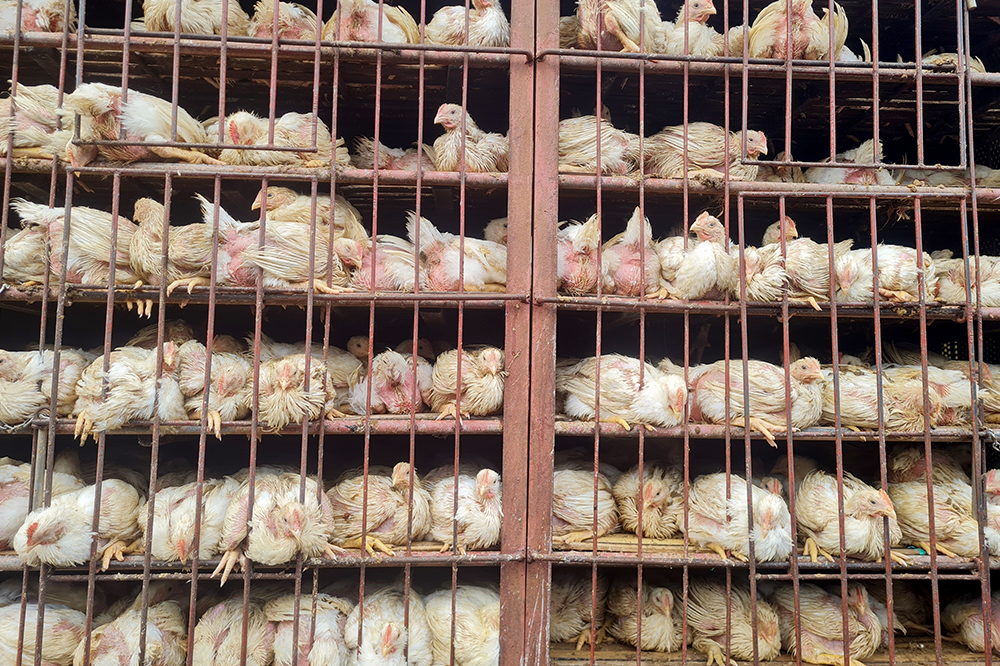
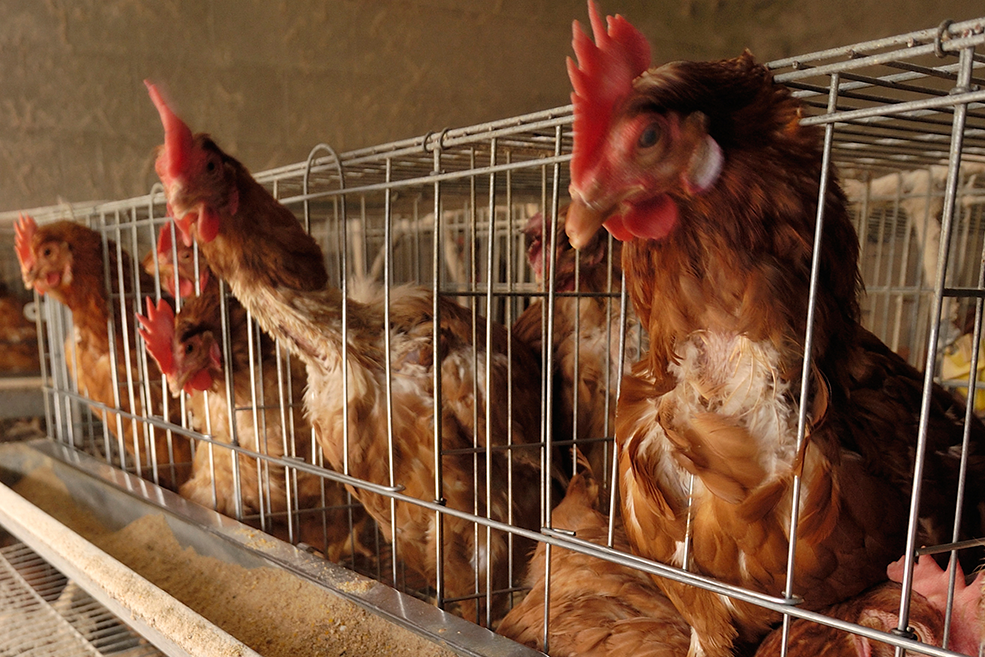
This is unsurprisingly a source of irritation for British farmers who argue many of these eggs are laid by hens kept in traditional battery cages, a system banned in the UK since 2012. “The UK government has created an open door for dumping battery cage eggs produced to standards far below those required of British eggs,” says Nick Allen, CEO of the BEIC.
That ire is particularly aimed at foodservice businesses where most of the imported eggs end up. One reason for this is that many foreign eggs are Class B meaning they are oddly shaped or in thin shells and therefore must be turned into liquid or powdered eggs for use in catering or manufacturing.

Another is that public opinion is strongly against ‘battery’ hens – more than 90% of Brits called the practice “unacceptable” in a poll for animal rights group Viva earlier this year. This means the big supermarkets – who are legally required to display the country of origin on packaging – tend to avoid sourcing foreign eggs altogether.
Major foodservice suppliers and operators like Bidfood and Compass also told Footprint they only ever use British Lion-marked eggs. (The scheme does allow for some caged production alongside organic, free range and barn.) Much of the imported supply, therefore, appears to be funnelled via wholesalers into the kitchens of smaller operators where transparency and traceability are often lacking.
This is significant in the context of the current outbreak because the UK authorities are finding it hard to pinpoint exactly where the salmonella-infected eggs are coming from. While previous outbreaks in the UK were linked to eggs imported from European countries like Poland, the current source of this outbreak is still yet to be confirmed.
“Large retail has a high level of visibility of their egg supply chains. Large foodservice is in a similar position,” says Chris Elliott, professor of food safety at Queen’s University Belfast. “But as for smaller foodservice companies, the level of oversight is moderate at best.”
These businesses may say they had little choice; squeezed by rising costs and under pressure to find savings, locating cheaper ingredients is essential for them to stay afloat. Ukrainian eggs, for example, are reportedly selling for around 20p less a dozen than those from the UK, according to the British Free Range Egg Producers Association.
The challenge has been exacerbated recently by volatilities in supply, caused by key markets like the Netherlands suffering reduced laying flocks due to avian flu. In 2025, around 3,000 cases were reported across 29 European countries in the autumn alone – a scale the European Food Safety Authority called “unprecedented” for that time of year.
The frustration for many food safety experts is that they’ve warned of a salmonella outbreak in the UK for some time. “This is a very hot issue and one which was predicted,” says Sterling Crew, a food safety expert and an independent scientific and regulatory advisor for British Lion.
After cases of salmonella shot up by almost 20% in 2024 to over 10,000 incidents, the BEIC said “alarm bells were ringing” over the rising number of imported eggs seen in foodservice.
It came alongside a survey last year which found 80% of environmental health professionals in the UK believe imported egg products pose a greater food safety risk than British eggs. The results led to further calls for foodservice companies to halt their use of non-British eggs – a demand which seemingly fell on deaf ears.
Difficult dynamics
It’s important to note that the hospitality and foodservice sector faces some unique difficulties when it comes to sourcing eggs. Unlike retailers, their final customers typically don’t know where the eggs come from, meaning there is no marketable benefit to sourcing eggs produced to higher safety and welfare standards. If foodservice companies want to do this voluntarily, they must usually pay more for no financial compensation.
Another is that the sector rarely uses shell eggs, instead relying on liquid or powdered products, or buying-in products like biscuits and cakes where the egg is already baked in. This makes it much harder to trace the origin of the eggs, especially if a manufacturer has combined multiple sources into a single product.
“We’re finding in our conversations with foodservice companies it’s a very difficult area to transform,” says Dan McAlpine, senior food business manager at Compassion in World Farming.
These difficulties show up in Compassion’s annual EggTrack report, which monitors the progress of global food companies’ transition to cage-free eggs. In the UK, supermarkets have nearly all completed their transition to cage-free eggs, as have big restaurant chains like JD Wetherspoon and Greggs.
Foodservice, however, is lagging behind with most of the big providers finding it hard to fully complete the transition. Bidfood UK, for example, is 52% cage-free on shell eggs, 47% on egg products and 83% on egg ingredients, while Sodexo UK & Ireland is at 99% for shell eggs and 59% for egg products (with no data recorded by Compassion for egg ingredients). Elior UK is at 100% for shell eggs and egg products but is not reporting egg ingredients. Compass Group UK & Ireland is the only foodservice company in the country to make the full transition for all its eggs.
According to McAlpine, cost and supply security are still the main drivers for determining where most big foodservice companies buy their eggs. Although food safety and traceability may become more important for a brief period in the midst of a salmonella outbreak, “we find it generally reverts back to cost and supply security over the long term”, he adds.
The exception is Compass, which over the last few years has gone through “1000s of products across multiple sectors” and renewed contracts at a higher baseline of welfare, McAlpine notes. “It’s a lot of unpicking,” he says. “It’s not going to happen in one year, even in two years. But it is possible.”
Drivers of change
For businesses taking action to change their egg specifications, pressure to improve bird welfare and carbon emissions may come into the equation too, alongside safety. (Sainsbury’s cited lower emissions as one of the reasons for switching to white-shelled eggs earlier this year).
Operators may argue, with some justification, that shortfalls in supply and rising prices make imported eggs the only commercially viable option. If change is to happen at scale, the cost will need to be shared by the entire supply chain given the lack of incentives for individual businesses to make the responsible choice the default. Policy makers will also need to consider the case for intervention, including stricter origin labelling requirements for the out of home sector.
Compass’s success in making the transition shows a route forward for the many foodservice companies who, in the wake of the salmonella outbreak, can expect to come under growing pressure to guarantee the integrity of their supply.
The consequences of doing nothing have been brought into sharp focus by recent deaths. Where egg sourcing is concerned, the stakes really couldn’t be higher.
Further reading
Egg challenge not quite cracked
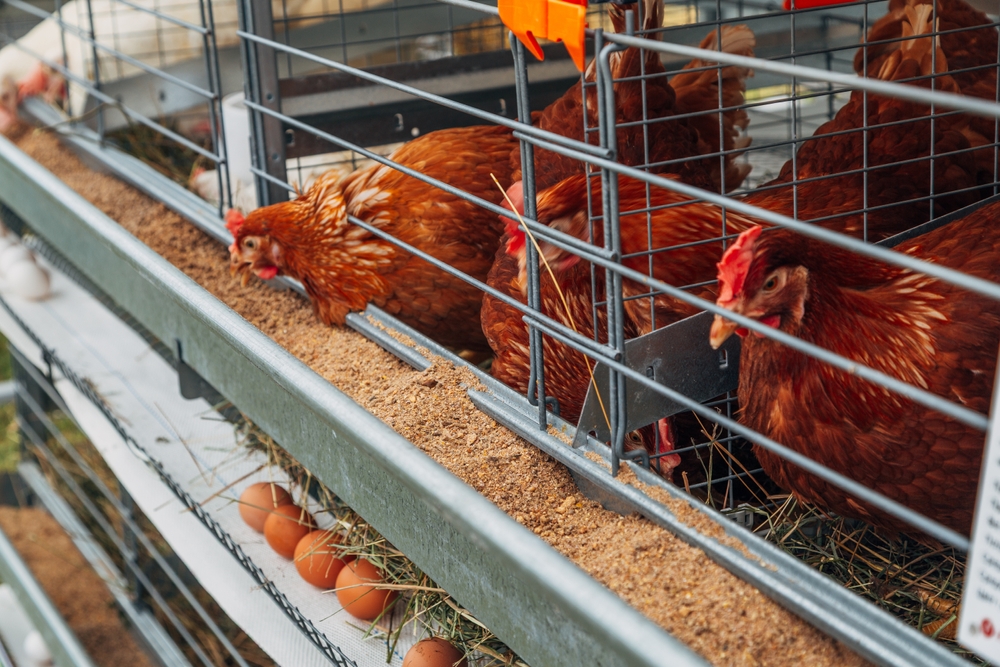
UK food businesses continue to lead the way in sourcing cage-free eggs from laying hens, however reaching 100% compliance remains a step too far for many
Can businesses close the ambition-action gap on animal welfare?
Nicky Amos of Business Benchmark on Farm Animal Welfare tells Nick Hughes how foodservice businesses are progressing on animal welfare and why the focus must shift from targets to delivery