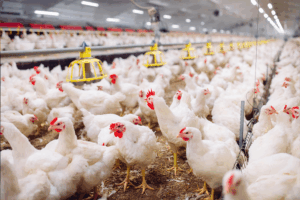
UK food businesses continue to lead the way in sourcing cage-free eggs from laying hens, however reaching 100% compliance remains a step too far for many.
The latest EggTrack report from Compassion in World Farming found that UK businesses – spanning retailers, manufacturers, and foodservice and hospitality operators – have achieved an average cage-free transition of 97% across 71 reporting commitments, versus a global average of 85% and a European average of 94%.
Only 31 of the 49 UK companies tracked, however, have successfully completed their cage-free transition across all egg categories, including shell eggs, liquid and processed egg products, and products where egg is an ingredient.
In total, 852 commitments were assessed across 602 businesses globally in this year’s report. Compassion said the results show higher welfare standards are both achievable and commercially viable, but that voluntary action alone will only take the industry so far.
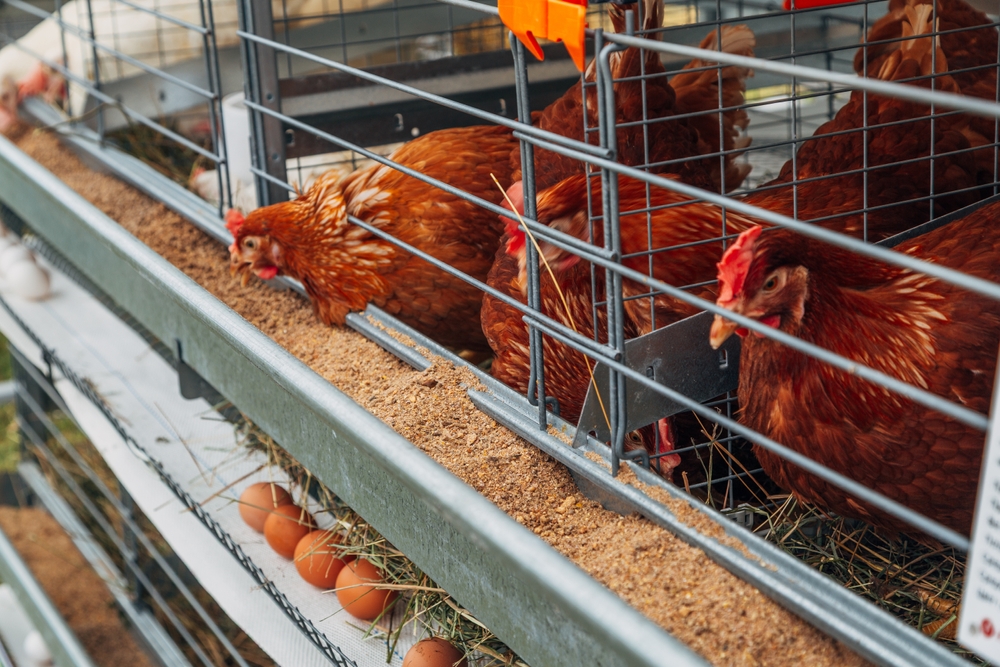
The report is the first to be published since the 2023 EggTrack when the global average cage-free transition stood at 75%. Since then, both the EU and UK have pledged to phase out cages for laying hens, providing extra incentive for businesses to speed up voluntary action. The European Commission has confirmed it will deliver proposals to ban cages for laying hens in 2026, while in its animal welfare strategy for England, published in December 2025, the UK Government pledged to transition to non-cage systems and consult on phasing out enriched ‘colony’ cages, which supply just over 20% of UK shell egg production. Although colony cages are larger than battery cages and are legally required to have nest boxes, litter and perches, they are not considered to fully provide for the physical and behavioural needs of the birds.
Globally, retailers are leading the way in transitioning to cage-free eggs with a transition rate of 93%, up from 77% in 2023, closely followed by the restaurant sector at 90%, up from 77%. Progress among manufacturers has slowed, rising only slightly to 85% from 83%, while the foodservice and hospitality sector continues to lag behind at 68%, up slightly from 65% in 2023.
In total, 71 businesses have achieved cage-free status since 2023 including a handful of major UK-based businesses: Compass Group UK & Ireland, Caffè Nero, Greggs, The Restaurant Group and Tesco UK.
For some businesses, progress has been more uneven depending on the egg category. Sodexo UK & Ireland, for example, has achieved 99% cage-free in shell eggs but only 59% in egg products, a category that includes liquid, frozen, dried and pre-cooked products.
Compassion highlighted how of the 415 commitments with a 2025 deadline, only 48% have been fulfilled with some companies accused of weakening commitments instead of delivering them. Of the 852 commitments tracked, 61 have had their deadlines pushed back by companies, although 21 of these have published revised timelines toward full compliance; 29 businesses have removed their deadlines but retained their commitment; while 50 have withdrawn their public cage-free pledges entirely, according to Compassion, including Spar and Prezzo Restaurants in the UK & Ireland.
“Companies falling behind must act now with urgency to progress towards their commitment deadlines and those that have dropped commitments must reinstate them immediately,” said Tracey Jones, global director of food business at Compassion in World Farming. “With legislative momentum building and the rising global trend towards cage-free, companies have a clear opportunity – and responsibility – to turn promises into action and consign cages to the history books for good.”
Small Bites
Pizza ad passes regulatory test
An online marketing campaign featuring Domino’s Vegi Supreme pizza is among a handful of adverts from fast food chains deemed to comply with new government restrictions. The Advertising Standards Authority (ASA) also dismissed complaints made against adverts from Burger King, Uber Eats and KFC in what is being viewed as a key test of the impact of ‘junk food’ advertising restrictions which came into force in January. In the Domino’s case, two complainants challenged whether two paid for social media ads promoting a special price offer broke the rules, which ban products high in fat, sugar and salt (HFSS) from pre-watershed advertising on TV and altogether in paid-for media online. Domino’s argued that the pizza depicted in both ads was the Vegi Supreme, which is non-HFSS in all sizes, and is visually distinguishable from other pizzas in its range, many of which are HFSS. The ASA agreed, noting that other pizzas displayed on Domino’s website show meat toppings like pepperoni, bacon and chicken or are otherwise absent of key Vegi Supreme toppings like tomatoes, mushrooms and peppers. The verdict appears to confirm the fears of campaigners who previously warned that a watering down of the rules to allow so-called ‘brand adverts’ – whereby a brand with a largely unhealthy portfolio is free to advertise so long as specific HFSS products are not shown – would significantly lessen the effectiveness of the rules.
Regenerative doesn’t resonate with consumers
Consumers are more likely to value food produced in regenerative farming systems when it offers tangible personal benefits. New research carried out by the EIT Food Consumer Observatory concluded that although people believe agriculture needs to improve, terms like “resilient” and “regenerative” are not always found to be engaging on their own. Alternative agriculture is more likely to be valued when it offers tangible personal benefits, particularly health, taste, naturalness, fewer synthetic inputs and credible proof through certification or scientific testing, according to the findings. The report, ‘Making agriculture matter: Toward consumer-centric positioning of resilient and regenerative agriculture’, explored how the benefits of resilient and regenerative agriculture can best be communicated to consumers to drive purchasing. It found that although regenerative agriculture is seen as natural and traditional, the label itself does not connect strongly with how consumers describe what they look for in food. Resilience is seen as important, but as a systemic concern linked to food security and crisis preparedness, rather than as a personal food choice. There is ongoing debate within the regenerative farming movement over the extent to which the term should indeed become consumer-facing or remain largely as industry terminology.

EU plant protein plan eschews dietary targets
The European Commission has published its long-awaited ‘EU protein plan’, which describes an ambition to scale up sustainable plant-based protein production. Although much of the plan focuses on expanding sustainable EU protein supply, including for animal feed, amid a current dependence on imports, policy makers also express support for “diversified diets to strengthen system resilience”, including “different sources of plant-based proteins and sustainably produced animal products”. The European Vegetarian Union (EVU) described the plan as “an important milestone” but said it falls short on concrete measures to solve the EU’s protein imbalance. “To unlock the full potential of plant proteins, the EU needs concrete policies that stimulate demand for plant foods and support a shift towards increased human consumption,” said Rafael Pinto, senior policy manager for the EVU. Although the document mentions the role of public procurement, “what is missing is a target to balance plant/animal protein production and consumption,” said Pinto, noting that the only target set by the plan is to increase EU production of proteins for feed, from 25.8% to 35% by 2035.
Chef’s Special
The march of fried chicken may seem irresistible, but not at University College London where a 4-week trial to replace the fried chicken counter with a plant-based alternative led to uptake of plant-based meal options increasing from 33% to 41% among the student population. The aim of the trial, overseen by the Gather + Gather food team at UCL, was to show how plant-based dishes can appeal to students beyond those who have already adopted a vegan or vegetarian diet. The university has already increased the proportion of vegetarian and vegan dishes on campus menus to at least 50%. For the latest trial, the team tested more than 30 alternative proteins with a student focus group that included meat-eaters to identify the dishes most likely to appeal across the whole student dining population. In the event, the caterer switched its fried chicken counter at the Wilkins Refectory to a plant-based alternative from MOCK for four weeks, timed to coincide with a university sustainability event. Rather than presenting the offer as a “vegan menu”, Gather + Gather built the menu around familiar, indulgent formats, including fast-food such as crispy tenders, stacked burgers and loaded fries.
Last Orders

Oatly has reported that the climate footprint of its core oat drink has fallen relative to cow’s milk during the past four years. In 2022, the company published its first comparative life cycle assessment (LCA) for its original 1 litre Oatly Barista drink versus average cow’s milk, with analysis carried out by the consultancy Blonk. Four years on, it has repeated the analysis and found the gap between Oatly and cow’s milk has increased from 58% to 67%. Oatly’s senior sustainability director, Caroline Reid, explained in a social media post that the change can partly be explained by Oatly reducing its own climate footprint through improved energy efficiency in its factories, more optimised transport routes, use of HVO fuel and sourcing British oats; however she noted that the gap has also grown because of updated emissions modelling for calculating the climate impact of cow’s milk.