

Budget blues
For the new chancellor, John Healey, a subdued response to his maiden budget may have been considered a case of ‘job done’. The markets were notably not spooked by Healey’s pre-Halloween tricks and treats, although business and civil society organisations were left pondering if and when a government elected on the promise of change plans to tackle deep, structural challenges in areas like food security, nature recovery and sustainable business growth.
Healey’s budget contained lots of small giveaways but little in the way of headline reforms, with big decisions over public spending largely put off until next autumn’s spending review.
UKHospitality described new measures to freeze, reduce or remove business rates for the sector across England as “important”, but noted how hospitality still pays 82p in business taxes for every pound it makes, the highest in the economy. Chief executive Allen Simpson urged the government to go further and faster in helping the sector unlock investment, jobs and growth.
A further 3.9% increase in the national minimum wage and national living wage will put further pressure on costs in the short-term, while winter energy price rises are set to fuel higher inflation, including in food prices, according to the Office for Budget Responsibility.
Food itself was largely missing from the budget. The National Farmers Union (NFU) described it as a missed opportunity to put some substance behind ministers’ favourite new aphorism that ‘food security is national security’. NFU president Tom Bradshaw bemoaned the failure to “link domestic food production to food-price inflation”. Although he described a six-month extension to the 3.7p cut to duty on red diesel as “welcome”, Bradshaw noted how this is dwarfed by the 65% hike in fuel prices farmers have experienced compared with a year ago.
There was disappointment too that farming and horticulture will miss out on eligibility for the British industrial competitiveness scheme, which from April next year will exempt more than 10,000 energy-intensive businesses operating in key strategic manufacturing industries from the indirect costs of the renewables obligation, feed in tariffs and capacity market schemes – equivalent to a 25% discount on the cost of electricity. “That leaves our food supply exposed to higher energy costs twice over: first through squeezed production margins, and then through the pressure those costs place on food prices,” noted the NFU’s chief economist Jack Watts.
The main budget measure targeted at minimising food price inflation was a new round of tariff cuts on imported items like garlic, baked beans and plant-based beverages. However, the inclusion of confectionery items like boiled sweets and toffees, along with chocolate-coated waffles, prompted more concern over a lack of joined-up policy making – this time from the food and farming alliance Sustain. “With food bills still putting households under pressure, the government is right to look for ways to bring costs down. But tariff policy should make healthy and sustainable food more affordable, not make sweets cheaper,” said Glen Tarman, director of policy and advocacy at Sustain.
Elsewhere, the RSPB complained how “the UK Government has once again sidelined investment in nature, despite the billions in economic growth and thousands of jobs it could help deliver”, while WWF said “more ambition is needed to deliver a fair energy transition”.
In what was generally considered a low-key budget, eagle-eyed observers did spot one potentially significant policy shift, with implications for healthy diets. Buried in its budget policy paper, HM Treasury set out the government’s intention to introduce a new category of ring-fenced spending at the spending review in 2027, termed ‘preventative departmental expenditure limits’ (PDEL). The cross-party think tank Demos explained how the reform means funding for programmes designed to stop problems before they escalate will be formally identified and protected from being diverted to cover short-term spending pressures. In practice, it said, that could mean greater protection for investment in areas like obesity prevention, alongside other initiatives designed to improve societal outcomes and reduce future costs to taxpayers. Going against the grain of opinion that the chancellor had played the safest of safe hands in his budget, Demos director of policy, Jess Sargent, described PDEL as “one of the most significant reforms to the way public spending is managed in a generation”.


Small Bites
Nature targets require focus on food
With COP17 on biological diversity due to reach its conclusion on Friday, a group of nations has warned that nature goals will remain out of reach without urgent investment in sustainable food systems. Stakeholders have been meeting in Armenia over the past fortnight to review progress towards the targets for nature set under the Kunming-Montreal Global Biodiversity Framework. These include a headline target to halt and reverse nature’s decline by 2030. More than half of the framework’s 23 targets depend on how food is produced, sourced and consumed, however progress is currently falling short. Ministers from six countries have now called for urgent action to transform food systems to help close the global biodiversity implementation gap. Sierra Leone, Brazil, Norway, Italy, Cambodia and Vietnam are members of the Alliance of Champions for Food Systems Transformation, a group of countries working towards healthier ecosystems by making nature restoration and protection central to cross-ministerial food system strategies. In a statement issued during the conference, ministers from the countries urged governments, financial institutions, development partners and the private sector to step up investment in agroecological approaches, sustainable fisheries and aquaculture, agroforestry and landscape restoration. They noted how positive outcomes can follow in areas like soil health and food waste reduction. “Agreeing targets is the easy part. Implementation is where the real work begins,” said Jiwoh Abdulai, Sierra Leone’s minister of environment and climate change.
Meat reduction motivated by welfare concerns
Almost a quarter of the UK public say they have reduced their meat consumption during the past year, according to new survey data. The latest public attitudes survey by the charity Eating Better found that 24% of people have reduced their meat consumption compared with just 5% who have increased it and 62% who say they are eating the same amount as a year ago. This year’s research was run in partnership with two Eating Better alliance members, RSPCA and Four Paws UK, and for the first time used YouGov data. The annual survey is designed to understand how the UK public thinks about food, meat and dairy. The majority of the public follow a flexitarian diet, with 54% eating meat fewer than five times a week compared with 21% who eat it every day. Around two thirds (67%) say they eat white meat – chicken, turkey and game meats – multiple times a week compared with around a third (32%) for red meat. Over half of those surveyed (54%) say they are open to reducing how much meat they eat with better animal welfare a key motivator, although Eating Better said affordability and accessibility remain barriers to reduction in practice. “People want affordable food, produced in a way that protects nature, by farmers who are properly supported,” said Rebecca Sunter, interim executive director at Eating Better.
Farming schemes face chronic cash shortage
Government schemes designed to encourage more sustainable farming practices are “chronically underfunded”, according to new economic analysis published ahead of this week’s budget. The Wildlife Trusts identified a funding gap of over £2bn for England’s Environmental Land Management Schemes (ELMs), which it said leaves both the farming community and nature facing a crisis. Under ELMs, which include the Sustainable Farming Incentive (SFI), farmers receive public money for delivering public goods through nature conservation and measures to improve climate resilience. However the latest round of funding for the SFI was hugely oversubscribed with the result being that thousands of farmers were locked out of receiving funding. The Wildlife Trusts’ analysis found that £3.8bn is required to build resilience to the impacts of climate change across the farmed landscape compared with the current budget for ELMs of just £1.65bn. Of the total, it said over £2bn must be designated to the upfront cost of actions and land use changes required to tackle climate change, including efforts to restore peatlands, create new habitats for wildlife and the planting of new hedgerows and trees. The remaining £1.7bn must be allocated to providing advice and ongoing management of nature-friendly farming practices. Instead, the charity argued the ELMs budget has effectively been frozen for years, despite rising costs for farmers and the growing toll of climate change-driven heatwaves, droughts and flooding on food production. “Without action, the system we all rely upon could collapse,” warned Vicki Hird, strategic lead of agriculture at The Wildlife Trusts.
Chef’s Special
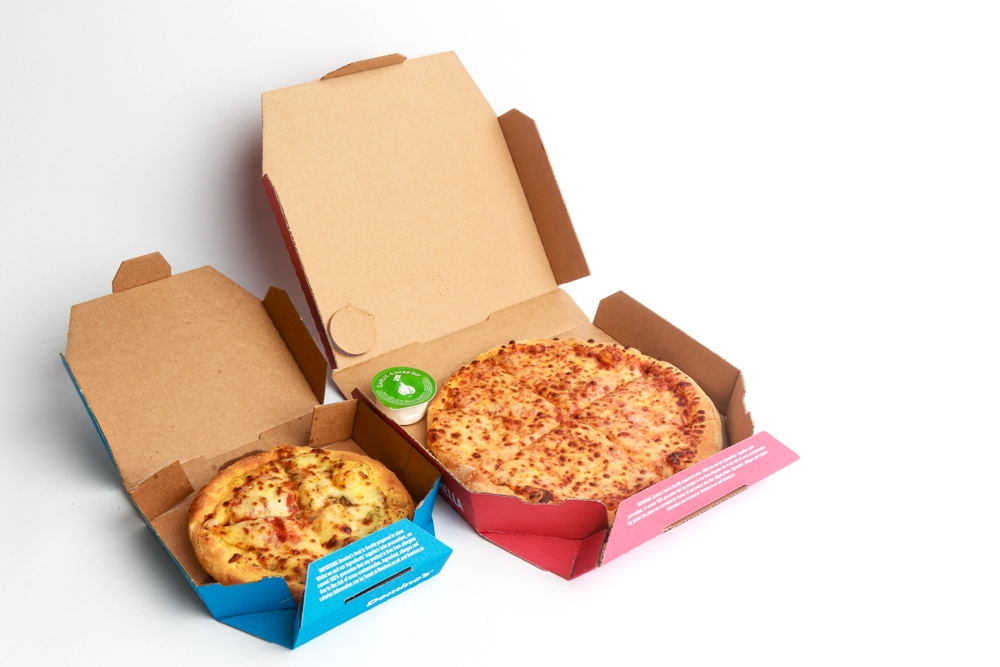
Nutrition is “probably not the first thing you think of when it comes to Domino’s” wrote the pizza chain’s CEO Nicola Frampton in a recent display of candour. Frampton made the comment in the foreword to Domino’s first ever nutrition report, which includes plans to update ingredients and recipes to cater for more health-conscious customers. The strategy is being led by Domino’s first ever full time nutritionist, Sophie Rose, and is built around creating new options for customers, signposting more balanced choices and reformulating existing products. The report notes how Domino’s is working to introduce more vegetable dishes to its menu, citing the launch last year of its Loaded Veg and Loaded Veg with Chicken side dishes, both of which contain two of the government’s recommended five-a-day portions of fruit and vegetables. It has also reduced the portion size of its meatballs and sausages, and reduced the sugar content of its BBQ sauce. Domino’s is among the brands having to work within the confines of new rules restricting the advertising of products high in fat, sugar and salt (HFSS) online and on television. In July, the Advertising Standards Authority upheld a complaint that TV, video on demand and paid-for YouTube ads promoting Domino’s Cheeky Little Pizza breached the guidelines as they showed an identifiable less healthy food product in the form of a sausage and bacon pizza.
Last Orders
Heineken has told hospitality sector operators that growing use of weight-loss drugs could result in people drinking less alcohol and is urging venues to respond by stocking more low- and no-alcohol options. The news agency Reuters obtained a document from the world’s second largest brewer sent to UK venues including pubs, bars and restaurants in which it warned that people using GLP-1 drugs like Ozempic and Wegovy often feel fuller sooner thus reducing their desire to consume multiple beverages in one visit. In the document, Heineken advised businesses to promote half pints or other smaller servings, alongside no- and low-alcohol options, or risk losing sales and custom. Bundling drinks in with food offers is another tactic advocated by the brewer. Heineken confirmed to Reuters that it had seen some changes in the way people using GLP-1s are consuming its products and said it would continue to monitor these.
Main image: repic / Shutterstock.com





Leave a Reply