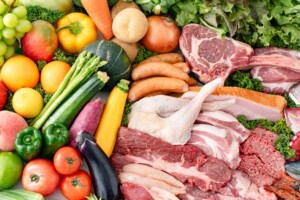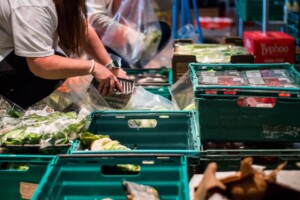

The cold chain describes the collection of businesses responsible for keeping temperature-controlled goods like meat, dairy and fresh produce moving safely and efficiently through supply chains: from source all the way through to restaurant kitchens and supermarket shelves. Trade body the Cold Chain Federation is concerned about growing risks to the chain from a range of threats including targeted cyber attacks, extreme weather events and disruptions to fuel and energy supplies, all of which are set out in a newly released whitepaper. Yet there’s a strong sense that government ministers continue to turn a blind eye to the unique challenges facing suppliers and distributors of perishable goods that make up 50% of the UK’s food supply. In this week’s episode, CCF chief executive Phil Pluck explains why the cold chain is essential to the effective functioning of the foodservice sector and why it’s high time for a resilience strategy that protects against current and future risks.
Subscribe to the podcast



Further reading
UK food system resilience is undercooked
The UK food system is not resilient to the kind of shocks that will increasingly present themselves over the next decade, according to the author of a seminal report on the subject
Is it a good time for a food bill?
An alliance of organisations believes legally-binding targets are the only way to put the UK’s food system on the path to a more sustainable, resilient future
Transcript
Nick Hughes: Hello and welcome to the Small Print, a podcast by Footprint Media Group. I’m Nick Hughes, Footprint’s Editorial Director. Each week we delve beneath the headlines of an issue impacting the hospitality and food service sector through our unique lens of environmental and social affairs. The voice you just heard was that of Phil Pluck, Chief Executive of the Cold Chain Federation. The CCF represents businesses responsible for keeping temperature controlled goods like meat, dairy and fresh produce moving safely and efficiently through the supply chain by ports, warehouses and vehicles, right through to restaurant kitchens and supermarket shelves. Phil and his members are concerned about growing risks to the cold chain from a range of threats, including cyber attacks, extreme weather events and disruptions to fuel and energy supplies, all of which are set out in the newly released white paper. Yet the feeling is that government ministers continue to turn a blind eye to the unique challenges facing the sector. In this week’s episode, Phil explains why the cold chain is essential to the effective functioning of the food service sector and why it’s high time for a resilience strategy that protects the UK’s food supply against current and future risks. Phil, welcome to the Small Print. It’s good to have you join us. Before we talk about your new white paper, perhaps you can start by explaining what exactly is the cold chain and how is it integral to the effective functioning of food supply chains?
Phil Pluck: Yeah, of course it’s often a very overlooked part of the food supply chain and the food system, partly because it works all the time, so people therefore don’t see it unless it goes wrong. But if we just row back slightly and just look at some of the big figures for food supply in the UK. So around about 50% of all of our food travels through something called the cold chain. It used to be a slightly lower number, but actually with, with productivity in the UK now in terms of food growing, that’s reducing. So actually the need for us is increasing in order to store food. So 50% of all food consumed travels through the cold chain. Of that around about 50% of all food comes in via UK ports as well. So it’s a very, very large number in terms of food supply. And it’s dead simple really. The cold chain consists of temperature controlled food storage and temperature controlled food distribution. And we do that by around about 470 separate cold stores. They hold vast amounts of food and they’ll hold it from 1 degree, 2 degrees all the way down to minus 50 degrees and they sit on average at about minus 22. So we use an awful lot of energy as well. And then we’re distributing that to the UK public via small shops, large retailers and anything in between. There are around about 100,000 temperature control vehicles that make sure that that food gets to them both safely and that it keeps its integrity. That is, it looks and tastes like it should do.
Nick Hughes: Okay, terrific. And if we think about the food service sector specifically, obviously the cold chain is, is critical to the effective functioning of that sector through ensuring food gets to public sector institutions like schools and hospitals, care homes, as well as private enterprises like pubs and restaurants. That gets to those places safely and in a way that maintains its integrity. And high quality.
Phil Pluck: Yeah, safe, high quality. And just in time, because the food service industry has changed quite dramatically over the decades. So when I was at school, there was actually a school kitchen behind where that food was served. And actually if you went to Hospital just 20 years ago, somewhere in that hospital was a food kitchen. That isn’t necessarily the case now. So food has to be prepared, ready to go, ready to enter, say, a prison or a hospital or a care home or a school. All of those institutions actually rely on food getting to them almost on a daily basis. And it being ready to go, I. E. Just warm it up in some way and then it goes to those particular vulnerable populations or populations that can’t necessarily feed themselves. So that’s a vital element. I think it’s so easy, Nick, to just think that actually this is just about retail, it’s just about putting food in shops. But, but actually there are many complexities to it. And you’re absolutely right. Food service is one element. The other element that people just don’t think about is food banks. Sadly, around about 12%. I mean, gosh, Nick, we’re a G7 rich population and about 12% of our population lives daily in food poverty. Do I feed myself? Do I feed my children? That I have a choice. And yet, and what we do in the food, in the food chain and also in the cold chain is retry and support those food banks with food that they can access, as do the retailers with food that they can access in order to feed the people who are ever reliant on food banks. So again, if you took us out of the equation, food banks will struggle to feed those people as well.
Nick Hughes: Yes, it really hammers home this point, doesn’t it? About and this is a point that Tim Lang makes consistently. We’ll come on to talk about Tim a bit later because I know he’s a, he’s, he’s been very engaged with the cold chain that food security is national security. And when you’re talking about feeding vulnerable populations in hospitals and care homes and you’re talking about getting food into food banks and the charitable sector to feed people struggling with food insecurity, that really hammers home the point, doesn’t it, that when we talk about food security, we are talking about national security.
Phil Pluck: We are. And it’s national security that if it’s not in place, hits the most vulnerable first. So we’ve got to remember that, that actually Tim Laing is right in his report, that actually if there is any glitch in the system, if we don’t have consistency in that system, then it’s vulnerable people who are hit first and actually it’s those people on the verge of being vulnerable that then fall into, through poverty. So if we look at recent events, for instance, um, bearing in mind we’re a sector that doesn’t run on 30% margins or even 20 or even 10, we’re single digit. So actually we’ve been built around the fact that we have to be just in time, move things very quickly, move around about 30,000 different food products on a daily basis. And we have to have that because we’ve got over 60 million people sitting in this country and they all want three meals a day. So think about the logistics of that. But actually going back to that point about Tim Lang is if there’s any glitch in that system, it’s so finely tuned that suddenly vulnerable people get hit. So if we look recently at Middle east, first thing that happened within 24 hours of fuel prices went through the roof. And where do those fuel prices go? Bearing in mind we’re a single digit margin industry, it means we don’t have any room to absorb extra cost anymore. So we pass it on. We have to. What happens is that then sends supermarket shelf prices up, then there are people in that supermarket who could afford to shop last week, who can’t afford to shop in it this week, then they could become vulnerable. So Tim Lang’s right in that he is almost critical sometimes of just in time, but actually you need that in order to feed that vast number of millions of people. But then if it goes wrong, then actually really does impact very quickly on people who are almost on the breadline suddenly becoming on the bread line.
Nick Hughes: Well, we’ll come Back to some of those specific challenges shortly, let’s touch on your white paper, the critical link. It’s described as a resilient strategy for protecting UK food supply against growing threats to the cold chain. Before we get into those specific threats, why have you felt the need to publish this white paper?
Phil Pluck: So, for over two years now, I’ve been trying to discuss this topic with politicians and I’ll differentiate here. Government officials, I separate from politicians. So I’ve been trying to discuss this matter with politicians and with government officials. Government officials are quite keen to talk about it. They are keen to come up with a resolution. What they do not have is any form of clear policy guidance on how to tackle this issue. And it is an issue. It’s not something that’s coming up on the horizon. It’s an issue today. And I’ll go through some of the risks that are already affecting us. But after two years of discussion with politicians, I’ve got to be honest with you, I’ve got nowhere. What they do is they tend to rely or fall back on this statement to. To say food is part of critical national infrastructure. Therefore you need to be quiet, Phil, and not ask for special planning or any form of emergency planning around the cold chain, because it’s part of it. When I press, and I did recently with the current Food Minister, Angela Eagle, and said, no, that’s not good enough on behalf of the UK public. The response back was that the private sector is so complex that actually it won’t fail, it can’t fail. Therefore the plan is, and this is what it effectively said, the plan is we’re going to rely on the private sector to just bail us out if there’s a crisis. And that is crazy, that is absolutely crazy on behalf of 60 plus million people in this country. And the reason, and I was just pausing, I was saying, so the reason why we’ve created this white paper which creates the strategy, is to say, we’ll now stop. We’ll create the strategy. Here it is in the white paper. Now, join us in creating a plan. We know how to do this. Join us in creating a plan that actually is real. We know what we’re doing. If suddenly terrible things happen to this country, then each and every one of us knows precisely what we’ll be doing in an hour in order to make sure food continues to be provided to the UK public. At the moment, I’m sorry to say we have no plan in action. We will do our best, as we always do, but the government have no food security plan in place. And we have said within this white paper we want to be recognized as Christianity critical national infrastructure. And Nick, I’ve got some good news and some bad news. The good news is that we are recognized as critical national infrastructure. The bad news is we are recognized by Russian cybercriminals as critical national infrastructure, not by the UK government. And that is absolutely true because of the attacks that have taken place on the cold chain sector by Russian cybercriminals. And these are not teenagers in their bedrooms. These are highly organized, multi billion pound industries that are attacking the cold chain. They have realized long ago if they can stop us, they can stop food supply to the UK public. So the risks are so high that they are making an assumption that we will pay if we are successfully attacked. I have seen information shown to me in copy form from the Dark Web where they have discussed that one of their key targets in the UK is the cold chain. So they recognize this as critical national infrastructure. Angela Eagle does not.
Nick Hughes: So that sounds like bad news and bad news to me.
Phil Pluck: Yeah, it is. Sorry, I’m just slurging with this.
Nick Hughes: Yeah, look, I want to come back and touch on cyber specifically and the risk that poses. Let’s just be very clear. When you’re asking for the cold chain to be designated critical national infrastructure, what would it mean in practice to have that status?
Phil Pluck: That is a really great question. And the honest answer to that is I don’t know. Because actually when we delve into what, what critical national infrastructure is for others, it’s really difficult to see what protections are placed on them. However, the last sector to be made critical national infrastructure just over a year ago was data centers. And the government stated that it is essential, no matter what, that data centers continue to run in the UK because of our reliance upon the data that is stored, protected and comes out of that. Another part of that statement said, and therefore we need to protect the energy supplies of those data centers. So there’s a clue there. And part of that says that actually what CNI will give us once we have it, we can then go and negotiate what this looks like. But what it will give us is, is the potential to have a more dedicated energy supply should the grid become compromised. And the government will make an official statement to say the grid will never be compromised. I promise you that. Which is what they say. I speak to high end energy providers because we are high energy. Storing 50% of the nation’s food at minus 20 degrees is a colossal amount of energy. So I speak to a lot of high energy Provider energy providers, they tell me that the grid is not as robust as the government like to say. We are moving as fast as we can away from the grid to renewable energy, which is more independent, it’s less likely to be attacked, but at the same time we will still have dependence on grids. So cni, one part of cni, says that actually what that gives us potentially is a more preferential treatment should we go into darkness for our coal stores. But the other element of the white paper is that it hopefully will be the prompt for government to say, now that you’ve got cni, let’s create a food supply plan in times of crisis. Other countries have cottoned onto this Nick, and they Sweden, Finland, Poland, Switzerland, oddly enough, all those places that are a little bit closer to Russia than we are somehow clicked some years ago to say we need to A, store food and B, work out how it’s supplied. Should we be under attack? Now that for us, that could be climate attack, it could be cyber attack, it could be actual physical war attack, it could be bad player activity at some of our major ports where vast amounts of our food are coming in as we speak. So CNI should give us some form of protection in terms of how we operate, that is the infrastructure under which we operate. And it should give us the opportunity to then sit down with ministers and actually say, here’s what a plan looks like.
Nick Hughes: Yes. And it strikes me the important point here about the need to focus specifically on the cold chain and to sort of take it outside of the food supply chain is that we’re talking about perishable goods. And if you knock out a warehouse management system of a major player within the cold chain, you’re knocking out that supply of goods. Essentially, we’re not talking about grain piles in ambient foods piled up in a warehouse somewhere that will last for months and months and months, regardless of whether the IT systems and the energy systems are working effectively. These goods will spoil. And so if you knock out that infrastructure, you’re losing a huge volume of goods that would otherwise be flowing through the food chain.
Phil Pluck: Yeah. So, and if, if we look at it, if, if we just sort of look at some sort of big numbers really coming into the UK and produced in the uk, we have literally hundreds of thousands, if not millions, of food producers and food manufacturers. So they’re producing food for both ambient and also for temperature control. Millions of food producers around the globe are feeding food into our country, but of that food, 50% is going through the cold chain. And that means that 50% of that goes into just 460 warehouses and it can keep that food indefinitely if it’s frozen. And that really is a constriction point. It’s a good thing because we’re very efficient. It’s a bad thing because it’s a constriction point. So it’s like funneling 10 lanes of traffic into one lane of traffic. What you end up with is if you really want to cause mayhem, then do something about that one lane, take that one lane out and that’s it. You’ve created chaos all around. So that’s why we are particularly vulnerable but particularly efficient. So that’s why the cold chain becomes very critical because it’s that construction point. Now at the other end of that, we then have a hundred thousand vehicles that then take that food out of 460 warehouses and put that into a huge number of retail outlets and food banks and hospitals and schools, et cetera, so that you can go and choose your food 24 hours a day. Even on Christmas day you can go and buy food there. So, and that, that’s, you know, sometimes do I wish we go back to olden days where everything closed on a Sunday and everything closed at 6pm but that’s not our culture, that’s other countries cultures. Our culture is that 60 plus million people want food whenever they want it and they want a variety and then we don’t dictate that, we just service that. So that constriction point is both an absolute plus in terms of just in time because it can provide 30,000 food products daily. But it also acts as a danger point as well.
Nick Hughes: This year sees the launch of the first ever Footprint festival, a two day experiential and immersive sustainability festival set on a working farm in the heart of the Hampshire countryside. Created for senior leaders across food service and hospitality, this one of a kind annual event takes place on September 17th and 18th. Will blend sensory experiences, transformative content, powerful networking and unforgettable food, drink and entertainment. Tickets are now on sale. Visit footprintfestival.com for more details. Let’s just come back to Tim Lang’s report for the National Preparedness Commission on Civil Food Resilience. Because Tim’s. One of Tim’s proposals was that there is a need, and this comes back to your point about constriction points and just in time and efficiency, there is a need to build greater redundancy into the system through example, for example, greater storage capability that could support some strategic stockpiling. And I wonder whether 470 separate cold stores. It’s not many, is it? I just wonder whether the current cold chain would be able to meet the demand to store more perishable goods for longer periods, or is there just not the slack in the system at the moment?
Phil Pluck: So I think in my previous answer, I think I answered it in that our cold stores operate at around about 80% capacity today. An average day is about 80%. We might fluctuate a bit. Just in the last few days we’ve had a heat wave, so our capacity levels went up to about 84% because everybody wanted barbecue food, ice creams, et cetera. So the production of those massively ramps up. So we take on that pressure in terms of storage and distribution. So that gives you an idea really, that we’re pretty much full because a cold store, these are not places with just three shelves. These are vast. You know, they’re the size of small towns, some of them. They’re vast. And so we need it. It operates like a Rubik’s cube. We always need a little spare cube there so we can move lots and lots of products around very, very quickly. And so if you look at any of any of these cold stores at 4 in the morning, they are literally racing with food on a very sophisticated level, but racing it around those warehouses. So the answer to your question, Nick, is no, we don’t have any capacity left. And, and we also need that capacity for like, things like heat waves, Easter, Christmas, et cetera, when it goes up to 90%. So what’s the answer?
Nick Hughes: No, no, no. So, so that, that, that’s, that’s good to know. So, so in, in which case, firstly, do you think it’s desirable to build some redundancy into the system? And if so, what help do you need to. Or does the industry need to develop that additional infrastructure and unlock that extra capacity? And you know, should there be a small proportion of cold stores that are publicly owned in the event that we need that extra capacity due to a cyber threat or whatever it might be?
Phil Pluck: Again, a really good question, and there are two things really. First is I have the privilege, I suppose, of looking at the market and how it’s developing. So I think a little bit of spare capacity is coming into the market because we are building new cold stores. And that might create a little bit of capacity, but it won’t create capacity if we carry on increasing our population by 800,000 a year, which we have for the last two years. Bit of a leveling out this year, but our population is increasing and we should also understand that actually our population’s different need for food, that is an aging population, et cetera, increases in complexity as well. So we might have a little bit of capacity available, but actually the logistics. How do you commandeer that capacity and what do you put in that capacity should a crisis happen tomorrow? And sadly, I’m a pessimist, I get to see behind the scenes and I know a crisis will happen tomorrow. Or should I be more accurate and say in the near future it will happen. So I think you’ve hit the answer in your second comment. I think the answer is to go back to the days of World War II and immediately after World War II, where actually the government realized they could not afford to go back to the days of World War II where food was scarce and they knew that they couldn’t really force the population back into this extremely limited rationing system. So they built coal stores and they kept those coal stores pretty much empty until the 1950s when they said there’s no need for this anymore, we’ll just sell them off to the private sector. I think we’re going back to the days where actually a relatively low cost intervention for the government may be that they need to work with us in order to build coal stores that are dedicated to a crisis system and will act as a food storage buffer should that crisis happen. Now it’s possible, it’s possible that the government may then lease those out to the private sector. It’s possible they may operate in themselves. There are many ways in which those things could be made to pay for themselves before a crisis happens. But I think you are getting close to the answer. I just don’t know the detail of what that answer, you know, the detail of that answer is at the moment
Nick Hughes: perhaps useful to make the point not so relevant for a footprint food service audience. But of course the cold chain is critical for pharmaceutical products as well, isn’t it? And so you have to take into account that the needs of those supply chains and to build that capacity at the same time as food.
Phil Pluck: You are right. And so those 460 warehouses that we’ve been talking about just carry food. They also carry pharmaceuticals as well. And let’s be clear that these are, these are what we call temperature controlled, time sensitive pharmaceuticals. So they’re not, it’s not paracetamol in these things. What they are is life saving cancer treatments. And I don’t want to scaremonger here, bearing in mind we’ve just discussed there is no plan to provide critical food supplies. But I don’t want to scaremonger, but actually 100% of all of the blood that we require is in our cold stores. So that has to be temperature controlled and then it has to be in secret form. It then has to be transported to where blood is required. In a crisis, we may need more of that, not less. And again, at the moment, there is no plan to protect those warehouses that currently have blood within them. So, you know, it’s a bit of a scary scenario here, but actually it sort of goes towards that white paper. So the white paper is focused on food, but actually if we can engage the government in helping to create a plan quickly, I don’t think we have much more time left. But if we can get them to say, yes, we’ll do a food plan, then actually part of that plan could involve those pharmaceuticals and that blood as well, because they’re in roughly similar locations.
Nick Hughes: Yes. Okay, so what would the other key elements of a plan be in your view? What are the other key asks you’re making of government through the white paper?
Phil Pluck: Well, we’ve stopped short at just creating the definitive plan because we do need government to engage with this. But the key asks really are to effectively understand, first of all, let’s understand the cold chain, because the cold chain isn’t 460 warehouses. The risk is also at four of the major ports in this country. We’ve got nigh on 30 odd commercial ports operating just in England and Wales alone, as well as Scotland, et cetera, et cetera. Northern Ireland is particularly important to us now. So if we look at all of those, really just four ports are bringing in most of the food for the UK mainland. So we need to be able to, first of all, educate government and say, look, this, let us just explain what this is again. I go back to this. The officials get this, but the policy is lacking that allows the officials to act on it. So what we need is to get the politicians to engage with this, understand that actually we do not have much time left before the next crisis happens. And it will happen. I had a really quite worrying fact and it was on the news this morning. And it lasted. The news report lasted for around about 12 seconds and then it moved on to something else. But it said, tragically, of course, we still have a really serious Ebola outbreak in Central Africa, but the first case was recorded this morning in Brazil. So I’ve yet to see whether that’s confirmed or not. But actually that’s just one element. We also have things like African swine fever that’s hit Spain last year. We know the crisis will happen, we know it’s going to happen, we just don’t, don’t know in what form. So what we are saying to government is the next steps have to be true engagement. And please do not do what you did in Brexit. Go into a private room with civil servants, cook up a Brexit plan that allows food imports and exports to move across the channel. They did that by not consulting the industry and we’ve ended up with a mess in terms of food imports and food exports. Don’t do that. Let the industry lead on this. Present you with the plan to see whether you can adopt that plan. And that’s the next steps really is do they have the confidence, does this government have the confidence to trust industry to come up with a plan that works and that has to be the next step?
Nick Hughes: Yes, well, interesting. That sort of relates to some of the news we’ve heard over the past week in terms of the government requesting that supermarkets freeze prices on essential food items. And that received quite short shrift, I think it’s fair to say, from within the industry. Yeah. Which suggests that that kind of private, you know, that consultation with industry certainly didn’t take place before that proposal was floated. So more generally, it feels like the flurry of policy proposals that has come out in terms of tariff freezing and VAT exemptions. Although, you know, I’m sure welcome to an extent by certain businesses, it’s short term sticking plaster politics versus long term strategic thinking, isn’t it? What’s been your response to some of those policy proposals that have been made to directly tackle the issues relating to the conflict in the Middle east and the pressure on energy and food and fertilizer prices. Do you feel as though it’s been underpowered? It sounds as though you probably do.
Phil Pluck: Yeah, I do completely. And I’m really, really concerned that actually what we have here is a government that doesn’t understand industry. So we also, I think, have a government that actually is treasury led, not policy led. And that worries me as well, because if we go back to those vulnerable populations, what we have seen, and it’s not just our industry, but our industry supplies food. So what we have seen is massive increases in taxes, but national insurance tax, people call it the farmer’s tax, but actually it’s family business tax and a lot of our food industry is still family business. So they’ve rode back on investment. We look at taxes, we look at national living wage and some of those may be good things, some of them may be bad things. But the reality is this, if we are a single digit margin or sector, every single one of those costs has to be passed on. So all they’ve done, and this includes the increase in fuel prices because of the Middle east and it will be an increase in energy prices come the autumn. What that means is that whether the meaning behind it is good or bad, whether it’s because they don’t trust industry or don’t understand industry, reality is that because we supply food, it creates food poverty. And sticking plaster is exactly the phrase to use because what government tend to do then is say, gosh, we’ve just realized, we don’t want to really relate it to what we’ve done, but we’ve just realized that actually a whole load more people and children have become food poverty victims. So what should we do? And treasury say, well you can’t row back on any taxes, that’s not allowed. So what do we do? Well, we’ll put Bridget Phillipson on the telly who will announce a 50 million pound school breakfast fund. And that is the sticking plaster that does not address the cause. And the cause is let’s create food stability by both security of supply, which is what you and I have been discussing, but also some form of financial resilience around the food sector as well that isn’t a revolutionary idea. Other countries are doing this already. So we just look at the Middle east fuel crisis. Countries around the world immediately protected their logistics sector and said we know this is going to impact on our population if we don’t protect the logistics sector in terms of that fuel increase. And so that’s what they did. Within days there were substantial rebates applied to the cost of diesel if you were a commercial user or an agricultural user. But that hasn’t happened in this country. So it does feel as if government don’t get the cause, they only get the symptom. They look at the symptom and it seems to be that actually a great thing to do is to then government ministers to appear on the TV and announce a 50 million pound injection into this, a 100 million pound injection into the pub and leisure industry. And that’s great, but actually once that money’s used up, you haven’t got rid of the course, the cancer’s still there. So actually, and this doesn’t really work anymore when you’re leading up into two and a half years to an election because the answer to these things is 10 years. It’s a 10 year plan to create food stability in this country. It’s not a two year plan. That’s the sticking plaster element which I really worry we’re going to be living with for the next two years.
Nick Hughes: Yes. Well Phil, thank you for bringing the strategic importance of the cold chain to our attention and illuminating the challenges that businesses are facing and some of those we haven’t got into in great detail. But climate change for example, a huge having a huge impact clearly on food supply chains. We touched on cyber, there are many, many others. I hope the white paper does the job that you want it to do and focuses some politicians minds on the importance of resilience and adopting a resilience mindset where food is concerned. I’m not optimistic if I’m honest. I’m possibly joining you in the pessimistic corner but we can but hope. And Phil, thanks very much for joining us on the Small Print.
Phil Pluck: Thank you Nick. I appreciate it.
Nick Hughes: We’ll be back next week with another episode of the Small Print. If you like what you’ve heard, please take a moment to rate, share and subscribe.