
Purposeful purchasing
Food has been recognised as a priority sector in a new EU regulation designed to modernise and simplify the bloc’s public procurement framework, as well as reward environmental, ethical and social qualities rather than just prioritise cost.
The Public Procurement Act streamlines almost 1,000 pages of old directives and laws into just 200 that “encourages better market consultation, simplifies administrative procedures and allows for negotiations, making public procurement more similar to private procurement”.
Stronger support for environmental and social goals has been promised, with an explicit mention of food (which has long been ignored in such rules, according to NGOs). Page 21 of the proposed act reads: “In view of the crucial role of resilient food systems in ensuring food security and protecting public health, this regulation recognises the importance of economic, climate, environmental and social sustainability considerations in the procurement of food.”
It continues: “These food-specific considerations may include […] fairness and transparency in food supply chains, organic production methods, quality schemes, nutritional value and health effects, freshness and seasonality, organisation of food supply chains or animal welfare. This can play an important role in bringing consumers, particularly in settings such as schools and hospitals, closer to sustainable food production.”
Eduardo Cuoco, director of IFOAM Organics Europe, said the act could deliver “a significant change” in public procurement, not least because the lowest price criterion would no longer be the default, instead being replaced by the best-price quality ratio (BPQR).
Christophe Hansen, European Commissioner for agriculture and food, said: “For too long, public procurement has too often been a race to the lowest price. But when public institutions buy food for schools, hospitals, care homes or other public services, price cannot be the only measure of value. We should also be able to consider how food is produced, how the food chain is organised, who is paid for it, and what impact it has on consumers, farmers, animals and the environment.” He added that “the proposed framework rightly makes room for [such] criteria”.
Hansen said the changes to procurement laws “matter because every euro of public money spent on food is also a choice about the kind of agriculture and food system we want to support in Europe”.
Cuoco and others suggested the proposals could be tightened however. The ambition to make sustainable public procurement the easiest and most common option across the EU is still lacking, for example, with the BPQR also weakened by broad derogation clauses and only a vague definition of ‘quality’ that is unlikely to ensure high environmental and social standards are part of every public procurement contract.
While the EU strengthens the sustainability element of public procurement, the UK Government is heading in the opposite direction. The weighting given to social value in public tenders, including alignment with net-zero, is set to be replaced with a focus on job creation and getting young people into work, in line with the priorities of the new prime minister, Andy Burnham. Meanwhile, a policy proposed in 2024 to ensure 50% of public sector food is local or sustainable has still not been delivered by Defra.
Small Bites
McDonald’s cups are not fine
McDonald’s must stop using disposable plastic cups for everyone eating at its restaurants in the Netherlands, or face a weekly fine of €625,000 (£537,000), up to a maximum of €3.75m. The Fair Resource Foundation, an NGO, flagged a problem with the fast food chain’s packaging policy to the country’s Human Environment and Transport Inspectorate (ILT). During dozens of visits to McDonald’s restaurants, the inspectorate found multiple violations of resource laws, including those transposed under the EU’s Single-Use Plastics Directive (SUPD). For example, since August 2024, the company had been issuing disposable cups for on-site consumption, which is prohibited as part of regulations to accelerate the transition to reusable packaging. Customers have also been charged extra for disposable cups. McDonald’s claimed it is applying the rules correctly, based on the underlying principles of the SUPD: less plastic and a lower environmental impact, as reported by Packaging Europe. It also noted that on-site consumption and takeaway are mixed daily, creating a further compliance challenge. McDonald’s will reportedly switch to reusable cups for those dining in by January 5th, 2027, as requested by the ILT. The company has previously lobbied hard against rules to increase the adoption of reusable packaging across foodservice and hospitality in Europe and the UK, publishing two lengthy reports – one in 2023 and the other in October 2025 – promoting single-use over reuse on environmental, economic and behavioural grounds. The Fair Resource Foundation pointed to Burger King Netherlands as an example of how reuse “yields both environmental benefits and is economically viable”.
Colourful images cloud calorie info
Menu images are drowning out nutrition labels, according to research published in the journal Nutrients. Using eye-tracking technology, academics from Florida State University in the US explored how menu design factors influence attention. They found that calorie labels “received significantly fewer visual fixations (in terms of frequency and duration) when food images were present”. “[Our] findings suggest that the motivational responses elicited by food cues undermine the effectiveness of calorie labelling by diverting attention away from nutritional information, limiting its utility as a public health intervention,” the academics wrote. In other words, people spend significantly less time paying attention to calorie labels when they appear alongside appetising images of meals, compared with menus without images, noted Sophie Attwood, an independent behavioural scientist, who was not involved in the study. This may help explain why mandatory calorie labelling has had a limited effect on encouraging lower-kcal food choices: they are just too easily bypassed by more visually compelling elements of the menu, Attwood explained, adding: “The implication here is that we not only need to carefully consider which labels to add to menus to attract attention, but also what other content may need to be restricted in order to channel that attention effectively.”
EU tightens rules around green claims
Making green claims is hard work these days. The regulatory net around green claims has already tightened in the UK with the EU set to follow suit later this month as new rules and powers come into force. Representatives from the likes of Riverford Organic Farmers, Tony’s Chocolonely, Nc’nean, Nice Rice and Huel, took part in a recent roundtable discussion organised by the non-profit, Anti-Greenwash Charter, in the run up to the EU’s Empowering Consumers Directive (EmpCo), which takes effect on 27th September. The new rules introduce tighter restrictions around generic environmental claims, sustainability labels that are not based on approved certification schemes or established by public authorities, and claims that a product has a neutral, reduced or positive greenhouse-gas impact where that claim is based on offsetting. A report published following the roundtable offered a series of tips for brands affected by the clampdown, including the need to “lead with one differentiating, defensible claim; [and] hold the full evidence on a linked impact page”. The message from these businesses is not that brands should stop talking about sustainability; it is that they “need to get better at it”, explained Charlie Martin, founder and CEO of the charter. This advice is relevant to the UK, too, where the Competition and Markets Authority has had strengthened powers to enforce consumer law directly since April 2025, including the ability to impose significant financial penalties for breaches.
Chef’s Special
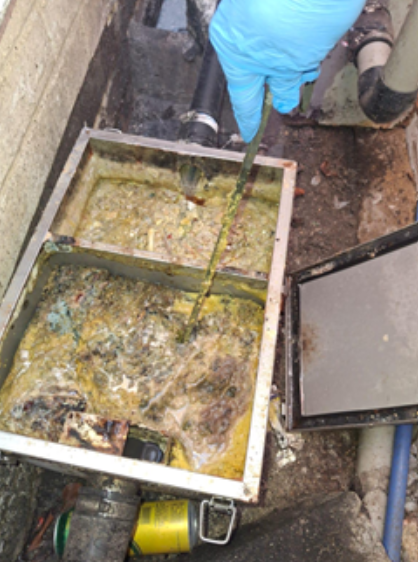
More than 2,500 restaurants and food businesses across London and the Thames Valley have installed grease management equipment commonly known as ‘fat traps’ in the past year. Fats, oils and grease (FOG) poured down sinks can cool, harden and stick to the inside of pipes. Over time, these materials build up and form large blockages known as fatbergs, which can cause sewer flooding, damage pipes and harm the environment. There are some 20,000 FOG-related sewer blockages across the region every year, said Thames Water, costing £40m in clean-ups. The water company has carried out more than 19,000 visits to food businesses across the region in the past year, installing 2,500 fat traps and helping businesses prevent blockages. Under the Water Industry Act 1991, it is a criminal offence to put substances such as fats, oils and grease into a sewer if they could cause blockages, damage the sewer network, or interfere with wastewater treatment. Food businesses are required to ensure they have effective grease management measures in place. Simply installing a basic fat trap is not enough if it does not ensure compliance and adequately prevent FOG from entering the sewer network. Thames Water’s network protection teams have encountered cases where equipment has been deliberately bypassed to avoid maintenance costs. In one case, a takeaway business cut away part of a fat trap and fed a pipe directly through the unit so that it appeared compliant from the outside, while allowing FOG to flow into the sewer network unhindered.
Last Orders
Diageo’s move to stop linking executive pay with the achievement of sustainability targets continues to create chatter among sustainability leaders. Emily Coon, sustainability manager at St Austell Brewery, said the move doesn’t look good, nor would she suggest others follow suit. “But before we all collectively reach for our pitchforks, I think we first need to ask the question: What happens if [Diageo is] actually doing this right?” she wrote on social media. The Guinness owner’s new long-term incentive structure is far more financially-focused, but whether that can be ‘neatly’ separated from climate change, packaging regulations, ingredients sourcing and all the other aspects of ESG is a source of debate. “How do you protect growth if water becomes a constraint? How do you protect margins if climate change affects the availability and price of ingredients?” Coon noted, adding: “Sustainability itself is a business continuity issue. Which means optimising for commercial longevity hinges on embedding a sustainability lens into decision-making.” Her comments echo those of chief sustainability officers and leaders interviewed for a Footprint in Focus feature published earlier this week, ‘Inside the great sustainability reset’, which explored whether companies are backing away from sustainability or actually embedding it. The feeling was that sustainability is “maturing” in some businesses as CSOs become strategic stakeholders. As Coon told Footprint: “I really hope this is not the end of altruistic sustainability, but I do think we need to stop pretending every sustainability intervention is going to have a beautiful business case attached to it.”