Scotland the brave – or foolhardy?
The eyes of food policy watchers were cast north of the border this week as the Scottish Government announced its programme for government for the next five years. While much of the media focus was on the controversial Food Prices (Scotland) Bill, which will establish legal price ceilings on some essential food items, the attention of health and environmental campaigners was piqued by an announcement, buried on page 48 of the 80 page document, that the recently formed Scottish Food Commission will be integrated into Food Standards Scotland (FSS), along with the Scottish Pubs Code Adjudicator.
The independent commission was formally established earlier this year to support delivery of the ambition for high quality, nutritious food to be available to everyone as set out in the Good Food Nation Act. Speaking to Footprint’s The Small Print podcast in April, its chief executive, Jayne Jones, explained the commission’s purpose: “We’re here to provide independent advice. We’re here to monitor progress and we’re here to help ensure that the ambitions of the act translate into real action through oversight,” said Jones.
The Scottish Government said both the commission and adjudicator would maintain their independent scrutiny functions within FSS, while Jones told Footprint: “Throughout the transition, our priority will be to protect the integrity and independence of each function and ensure continuity of delivery.”
However, the decision to integrate the commission with the regulator so early in its existence has raised concern among campaigners that policies to ensure Scottish food is good for health, the planet and communities will be deprioritised. “It’s hard not to see [the integration] as a demotion for this independent watchdog before it even got going,” wrote Anna Chworow from the charity Nourish Scotland in a blog.
Chworow also criticised the wider programme for government, suggesting that one would need “a big magnifying glass to find any meaningful proposals for food” – albeit she cited a long-planned expansion of free school meals in primary schools, and a national breakfast club offer for all primary schools from August 2027 as exceptions.
Meanwhile, the proposal to impose a mandatory cap on prices of some essential food items continues to divide opinion. Chworow described it as “a laudable intention, though incredibly scant on details”, while the Scottish Food and Drink Federation said the proposals were causing major concern across Scotland’s food and drink supply chain. “Despite publishing a very lengthy consultation paper running to nine chapters, the Scottish Government still cannot answer some of the most basic questions about its food price cap plans, including which products would actually be capped,” said FDF Scotland chief executive David Thompson.
The government has said its aim is to improve the affordability of food for households facing cost of living pressures. Thompson, however, insisted that food price caps won’t address the underlying causes of food inflation, including high energy, labour, commodity, packaging and regulatory costs. “Capping the shelf price of selected products does nothing to remove those costs and will simply push them elsewhere,” he warned.
Small Bites
Energy costs surged during summer heat
The succession of heatwaves experienced this summer drove a 19% rise in energy usage across UK hospitality venues, costing sites an additional £680 per month on average. Analysis from Zero Carbon Company found pubs were hit hardest followed by QSRs with restaurants least affected. Sector-wide figures were extrapolated from Zero Carbon Company’s own client data gathered during the 2026 summer heatwaves. The increased cost of refrigeration and air conditioning contributed to the surge in usage with one multi-site pub group experiencing an extra £48k in additional energy costs on a single day. Zero Carbon Company urged operators to plan ahead of the next heatwave and get their energy costs down by investing in energy analytics and behaviour change campaigns, rather than absorb the cost after it’s landed. It said its own energy and carbon reduction tool had helped a pub in Bromley cut its overnight energy use by 26%. “Knowing where your energy is being used can help avoid energy waste, particularly in heatwaves. That’s the kind of return operators can bank right now, whatever the weather does next,” said Mark Chapman, Zero Carbon Company CEO.
Food waste targets most likely to be missed
More than three quarters of food waste reduction goals set by UK hospitality businesses are being missed, according to new analysis of sustainability data. Hospitality consultancy, Horwath HTL, and sustainability platform and consultancy, FuturePlus, tracked the ambitions set by a sample of businesses against the actions they actually completed. They found a significant implementation gap around waste with 77% of food waste ambitions not completed within their original target timeframe and 70% of general waste reduction ambitions also missed. By contrast, 70% of overall hospitality sustainability ambitions were completed on time, with particularly strong performance across economic, social, and diversity & inclusion indicators. The research looked at primary sustainability data generated by businesses using FuturePlus’s platform to track their sustainability performance, covering nearly 100 hospitality properties in total. A report accompanying the research identified barriers to delivery including fragmented responsibility, inconsistent data and competing investment priorities.
Drinks giant decouples bonuses from ESG targets
Diageo has stopped linking executive pay with the achievement of sustainability targets as part of a strategic shift under new CEO Dave Lewis. In his foreword to the drinks giant’s recently published annual report, chairman Sir John Manzoni wrote: “While Spirit of Progress [Diageo’s ESG action plan] is no longer part of the long-term incentive plan, the accelerated work undertaken in recent years has embedded its priorities more deeply within the business and will continue to be a focus for the board.” The decision means bonuses paid to executives will no longer be linked to delivery of targets in areas like responsible drinking and environmental sustainability. These include a 50% reduction in scope 1 and 2 emissions by 2030, reaching net-zero in direct operations by 2040, and a 40% improvement in water-use efficiency in water-stressed areas. Some sustainability targets have recently been watered down with the Guinness and Smirnoff maker citing challenges with policy and infrastructure. The decision to decouple pay from sustainability targets comes at a time when many food and drink businesses are rethinking the place of the sustainability function within their organisations and with it the role of the chief sustainability officer – a trend explored in a special Footprint in Focus feature to be published on Monday.

Chef’s Special
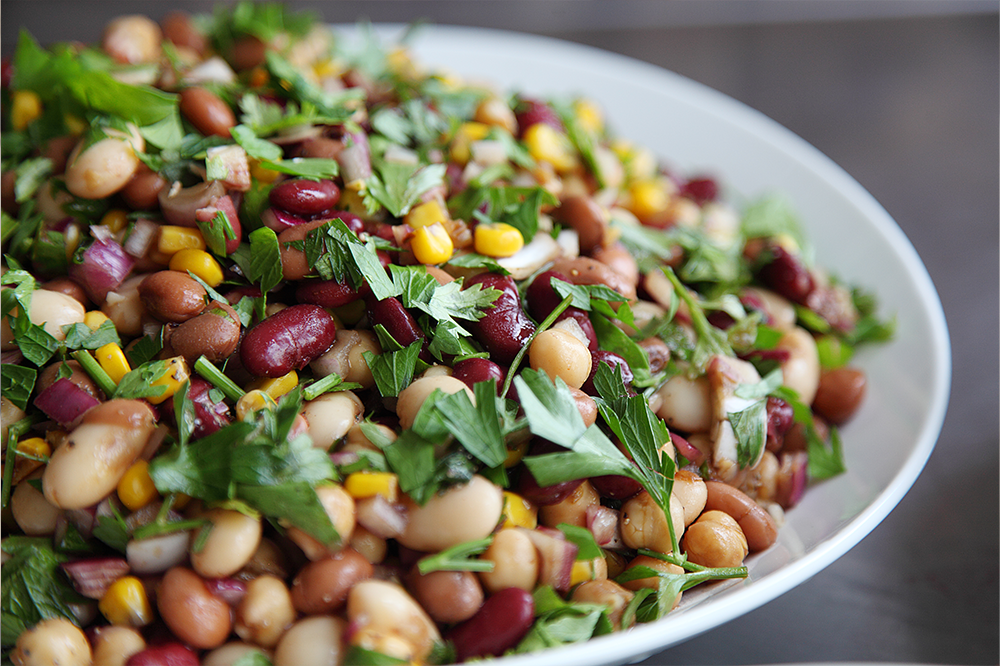
Is it time to anoint beans as the new rockstars of plant-based cuisine? It certainly feels that way. Beans not only have their own dedicated campaign – The Food Foundation’s ‘Bang in some beans’ – but the raw data to prove they are powering new growth in sales of plant-based products following a sticky period for the category. Analysis of NielsenIQ data by the NGO, Madre Brava, found that total volume sales of beans, pulses, tofu and tempeh grew by 7.3% in the first six months of this year (and 10.1% in value), with sales of dried beans, peas and lentils increasing by 16.7%, canned and jarred beans by 6.4%, tofu by 7.2%, and tempeh by a huge 71.5%. It’s part of a trend for people choosing simpler, higher-fibre plant proteins rather than processed products that seek to mimic the taste and appearance of meat. To illustrate the point, volume sales of plant-based meat alternatives declined by 4.3% from January to June versus the same period in 2025. While The Bold Bean Company has driven growth at the premium end of the beans category, budget beans are also seeing double-digit growth, according to Madre Brava. Its UK director, Sara Ayech, says the bounce back in plant-based sales shows people are “choosing foods that are a win for their health, their budgets and can compete on taste”.
Last Orders
With just over a year to go until the launch of the UK’s first deposit return scheme (DRS) for drinks bottles and cans, the drip drip of announcements coming out of Exchange for Change – now confirmed as administrator for all four UK schemes – continues to gather pace. This week, the news concerned the fee drinks producers will need to pay to help cover the costs of operating the scheme. The producer fee will be set at 0p for the first 15 months of the DRS’s operation, covering the period October 2027 to December 2028, with the aim of minimising costs for businesses at the scheme’s outset. Exchange for Change anticipates producer fees will then rise to 0.6p per unit for aluminium and steel containers and 2.3p per unit for PET containers, with the changes projected to take effect from January 2029 to December 2032. The fee level will be reviewed, validated and reconfirmed in May 2027. During the past six months, Exchange for Change has confirmed the deposit fee (20p per container) and return handling fee (which functions on a tiered basis), as well as exemption criteria for hosting a return point, and details of grants available for small independent retailers.