More than 100 businesses – including foodservice and drinks companies like McDonald’s, Restaurant Brands International, Heineken, Carlsberg, Coca-Cola and Molson Coors – are putting pressure on the European Commission to postpone some of its most ambitious packaging regulations.
The Packaging and Packaging Waste Regulation (PPWR) introduces stricter rules on recyclability, waste prevention and reuse, with some requirements coming into force as early as August 12th this year. It is billed as a seismic shift away from single-use, despite some targets having been watered down following lobbying by industry.
In a letter to commissioners signed in large part by CEOs the companies stated: “[…] given the limited timeframe and the level of legal uncertainty that persists, the PPWR risks not being implemented as intended without immediate clarification of key compliance requirements by the European Commission.”
The letter outlines 12 areas of the regulation where businesses have major concerns. One relates to restrictions on PFAS, or forever chemicals, which as Footprint reported on Monday are set to be the next real pain point for food and hospitality companies, both in the EU and the UK. The businesses argue that the methodology for testing for PFAS, for which strict limits will be set, is not in place. NGOs however point to the “very pragmatic” approach to enforce the PFAS restriction that has recently been published by the Commission.
The companies also rail against reuse and refill targets, arguing that ‘bring-your-own’ (BYO) options for takeaway products “introduce significant food safety risks”, which are further “compounded by the requirement for Horeca (catering industry) operators to enable BYO for delivery models, which is operationally unfeasible”.
They also challenge the environmental benefits of reuse over single-use, and want exemptions for when life cycle assessments show disposables result in lower emissions. Indeed, they refer to research by the European Commission’s Joint Research Centre (JRC) which “concluded that, for off-premises consumption, reusable packaging systems systematically deliver poorer environmental performance”. The results of the study in fact showed a variation in results depending on the specific use case and material.
NGOs shot back this week with a letter of their own. A broad alliance of over 160 Break Free From Plastic members and allies said the pushback “reflects a continued effort by the single-use packaging industry to delay structural change” that would bring environmental and economic benefits to the bloc.
The importance of PPWR in releasing the EU from single-use packaging was laid out in an article by the New Reuse Alliance in February: “Europe has been calling for reuse for over a decade. Citizens expect it, public authorities encourage it, and businesses are testing it. Yet, on the ground, volumes remain low and infrastructure is still in its infancy. This is precisely where the PPWR is a game-changer.”
Experts feel moving the goalposts now would be damaging, not least for the companies that have invested in preparing for the new rules. “In the UK the adoption of reuse has stagnated and legislation is a key driver to move it forward,” Sarah Greenwood, an independent packaging consultant told Footprint. “If big brands push against the PPWR then the same will happen.”
Small Bites
King’s speech all quiet on food
The UK Government laid out its legislative priorities during the King’s Speech this week – but there was no mention of food policy. Thirty-seven bills were announced by King Charles at the State Opening of Parliament including steps to “control the cost of living”. Yet measures to improve the food system and help families struggling to afford healthy food were nowhere to be seen, an omission that The Food Foundation executive director Anna Taylor found “remarkable”. She explained: “Food prices are a huge concern of the British public – cited by 92% of consumers in the most recent Food Standards Agency tracker, with 60% highly concerned, the highest level on record. Conflict in the Middle East is disrupting the supply chains that feed this country. A third of families continue to struggle to afford a healthy diet. British fruit and vegetable production has fallen 16% in a decade, and climate change is projected to drive food inflation up by a third by 2050. Yet the government chose silence.” Glen Tarman, director of policy and advocacy director for Sustain, said the King’s Speech “offered nothing directly to the millions of households struggling to afford a healthy diet, nothing to the farmers facing an uncertain future, and nothing to the businesses trying to plan for a food system that works long term”. More than 100 businesses, investors and civil society organisations have called for a Good Food Bill.
SBTi shifts 2030 target goalposts
The Science Based Targets initiative (SBTi) has published an update to one of its standards that experts say will effectively require companies to achieve a smaller reduction in greenhouse gas emissions. In a press release, SBTi said it had “updated the Absolute Contraction Approach (ACA) – the methodology companies use to set absolute emissions reduction targets under the Corporate Net-Zero Standard V1.3 and Corporate Near-Term Criteria V5.3. This brings the method into alignment with the methodological direction proposed under the forthcoming Corporate Net-Zero Standard V2.0, supporting a smoother transition for companies to move from Version 1.3 to Version 2.0 over time.” Decoding the jargon, the update relates to how SBTi calculates minimum ambition for near-term emissions targets. “The change is framed as a technical refinement [but] in practice it means significantly lower required reductions for many companies,” explained Pankaj Mohan Singh Tanwar, MD at CarbonBetter, a boutique consultancy. In a blog unpicking the consequences of the change, Tanwar noted the “genuinely difficult tension” SBTi is having to navigate (set the bar too high and companies drop out; lower it too much and the pioneers get punished). His advice? Take the change if it helps reset target-setting with clearer baselines, better data and more realistic operational plans. If it’s purely being used to reduce ambition, then “that’s a short-term decision with long-term consequences”, he cautioned.
Time to panic and push organic
“It is a beautiful early summer Sunday afternoon and you have stopped for a pub lunch, ”wrote Guardian environment correspondent Damien Gayle, this week. “A waiter sets down a roast served with carrots, peas, parsnips, potatoes and onion gravy, and then for pudding, strawberries and cream. It feels like the perfect rustic meal to accompany a day in the country.” And yet there is an unexpected cocktail accompanying the meal. “[A] report by Greenpeace […] has found the ingredients of the traditional Sunday roast have potentially been treated with a cocktail of more than 100 pesticides,” Gayle added. Seven of these pesticides are already banned in the EU. A handful of them are classified as forever chemicals (PFAS). “We can grow food without these products,” explained Tim Lang, professor emeritus of food policy at City St George’s, University of London, in a foreword for the new Greenpeace report, ‘Our poisoned land’. “Not as much, perhaps,” he continued, “but so much of the vast acreages of grain and seeds onto which agrichemicals are spread in a country like the UK don’t feed people directly. They produce feeds for poor animal converters, themselves industrialised and commodified.” Greenpeace is calling for a 50% decrease in the usage, impact and toxicity of pesticides and synthetic nitrogen fertilisers by 2030, plus a 10% target for organic agriculture.
Chef’s Special
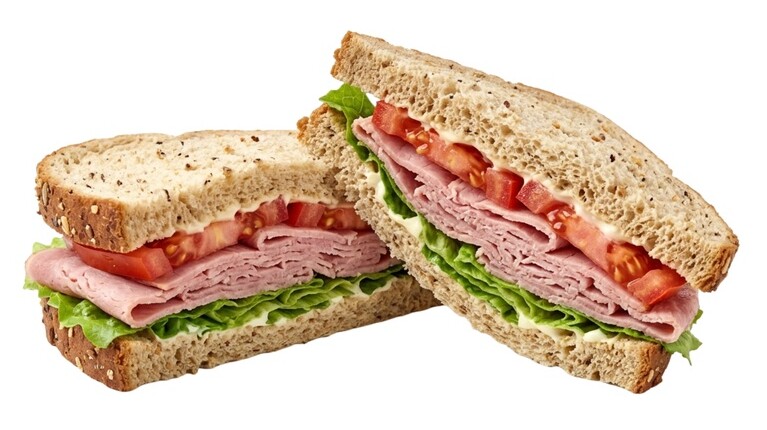
Sandwiches remain a lunchtime favourite; the default choice for many office workers. But there is no guarantee these are healthy and sustainable. The ‘2026 sandwiches report’, produced by Action on Salt & Sugar and Eating Better, showed (44%) of the sandwiches assessed were high in salt, while 97% failed to provide even a third of daily fibre requirements. Many also rely heavily on processed meats or dairy as their main fillings: three in four contained meat or fish, while only 6% were plant-based, “underlining the industry’s continued dependence on salty, animal-based options”. A total of 546 products were assessed, 35% of them from out of home chains including Caffè Nero, Costa, Gail’s, Greggs, Leon, Paul, Pret, Starbucks and Subway. Sandwiches from Caffè Nero, Costa, Gregg’s and Starbucks met their salt targets, while other companies had lower compliance. “Voluntary action has been allowed to drift for too long, and the result is a food environment that continues to put public health at risk,” said Action on Salt & Sugar’s Sonia Pombo, who called on the government to “step in”. Guidance on how to build a better sandwich has also been produced. “Because [sandwiches] are made up of so many components, they present a clear opportunity to shift the dial towards better health and a more sustainable food system,” the campaigners said.
Last Orders
Low- and no-cider has reportedly emerged as the “most appealing option” for non-drinkers considering such drinks, ahead of beer, wine and cocktails. A new survey by the National Association of Cider Makers, reported by Drinks Business, showed 58% of respondents confirmed they have reduced their alcohol consumption over the last year. When asked “compared to other alcoholic drinks you usually drink,” cider came out higher than other drinks in all categories, including taste, quality and value for money. The largest proportion of respondents said they mainly drink cider “at the pub”. Furthermore, 59% of consumers would prefer cider to come from a British producer. “The UK remains both the world’s biggest producer and consumer of cider, something us Brits should be very proud of,” said NACM CEO Fenella Tyler.