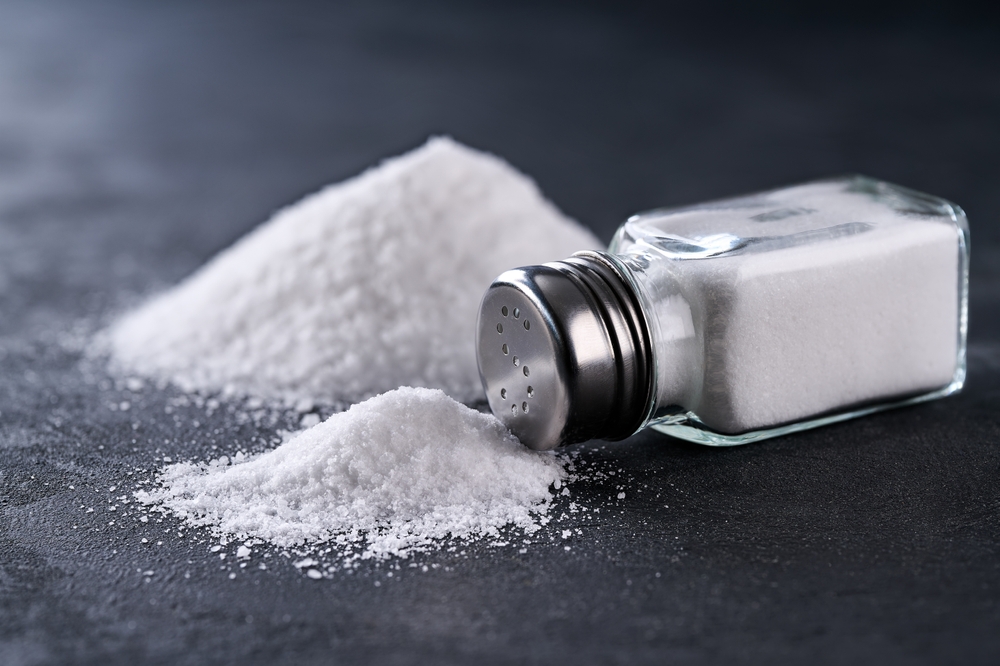
New research from the campaign group Action on Salt & Sugar has revealed worrying levels of salt in some of the UK’s most popular sandwiches sold by high street food-to-go brands and retailers. It’s now two years since the deadline passed for food businesses to meet voluntary salt reduction targets and still the government has failed to publish its report on industry progress. In the meantime, policy focus has shifted towards a more holistic approach to nutrition via plans for a healthy food standard. In this week’s episode, Nick is joined by Sonia Pombo from Action on Salt & Sugar to hear why salt should remain high on the health agenda and how businesses can play their part in helping lower our intake.
Subscribe to the podcast



Further reading
Where next for voluntary reformulation programmes?
As a new report shows precious little progress on calorie reduction the pressure grows on ministers to take a more hard-line approach
How might foodservice report healthy sales?
Announced in the 10 year health plan for England, the policy will require large food businesses to report publicly on the healthiness of their food sales and meet future targets
Transcript
Nick Hughes: Salt is back on the health agenda after a survey found excessive levels in high street sandwiches. Have businesses drop the ball on this key nutrient of concern? Hello and welcome to the Small Print, a podcast by Footprint Media Group. I’m Nick Hughes, Footprint’s Editorial director. Each week we delve beneath the headlines of an issue impacting the hospitality and food service sector through our unique lens of environmental and social affairs. New research from the campaign group Action on Salt and Sugar has revealed worrying levels of salt in some of the UK’s most popular sandwiches sold by high street food to go chains and retailers. It’s now two years since the deadline passed for food businesses to meet voluntary salt reduction targets and still there’s no sign of the government’s report on industry progress. In the meantime, focus has shifted towards a more holistic approach to product nutrition by plans for a healthy food standard. In this week’s episode, I’m joined by Sonia Pombo from Action on Salt and Sugar to hear why salt should remain high on the health agenda and how businesses can play their part in helping lower our intake. Sonia, thanks for joining us on the Small print. So your report on levels of salt in sandwiches sold across major supermarkets and high street chains has put salt back on the agenda at a time when one could argue sugar has become the main nutrient of concern for many people. Before we get into the detail of the report’s findings, remind us again why high levels of salt consumption are a public health issue.
Sonia Pombo: Yeah, thanks for having me today, Nick. Yes, so it’s not really. Salt isn’t really something that many people think about automatically if you, if you’re talking to them about healthy diets. But it has been well known for decades now. In fact, it’s probably one of the most researched nutrients out there that shows a really strong kind of like, correlation to, to, to, to our health. And it’s unusual because most people don’t tend to those who are consuming so much of it, a don’t realize that they’re having so much of it, but also they don’t really know where that salt is coming from. So it’s not the salt necessarily that we’re adding to our own foods, but rather that’s the, the salt that’s already present in, in the foods that we buy, not even the things that necessarily taste salty. So it’s, it’s in pretty much anything and everything. It’s even in cakes and biscuits. And it’s, it’s, it’s those little amounts here and there that just add up throughout the day and the impact that, that it has on our health is that it’s gradually raising our blood pressure over time. So throughout our life course, which is also why it’s really important, we often talk about making sure that children also eat less salt. If we get them used to having a lower salt diet, then it will hopefully reduce any of the kind of effects of having high blood pressure later on in life. So that’s, that’s, that’s the main cause. If we’re eating too much salt, it tends to raise our blood pressure and that’s one of the key modifiable risk factors actually, to, to death and disability. It’s, it increases our risk of not just heart attacks and strokes, but also things like chronic kidney disease, osteoporosis, so damage to our bones, but also to vascular dementia as well. The impact that it has on our health is, is huge. But as I mentioned before, not many people know about it. And it’s what we often refer to as the silent killer, because it’s quietly doing that damage to our health. And not many people get their blood pressure checked out as well. There’s about, I think there’s about a third of us in the UK already suffering from, from high blood pressure. Many more don’t even know that they have it. So it’s really important that it’s. That collectively we work together to, to reduce our salt intakes and that risk.
Nick Hughes: Yes. And of course, one of the occasions when we might not realize we’re consuming high levels of salt is eating lunch on the go outside of the home. Which brings us neatly to sandwiches, of course. Remind us, what was the scope of the research you carried out into sandwiches and what were the headline findings?
Sonia Pombo: Yeah, so sandwiches was a really good kind of insight to think about the wider food environment and the role that that has on our overall salt intake. Um, if we look at typical UK diets, we have. What we, what we have here in the UK is something called the National Diet and Nutrition Survey, which, which kind of observes and checks what people are eating. Every. The report gets published about every four or five years and the latest one was published last year, which found that sandwiches was the number one source of salt in our diets. But for many years before that, it used to be bread, but now sandwiches has taken over and it’s just because we eat so many of them, so many of us eat it on such a regular basis. It’s such a popular, convenient, affordable kind of lunch option, whether you’re making it at home or you just buying it as a quick meal. Deal from your, from your local supermarket on your way into work. And so what we, what we wanted to do was look at just how healthy or unhealthy these, these popular options actually are for us. So we looked at all of your kind of methods. Main high street supermarkets. I think there was only one supermarket that actually doesn’t sell any sound, any prepackaged sandwiches. So all the others we were, were included. But we also looked at kind of popular high street coffee shop for want of a better word, like fast food, easy convenience places as well. So your likes of like Gregg’s and, and Gail’s Subway, et cetera. And what we needed, what we needed was access to full nutrition information. So we used what was trans, what was physically available out there, whether it was on the product packaging or on the stores websites directly. So we haven’t calculated or estimated any of the values. It’s just exactly what the companies have said. And in total there were about just over 500 sandwiches that we surveyed. Would you, could you believe there’s so many out there? Of all your. We didn’t exclude any popular fillings or anything, anything that was your standard. You know, we, whether it was a wrap, a bagel, a bap, you know, regular sliced bread. We included all of them in there. More than 400 sandwiches available. And we found that if we were to use the government’s criteria for front of pack traffic light labeling, I know it’s not used in all settings and it’s also a voluntary system that’s supposed to be used for supermarkets. But we applied the same kind of thresholds and criteria for both supermarkets and out of home. And we found that using that criteria, nearly half, about 44, 45% of the sandwiches that we surveyed would be considered a high salt product. And by that it’s a, it’s any product that would have had more than 1.5 grams per hundred grams of salt in it or more than 1.8 grams of salt in a whole portion, which if you think the maximum limit that we should be having as an adult per day is about 6 grams, 1, 8 is about 33% of your daily intake. But not just that, we also found that they were also relatively low in fibre as well. About 97% of them would all be considered low in fiber. There were also very many, quite a few of them had high saturated fat content. And then we also compared them to a government kind of reformulation program targets. So you’ve got things like the salt reduction targets and also calorie reduction targets. And we found that about 1 in 10, so 12% specifically were exceeding the salt targets, which doesn’t sound like a lot. I think it’s, it’s good to acknowledge the, the 90 odd percent that were achieving the salt reduction target. I think that’s really good. But considering these targets should have been met by 2024, the fact that we do still have a good 50 or so sandwiches out there on the market that are above this target is a kind of testament to the lack of monitoring I guess and the lack of incentives that these businesses are getting to reduce the salt content.
Nick Hughes: Okay, great. So you mentioned you surveyed both supermarkets and high street food to go brands, the likes of Greggs and Subway, Gale’s etc. How did those out of home businesses perform compared with supermarkets and manufacturers as well? The out of home sector has tended to lag behind somewhat in voluntary reformulation of products. Was that the case here?
Sonia Pombo: Yes, yeah. Overall the out of home sector does tend to be saltier than supermarket products. But that wasn’t consistent across the whole entire sector. I think it’s also important to show that there were some really good examples. You had some out of home chains were performing really well. You had some good examples of companies that were meeting all of the salt reduction targets, calorie reduction targets. You had a much lower proportion of these products that were deemed less healthy because we also assessed them against the nutrient profiling model as well, the 2004, 5 version. So while they were, there were some examples and that’s probably because they would, they, they, the out of home sector are kind of like late bloomers in the reformulation kind of world. Right. So when the salt reduction program first began here in the UK in the early 2000s, it was very much directed towards the supermarket, you know, manufacturer and retailer kind of sector. The targets, whilst food businesses were encouraged to follow them, they weren’t really specific to the out of home sector sector. And I guess that’s just a reflection perhaps of how trends have changed. I think there is a growing popularity and reliance in the out of home sector. It is contributing, having a growing contribution to not just our salt intakes but our overall calorie intake as well. So they did. Whilst we do now have salt reduction targets for the out of home sector, they probably didn’t come in until I think it was, was for the 2017 target. So they were only about 10 or so years in I would say. But yes, as I mentioned before, there are some really good examples. There are some businesses that are, have taken the bull by the Horns, let’s say, and like really done their part to try and innovate and create lower salt versions. And that’s what’s really important from this survey. It’s not to demonize a food category or a food business, and it’s, it’s to demonstrate there was so much variation even within the same filling. Take a blt, for example. Whether it’s in the supermarket or the out of home, the variation in the salt content between different businesses was pretty significant, which just shows to us it’s not an issue of feasibility. It’s not to say, oh, you know, it needs to have salt in this. If they were all exactly the same, then granted, you know, we would agree that there’s very little that can be done in terms of reformulation. But to show that one type of sandwich can have two or three times more salt than another is down to the businesses that can make that difference and that change.
Nick Hughes: Okay, so let’s give the leaders some credit here. Which brands in particular stood out for delivering, you know, the best, the best progress, the best results against your criteria?
Sonia Pombo: So there are a couple of good examples out there. If we look specifically to the out of home sector, um, you had Greggs, Cafe, Nero Costa and actually Starbucks. They all had a hundred percent compliance to the salt reduction targets. Um, there are a couple of supermarkets also that did pretty well as Dr. And Lidl specifically, they did a hundred, they had 100% compliance to the salt targets. Um, there were also a few manufacturers as well, actually. So the Gym Kitchen came across as a really good one. They didn’t have any, any of their sandwiches exceeding the salt calorie. The salt targets, the calorie targets also, they were all non hfss as well. So some really good examples there of companies really doing, playing their part and trying to offer healthier sandwiches. I think the real issue that we’ve, that we’ve got at the moment and that we have had for quite some time is that we’re really leaning on businesses to play their role on a voluntary basis. So you’ll have some companies who, whether they’re actively seeking to reformulate and reduce the salt content or whether it’s just happened by accident, let’s say, depends on what they’re, you know, if they’re looking at sustainability things or just generally trying to provide like more vegetables and stuff to their food, and it’s a happy consequence that they’ve also reduced the salt content. But you know, regardless of what their incentive is to reducing salt, it’s very much a business choice at the moment. And we’ve got this situation where we’re all in this unlevel playing field where we’ve got business, some businesses doing what they can or going even further and others are just holding everyone back because they don’t want to reformulate for whatever reason. And there’s no consequences to that because it is a voluntary system. And we currently were in a position where the government isn’t monitoring the efforts to reducing salt. There are no kind of disincentives for businesses or incentives for businesses to reformulate. And so we are getting towards a bit of a stalemate at the moment where there isn’t enough happening.
Nick Hughes: Yes, well, I think it’ll be useful to recap where we are with voluntary reformulation programs for salt, calories and sugar, of course, because it feels like there was a period maybe three, four, five years ago where these were quite front of mind when it came to the food and health agenda and industry efforts towards improving the health profile of their products. But I don’t know, my feeling is the focus has shifted elsewhere in recent years towards advertising restrictions, promotional restrictions. We’ve now got the healthy food standard, mandatory reporting of healthy sales. Where are these voluntary reformulation programs? Let’s focus on salt perhaps. What was the last set of targets? When was that published? When should businesses have met those targets by and have we heard anything from government since then?
Sonia Pombo: The latest set of salt targets were published in 2020 and businesses had until 2024 to meet them. It’s now May 2026. We have not heard anything really specific to salt reduction. So when the salt program, this latest set of targets, was published in 2020, the government had committed to a progress review in the middle, which didn’t happen. And normally with these reformulation programs you then get a progress report or an evaluation report that also hasn’t happened. And what we’ve seen in the last year or so is very much a focus around not just advertising and promotions, restrictions and regulations. But you’ve got within the government’s 10 Year Health Plan they had committed to the healthy food standard, which talked about mandatory reporting of healthy sales food. And also once that comes about, then you’ll have this healthy sales target that they’re proposing. Businesses will have to kind of work towards. Their argument is that it encompasses, you know, the overall nutritional profile of a food product. So it’s, it is looking at salt, but not in isolation. It’s also looking at, you know, the fiber content, the fruit and vegetable content of these products, saturated fat and sugars. As well. But this is, this is quite far in the future, I would say the way that the process of getting this done could take many, many years. Whether it’s happens within this government’s time period. I know it’s all very volatile at the moment, who knows? But even if, if, even if everything was very smooth, I do think it would take to still take quite a long time to, to get through. And in the process, this focus on what that might look like has almost put everything else on pause because we don’t have new salt reduction targets. There’s not even a mention about salt reduction. I think everything now is just being kind of engulfed within the healthy food standards.
Nick Hughes: This year sees the launch of the first ever Footprint Festival, a two day experiential and immersive sustainability festival set on a working farm in the heart of the Hampshire countryside. Created for senior leaders across food service and hospitality, this one of a kind annual event takes place on September 6th, 17th and 18th. We’ll blend sensory experiences, transformative content, powerful networking and unforgettable food, drink and entertainment. Early bird tickets are now on sale. Visit footprintfestival.com for more details. A few things to pick up on there. It feels like firstly, we’re in a moment where we’re shifting towards perhaps a more holistic assessment of what a healthy product or a healthy portfolio even looks like, rather than a focus on individual nutrients so much. And like you say, that the healthy food standard, as much as it has been welcomed and the ambition has been welcomed, its stickiness is perhaps under a bit of a cloud at the moment, given all the changes we’re seeing politically and the, the departure of the Health Secretary that has championed it and, you know, the prospect of a new leadership taking a slightly different direction. I guess the other point back to reformulation is that the deal was always, wasn’t it? You know, we want to give you the opportunity as businesses to voluntarily reformulate products so that we don’t have to regulate. And if you look at salt, 12% of the products that you surveyed hadn’t met the salt reduction target. So I guess you could read that reasonably optimistically that 88% have and businesses might make the argument, well, look, we’ve kind of moved en masse and hit a lot of these targets. There is no longer a case for regulation. I’m guessing you think slightly differently and that that 12% is still significant enough to suggest that we do need to put these targets on a kind of, you know, statutory footing.
Sonia Pombo: Yeah, it’s important to remember that this was just one small significant category of food. But there are many, many other food products out there. And we’ve done these surveys many times and shown much less compliance to these salt targets in comparison. And I think we need to go back to the importance of reducing salt. So I mentioned, or I might not have actually, but the maximum, that the recommendation for salt in our diets is that we should be eating no more than 6 grams of salt per day. And currently we’re having about 40% more than that. And there was a really good stat that the department put, the Department of Health put out a few years ago. For every one gram of salt that we can reduce in our population diets, we can Prevent more than 4,000 premature deaths from heart attacks and strokes. That’s really what the issue is here, that such a small, simple ingredient is having a huge impact on our health, on our health, on our economy, on the healthcare system as well. And with most of that salt in the foods that we buy, it’s really important that we do what we can to reduce the salt. And I know, yes, it’s great to look at it more holistically because salt’s not the only issue. Of course, we’re not eating enough fibre. That was a good example. The sandwiches, sorry, was a good example to show that, you know, we’re not eating anywhere near as much fiber as we should be. But the healthy food standard has a real focus around obesity. Specifically, like in the 10 year health plan they talked about it being the, the moonshot to end obesity. And what, what we’re concerned about, action on salt and sugar, is that it’s important to remember that blood pressure impacts people regardless of their weight. It’s independent of whether you’re eating too, you know, if you have too many calories or you’re above a normal weight. So. And it impacts everybody. We’ve even seen it, you know, it’s more likely to impact people. For more vulnerable, marginalized groups or, you know, more deprived groups as well, we see that more deprived people from more deprived areas tend to eat more salt for whatever reason and they have higher rates of blood pressure as well. If we were to just focus on calories or to just focus on sugar, whilst yes, they are all important things, if we just focus on those, we, we risk kind of undermining and, and, and ruling out or missing out an equally important factor, which is salt.
Nick Hughes: One point I that caught my eye within the survey, the sandwich survey, was a continued dominance of meat based sandwich options versus plant based options. I think only 6% of those surveyed were plant based and that obviously plays both to the high salt levels because common meats like ham and bacon tend to be very salty. But it also has sustainability implications and I just wonder why. And this has been an issue for a while. I know Eating Better has, has done a lot of research and work in this area. It’s not a new, a new thing. Why do you think sandwiches are still dominated by animal protein? Is it a lack of consumer demand for alternatives? Is it a lack of imagination among product development teams? What do you think?
Sonia Pombo: It’s a good question. Yeah, I know Eating Better have done quite a lot around this in this space. They’ve previously looked at sandwiches and looked at their sustain the kind of the, the ratios of meat and non and non meat options. And even within the not meat, non meat options, the vegetarian sandwiches are predominantly dominated by cheese and dairy products as well. Which of course still equally has a problem, an impact on sustainability. But as to why there isn’t as many, I don’t know. That’s a really good question. It probably is probably not one single reason for that. It probably is consumer preferences. There might be some familiar familiarity and you know, people typically tend to go for the same standard sandwich, whether it’s a ham and cheese or a tuna mayo or something. I think there’s loads of opportunities there probably for particularly in the out of home sector where you can make products from scratch. It could be like a shelf life issue or something else as well, especially if it’s in the supermarket ones. But if you’re making sandwiches from scratch, I think there’s loads of opportunity there to get innovative and, and, and try out more plant based options because that you can. And what I was really pleasantly surprised to see in this, in this report, unlike when, when we’ve done previous reports looking at kind of a particular food category and then comparing the plant based alternatives or the meat alternatives rather options out there. Unfortunately it being plant based doesn’t all, doesn’t always necessarily automatically make it a healthier option. It might be from a sustainability and welfare point of view but we often found like if you look at meat alternatives a lot of the time they would still add in in many cases more salt in them or saturated fat as well. So they don’t necessarily automatically make them a healthier product. But what I was pleasantly surprised to see in, in this sandwich report that was that they were actually higher in fiber, they were not higher in salt, they were lower in salt and they were just generally healthier for you. So it’s a really good opportunity and avenue I think, to be getting those healthier nutrients in us. We just need food businesses I guess, to like you say, be more innovative and provide some better options for us as consumers.
Nick Hughes: Yes, the other, the other thing maybe that explains it, is technical limitations with plant based sandwich options. I did a piece of work a number of years ago with a major caterer looking at the opportunity to reformulate a range of sandwiches to lower their carbon emissions. And most of the changes were rejected by the technical team because they compromised the product’s integrity. Essentially when you add lettuce, leaf, vegetables, etc. To a sandwich, it can make the bread too soggy. And so actually it does kind of compromise the product itself, which made me wonder whether sandwiches are actually the right vehicle for increase increasing plant rich lunchtime options or do we need brands to be more creative in offering alternatives like salads and poke bowls which are gaining traction in the market and also making these part of meal deals because meal deals provide a great opportunity and this, this was mentioned in your report to nudge people into choosing healthier, more sustainable options, don’t they? And for sandwiches that could mean a lower salt version or it could mean a higher fibre version.
Sonia Pombo: Yeah, yeah, no, I agree with that. And I guess the challenge with sandwiches, particularly around salt, is that you know every single kind of like layer and when you construct a sandwich they’re all pretty salty ingredients, not just your cured bacon or your salty like you know, tuna and brine. But it’s also the late, the bread I mentioned before, bread being a really big contributor of salt to UK diets, the, the kind of, any kind of sources that they add to it. I can see why sandwiches would be a high salt, high salt product, but I don’t want to suggest that we should be abandoning sandwiches. Yes, increasing it to, to other types of lunch choices would be great to have. And you do see in quite a few high streets now supermarkets, they do include things like salads in their, in their, in their meal deals and lunch to go options. Um, but I think there’s still opportunity that even within sandwiches, especially in the, out of home. So you mentioned lettuce and the feasibility of like putting that in a package sandwich and the fact that it will make it go soggy. But out of home you don’t, we don’t have that kind of issue because most of the time it is made fresh. So that would be a great opportunity to, to bring in some extra fruits and well, not maybe not fruits but vegetables in there and, and beans. And things like that. Beans and pulses would be a great opportunity.
Nick Hughes: Yes, yeah, absolutely. So, Sonia, before we close, based on the results of the sandwich survey and your work, your broader work on salt reduction, what are your key asks off the back of the research to government and to businesses with regards to the ongoing importance of focusing on salt reduction? And is there anything specifically, any specific policy levers you’d like to see used where the out of home sector is concerned?
Sonia Pombo: Yes. So. Well, I’ll answer that last question first, specific to the out of home sector, I think because it does have such a growing importance and contribution to our overall diets. They are so convenient and there’s so many options out there now, but we don’t have anywhere near the level of transparency that we might get in the supermarket in the, in the retail sector. So by law, supermarkets have to provide the back of pack nutrition tables on a voluntary basis. Although definitely with sandwiches, we saw the vast majority of them, they did have front of pack colour coded labeling and that’s hugely beneficial, beneficial for us as consumers. We can see at a glance very clearly whether a product is high, medium or low for not just salt, but saturated fats and sugars, et cetera. But we just don’t have any of that with the out of home sector. The most we have is mandatory calorie labeling on menus. That’s been around for a year or two. And I just think it would be really good if companies were more transparent with their information. Now, all of the companies that we included in this report, they did all have, except for Paul’s, I think they didn’t have any nutrition information on their website, but all the others did have it on their website and a couple have it at point of purchase as well. So when you go into the store, they might have these labels on the packet, but otherwise, unless you’re really health conscious and you know where to look, you have to really look for that information. Um, it’s not always consistent either. So some, some, some of the out of home companies like Gale’s, they had their salt information in milligrams, so it looked even more confusing. They, they talked about their sandwich being 6,880 milligrams instead of grams, which is what we’re more used to in this country. So having that kind of increased transparent not only would be helpful for consumers, those who are actively looking to reduce their salt, but we’ve seen it with the supermarket sector that having front of pack labels or being more transparent with that information incentivizes the businesses themselves to reformulate because they don’t necessarily want to make it. Not that they don’t want to make it clear, but having that information really clear for their consumers can be a little bit off putting for a consumer or food businesses, a food business. And they want that, that is in itself a helpful incentivizer to maybe think about how they can reduce the salt content. And the key here is definitely, as I mentioned before, gradual reduction. So not suggesting that you should cut the salt content by half, but you know, just small little tweaks, whether it’s a change in your supplier for your bacon or your bread, slightly less you butter one side of the bread instead of both. You know, all these little tweaks will have a really big impact on your overall salt intake. And what we really want from the government is to bring salt, bring salt back in as a primary prevention strategy within their, within their, within their policy areas. So as I mentioned, with the 2024 targets, we don’t know how companies have done. We’d really like to see a report out there to see how companies have fared against the targets who. And we need to know how that’s impacting our overall salt intakes. So the last, where I mentioned we’re eating 40% more than the maximum intake, that’s based on data from, from 2018. Um, and from my understanding, we’re not going to get another new report like that for another two years or so. So we’ve got this 10 year timeframe where we have no idea whether those salt levels are actually creeping up now. So we need to know how we’re eating and we need to really bring salt back in, resetting these targets, making it a really a real core part of the prevention strategy, not just embedded within the healthy food standards.
Nick Hughes: Okay, well, look, you’ve certainly successfully put salt reduction back on the agenda with your report. I know you’re doing an extensive media round talking about the findings. So thank you for coming on the small print, Sonja, and sharing your insights.
Sonia Pombo: Thank you very much for having me.
Nick Hughes: We’ll be back next week with another episode of the Small Print. If you like what you’ve heard, please take a moment to rate, share and subscribe.