Cereal offender
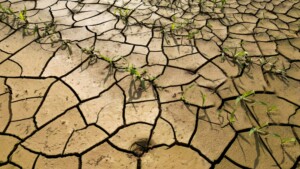
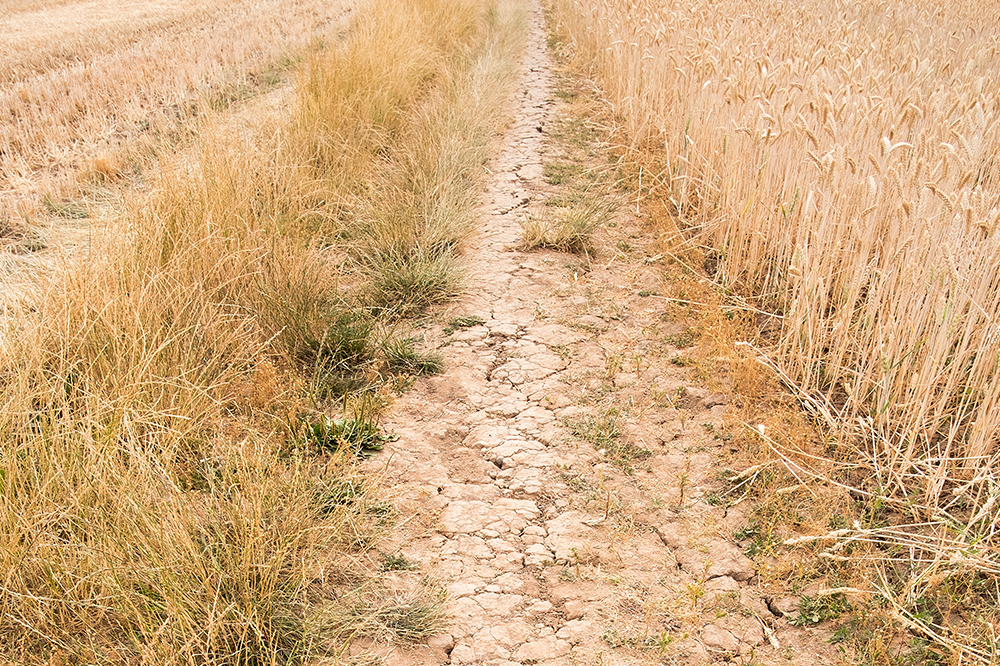
The brown fields and dry rivers have told their own story, but the data crunchers at the Met Office have now confirmed what we can see with our own eyes – that the British summertime has once again played host to exceptional weather extremes.
Multiple heat records had already been smashed during May and June, contributing to drought conditions affecting the whole of Wales and around half of England. Now, the Met Office has confirmed England and Wales provisionally recorded their driest July on record, with Southern England seeing its driest month ever recorded, dating back to 1836.
From cereal crops to fresh produce, the knock-on effect on agricultural yields and food supply chains is already becoming clear. Provisional yield estimates produced by the Agriculture and Horticulture Development Board (AHDB) suggest that wheat, spring barley and oat yields will all be down on previous harvests. The estimated wheat yield with 54% of the harvest complete stands at 6.8 tonnes per hectare, well below the ten-year average of 7.9.
Although average yields are lower than expected, AHDB said its results show considerable variation between farms with several factors appearing to contribute to the differences, including soil type and its ability to retain moisture, the use of organic fertilisers, and the variety of crop chosen and seed type.
In new analysis, in which it extrapolated the AHDB data for the entire harvest, the Energy and Climate Intelligence Unit (ECIU) calculated that if current average yields hold, the UK cereal and oilseeds harvest would be 19.5 million tonnes (mt), surpassing 2020 as the worst harvest on record since detailed records began in 1984. This is despite good yields being forecast for oilseed rape. It added that even if yields are revised up, 2026 is now likely to be one of the five worst harvests since 1984, which would mean that four out of five of the worst harvests on record had occurred this decade after periods of extreme weather made worse by climate change.
Successive heatwaves in May, June and July hammered cereal crops, depriving grains of the moisture they need to fill out and add yield. A near total absence of rainfall since mid-June in some key growing regions such as the East of England has compounded the impact of the extreme heat. ECIU said overall production could be down as much as 2.5mt compared to early season forecasts which, at current prices, could lead to a loss of revenue for UK farmers of between £293m and £390m.
The pattern is being replicated across Europe with Coceral, the trade body for European cereals, rice and oilseeds producers, having recently slashed a further 9mt from its June forecast for the total 2026 grain crop covering the EU 27 nations and the UK.
The impact of hot weather and lack of rainfall is also being felt beyond arable crops. In its recent crop reports, wholesale supplier Fresh Direct has highlighted sustained pressure on brassica crops and challenging growing conditions for lettuce and tomatoes.
Challenging growing conditions are expected to lead to a fresh surge in food prices, which have already been impacted by higher input costs linked to the war in Iran.
Tom Lancaster, land, food and farming analyst at ECIU said farming is now the sector most exposed to climate change and the risks and damage that it brings. “From the wettest winter on record in 2024, to the hottest summer in 2025 and now unprecedented heat and drought this year, we are in danger of UK farming entering a climate doom loop, as repeated impacts undermine the capacity of farmers to drill next year’s crop,” he said.
Martin Lines, CEO of the Nature Friendly Farming Network and a farmer from Cambridgeshire, added: “I’ve never known it this dry and hot on our farm. […..] The nature-friendly practices we’ve deployed on the farm have helped our soils hold on to water for longer, but there’s only so much you can do to adapt to these sorts of extremes.”
This week, the National Farmers Union called on the UK Government to focus on shoring up domestic food supplies by prioritising water for food production. Among a series of measures to bolster water resilience, it wants to see flexible abstraction licences so farmers can take and store water when it rains for use at times of shortage, and support for investment in on-farm reservoirs.
Small Bites

NFU demands action on Brazilian meat risk
Ministers are coming under pressure to suspend imports of Brazilian beef and chicken unless the country’s authorities can prove that animals have not been fed banned antibiotics. The National Farmers Union (NFU) is calling on the UK Government to place a precautionary ban on imports of Brazilian beef and poultry if the country does not demonstrate that it is using antibiotics responsibly. It follows the EU’s request for Brazil to provide evidence that meat products are not derived from animals that have been treated with antimicrobials that are reserved for human health or that have been used for growth promotion or yield improvement. Brazil has been given until September 3rd to provide the evidence or the EU has said it will remove its authorisation to export. The use of antibiotics for growth promotion has been banned in the UK and EU since 2006, while voluntary UK measures to reduce dependence on antibiotics deemed critically important for human health have resulted in an 83% decrease in their use. The NFU said failure to act would undermine UK farming’s progress in tackling antimicrobial resistance and erode public trust in the food sold in Britain. “If an EU ban is implemented without the UK mirroring it, we could also see a significant influx into the UK of Brazilian beef and poultry imports,” warned NFU president Tom Bradshaw. Brazil is the EU’s largest supplier of chicken, exporting 211,000 tonnes to the bloc in 2025, and is also a significant non-EU supplier to the UK market.
Businesses renew demand for Good Food Bill
Over 100 organisations including supermarkets, suppliers and wholesalers have joined the latest call for the UK Government to bring forward a Good Food Bill. Bidfood, Greencore, Aldi and Tesco are among the business signatories to a letter to the new prime minister, Andy Burnham, urging him to urgently introduce a bill aimed at increasing national food security and improving health outcomes. In the letter, which is also signed by a range of NGOs and academic institutions, Burnham is asked to ensure the UK’s food system becomes a national priority, alongside energy and defence. A Good Food Bill would set legally-binding targets to inform future policy design, building on policies already delivered or under development. The campaign is being led by The Food Foundation, Green Alliance and Sustain as a response to the repeated shocks that have impacted the food system in recent years, including extreme weather and international conflicts. “The next food shock is not a question of if, but when,” the letter states. “To meet it prepared, food has to stop being an afterthought for the government: we need mechanisms to put food high on the priority list of every part of government, both national and local, so that any decisions that impact on health, farming, planning, and trade secure better access to healthy and sustainable food for everyone.”
Redistribution sector joins forces to repurpose surplus
Plans to triple the level of food redistributed in the UK over the next decade have moved a step forward after the seven main food redistributors pledged to work collaboratively to achieve the goal. The Bread and Butter Thing, City Harvest, Community Shop, Feeding Britain, Felix, His Church, Neighbourly and Xcess Network have all signed a new covenant made up of 18 principles that will help deliver the significant uplift in surplus food being redistributed to those in need. The covenant sets out a shared approach to key focus areas like governance, programme management, food sourcing, logistics and allocation, which taken together will enable charities and community food redistributors to secure and redistribute more surplus food, according to the group. The covenant also commits signatories to ensuring that food redistribution is not seen as a way to solve food insecurity. “We believe this work must be accompanied by policies that tackle the root causes of poverty, hunger and hardship, and there is real power in this group collectively supporting those efforts,” said Matthew van Duyvenbode, co-CEO of Trussell, the anti-poverty charity and community of food banks that is supporting the overarching goal. The covenant forms part of the larger national programme to redistribute surplus food announced by former prime minister Sir Keir Starmer following the King’s Speech in May.
Chef’s Special

Recent reports of shortages in the supply of cucumbers have once again focused minds on the risk to fruit and vegetable supplies from extreme weather. That’s what made Sainsbury’s framing of a new 10-year partnership to supply British cucumbers particularly notable. The supermarket said the 10-year agreement with Evesham Vale Growers and Thanet Earth will improve resilience in a category historically impacted by weather-based shocks. The idea is that by giving UK growers confidence to invest for the long-term, Sainsbury’s will reduce its reliance on imports from key producing regions in Europe and Africa where extreme heat has impacted yields and quality. Britain is currently only around 20% self-sufficient in cucumbers; Sainsbury’s said the deal would extend availability beyond the summer season into the winter months and secure British-grown produce at a time when the category has traditionally relied more heavily on imports. It expects to increase the volume of British-grown whole cucumbers on its shelves by up to 60% this winter.
Last Orders
Heineken is to pay UK farmers a premium for producing barley grown regeneratively as part of a new supply chain collaboration. Farmers in key barley-growing regions of England and Scotland will receive payments for adopting regenerative agricultural practices such as reduced soil disturbance, use of cover crops and diverse crop rotations. Practices will be bespoke to each farmer, with the malting barley used across the brewer’s UK portfolio of beers, including Heineken, Cruzcampo, Birra Moretti, John Smith’s, Foster’s and Amstel. The first yield is due to be harvested in 2026, and brewed and served to customers in 2027. The programme is a supply chain wide collaboration that also involves maltsters Muntons and Boortmalt, barley merchant Cefetra, and independent agronomists Soil Capital, who will measure the outcomes from changes to farming practices across indicators such as soil health, biodiversity and water management. Heineken said the programme has been designed to make the transition to regenerative farming commercially viable for growers, not just environmentally beneficial.