Sodexo bucked the wider hospitality sector trend in 2025 by hitting its target to cut food waste by 50%, five years ahead of the SDG 12.3 and UK Food & Drink Pact targets. To mark International Day for Food Loss and Waste on September 29th, Claire Atkins-Morris, sustainability director for Sodexo UK & Ireland, talks Nick through the strategy that has underpinned the caterer’s food waste reduction success and the landmark moments that have helped unlock £3.6m in food cost savings since 2015. Claire highlights the transformational impact of technology that gave Sodexo visibility over food waste data at a granular level, and details the activities, including chef engagement and employee-facing campaigns, that drove operational improvements. She also stresses how food waste reduction has not been a sustainability-led programme of work, but a top-down approach driven through core functions like finance and owned by senior leadership.
Subscribe to the podcast



Further reading
Can food waste reduction get back on track?
A 2030 target to cut food waste by 50% is in danger of being missed. Government and businesses need to seize the opportunity to turn things around
Is upcycling of food waste viable at scale?
Perceived as fiddly and time consuming, utilising kitchen prep waste or surplus can often be seen as a marketable extra. But can practices be changed to make upcycling the everyday norm?
Transcript
Claire Atkins-Morris: We would never have been in this position without absolute leadership. And it’s not been sustainability led. You know, we’ve very much been consulted and informed, but it’s been one of those sustainability initiatives which has been very much top down. Like there’s been financed that do the dashboards and say this is where regions have deployed, this is where regions are compliant, this is where regions have adopted effectively and these are your hotspots where you need to focus on. And that’s been grouped down into CFOs, into CEOs, and then into each of those regions say this is where you need to focus on. And I think organizations, if you don’t have that level of governance, whether that’s financial or non financial, the rigor isn’t there.
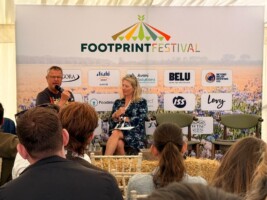
Nick Hughes: Hello and welcome to the Small Print, a podcast by Footprint Media Group. I’m Nick Hughes, Footprint’s Editorial Director. Each week we delve beneath the headlines of an issue impacting the hospitality and food service sector through our unique lens of environmental and social affairs. Sodexo bucked the wider hospitality sector trend in 2025 by hitting its target to cut food waste by 50%, five years ahead of the SDG 12.3 and UK Food and Drink Pact targets to mark International Day for Food loss and waste. On September 29, Clare Atkins Morris, sustainability director for Sodexo UK and Ireland, joins me to talk through the strategy that has underpinned the caterer’s food waste reduction success and the landmark moments that have helped unlock 3.6 million pounds in food cost savings since 2015. Claire highlights the transformational impact of technology that gave Sodexo visibility over food waste data at a granular level and details the activities including chef engagement and employee facing campaigns that drove operational improvements. She also stresses how food waste reduction has not been a sustainability led program of work, but a top down approach driven through core functions like finance and owned by senior leadership. Claire, welcome to the Small Print. It’s great to have you join us fresh from a starring role at the Footprint Festival. Of course. How are you?
DEADLINE EXTENDED: FRIDAY 2ND OCTOBER
Claire Atkins-Morris: I’m very good, very much enjoyed the Footprint Festival. Had a good weekend and the sun is shining.
Nick Hughes: Superb. Well look so this week. Well Tuesday 29th September in fact is International Day for Food loss and Waste. So we thought it would be a nice opportunity to showcase an example of successful food waste reduction. And Sodexo had successfully managed to reduce your food waste by 50% by August last year. That’s five years ahead of the UN Sustainable Development Goal 12.3 target for 50% by 2030, which of course also forms the basis for RAPs food waste reduction target under the UK Food and Drink pack. So this is, I guess, particularly notable because overall the UK looks set to miss that 50% by 2030 target. I think we’re currently on track for about 30% by 2030. And food waste within the hospitality and food service sector overall actually increased by 8% between 2007 and 2021. That’s according to a RAP report from last year. So perhaps things have got substantially better in the, in the five years since those figures were recorded. But. But I’m sort of skeptical that’s the case. So firstly, well done for bucking the trend and we’re going to discuss how you’ve managed to achieve that. Okay, so let’s start by going back to 2017, when the original target was set. Why did you settle on 50%? I mean, presumably to align with those other targets that I mentioned. But good to understand how much analysis and modeling of went into assessing how deliverable 50% target was. Or did you actually see it back then as more aspirational?
Claire Atkins-Morris: Well, I suppose, you know, 2017 was a long time ago. Can, you know, just thinking about where were we? I had less gray hair then, but I know back in 2015 we’d already started to engage with technology providers to be able to measure food waste. So. So a pilot was done back in 2015 to determine how achievable it was. And you have to remember that this was a global sustainability strategy. It’s not just focused on UK and Ireland. So the team at the time would have been closely looking at the UN Sustainable Development Goals, which would have been very much aspirational back in 2017, 2017, and aligned with it. You know, there was a lot of research and data put around the stgs to define the case for it, and it started a bit of a movement. And within sodexo, we deliver a lot of food every day across a very diverse portfolio. It felt like not an easy target to go for, but it felt very aligned to our business model and very aligned to the sustainability strategy that we were deploying at the time called the Better Tomorrow. So that ran from 2015 and I think the momentum sustained. There was always talk around food waste with our clients, so there was always operational efficiencies that could be done. And no matter what market we were talking in, there felt like there was an appetite to look at food waste, but not really the understanding or knowledge to know what to do with it. And you’ll know from a sustainability perspective, there’s ebbs and flows in terms of what’s hot, what’s not. Food waste has been relatively consistent, never sexy, never a leading metric, but very fundamental to any food business.
Nick Hughes: Yeah. And an example of where the sustainability and economic case for action very, very clearly align as well.
Claire Atkins-Morris: Yeah, yeah, it was, it’s really tangible. So if you’re measuring it, you can see straight away the improvements purely from a change management perspective. You’ve got the, the data, the individuals on site can see that they’re moving in the right direction. Whereas if you think about tracking scope three as we do, it’s really complicated, very methodologically driven, I think that’s the right word. And it seems far away from individuals day to day work and influence, whereas food waste is, is really tangible. I’m surprised, I suppose I’m surprised that Sodexo’s achieved the target. Not surprised because the next is achiever, but surprised that we’ve achieved and others haven’t. I would assumed it would have been an easy one, but we’ve invested in this, not only from a monetary perspective, but invested a lot of time, effort, strategy, resources, governance into delivering against it.
Nick Hughes: Yeah, well, on that point, 2015, you’ve started engaging tech providers in food waste reduction. You’ve then set this 50% target. Was there an overarching food waste reduction strategy then developed at the start for the UK and Ireland business specifically because as you said, this was a, you know, a group level initiative. What did that strategy look like at the start? If indeed there was one put in place?
Claire Atkins-Morris: Yeah, and there would be. And you know, I’m talking about predecessors who I still meet. It’s so nice to sort of but bump into individuals that did my role at the time. But. Yeah, so if you’re going to take on a sustainable, global sustainability strategy, you then need to be able to then deliver it within a region. So if I think about the governance that we have now, that’s just been been built on the governance that was then. So these are the global targets. It’s your market, but you tell us how you reach it. And therefore whatever metric was in place, it was always done from a very centralized view, but recognizing that there was different markets in place, annual audits, annual progress reports, then kept everybody aligned to the direction of travel that the sustainability requirements met. Some markets met it easier than others. But I know from a group perspective, last year we weren’t too far off and this year I can’t, you know, it feels like a Bit of a spoiler and it’s not been fully put out there. But this year, you know, really great momentum to close that that gap.
Nick Hughes: And has there throughout been genuine leadership buy in to identifying and pulling the levers needed to deliver food waste reduction at scale. Because we’ve seen I guess a little bit with net zero targets that the target setting part is the easy part. And if you don’t have the opportunity to re sort of model the business in a way that allows you to deliver deep decarbonization, you’re just not going to get anywhere close to those targets. But with food waste, has there been that real concerted leadership buy in throughout?
Claire Atkins-Morris: Yeah, we would never have been in this position without absolute leadership. And it’s not been sustainability led. You know, we’ve very much been consulted and informed, but it’s been one of those sustainability initiatives which has been very much top down. Like there’s been finance that do the dashboards and say this is where regions have deployed, this is where regions are compliant, this is where regions have adopted effectively. And these are your hotspots where you need to focus on. And that’s been grouped down into CFOs, into CEOs and then into each of those regions. Say this is where you need to focus on, I think organizations. If you don’t have that level of governance, whether that’s financial or non financial, the rigor isn’t there. And tonally again, you’re connecting it to people’s bonuses, it’s connected to a financial incentive like a revolving credit facility, it becomes embedded into. This is how we operationally and perform. This is not sustainability. And showing how we do sustainability.
Nick Hughes: Yeah, absolutely. So let’s talk through some of the landmark moments I guess in your food waste reduction journey. It seems that this relationship with Lean Path isn’t. It was, was key in giving you visibility over where food waste sat within the business. Talk us a little bit about that relationship and how it developed and what opportunities that data unlocked.
Claire Atkins-Morris: Yeah, so it’s a global partnership with Lean Path. And you’re absolutely right and I’m not going to say the quote that seems to be following me around now on LinkedIn. But data is pertinent and they know where to then drive that insight. And we were having conversations with our ops team and with our chefs going, how do you feel about food waste? And it was very much like, you know, there is food waste, but we don’t feel it’s a lot and we are managing it, et cetera. And that’s just A feeling, and actually working on feelings doesn’t then create tangible results. So Lean Path or any technology provider was a game changer. So straight away we could see where first of all we were aligning where our primary raw material cost was. So again, it wasn’t, let’s just deploy everywhere and see what happens. It was very much like, let’s be very driven by the data. Where have we got key areas where food waste could be produced? Let’s get the data, the technology, into those areas first and then prioritize sort of more of the tail. I don’t really like saying the tail, but, you know, start with the big impact and then move across. But the moment you started to see the data, the moment people then started go, hang on a minute, not just I can see this data, but it can be rolled up lots of different ways. So you can see it globally, regionally, you can see it from an account director level. So then all of a sudden people are like, I’ve got nowhere to hide here. And it was never intended to be a stick, it was always led by, this is really important to Sodexo. It’s really important to your clients. There’s technology in place to do that. There will always be bumps in the road. But fundamentally that data helped us to understand where the early adopters were and where individuals were struggling more. And it’ll be things like knowing where to put the piece of technology. Right. Because there are lots of dead spots. Those that work in hospitality know that kitchens are often the last thought through places in terms of planning, et cetera. So, you know, having technology that could be connected to a data point, that could then go to some cloud based approach was, was always, always a challenge, but they were not insurmountable. It just meant that we have to put in different people with the different skill sets and help that initiative be rolled through.
Nick Hughes: Yeah, okay. And what was the data telling you about where food waste did exist, you know, and what type of what was driving it and what it was as well? Was it overproduction? Was it mostly trim, was it meat and dairy, was it fruit and veg?
Claire Atkins-Morris: It was nuanced is what it was, of course, never any trending. And I think that just shows the diversity of Sodexo. Like again, I can imagine other operators, and maybe they do manage their waste differently, it’s just that they haven’t got the data to demonstrate it, but if they’ve got consistent delivery to their clients, then they should be able to manage that through. Whereas we are changing our menus all the time. From a seasonal perspective, a client perspective, limited time offers, it’s Halloween, it’s what’s the thing that happens in January? Veganuary. There you go. All of those things. You know, you, you, you’ve got different insights coming through from what the customers want. And therefore your menus are always changing. So like bracelets in one way is a really great identifier about what your consumers wanted. Right. So for example, if you put soup on and soup was your highest wastage, it indicates that either soup is disgusting or your consumers don’t want soup. So you could like marry that. There were other sort of challenges in terms of being able to know and forecast people coming to site. So within this time frame we obviously had Covid and then we had returned to office politics and you still got the ongoing challenges about forecasting who’s going to be in the office, who’s not. And then as a team you want to be able to get that data to then track it against other data points to then know how much you need to then cater for on that day. But it’s a day old. You know, people who are hospitality professionals, they would know this. It’s a day old sort of challenge that you always have. You never want to underserve, but you definitely don’t want to overserve either.
Nick Hughes: Yeah. Okay, so you’re getting this picture of where food waste sits within the business. What kind of opportunities did that unlock and what were the key initiatives you then took to drive that wastage down? Whether that be around sort of menu planning or chef engagement campaigns, you know, sort of customer facing campaigns. What, what have been the key initiatives, would you say?
Claire Atkins-Morris: Yeah, so we’ve always had waste this week, that’s always been an annual campaign. So that’s where we would showcase our operators to say, you know, tell us your stories, tell us where you’ve been really innovative about waste. And there will be things like competitions about peeling potatoes, but with the least amount of peels. And that goes back to chef’s. Right. So using a peeler, are you using a knife, are you cutting off lots of things? So again like it’s kind of that basic piece there. Straight away you’re always going to have trimmings, but do you need the trimmings? Like could they go into a stock? Could you bring on like different sites? Could you bring on and go, hang on a minute, there’s loads of potato peelings here. Would we be better to source potatoes that have already been peeled to then reduce the waste, but then Are we creating the waste further upstream? Like it’s a constant sort of thought process and it’s things like people like pineapples, but my goodness, don’t they create a lot of waste like you know, at home? Like your bin is full by the time you’ve managed to do a pineapple. So again, you best to bring in pre prepared pineapple, you best not serve pineapple at all. So there’s lots of questions that come about on that. Then it goes back to into menu planning. So if you know that there might be two food left over from the day before and again, being really mindful of food safety as well, this is, it’s not just being driven by food waste, you also have to think about food safety, but then also thinking about what your consumers want in terms of the planning. So then if you’ve got courgettes, and we all know I’ve still got a glut of courgettes at the moment, right, you don’t want to overburden your consumers with courgettes because you’ve got a glut, but that is life, isn’t it? Um, and I think we heard Matt, Matt Hay last week, he was talking about celeriac. And there’s lots of different things you can do with celeriac, but you know, be mindful not to overburden the consumer with it’s celeriac again.
Nick Hughes: Yeah, absolutely. And that’s, you know, it’s a good point, isn’t it? Because obviously you want to support people upstream in the supply chain, farmers and the people buying off farmers and supplying operators to manage their surplus in the most sustainable way possible, which might, like you say, mean taking on loads and loads of courgette at any given given time. But, but, but, but consumers might not want to be subjected to courgette every day for the past week, as has been the case in my household with my children, because I also have a surplus of courgettes currently and green beans as well. They love the green beans. They’re quite happy to eat those every day. So. Yeah, so, so, so just tell me a little bit, Claire, about working upstream as well with the supply chain and the relationships with growers and helping them. Because like you say, reducing your food waste at, on a site level is great, but from a sustainability perspective, if the waste is being pushed back up the supply chain, that’s not actually helping the overall picture, is it? So how have you been working upstream to ensure that your waste strategy is aligned? I guess.
Claire Atkins-Morris: Yeah. And I suppose that comes down to the net zero supply chain engagement strategy which we deployed back in 2021. Whilst it was being driven from a carbon perspective, it also opened up opportunities to talk to our key providers to say, how does this work? You know, where are we putting barriers in where you’ve got and some challenges and where can we help you a bit more? So that’s really helped in terms of those strategic conversations, but it’s quite complex to be able to do that. And you know, we’re driven by sort of making sure that we meet our contracts and we talked about this before about making sure our clients being being met in terms of their contract requirements. So it’s all I can say, I suppose with that one is it is ongoing and we certainly haven’t solved that bullet yet.
Nick Hughes: And to achieve 50% reduction in food waste, that requires an ongoing. It has to be deeply embedded within the business, doesn’t it? You can have a sort of initial flush of success and deliver 20% and then things can stagnate if there’s not that buy in throughout the organization. Just tell us a little bit about how you’ve motivated and incentivized those key stakeholders like chefs and floor staff and procurement teams to keep going and keep pushing and really embed food waste reduction as a priority within their everyday work and not, you know, lose motivation as time goes on and as priorities shift and workloads become more intensive.
Claire Atkins-Morris: I think it’s just regular cadence of the same message and I think sometimes sustainability professionals get caught up in we need to go after the next shiny. Whereas actually some of these things are really long term change management programs which then, like you said, do need to be sustained. So it goes back to like just standard onboarding documents like WasteWatch Food Waste, they’re included within there. When somebody new comes on board, then a chef would then say, right, this is the technology, this is how you use it, this is where the data goes to, etc. So you’re getting, this becomes word of mouth at site and this is how we work here and this is new. Some people go, oh yeah, I remember in my other employer they had something similar, oh, this is good. And I’m getting used to doing this. Whereas others like, oh, this is new. How does it work? What’s the, what’s the way that we can best do that and how does it work? When we got a busy service, ongoing, I suppose that’s your day or challenge, right? You often can meet a target and then you’re like, right, let’s focus on something else. And you lose that momentum and for us going forward post 2025, it’s sustaining, it’s ensuring that those that were early adopters are still taking the time, the effort to look at it. But that’s where data comes in. So it will show. And also automation and AI plays within this because it can find the outliers. There’s nowhere to hide because there’s so much data there. You could then say, right, what is that site was compliant, it’s now not. What’s happened? Oh, we’ve got somebody news joined. You’re like, okay, well you can see that through the data. So you don’t need to know what’s going on at a macro level or micro level. At a site level, the data tells you that there’s been a change or, you know, that site’s been closed down for refurbishment. Okay, well, you need to make sure the system knows because it’s saying that you’re not tracking any food waste anymore. So. So it’s being able to work with the champions that cover those different areas and they can, they see it through their data. And I am eternally grateful for those champions because they fully embraced it. They are out and about at the sites all the time building relationships and it’s just really great to hear them talking about, A, how proud they are of their achievements. But B, also what they’ve been doing with the data, they’re like, I’m now tracking it and this digital skills thing keeps playing out and there’s real stereotypes about who can use digital skills and who can. And I met a gentleman and he, you know, he really challenged how I thought, because he was like, yeah, I’m all over this. I’m putting all the data through AI. It’s telling me about how I could do things better at all my sites and I’ve got a real plan for it. And I was like, that’s what we need more people to do, right? The data is going to be there and then you need ownership of great people like that individual to then do something more about it.
Nick Hughes: Yeah, absolutely. And we should touch, shouldn’t we, on the relationship between food waste and Sodexo meeting its net zero commitments as well. Because food waste reduction is one of the ways that you can reduce those Scope three emissions embedded within the supply chain.
Claire Atkins-Morris: Food waste and net zero, they go hand in hand. So last year we reduced our scopes 1, 2 and 3 by 44.5% against our baseline of 2017, which is a big achievement. Right. So again, we forget to celebrate some of these Things again, I often see individuals, you meet your target and it’s like, what’s next? Rather than go, actually, that was a really great achievement. So now to sustain. Right. But again, we’ve been really focusing on Scope three. Everyone says SCOPE three really, really hard. I get a bit bored of people saying how hard SCOPE three is, but that is matter of fact. But again, through lots of interventions, not just food waste, but lots of different interventions for 2025 reduced it by 43.8%. And so again, sustaining that every year is really, really hard. But that, I suppose that is net zero for you. Right. It’s not going to go away. We’ve got near term targets for 2030, we’ve got the longer term targets for 2040. It’s going to get harder. It doesn’t keep me up at night because it is what it is. And again, my sort of thing out there for sustainability professionals, like, you’re doing the best that you can do at the day that you’ve turned up. Right. And use the data and work out what you then do next and what’s going to give you your biggest buck. And at the time, food waste gave us probably the tangible story whilst we were then also transforming the bigger part that people wouldn’t necessarily see on an annualized basis.
Nick Hughes: Well, I’m going to ask you in a moment what your stretch target is for food waste reduction. Now you’ve hit that 50% target.
Claire Atkins-Morris: Yes.
Nick Hughes: Early. But before we do that, we’ve touched on how you sort of align the upstream supply chain in food waste in a food waste reduction program. We haven’t really talked so much about your own clients and clearly, you know, you’re working on hundreds, if not thousands of client sites. They benefit from your focus on food waste reduction as much as anything for their own sustainability ambitions. I just wonder whether you’ve met any resistance to implementing measures aimed at reducing food waste and if so, how you’ve worked to overcome those. And I, and I recall from my own experience visiting a manufacturing site when I was working with WWF, probably around 2016, and hearing about how it was mandated that every worker had to have the option of choosing every meal at a given lunchtime, regardless of when they entered the canteen, even if it was one minute before the end of the lunch break, and that was driving huge levels of wastage. Do you have those kind of challenges at certain client sites or do you think that by and large clients are really receptive to food waste reduction programs?
Claire Atkins-Morris: I think, well, by and large, and I think we see that when we did the community of practice, by and large, most individuals are interested in food waste. I think even now it’s really helpful because they’re connecting it with food systems, they’re connecting it with food resilience. And often a lot of our clients have an individual that’s responsible for sustainability. So they’ll be saying the same message, but you’ve got the same challenge. Commercials versus sustainability. There’s always that tension, right. And a lot of it is having conversations, particularly around the operating environment. So again, in that manufacturing environment, that’s really hard because you’ve got a lot of people that need to be fed in a very short time and then back on the production line. And if they don’t get back on the production line, then you’re. They’ve already done pounds, shillings and pence in terms of how much that costs. But at the same time you’ve got those individuals, and we’ve seen it, are looking for something that’s more, less grab and go but more healthy but still quick to eat. And that just through that has driven maybe more sort of bowl options and less sort of, you know, dysania chips, peas, you know, big plate of food that could then create more wastage. But the service has evolved so then you’d stop starting to put the food solutions closer to where the workforce is so then they don’t have to travel too far and they can get hot stuff delivered to them and that’s reduced wastage. But not been driven by food waste, that’s been driven by alternative requirements. That has made more sense and food. Reducing food waste has been a better product for that. We still see it in hospitality though, Particularly when you see high end hospitality, you want the past to look beautiful and the way to do that is to make it look nice and full. But again, that’s really good relationships and conversations with your client to go, what perception do you want? Because actually we could refresh it and monitor what’s going out and therefore you can reduce your hospitality offering, etc. So there is an element where the contract may stipulate it, but it’s a conversation that you have with the client saying, in your sustainability strategy, this is what you want to achieve, this is how we can help you, how do we bridge the gap if the contract is creating some complexity?
Nick Hughes: Yes. It may be worth mentioning as well at this point that redistribution of food surplus has scaled quite significantly in recent years and become more sophisticated within the food service and hospitality sector, hasn’t it? Which obviously also contributes towards a reduction. Well, A reported reduction in food waste,
Claire Atkins-Morris: I think, and I think quite a few people have relied on that redistribution rather than prevention. So that’s been the easier route. Whereas I think Sodexa has been like, I know a lot of our teams want that silver bullet, but fundamentally you should be preventing it. So there shouldn’t be much to then redistribute. And if there is a need to redistribute, would it be better to do it on site? Because again, we’ve got food safety to, to, to manage and also then you’ve got mileage to do. But there are other sites, like manufacturing sites that will have ingredients that are more readily able to be redistributed. So I, I don’t see redistribution as, as helping hospitality as much because you often have like, I’ve got one portion of lasagna left, right, it’s been on the pass for X period of time. I know that I can’t safely then pass that on to anybody. So it’s better that somebody on site eats it rather than redistribute it off site. That’s my view. It’s not widely accepted, I suppose. I think people still feel that redistribution is the direction of travel. But I will always be committed to prevent first and then look at your ordering. Because if you are consistently redistributing, then you’ve got a disconnect there.
Nick Hughes: Yes, absolutely. You have a friend in the food waste hierarchy in any case, the pyramid, so there is that. Okay, million dollar question, Claire, you’ve hit 50%. Is there a pathway to 60, 70, 80% food waste reduction or have you hit your limits, do you think?
Claire Atkins-Morris: I said, for me, you know, it’s always around sustaining that gain. You already talked about it. If I, if I can sustain the gain that we’ve already made, if I can improve the depth, the coverage and the data quality, then I will consistently be able to then demonstrate that we are reducing food waste. I’m not looking to put any more stretch in because I think you’ll get to the point where you lose people because you’re going too far. For me, it’s all about we sustain where we absolutely are. Look at the methodology. So again, can we refine the methodology? There’s always work to do. Like, data is always informing us that we can do better. And actually if we sustain that, rather than like try and get the next target, wouldn’t it be better to go back and go, is this absolutely accurate? Is it absolutely deployed and where else can we find opportunities? For me, I think That’s a better success of a change management program than to continue to push, push, push. And I think that’s what happens. Like, we’ve met net zero. I don’t think we’ll ever meet net zero. Like, from a, from a, like a broader perspective, but like saying that you’ve met net zero but you’ve still got so much to go. Like, that’s, that’s the parameters that we’re working in. Everything changes all the time. I think, like you said, like, targets are one thing, but sustaining it and gaining improvements within that target, I think is fundamental.
Nick Hughes: Well, look, I think it’s reasonable for you to bask in the glory for the time being of hitting that 50% target. Well, I’m sure there’s lots of lessons to be taken by businesses who perhaps haven’t been able to reduce their food waste quite as quickly, albeit I’m sure not due to a lack of ambition, but perhaps a lack of deploying the right mechanisms within the business to do so. So thank you for sharing those insights, Claire, and thank you for joining us on the Small Print.
Claire Atkins-Morris: Ah, thank you for having me.
Nick Hughes: We’ll be back next week with another episode of the Small Print. If you like what you’ve heard, please take a moment to rate, share and subscribe.

Leave a Reply