In Monday’s Footprint In Focus feature we explored the implications of a new government-backed plan to triple the level of surplus food being redistributed to those in need. The plan has been pitched as an opportunity to turn the environmental problem of surplus food into a social opportunity. But it’s also raised concern that food redistribution risks being conflated with food security amid a surge in need for charitable provision. The food sharing app Olio sits at the heart of the redistribution ecosystem. It enables food businesses to offer surplus food for free to people within their local community. In this week’s episode, Nick speaks with Olio co-founder Saasha Celestial-One to discuss the origins and growth of Olio, how barriers to redistributing more food surplus can be removed, why she fully supports mandatory food waste reporting, and why it’s important to be clear about the issues redistribution can and cannot solve.
Subscribe to the podcast



Further reading

Taking food redistribution to the next level
A plan to triple the level of surplus food going to those in need relies on the support of businesses, but those on the frontline stress it is not a silver bullet solution to food poverty
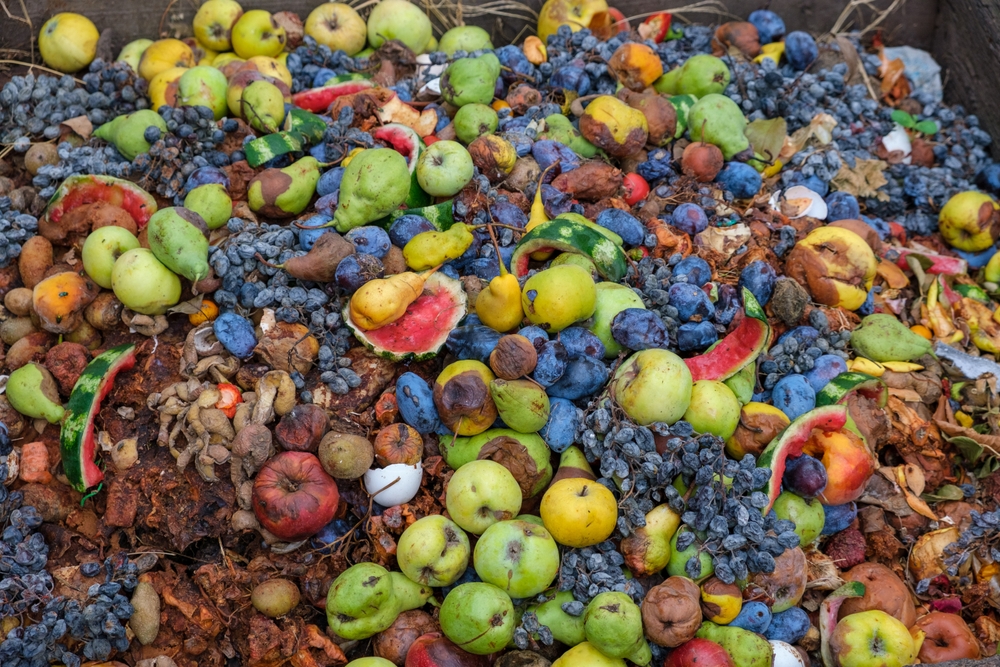
Can food waste reduction get back on track?
A 2030 target to cut food waste by 50% is in danger of being missed. Government and businesses need to seize the opportunity to turn things around
Transcript
Sasha Celestial-One: I feel like there’s a moral imperative to prioritize making sure that food and all the value that’s gone into producing that food is recovered to the maximum extent possible. And you do that by feeding people who either need or want it. This should not just be for charities, in my opinion. I think. I think it’s really important that the idea of getting access to surplus food or rescuing food becomes completely normalized, mainstream and inclusive.
Nick Hughes: Hello and welcome to the Small Print, a podcast by Footprint Media Group. I’m Nick Hughes, Footprint’s Editorial director. Each week we delve beneath the headlines of an issue impacting the hospitality and food service sector through our unique lens of environmental and social affairs. In Monday’s Footprint and Focus feature, we explored the implications of a new government backed plan to triple the level of surplus food being redistributed to those in need. The plan has been pitched as an opportunity to turn the environmental problem of surplus food into a social opportunity. But it’s also raised concern that food redistribution risks being conflated with food security amid a surge in need for charitable provision. The food sharing app Olio sits at the heart of the redistribution ecosystem. It enables food businesses to offer surplus food for free to people within their local community. In this week’s episode, I speak with Olio co founder Sasha Celestial one to discuss the origins and growth of Olio, how barriers to redistributing more food surplus can be removed, why she fully supports mandatory food waste reporting, and why it’s important to be clear about the issues redistribution can and can’t solve. Sasha, great to have you join us on the small print. So we’re going to look at the opportunity to scale redistribution of surplus food and in particular the role of the food service sector within that. Olio’s obviously been a key part of that redistribution ecosystem over several years now, so we’ll explore that in due course. But let’s start at the beginning. How did you come up with the idea for Olio and what problem were you trying to solve?
Sasha Celestial-One: Well, thanks for having me. I can’t believe I’m going to say this, but it was just about 11 years ago. It’s our anniversary in a few weeks. When we launched in the App store in 2015 and Tessa and I, we set out to solve the problem of food waste in the home, we, without going into all the backstory, we knew, we knew we wanted to pick a big environmental challenge that we could sort of tackle at scale. And Tessa had a personal experience moving house, where she found herself with some Food she thought she’d be able to take with her, and she was told to throw it away instead. Because of our respective backgrounds, throwing good food away is just something that is considered fairly criminal. And so rather than doing that, she ended up sort of smuggling the food in her packing boxes. And that was the sort of light bulb moment or origin story, because obviously there was someone nearby she could have connected with quite easily if she had an app. And so we set out to connect neighbors to share any unwanted food with each other. Over baked, overcooked, got something they didn’t like in their delivery. You know, the scale of household food waste is absolutely enormous and costs the average family £1,000 sterling per year in perfectly good food that’s going to waste. And along the way, what we realized is that we attracted individuals to oleo who care deeply about food waste. Most of us sort of do, even if we’ve become numb to it. You know, there’s something very hardwired in us that really doesn’t like to see something of value go to waste. But we attracted people who already cared about food waste and they tended not to have a lot of food waste in their home or surplus food to share by definition, since they were already interested in solving the problem, but they were quite passionate about talking to other people in their communities. And that’s how we’ve grown is through volunteers letting their neighbors know they can use Olio, but also talking to local businesses. And quite quickly we realized that local businesses of all shapes and sizes had a consistent supply of perfectly good food going to waste every day. Whether it was coffee shops, whether it was, you know, local offices, schools, retailers. If we could come up with a platform to rescue and redistribute that surplus food, then we would be onto something. And so that’s what we’ve been doing over the last seven or eight years. We have over 100,000 food safety trained volunteers who we call food waste heroes. We built a scheduling platform that works sort of behind the scenes to basically advertise surplus food collections to registered and trained volunteers and facilitate those collections tens of thousands of times a day all across the uk.
Nick Hughes: Great. So quite a journey you’ve been on over the past 11 years, scaling the platform. What have been the key challenges you faced in getting from that initial concept through to the point today where, like you say, you’ve got a hundred thousand food safety volunteers trained and, you know, getting this food out into the community. What have been those sort of main barriers and how do you overcome them?
Sasha Celestial-One: I think one of the biggest barriers, but also one of our USPS really is that we’ve had to build a system is food safety basically in order to develop relationships and the trust and you know, client supplier relationships with everyone from Tesco to Compass to, you know, big, huge companies. We look at food safety very seriously. We had to have very robust systems and processes in place to make sure that any concern of food being shared unsafely is an absolute minimum and that we’ve taken all sort of reasonable precautions to ensure that food is safely collected and redistributed. And it’s almost impossible to summarize because there’s hundreds if not thousands of little interventions all along the volunteering journey and the, in the food collection journey that are put in place mostly in an al. Algorithmic fashion like automatically that just like collectively ensure that 99.999% of all the food shared on Olio is done in a safe and, and, and transparent and reliable way. So we’ve worked with our primary authority, we’ve had assured advice for the last, I think eight years. We’ve worked with the, the Food Standards Agency, we’ve had to get rules and regulations modified and tweaked and all of that investment in building a proprietary food safety system has, has really helped us to scale. I think the other thing that’s helped us to scale is in terms of building up that network of volunteers. You know, obviously there’s a lot of people who benefit from the food on Olio that’s being given away. Six million pounds sterling of free food is given away on the platform every month and many of those people are living in households where the food budget is under serious strain. You know, 6 million people in the UK have moderate or severe food insecurity right now, you know, 4 million children. So there’s a lot of people out there who are struggling to feed themselves and their families. But I think what’s helped us to scale is not focusing on the food poverty angle and really focusing on, on, on money saving and connecting with your community and the environmental impact of rescuing food. It’s a much more inclusive messaging which is meant that people, people can get quite. We need, we, we need this huge number of people to participate in Olio to make the redistribution work. And if we made it feel like a charitable handout, I know that 90% of the people would have self selected out because it’s too visible and it’s too, there’s just a lot of like odd psychology around people feeling, participating in things where they feel like it might be A handout. So our messaging, always trying to be aspirational, inclusive, focusing on the environment in the community and not making it feel like a charitable handout has been key.
Nick Hughes: Yeah, absolutely. And you touched on the scale of food insecurity in the UK at the moment. Some quite stark figures that, that you know, have come out this year around that we know that the price of food alone has risen by around 30% since the start of the cost of living crisis back in 2022. Households are obviously facing increases in energy costs, in mortgage costs, which is further squeezing incomes. Are you finding that that sort of combination of financial pressures is leading to increased demand for surplus food via Olio and are you able to meet that increased demand? If so,
Sasha Celestial-One: we’ve always had really strong demand for surplus food, whether people need it or want it. There is, we are sort of, if you ever, ever seen me run for the free meal on an airplane, even though I’m probably not even hungry. Like we are quite high, humans love free food. So the, I think the severity has definitely shifted. Right, right. And that we’re helping people who legitimate more so now, although we’ve always had, you know, those people benefiting from the platform, there is definitely more stories of like true, true hardship that we’re sort of seeing anecdotally and we do survey our users and the percent of people who say Olio is helping them like save money, helping with their financial well being has increased. There have definitely been some, some increases, for example from the student population. So there’s. Students are really suffering. You know, the average student is overspending by more than just over 500 pounds a month. That’s the gap between sort of the loans and what they’re getting for their studies and what they need just to survive. So, you know, 41% of students are considering stopping their studies altogether, university students, because of financial stress. So it is quite a big challenge. We’ve been working with that population specifically to help spread the word about Olio as a resource. The food on Olio is actually particularly suited, for example, to students who are often able to do late night collections. They can collect the food, they can share it with their flatmates or their dorm mates, et cetera. So yes and no. There’s always been demand, sadly for surplus food, but it is certainly more acute right now and I think that we could double or triple in size and the demand would absorb the surplus. So there’s still room to go, there’s still people who need or want that surplus food.
Nick Hughes: Just to be clear on in Terms of the volunteers themselves, they are able to retain some of the food that they collect themselves, but they’re obliged to pass on a proportion of it to others, whether that’s friends and family or those within their local community. Is that right?
Sasha Celestial-One: That is correct. The basic sort of program is that a volunteer can keep 10% as a thank you. And we have ways of sort of tracking and monitoring that behind the scenes to make sure that that’s done in a, in a fair way. And then there’s meant to give away the food through the app. So it needs to be through the app for traceability to, to neighbors and other people on Olio in their community. However, we do sort of flex the rules as we get closer and closer to. So if there’s a vol. If there’s a collection slot, an opportunity to collect surplus food and it’s going unclaimed, as we get closer to the chance that that food might legitimately just go to waste because no one is incentivized or is signed up to take it, then we flex the what portion you can keep and at some point we actually will flip it to what we call a save me collection, which means last chance, someone take this. And by the way, you can keep as much of the food as you want, um, as long as you, you know, don’t pick over the food when you arrive and you take the food that you can safely store. And you also need to give away through the app, per normal, any food that you don’t want. So you certainly can’t be picking up food and then just throwing it away in your home. Um, and those. That extra incentive helps us to get volunteers for more challenging locations or times a day, like Friday at 11 o’ clock at night. You know, like, we want the person who picks up that food to be able to get as much of that food as they. As they want. But the vast majority of collection slots, a volunteer keeps a portion and shares the rest.
Nick Hughes: And of course, we’re talking here not necessarily about dry ambient foods with a long shelf life, aren’t we? We’re talking about fresh foods, chilled foods, you know, some of which might be prepackaged, but some of which might be. Might be loose as well if you’re collecting from a contract caterer, for example. So it’s a really sort of wide variety of, of foods and products that people are collecting.
Sasha Celestial-One: It’s a, it’s a huge variety, it’s mostly perishable, and 94% is shared on with a NA with through OLIO. The same day that it’s collected because it needs to be reached the final consumer. Um, so with the exception of some best before like loose fruit and veg and baked items, like everything is just is shared, it’s very quickly on the same data that’s collected. And so we collect from hundreds and hundreds of schools for example. And that collection will take place between 2 and 2:30 in the afternoon. The volunteer might be picking up large tray bakes of chips or spaghetti. And that’s a very different type of food that is being redistributed versus pret. A manger for example, or wasabi or Coco da Mama. The quick service restaurants, you know, we collect from loads of those. And what we’ve tried to do is to create model that solves the gap. We, we looked at the market and we saw a big gap. We saw gaps by food types, we saw gaps by, you know, sort of quantity. Like if it’s too small, you know, having a charity go and collect the food just simply doesn’t make sense. We saw gaps by times of date, city center locations and, and we tried to make this model that’s really flexible and it, we serve as the collector of last resort for unsold or unserved edible food. And we if it’s frozen, if it’s sushi, if it’s hot, if it’s big, if it’s small, if it requires a van. We built this model to try and match the right volunteers with the right skill sets, the right car, the right van, whatever, the right training with the food that is required for that is in that situation, what that really means is that there is almost no one size fits all model. It is hyper flexible. Even with Tesco, which, you know, we’ve been collecting for them for a very long time, they’ll have freezers break down or they’ll get nine, ninety pallets of mushrooms. And then all of a sudden we need to like get a squad of volunteers, 6, 7, 8, 9 to go because it’s gonna take multiple cars. So it’s a fairly flexible model. That’s its beauty in terms of the
Nick Hughes: way you work with businesses. I, I imagine that from a food service perspective it’s quite a different way in which you work than you would for a supermarket, for example, because you know, if you’re, if you’re a contract caterer, a compass group, for example, you’ve got, if you have surplus food, it’s ready to eat, you need it collected now and it needs to be eaten within a very short time frame. So how do you work with those kind of businesses in particular and also what motivates them to partner with Olio.
Sasha Celestial-One: So what motivates businesses to partner with Olio is a whole variety of sort of direct and indirect benefits. Starting in sort of big picture. Most businesses including Compass, will have set of a food waste reduction target publicly and they’ll have deployed a project team in order to trial and launch and embed a number of initiatives that collectively hopefully will get them to their 30, 50, whatever it is, percent reduction they want in line with the UN SDGs, et cetera. So that sort of gives the senior buy in. Right. The direct benefits are, you know, we’re reducing the cost of waste disposal. We are, they’re directly benefiting people in the local community near where they, where they operate as part of their sort of corporate social responsibility objectives. Staff hate throwing away good food and it results in bad, low morale and high staff turnover. So if you can do a program that’s right and also the people that you’re are eating the food that you make want to find out how, what you’re doing about the food waste. So there could be pressure from the client sites, for example. So there’s also marketing benefits and we provide all kinds of testimonials and photos and content and LinkedIn celebrations and we enter award ceremonies together which you know well about. Right. And we try and get public recognition for the, for the work, being positioned as an innovator. So there’s definitely not a one size fits all sales approach and usually if a client isn’t ready to think about food waste seriously, there’s nothing we can do to persuade them. Once they get serious about it, they set a target, they have some budget and they have some people who own these targets. Then we, it’s, it’s quite challenging I think for many businesses to get to zero food waste. Like they’re going to have edible surplus food and you know, at the end of the day it’s most people agree that if food’s fit for human consumption, it should, it should feed a human and if we’ve got a really easy, low cost way to make that happen, then we can have a conversation.
Nick Hughes: This year sees the launch of the first ever Footprint Festival, A two day experiential and immersive sustainability festival set on a working farm in the heart of the Hampshire countryside. Created for senior leaders across food service and hospitality, this one of a kind annual event takes place on September 17th and 18th will blend sensory experiences, transformative content, powerful networking and unforgettable food, drink and entertainment. Tickets are now on sale. Visit footprintfestival.com for more details. We reported on Monday about this new government backed plan to triple the volume of surplus food being made available for redistribution. And that’s going to be driven by the charitable sector working alongside businesses and policymakers. I mean, that’s a huge uplift and I just wonder whether you feel delivering an increase of that scale is achievable based on what you see within your own business and I guess the constraints that you face in growing the volume of surplus food being redistributed, you’ve touched on food safety as a big one. And these rules are there for good reason to ensure people, consumers are kept safe. But know, tripling the level of food redistributed is, is that viable?
Sasha Celestial-One: I definitely think that’s viable and sometimes, you know, you need to shoot through the stars and reach the moon. So I’m really excited to see the government being, setting ambitious targets. You know, we have gone through years where we have tripled or even 5x the amount of food that we’ve redistributed. And as I sort of mentioned earlier, they’re, I don’t want to say insatiable, but there is still huge amount of unmet demand for food. And also the scale of food waste is so big that it’s not, it’s easy to get it mixed up with food poverty, but they are not one and the same. Food waste dwarfs food poverty. Quite sadly. You could feed all 800 million hungry people on the planet on less than a fourth of the food that we waste in the US and the UK alone, I believe is the stat. So if we have good food that has been taken up, the resources of land, labor, water, shipping, manufacturing and all, all of that, and then it’s sitting there and, and, and we don’t then at that point in time, like this massive resource, right, if we don’t prioritize it’s edible, there’s an opportunity for that to reach someone and to benefit someone. Like, I feel, I feel like many things can be true at once, right? This is not an ideal system obviously, but if we’ve got the food and it’s ready for redis, it’s ready for, it can be eaten. I feel like there’s a moral imperative to prioritize making sure that food and all the value that’s gone into producing that food is recovered to the maximum extent possible. And you do that by feeding people who either need or want it. This should not just be for charities. In my Opinion, I think, I think it’s really important that the idea of getting access to surplus food or rescuing food becomes completely normalized, mainstream and inclusive. Too Good to Go has done a fantastic job of trying to do that, to embed that kind of mindset. We’re trying to do the same thing. I think, I think one of my concerns about the current policy is that it is very, very, very focused on charity. And that’s fine because, you know, if that frees up, if good food and funds are being diverted to charities so that they can rescue that food, that just means. Because we only, we’re not a charity, right? And we only collect when charities can’t collect. So we work in lockstep right behind Felix and Neighborly and everyone else who’s organizing charities. And then when they hold their hand up and they say we, we can’t find a charity, or by the way, this food type, for example, or this collection type isn’t suitable for charity, that’s where we come in. So anything that accelerates donation to charity helps us because we come after charity in the food waste recovery hierarchy. And it just means that we’ll get food to the community. So we call ourselves the community. Regular everyday people who may or may not be food insecure, but they’re not an organized territory or community group. So I think, I think it’s important to try and make this inclusive, to remember that this is not the ideal solution we should be solving for at the end of the day. But whilst there is good food going to waste, it is so incredibly valuable and there’s people who don’t have enough to eat. We have to make sure that food can feed people.
Nick Hughes: Well, I wonder whether, as I mentioned, this is a government backed plan. I wonder if there are any policy levers that can be pulled to help increase that. Commercial redistribution, like you said, charitable redistribution accounts for. I think it’s about 75% of the total. Currently.
Sasha Celestial-One: It is, yeah.
Nick Hughes: I’m not talking about loosening food safety rules here, but for something like mandatory reporting of food waste for large businesses, for example. It’s a policy that’s been talked about for years, it still hasn’t been enacted. And clearly there will be businesses that are still not engaging fully with food waste reduction. And I wonder whether a shove like that to say you now have to measure and report your food waste could be, you know, a pivotal point for getting that engagement with a critical mass of businesses that would benefit you.
Sasha Celestial-One: Obviously we 100% support mandatory food waste reporting. It’s been very frustrating it feels like we’ve gotten really close and it’s never materialized. And we, we speak with businesses day in and day out and of course that’s going to help accelerate by shining a light on food waste levels. It will by necessity. Those that are lagging behind, I think it’ll make it a lot easier to have some tough conversations about what we can do to help them. So of course we support that. And you know, and we also support, you know, tax incentives that I know are being proposed and like, I think Good Samaritan law to exempt from a liability perspective all of those best practices that are already deployed and proven in other markets. We’ve been talking about them since we started Olio 10 years ago and very little has happened. So whilst it’s super encouraging to see this target being put in place, yes, there’s a lot higher likelihood that ambition will be achieved if there’s some regulatory teeth behind it. I would encourage everyone to not just focus on distribution to charity. You mentioned. I know that there’s 75% of redistribution and that other 25% is commercial, but by commercial that means it’s for sale, whereas we’re not selling surplus, we are giving surplus away to regular everyday people. And we’re only doing that when a charity can’t take it. And I find it odd that our work, for example, wouldn’t be incentivized. As long as something happens, then I’ll be happy that there’s some regulatory movement because it will just help accelerate the increase in redistribution that we’ve seen and that we’ve contributed to. And we work alongside, alongside charities. However, before you redistribute, for example, because as I mentioned earlier, we’re at the bottom of the food waste recovery hierarchy. Like we’ve been thinking about going up the hierarchy and over the last year we’ve built what we call a one stop shop proposition. So we have at the top a reduced food proposition which is in about 1400 stores right now. That is a live data feed of sort of yellow sticker reduced to clear inventory at local shops. And what this does is it gives shoppers the confidence to know if they head into store, there’s 10 bags of apples and they’re all half off. And they know they can go and get a bargain so they can save money on their grocery bill. Those, you know, I think there’s other things that we could do to give people the ability to buy their own food and have, and not sort of be subject to whatever it is that’s left over that no one else bought that day. Which is often what happens with redistribution. And it’s not about some of the government things, I know they’ve not been enacted but about like capping the price on essentials and things like none of that made a lot of sense, but helping retailers to recover some economic value. And I know that we’re not just focused on retailers here, but in general helping businesses sell through the more the food, more before they donate it I think makes good sense. And that could also be at, in hospitality, at quick service restaurants like you know, there’s no reason that the things can’t, we can’t have more discounting throughout the day. That’s like not necessarily in order to drive sort of increase in sell through before we donate the food.
Nick Hughes: I don’t think there’s any debate is there that getting food that would otherwise go to waste out into people’s mouths is a, you know, it’s a, it’s a good thing, it’s absolutely the right thing to be doing. There has been some concern raised and I spoke with some people for Monday’s article who made this point about the risk that food redistribution is conflated with food security and that the redistribution of surplus is in effect being positioned as an answer to food poverty. Now it’s important to note those charities working at the coal face absolutely do not see it as a long term solution but as a way creating short term resilience in times of need. But I think there’s a legitimate question as to whether governments see it in such a clear eyed way. Where do you stand on these questions, Sasha? I mean, do we need to be very clear about the issues that redistribution of surplus can solve and those that it can’t?
Sasha Celestial-One: I think it is important, yes. We need to be clear and I think everything you’ve just said is, is accurate and there is some inherent friction or you know, conflict because the ecosystem is so complicated and interdependent. We have a lot of surplus because we overproduce. We overproduce because we want to guarantee access to choice and availability to consumers. So, so we have this. Is that going to change? In other words, are we going to arrive in a universe where there’s, where businesses say I’m not going to overproduce, I’ll take the loss because, you know, I’ll let them go to my competitor. I just don’t see that happening in a sort of capitalistic growth driven society. Everyone’s incentivized to overproduce and that means that redistribution is therefore sort of guaranteed. Now the mix might change over time with forecasting tools, improvement or key products like really expensive products, meat products, et cetera, the price might get so high that they get really good about not wasting it, et cetera. So the mix might change if it goes, if it does change, it’ll be the quality that changes, which is not great because then you definitely don’t want a population dependent on redistribution. Who, who then has this deteriorating quality worth of food over time. So all of that’s like, you know, one challenge. On the other hand, if you’ve got food that needs to be eaten, it’s got a ticking clock on it because it’s only, you know, only good to eat for the next six 12 hours or days or whatever. I do think that in the priority or the hierarchy of, of, of, you know, if I had to force rank actions, number one action would be get that food to someone who can eat it. Because once it’s waste, once it’s not edible, all the value that went into creating it is wasted and it’s an enormous drain on the environment. And if you can save charities money or you can feed someone or save, help a family save money so they can spend it on education, electricity or holidays, like you’re literally just throwing money away if you can’t get that food to a place where the value can be consumed. So you have to do that whilst in parallel try and figure out how to not build a dependency and to help sort of build longer term resilience and help try and migrate families and generations, you know, out of food poverty. So as well. So it’s very challenging.
Nick Hughes: Well, no, that’s, and I think that’s really nicely put. It’s, it’s not an either or is it, it’s a, you know, it feels, it feels immoral to be sending good foods to landfill or even to, you know, anaerobic digestion when with a bit of effort it can go towards feeding people. But let’s not use it as a reason not to address those structural drivers of high levels of food waste and high levels of food insecurity at the same time. So Sasha, we’ve had a great chat around, you know, issues around food redistribution, Olio’s growth and the way you work with businesses. As you said, you’re 11 years into your journey. Some final thoughts about where you might see yourselves in 11 years time. Let’s say, what does Olio look like a decade from now?
Sasha Celestial-One: If I think about 11 years from now and I think about all the opportunities where there’s good food going to waste by sector. We have reached a real tipping point in retail now after. And that was the first sector we focused on and we have made significant sort of inroads into to food service. The. There’s a really big sector which is events. You know, there’s one point, some 1.1 million corporate events in the UK every year. There’s weddings, there’s, you know, there’s so many events it’s actually mind boggling how many events there are and we’ve only barely started to collect from events. And in terms of what impact that has, like what happens at, at a, you know, in an office or at a retailer, it’s not like super visible to the regular everyday person, but everyone goes to events and everyone participates in events. And so I’m really excited by the idea of making it, having it, bringing a proposition to market that makes it so that anyone anywhere who’s hosting an event can request one or more volunteers to have their food safely collected and redistributed. And how that sort of then starts to just become part of like how we, our lived experience collectively. And I think that that is, could, could help like us collectively just start to think about all of our resources that we waste in our own homes, in our communities, at our food businesses. There is an opportunity for the UK to sort of flip into a world where you reuse first, you rescue first, you resell first. You know, we’re not that far away and not just in food. If you think about fashion and, and the idea of having like a real circular economy, I think Olio could play a role in helping to drive that by having built the, what we call the rails of redistribution to connect anyone with surplus food or otherwise with people nearby who need or want it in a way that is super efficient, easy, simple, fun, safe, et cetera. So that’s the kind of world I want to build, you know, I want. We want to be the Uber for unused value.
Nick Hughes: The Uber for unused value value. I love it.
Sasha Celestial-One: If we can just layer on unlocked value through our marketplace then everyone can save loads of money and we can collectively reduce our. The how much resources we’re draining from, from the environment, which we’re doing now in a way that’s completely unsustainable and net negative over time. Circular living, I guess.
Nick Hughes: Circular living indeed. Well look, that’s a nice, nice call to action on which to end on. Sasha, thanks so much for joining us on the small print.
Sasha Celestial-One: No worries. Thank you so much for having me.
Nick Hughes: We’ll be back next week with another episode of the Small Print. If you like what you’ve heard, please take a moment to rate, share and subscribe.