
From fears it will stifle growth of the cultivated meat market to relief that border checks will be removed, the implications of the UK’s realignment with Brussels are huge and far-reaching
It is either a good deal that “will deliver real benefits for Britain” (Andy Burnham) or a bad deal the Prime Minister “should be embarrassed about bringing to the House” (Kemi Badenoch). Ah Brexit, how we’ve missed your incomparable ability to divide the nation.
The Prime Minister and Leader of the Opposition locked horns in Parliament last week over the details of the UK’s new relationship with the EU. Central to this first phase of the deal is the UK-EU Sanitary and Phytosanitary (SPS) Agreement which will see the UK (or technically Great Britain, since Northern Ireland is already aligned with EU SPS requirements under the Windsor Framework) realign with rules made in Brussels in exchange for a removal of the trade barriers that have dogged many food businesses, in particular exporters, over the past six years.
Indeed, the £5.1bn long-term boost to the economy the government is claiming from the deal needs to be seen in the context of this agreement essentially taking us back to the trading position we were in before the Brexit transition period concluded at the end of 2020.
Just as the party leaders were split on the success of the negotiation, they were equally divided on how positively or otherwise the deal has been received by businesses and the impact it will have on food prices. What is unarguable is that this is a significant agreement for food and drink businesses that will have real life ramifications once it comes into effect from March 2028 in areas such as reformulation, labelling and innovation – with cell-cultivated and precision fermentation products among those whose future now seems more uncertain.
‘Game-changer’
Let’s start with the basics. The SPS agreement will remove the need for hundreds of pages of costly paperwork like health certificates and time-consuming border inspections. It is uncontestable that this will make it easier and cheaper for businesses to trade with Europe. James Bielby, chief executive of Food and Drink Wholesale UK, says removing these barriers will be a “game-changer for wholesalers”, making it easier and more affordable to get food to schools, hospitals, shops, pubs and restaurants.
It may also allow UK businesses to expand the range of products they source from the continent. Small EU producers and UK importers of products like cheeses and charcuterie were one of the major losers from the original Brexit deal. These products are often imported via groupage services whereby multiple batches of products from different suppliers are transported on the same vehicle. The combined cost of new administrative charges, including health certificates for medium or high risk products, added hundreds of pounds to the cost of sending a single consignment, leading some smaller EU-based food producers to stop supplying the British market altogether.
On the flip side, for British exporters of certain products like seed potatoes, sausages and shellfish, the agreement will reopen access to the EU market. This matters since the EU is still by far the UK’s largest trading partner for agri-food products, accounting for 75% of exports last year, despite volumes having fallen by more than a third since 2019.
The removal of administrative and physical checks is also expected to have a positive impact on food waste since the risk of vehicles carrying perishable goods being held at the border for long periods of time should disappear. M&S food managing director Alex Fredumann noted how “one wrong detail can hold up a lorry and around 20,000 products, costing shelf life and increasing the risk of food waste”. He said the agreement would mean “fresher food, less waste and more choice for customers – while opening up opportunities for British farmers and suppliers”.
In challenging times, connection is our greatest strength
Secure your place at the inaugural Footprint Futures Lunch
Farming interests
That may be true on the export front, however the main representative group for UK farmers, the National Farmers Union (NFU), has been more equivocal in its response to the SPS agreement. Although it acknowledged the benefits for farming businesses that depend directly or indirectly on access to European markets, the NFU said the deal must protect the interests of the many farmers that only serve the UK. During negotiations, it had made no secret of its preference for an equivalence-based agreement whereby the UK and EU recognised one another’s rules so long as they achieved the same outcomes.
In the event, the publication of Thursday’s legal text confirms the UK has bound itself to adopt EU rules, including those made since the end of the Brexit transition period, with EU law beginning to apply across a range of in-scope legislation starting from March 2028. This has led to the charge from critics that it is destined to be a ‘rule taker’ rather than a ‘rule maker’ with limited ability to influence the direction of EU regulations. The text states that although the UK will be consulted on the design of future food and farming rules it will not have a final vote – a worse position than pre-Brexit when the UK had a seat at the negotiating table and, as one of the major EU economies, wielded considerable influence.
The extent to which you view the UK becoming an EU rule taker as a good or bad thing for food and the environment will depend to a large degree on who you are and what you do. On pesticides, for example, some farmers are concerned they will no longer be able to use certain products that are banned in the EU but still approved for use in Great Britain. For environmental campaigners, by contrast, this is being celebrated as one of the big wins of the deal, with alignment on maximum residue limits for pesticides – for which British rules are generally weaker than the EU’s – also meaning better protections for British citizens from pesticide exposure.
Conversely, animal welfare groups are up in arms that a long-promised UK ban on foie gras imports from geese has not made it into the deal, leading to the accusation from Abigail Penny, executive director of animal equality UK, that the UK Government has bowed to pressure from Brussels “and abandoned these animals”.
Novel food fears
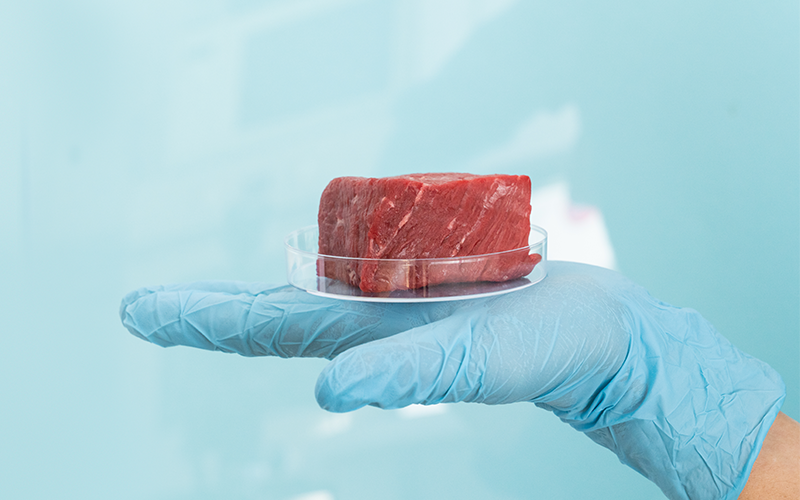
In certain areas, the UK did seek and achieve carve outs from EU rules, albeit only in the short-term. One of these is novel foods including cell-cultivated products like lab-grown meats and those made from precision fermentation. Under a temporary arrangement, production of these products (along with cannabidiol foods) will be allowed in Great Britain until October 2029, so long as they were authorised before the agreement applies in March 2028.
As yet, no cell-cultivated or precision fermentation products have been authorised in the UK for human consumption. However, since Brexit, the UK Government has taken the opportunity to move at pace (relative to Brussels) to try to build a regulatory framework and expedite approvals for these types of product in the hope of attracting inward investment into the infrastructure that will be needed to scale production.
Opinion is split on whether the carve out that’s been negotiated should be viewed as a positive for businesses wanting to manufacture and sell these novel food products in Britain, or rather whether the transition to EU jurisdiction from October 2029 risks stymieing market growth and investment before we’ve seen any products actually authorised for sale here.
“It’s difficult to understand how this can be seen as a long-term win,” says Dominic Watkins, global head of consumer market and partner at law firm DWF. “These new industries are hugely capital intensive. If your market access was going to stop in 2029 why would you continue to invest in the UK?”
However, speaking to Footprint’s The Small Print podcast for an episode due to publish on Wednesday, Linus Pardoe, senior programme manager for the UK at The Good Food Institute Europe, reflected that uncertainty is “a killer of many businesses” and noted how a pathway has now been set out for a three year period. “Three years is a very long time in the life of a start-up,” said Pardoe. “Ultimately we are very positive about this extended transition arrangement for cultivated meat and precision fermentation.”
Broad implications
The agreement also has implications for product reformulation where EU rules have deviated from Britain’s since Brexit. A key change relates to the use of nitrites in some processed meat products like ham and bacon which have been linked to a higher risk of cancer. In October 2025, new EU rules came into force reducing the maximum permissible levels of nitrites added during the manufacturing of meat products by almost half. UK producers will now be required to meet those rules.
Elsewhere, EU authorisation is more restrictive for certain animal feed additives like Bovear, with potential implications for efforts to reduce methane emissions from livestock.
Titanium dioxide, a food additive commonly used in foods like confectionery and icings, is still approved for use in Great Britain but had its EU authorisation revoked in 2022.
The agreement also covers environmental contaminants, where rules differ between the two trading blocs. The EU, for example, has set stricter maximum levels for certain per- and polyfluoroalkyl substances (PFAS) in a range of foods such as eggs, meat and fish.
It is also clamping down on the use of PFAS in packaging through its Packaging and Packaging Waste Regulation (PPWR). Although PPWR, which also seeks to increase recyclability and reuse, sits outside of the scope of the SPS agreement, the government said a consultation on Great Britain alignment with PPWR is planned for 2027.
Product labelling is another area of harmonisation. Nutritional labelling requirements will not change as there has been no deviation from the pre-Brexit rules, while UK businesses voluntarily displaying traffic light information on the front-of-pack will not be required to change their labels.
Some new foods like capers, dried fruits and certain nuts will need to display country-of-origin information (although not in the out-of-home sector), while the EU has also introduced stricter rules on the type of blends manufacturers can use for olive oils.
The agreement also brings British businesses into scope of controversial restrictions to the terms that can be used to describe meat alternative products. From August 19th 2029 in the EU, terms like “meat” and 31 meat-related terms such as “beef”, “chicken”, “bacon”, and “steak” cannot be used for products that don’t contain meat, including plant-based substitutes and cell or tissue cultured foods. This has previously led to concerns that it could restrict the growth of the plant-based alternatives many believe are needed to help put Western diets back on a more sustainable footing.
So, is this a good or bad deal for Britain? The unsatisfactory answer is ‘it depends’, both on where you sit in the food supply chain and in the House of Commons, and on how much weight you ascribe to cost saving versus the freedom to set one’s own rules.
Whatever the pros and cons of the deal, as the British Retail Consortium’s recently departed director of food and sustainability, Andrew Opie, noted wryly: “Spare a thought for technical teams who have the unenviable task of ensuring alignment asap. It is not a task to be underestimated.”
Further reading
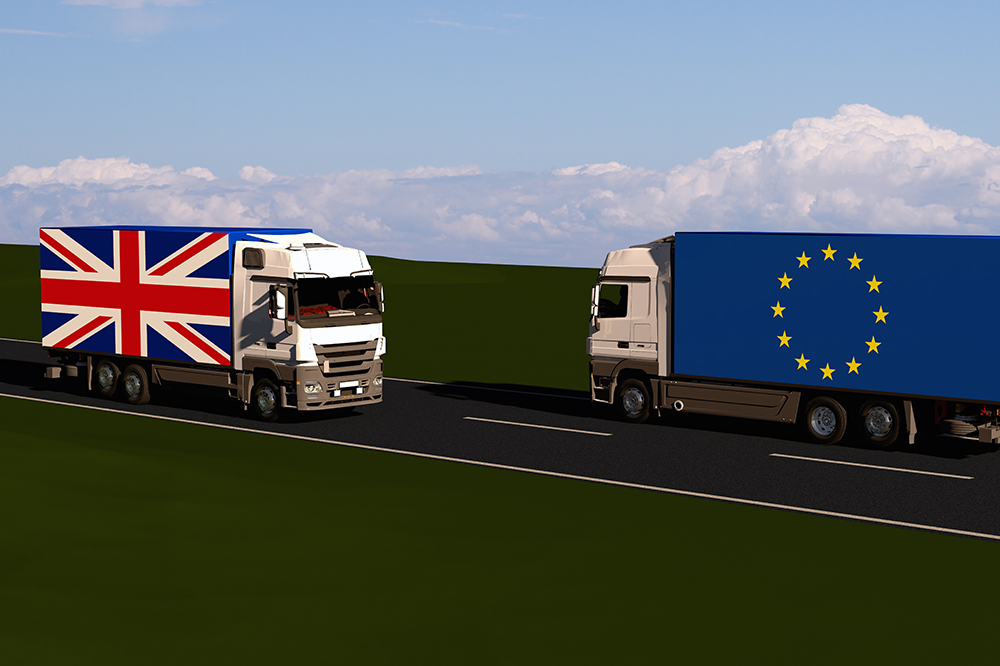
Back to the future on food regulations
Plans for the UK to realign with EU food laws will reduce import costs but leave a raft of unanswered questions including over the future for cell-cultivated meat
Is foodservice prepared for its next packaging pain point?
A harmful group of ‘forever chemicals’ commonly present in convenience food packaging is in the crosshairs of regulators, triggering a rush to seek alternatives
Leave a Reply