
Fire and brimstone
Prime Minister Andy Burnham chaired a meeting of the government’s emergency Cobra committee this week to discuss the UK’s response to the extreme heat that is set to take a huge bite out of production of key food ingredients.
Ministers from Defra and the Department for Health and Social Care along with officials from the Environment Agency joined Burnham to discuss the immediate threat from wildfires and pressure on water supplies, and how extreme weather conditions are impacting key workers like farmers and hospital staff.
Temperatures peaked in the mid-30s on Thursday pushing the number of days when a temperature of 30℃ or higher has been reached this year towards 40 – a new record according to the Met Office. The UK is on course to record its hottest summer on record for average temperature, while almost three quarters of England is now officially in drought.
Monday’s Footprint In Focus will detail the cumulative impact on crops and key food ingredients of extreme weather and the strategies foodservice buyers will need to deploy in order to cope. Products ranging from brassicas and salad to cereals and red meat are among those to have suffered the effects of persistent heatwaves and low rainfall.
The Food and Drink Federation (FDF) warned this week that not only is the UK experiencing one of its hottest and driest summers on record, but across most of Europe heatwaves and severe droughts are impacting fruit, vegetable and grain supply. Competition for fewer resources will add further pressure to the price of ingredients for manufacturers, on top of the rising costs already being absorbed or passed on as a result of the wars in Ukraine and Iran, according to the FDF’s chief economist Liliana Danila.
“With extreme weather and supply chain disruption becoming the new normal, government must focus on building resilience into the food system to help limit the impact on food manufacturers and on shoppers,” said Danila.
Climate experts have urged the prime minister to come up with a comprehensive plan to cope with weather extremes that are becoming ever more commonplace while at the same time cutting greenhouse gas emissions. Gareth Redmond-King, international analyst at the Energy and Climate Intelligence Unit, noted how Burnham will be “surveying a brown and parched land” when he sets off on his cost-of-living tour of the UK, with “barren fields pointing to likely one of the worst harvests on record”.
He added: “Until we reach net-zero emissions to bring our climate back into balance, all of the heatwaves, floods and drought will continue to get ever more severe.”
This summer’s extreme weather has driven public concern over climate change to new levels, research has suggested. Polling data from Ipsos in the UK carried out during the first week in August found 74% of people are concerned about climate change today, an increase on the 69% who remember being concerned about it prior to this summer. Over half of British adults (56%) say the extreme summer weather has disrupted their ability to carry out normal daily activities like working, exercising, or sleeping, while 87% think it is likely Britain will experience similar severe heatwaves in future summers.
“The intense heat this summer and visible wildfires across Europe has served as [a] visible focus point around discussions on climate change, which may be driving a clear uptick in immediate concern and leaving nearly nine in ten convinced that these heatwaves are our new normal,” said Raquel de Luis, head of energy and environment at Ipsos in the UK.
Small Bites
M&S wants clearer labelling of fibre benefits
M&S is calling for changes to labelling rules to allow businesses to promote the health benefits of eating foods high in fibre like beans and pulses. The retailer’s managing director of food, Alex Freudmann, has joined nutritionist, Emily English, and Dr Anisha Patel, in writing a letter to the health secretary, Yvette Cooper, calling for a practical change to the rules around fibre health claims so that links between consumption and improved gut health can be communicated more clearly. The letter notes that under current rules health claims relating to the benefits of fibre on pack are restricted to phrases such as “barley grain fibre contributes to an increase in faecal bulk” or “wheat bran fibre contributes to an accelerated intestinal transit time”. M&S is asking the UK Nutrition and Health Claims Committee and the Scientific Advisory Committee on Nutrition to review permitted claims to enable simpler, consumer-friendly wording like “improves gut health” to be used for high-fibre products like beans and pulses. The latest national diet and nutrition survey found 96% of UK adults consume less than the recommended 30g of fibre a day. Low fibre intake is associated with an increased risk of bowel cancer. “Customers tell us they want to eat more fibre, but the current rules make it harder than it should be to explain the benefits in a simple, everyday way,” Freudmann said.
Food systems emissions reduction well off track
No country in the world is projected to meet the 2030 target for reducing greenhouse gas emissions from food systems, according to new analysis. The latest study from the Food Systems Countdown Initiative found that countries are on average 75% away from their target to lower emissions relative to their national baseline. The study, published in the journal Nature Food, is billed as the most comprehensive performance assessment of food systems to-date, covering 197 countries and 44 indicators across five themes: diets, nutrition and health; environment, natural resources and production; livelihoods, poverty and equity; governance; and resilience. It found that most regions of the world would need dramatic annual changes to achieve key 2030 targets. Some indicators are revealed to be moving in the wrong direction, including ultra-processed food sales, agricultural water withdrawal, pesticide use and changes in emissions from food systems. More positively, for seven indicators, at least a third of countries are already on track to meet the 2030 target. The study authors said priority actions should focus on indicators where progress is most off track, like food affordability, food insecurity, government effectiveness and food systems emissions.
Certified palm oil shows growth potential
A fifth of the world’s palm oil is now certified to the Roundtable on Sustainable Palm Oil’s (RSPO) standard, the organisation has revealed in its latest impact report. In 2025, 16.2 million metric tonnes (MT) of RSPO Certified Sustainable Palm Oil (CSPO) were sold, representing 20% of the global palm oil supply. This represents just a 0.5% increase since 2023, however RSPO pointed to the total capacity of 31.4 million MT among grower members once all plantations have become certified – equivalent to 39% of global production – as evidence of the near-term potential for growing the volume of certified palm oil. CSPO is especially strong in Latin America where RSPO members account for around three quarters of regional output, while much of the recent growth has come from Africa which has seen a near 50% increase in supply. RSPO membership spans growers, processors and traders, consumer goods manufacturers and retailers. “With our grower members holding the capacity to supply nearly 40% of global demand, we have long moved past the question of whether sustainable palm oil is possible and are actively scaling across global markets. The report shows that sustainable palm oil has measurable and valuable impacts,” said Joseph D’Cruz, CEO of RSPO.
Chef’s Special
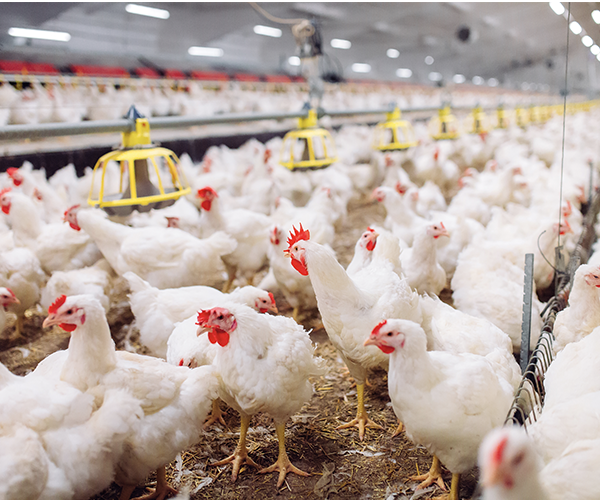
Britain’s seemingly insatiable appetite for fried chicken has encouraged high street chains like KFC, Wingstop and Slim Chickens to embark on ambitious expansion plans. But at what cost to health and the environment? That’s the premise behind a new Netflix film, which takes the ‘shock-food doc’ format pioneered by Morgan Spurlock’s seminal 2004 Super Size Me and applies it to poultry. Where Spurlock gorged only on McDonald’s, in Big Chicken: A Fast Food Conspiracy, the comedian Mo Gilligan embarks on a 28-day diet of fried chicken. The result is a film that looks set to further entrench already deep dividing lines around the impact of ‘big chicken’. Campaigners have applauded Gilligan and the film’s producers for building awareness among mainstream consumers about how fast-growing chickens live their short lives in “squalor” (the word used by Matthew Glover, co-founder of campaign group Project Slingshot, which is running a ‘Frankenchicken’ campaign across the London Underground at the moment). Meanwhile, in a social media post that didn’t directly reference the film, British Poultry Council chief executive Richard Griffiths rejected the assertion that large-scale production systems are inherently bad for bird welfare. “Poor bird health and welfare is the epitome of inconsistency and an unproductive process. We could not operate if the claims made by activists were true,” Griffiths wrote. As Footprint explored earlier this year, the complex and fiercely contested debate over chicken welfare and sustainability shows no sign of being resolved.
Last Orders
It’s been a landmark week in the waste and resources world as some of the key provisions in the EU’s new Packaging and Packaging Waste Regulation (PPWR) began to apply from August 12th. The PPWR replaces the existing Packaging Waste Directive and includes a wide range of measures including targets for the use of recycled content in plastic packaging and a requirement that all packaging must be recyclable by 2030. Perhaps the most significant immediate impact for UK businesses trading in the EU is that PPWR prohibits the placing of food contact packaging on the market if it contains PFAS (per- and polyfluoroalkyl substances, or so-called ‘forever chemicals’) above specific safety thresholds. The new regulation is also designed to drive up reuse rates: by February 2027, hospitality, restaurant and catering companies offering takeaway products will need to provide a system for consumers to be able to bring their own cup or container.