The Food Foundation’s annual ‘Broken Plate’ report rarely makes for comforting reading, but this year’s snapshot of the health of the UK food system may be the most dispiriting yet.
Before we touch on some of the headline indicators it’s worth reflecting on the charity’s commentary on its findings. It reports there is “a huge disconnect between what we should be eating for our health and our planet, and the food that we see all around us”.
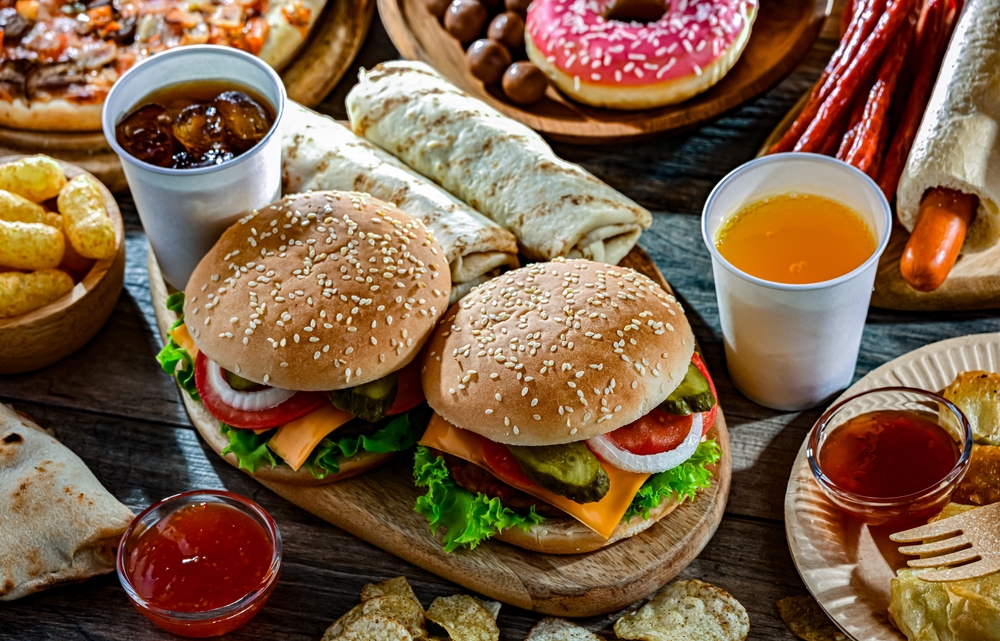
Foods high in fat, salt and/or sugar are “disproportionately available, promoted and advertised, and sold at relatively cheap prices, while staples and fruit and vegetables are overlooked”.
Much of the UK’s dietary protein “comes from unsustainable sources which have high greenhouse gas emissions, rather than from fibre-rich proteins such as beans and pulses”.
The report also identifies “huge inequalities in what people have available to them and what they can afford” with wealthier areas having “ample food choices from a range of food stores and restaurants”, while poorer areas are often “left behind, with fresh produce and healthy staples hard to find”.
Perhaps most damning of all, The Food Foundation says it has “seen little evidence that the situation regarding access, affordability and availability of healthy and sustainable food is improving”, since the first report was published in 2019. “The longer we fail to take strong action and transform the incentives in favour of healthy and sustainable diets for all, the harder the damage will be to unwind,” it warns.
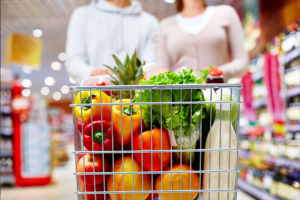
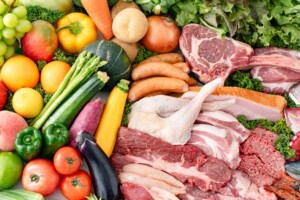
As for some of those key indicators, healthier food remains nearly twice as expensive per calorie as less healthy food, with the gap between healthier and less healthy foods widening, and fruit and vegetables the least affordable food group per calorie.
Fewer than 1 in 10 of teenagers eat their recommended 5-a-day serving of fruit and vegetables and 95% consume above recommended levels of free sugars.
Fast-food outlets continue to make up 1 in 4 places to buy food in England, rising to over 1 in 3 in the most deprived areas.
The food system is also lagging behind in key environmental indicators with emissions down by just 22% since 2008, compared to a 41% drop across the UK economy. Meanwhile, an estimated 204km2 – an area larger than Glasgow – was deforested in 2023 to produce agricultural products linked to the UK economy.
The Food Foundation proposes a number of measures that should be taken to put the UK food system on a healthier, more sustainable trajectory. These include a call to introduce a new levy on unhealthy food that incentivises manufacturers to make food healthier while also raising revenue that can be invested back into supporting access and affordability of healthy and sustainable food.
Local authority planning powers should be strengthened to curb the proliferation of unhealthy fast-food outlets, and current advertising regulations should be expanded to include brand advertising and outdoor advertising.
It’s not all doom and gloom. The charity acknowledges that in recent years there has been a range of policy commitments, strategies and ambitions from the UK Government that relate to food, from new advertising and promotions regulations through to wider access to free school meals, a food strategy and a child poverty strategy. However, it stresses how “we need much greater ambition” and “there must be a joined-up approach to food policy” and “a mechanism to lock in food system transformation once and for all”.
The Food Foundation is due to publish its annual assessment of individual business progress towards supporting a more sustainable, healthy and fair food system later in the year.
Small Bites
Chicken imports double amid UK constraints
Imports of chicken have surged over the past five years as UK supply struggles to keep up with growing consumer demand. The FT reported the value of imported chicken reached £1.78bn last year, up from £823.7m in 2020, according to the latest government trade statistics. The supply of chicken is a source of tension within the food sector as UK businesses struggle to square commitments to higher welfare with their need to source reliable volumes at an acceptable price point. Earlier this year, eight businesses responsible for 18 leading hospitality brands announced their decision to withdraw from the Better Chicken Commitment (BCC) and launched a rival Sustainable Chicken Forum. They believe a BCC requirement to transition to slower-growing breeds is unrealistic and will act as a brake on UK supply. The poultry sector also points to a restrictive planning regime as a barrier to domestic expansion. Much of the rise in imports has come from the Netherlands and Poland, as well as non-EU countries such as Ukraine, Brazil and Thailand, where welfare rules are generally more relaxed than in the UK, the FT noted. Campaigners argue that expanding the number of UK poultry units to meet demand will exacerbate local environmental issues, including river pollution, and say both chicken production and consumption need to be kept in check.
Food imports at risk from extreme heat
Supplies of rice, citrus fruits, coffee and cocoa are under threat from extreme weather with 2027 predicted to be the hottest year ever recorded. New analysis from the Energy and Climate Intelligence Unit (ECIU) found that the 15 nations most exposed and least resilient to climate change-driven extremes were the source of 13% of UK food imports in 2025, worth £8.9bn. Farmers are bracing themselves for hostile growing conditions after the World Meteorological Organisation confirmed a powerful El Niño event as 80% likely in the coming months. Heat stress is already posing a growing threat to yields and to the health of the agricultural workers who produce the world’s food. ECIU said that in 2024, agricultural workers across the 15 most exposed countries lost an estimated 216 billion hours to heat stress, roughly the equivalent of nearly 49 working days per worker. Among the foods most likely to be impacted by extreme heat are rice, for which India is the UK’s biggest supplier, along with soft and citrus fruits like grapes, lemons, oranges and nectarines from South Africa, Peru and Egypt, coffee from Vietnam and Brazil, cocoa beans from Cote d’Ivoire and Ghana, Colombian and Ecuadorean bananas, and Kenyan tea.
NPM change will curb health innovation – FDF
Proposals to change how the nutritional value of food and drink is calculated will disincentive investment in healthy new products, according to a leading trade body. The Food and Drink Federation (FDF) published new research this week showing that its members’ products now contribute 18% less salt, 19% less sugar and 17% fewer calories to the British grocery market, compared to 2021. But it said the UK Government proposal to switch to a new nutrient profiling model (NPM) has put the health benefits to consumers in jeopardy since many of these products would no longer be able to be advertised under the new rules. NPMs categorise the healthiness of food and drink products based on their balance of nutrients. The UK’s previous 2004/05 model is more than 20 years old and doesn’t reflect modern dietary advice, according to the government. The newer 2018 model takes into account updates to nutrition science that have occurred since 2004, particularly regarding expert advice to significantly reduce sugar intake. Thousands of products currently sitting on the right side of the 2004 NPM – often as a result of industry reformulation and innovation – would be categorised as HFSS (high in fat, sugar and salt) under the 2018 model. The FDF is calling on the government to pause plans to change the NPM, and instead accelerate plans to make reporting of healthier food sales data mandatory across the food sector.
Chef’s Special
The growing diversity of the UK workforce is being reflected in the food chosen to be served at corporate events. Research by event catering platform Togather revealed that Greek, Caribbean, Chinese and African cuisines have broken through into the top ten most popular cuisines in corporate events so far in 2026. Old default choices like Indian cuisine and burgers are losing ground to more adventurous choices, according to the research, with African food in particular having seen the fastest proportionate growth of any cuisine type on Togather’s platform. “Companies are now starting to choose food that represents their teams”, said Togather co-founder Hugo Campbell. Still, global cuisines have a long way to go to topple the number one choice for corporate events – pizza still tops the pile accounting for 13.2% of corporate food orders.
Last Orders

Carlsberg has heralded a breakthrough in climate-resilient hop production after scientists produced what is being described as the most detailed genetic map of hops to-date. Researchers working at the Carlsberg Research Laboratory (CRL) say they have gained an unprecedented view of the crop’s genetic complexity and its potential for improvement, which in turn provides a platform for developing hops that can better withstand climate change, while also creating new opportunities to improve flavour and quality. Scientists created a high-resolution map of all the chromosomes that make up the genome of a commercially important hop variety. This allowed them to see how genetic lineages are organised in the plant’s DNA and how they contribute to key brewing traits like heat and drought tolerance. Carlsberg said it has made the research, published in the Nature Communications journal, freely available to help other scientists, farmers and brewers worldwide protect and improve one of beer’s most essential ingredients.