
From helping companies comply with deforestation laws to assessing the feasibility of solar technology, AI promises to support the industry’s sustainability agenda, but only if businesses can cut through the hype
The lure of artificial intelligence (AI) is impossible to ignore. This article could have been written by one of the many software tools that uses AI and large language models (LLMs) to produce a first draft in seconds. No research, no reading, no emailed Q&As, no video calls and interviews (at least no original ones).
Rest assured it hasn’t been. In recent weeks, I have dived deep into the potential applications for AI across the food and environmental sectors, talking to think tanks, policymakers, regulators, innovators, consultants, ecologists and lawyers. I have been pulled into podcasts (Black box: the chatbots made the hairs on my arm stand on end), watched webinars and been sucked into articles, journals and books (the hairs are standing up again each time I dip into Bruno Giussani’s Our minds under siege).
This is a technological wave that is everywhere, all at once. A flood rather than a creep, bringing optimism and concern in equal measure. “I know how worried people are. So we have to rise to this moment,” said UK prime minister Andy Burnham last month, as he pitched the UK as “an honest broker” on the technology (the UK will also use its presidency of the G20 next year to put “AI centre stage and Britain will then work to develop a new global code”).
The genie is already out of the bottle, however. Claims for how AI can be employed to solve all manner of business challenges are legion. “My advice to any business is to judge AI on measurable outcomes, not hype,” advises Phil Wu, director at Absolar. “The technology is only valuable if it helps businesses make better decisions, reduce costs and deliver meaningful environmental improvements,” he adds.
Let’s start with some of the positive stories, beginning with Wu’s own. Founded by scientists from the University of Southampton, Absolar uses AI, LiDAR (remote sensing tech) and digital-twin modelling to assess solar and battery feasibility for UK businesses. Until recently, finding out whether a building could host solar infrastructure meant sending an engineer to every site, then waiting weeks for a report. “For a single café, that could be viewed as a hassle,” Wu tells Footprint. “For a restaurant chain, contract caterer or motorway services operator with dozens or hundreds of sites, it’s often the reason nothing happens at all.”
Southampton restaurant M’ Dim Sum got a solar feasibility report the same day it enquired about high electricity bills. Its proposed system is projected to generate 13,020 kWh a year and save 3.3 tonnes of carbon. Assessing all 65 Moto motorway service stations took a little longer (two weeks) but now the company has a read-out of each site’s solar potential, installation costs, payback periods and projected carbon savings. It also has “the evidence base for deciding where to invest first”, says Wu.
Elsewhere, ecologists I have spoken to have said how they welcome the role of AI in giving them a helping hand in carrying out surveys, and handling and monitoring data. “With AI we can monitor more things which gives us a better understanding of the functioning of an ecosystem, rather than just whether it has newts in it or not,” Mark Nason, head of professional practice at the Chartered Institute of Ecology and Environmental Management (CIEEM), told me last year.
AI also has the potential to protect the public from foodborne disease outbreaks. Last year, the UK Health Security Agency assessed a range of AI models for their ability to trawl thousands of online restaurant reviews for information about symptoms that could identify possible sources of foodborne illness and stop more people becoming sick.
The idea that AI can somehow help us transform our economy – including our food system – to one that protects and restores nature, and mitigates and adapts to climate change, is another enticing prospect. It is one that drives the likes of Antony Yousefian, general partner at The First Thirty, an early-stage venture capital firm investing in deep-tech companies building what he refers to as “the infrastructure to prove and deliver health value from soil to us”.
Imagine if a dairy company can prove its milk is more nutritious than the one sitting next to it on a supermarket shelf or by the barista station in a coffee shop. “The back of the label is the new front,” says Yousefian. As companies compete to develop products and ranges claiming high levels of ‘nutrient density’, the winners will be those who have the data to prove it.

In challenging times, connection is our greatest strength
Secure your place at the inaugural Footprint Futures Lunch
Farmers’ friend
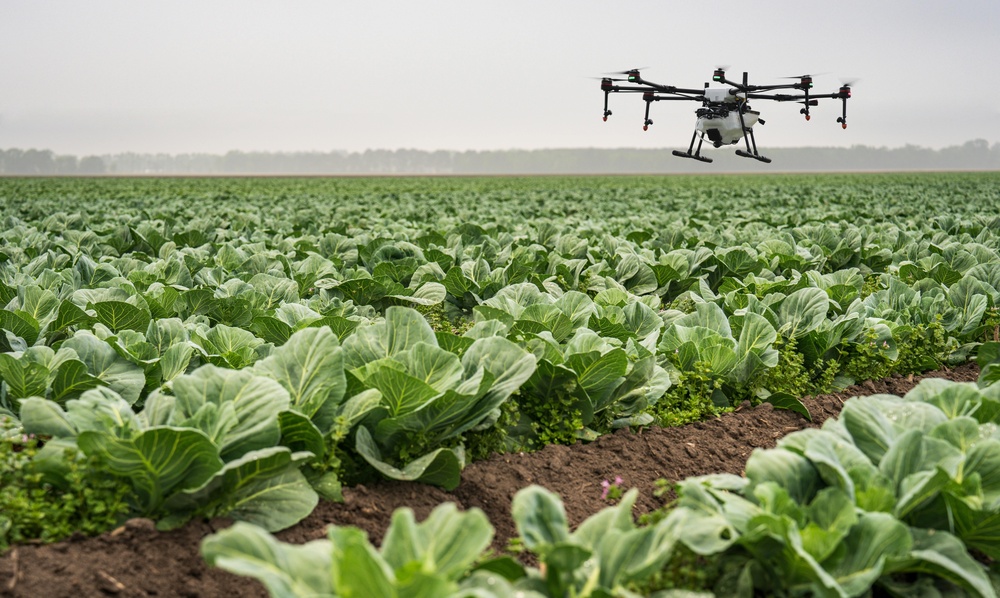
Within the food chain, it is at the farm level that AI has arguably been embraced most enthusiastically to-date. “One of the world’s oldest industries is racing into the age of artificial intelligence,” reported Bloomberg in September, referencing McKinsey research that farmers, especially in the Americas, are quickly adopting AI to assist with crop planning and precision application of inputs (McKinsey’s survey found input costs are farmers’ top profit risk in most regions, so producers now more so than ever don’t want to use more than they need).
“The uptick raises the potential for cost savings and efficiency gains at a time when climate change curbs harvests and the agricultural industry grapples with higher fertiliser and diesel costs brought by the Iran war,” the Bloomberg report noted.
Others have similarly high expectations. “The application of AI to the global agriculture value chain is likely to be rapid and transformative,” noted experts at Bain Consulting Group in June. “Big gains in input innovation, data capture and analysis, decision-making, and operations on the farm and in the marketplace can restructure not only how our food is grown but what kinds of food we eat,” they added.
Handle with care
This ‘agricultural intelligence’, as the consultants termed it, uses agentic AI to generate data and “take appropriate action at every stage of food production and distribution, with minimal human handoff at each step”.
Those concerned that we are perhaps running here (releasing control) before we can walk have every right to be. As farm advisor Erin Nazetta told Bloomberg, AI wouldn’t be capable, for example, of predicting unprecedented anomalies such as 2012’s severe drought that devastated the US corn crop. “It does not replace the ability to reason, the wisdom, the relationships – a lot of the aspects that are not necessarily captured in the data,” she said. There are also cost barriers to uptake of such technology among farmers and food businesses, often working on the thinnest of margins.
Almost every expert I spoke to noted the need for a human to be ‘in the loop’, to provide management and control over how and why AI is being used. “In many food businesses, information still sits in spreadsheets, old emails and individuals’ heads, which makes AI usage riskier,” explains Rob Sinclair, CEO at Point74, a platform that brings together information on things like raw materials, ingredients and recipes in a single system. This might not be the most glamorous of AI applications, he notes, but “it is the foundation any AI tool needs if it is to be trusted”.
Indeed, poor data produces inaccurate answers. Where allergen information is concerned, for example, that is a matter of customer safety. False green claims can also attract the attention of regulators these days. The Advertising Standards Authority revealed recently it is using AI-assisted analysis to explore how environmental claims are being used in online advertising.
Thirsty work
For businesses planning to deploy AI to deliver environmental efficiencies and improvements there is a trade off that demands careful consideration – namely AI’s veracious appetite for energy and water. BBC News recently reported that an explosion in data centres could undermine the UK’s climate targets. As experts at the UN University Institute for Water, Environment and Health put it in a report this summer: this is a digital technology but also a material system with measurable environmental costs. The research presented not a case against AI that is improving the lives of billions of people around the world, said UNU professor Kaveh Madani, but rather one “for using it responsibly and addressing its unintended impacts proactively to make it sustainable and equitable. We have a narrow window to ensure that the backbone of the technology develops within planetary limits,” he added.
Research by the NewClimate Institute, published in October, highlighted the emissions from manufacturing the chips and hardware that power data centres as “a major blind spot”. Balance, as ever, is everything. Foodservice companies will need to weigh up the good, the bad and the ugly of AI.
Just don’t do it
Speaking of ugly, Just Eat’s latest foray into AI has attracted headlines for all the wrong reasons. “We’ve been trialling AI-enhanced images and, as with any new technology, it isn’t always quite right the first time,” explained a spokesperson for the delivery platform last month as initial tests produced some rather bizarre concoctions. Photos of bacon and eggs floating in a glass of cola (a confusion between ‘soda’ and ‘soda bread’) and chips poking out of muffins (a mix up involving a Manchester colloquialism for ‘chip butty’) spread fast and far across social media. Amid the ridicule, the delivery platform was forced to apologise to local restaurants and customers, and put the brakes on this particular AI initiative.
Big out of home food brands are certainly hungry to see where the technology takes them. “AI is coming to life in a way that empowers our people to deliver a great experience for consumers and drive faster business growth,” said Yum! Brands CFO Ranjith Roy on an investor call last week. The owner of KFC and Taco Bell has been adding the tech to kitchens, drive-thrus and management strategies in a “modernisation push”.
There is also an almost inevitable push into robot-led restaurants, with some looking to build the ‘next Amazon’, but in foodservice. The goal is to make food that doesn’t have to compromise on quality, in a place that also provides endless variety, according to billionaire e-commerce veteran and founder and CEO of food delivery start-up Wonder, Marc Lore. “Amazon is: pick, pack, ship,” he told Bloomberg. “We’re pick, cook, pack, ship. It’s very similar to e-commerce; we just have this one extra step that adds a 10% margin.”
Wonder Create is an AI-powered platform that enables you to design and launch a virtual restaurant brand in under a minute. Wonder’s kitchens then cook every dish to order and deliver it. This is restaurants as software; no need for your own kitchen, staff or storefront.
Jobs conundrum
Whether AI will turn out to be a job replacer or enhancer remains the subject of fierce debate. At the Labour Party conference this autumn, where Burnham made his “honest broker” comment, talk of AI inevitably focused on the labour market. Those attending one fringe event heard how 11% of UK jobs are “highly exposed” to being replaced by AI chatbots, according to IPPR, “led by secretarial and administrative occupations”. But with the rise of more sophisticated agentic AI, that “could rise to about 60% of tasks across the UK economy”. Some frame this is a positive: AI will take care of routine tasks leaving staff to focus on more enjoyable, valuable work.
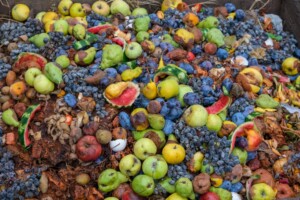
Indeed, there is plenty to be upbeat about when it comes to the deployment of AI across the food chain. Chefs are using it to inspire new recipes and reduce food waste (the ability to measure food waste and identify hotspots is one of the original and most established applications for AI within the hospitality and foodservice sector); environmental lawyers are using it to help clients comply with new deforestation regulations and synthesise supply chain information; fast food chains are using AI to create faster and more personalised experiences for customers; scientists are using the technology to better understand our soils, reduce food waste and improve crop resilience.
Yet the question of who has control over AI and how it is used are questions I found myself coming back to time and again in my research. Are foodservice companies genuinely being empowered to work more effectively by AI or, in the rush to keep pace with the technology, are they blindly throwing lots of ideas at the wall and hoping some of them stick?
Time will tell if deployment of AI results in better food and stronger businesses, but the window to get this right is narrowing by the day.
Further reading
Can AI turbocharge sustainability?
In this episode of our Sustainability Bites podcast, in association with Nestlé Professional, we take a closer look at AI and the possible profound impact on sustainability endeavour in the hospitality sector
AI deployed to tackle food poisoning
Artificial intelligence (AI) could in future be used to comb restaurant reviews for possible sources of foodborne illness and stop more people becoming sick