What goes up must come down. Although in the case of food prices, the descent is likely to be far slower than the journey to the summit. That was the conclusion of a new study published this week by the Energy and Climate Intelligence Unit (ECIU), which found that on average shelf-prices fall back by just 1% of the original rise after six months, 5% after a year and 7% after two years. In wage-adjusted terms, only around a third (35%) of the affordability shock has unwound after two years.
The analysis, based on more than thirty years of UK data, comes at a time when food prices are expected to rise sharply again over the remainder of this year as the ongoing conflict in the Middle East pushes up costs across supply chains. Climate change is also playing a role; in England three of the worst harvests on record have occurred within the past five years, while the current heatwave has led to fears of lower yields for spring crops.
ECIU said the so-called “rocket and feathers” effect – where food prices shoot up like rockets but drift down like feathers – helps explain why prices remain far above pre-pandemic levels even after some of the shocks that drove them have eased. The effect has been especially pronounced in the years since the start of the cost-of-living crisis. Analysis of industry forecasts found UK food prices are on track to be 50% higher by November 2026 compared to levels in mid-2021. Staples including pasta (+50%), frozen vegetables (+55%), chocolate (+58%), eggs (+59%), beef (+64%) and olive oil (+113%) have already seen some of the steepest rises.
“What’s striking here is the lasting impact of these shocks: once food prices go up, they rarely come properly back down and that means for millions of people in Britain food becomes harder and harder to afford, and food insecurity continues to remain unacceptably high even after the headlines have moved on,” said Anna Taylor, executive director of The Food Foundation.
Taylor was one of a number of food experts to write a letter to ministers this week arguing that Britain is sleepwalking into a food crisis caused by extreme weather, inflation and the impacts of the Iran war. The Guardian reported that the experts, who also include Mike Barry, co-founder of Planeatry Alliance and architect of M&S’s Plan A sustainability strategy, have called for the national food strategy to be updated to take account of the risks and prepare the UK for a future of higher temperatures and more severe weather. They said ministers should focus on three priorities: resilient domestic production of healthier food; greater preparedness for supply chain shocks; and access for all to safe, affordable and healthy food.
It’s yet another warning that the UK Government’s response to the risk to food security remains underpowered and overly reliant on short-term sticking plasters. On Wednesday, HM Treasury published the list of 125 food items that are set to have import tariffs suspended subject to consultation. The list includes avocados, mangoes, olive oil and baked beans along with less healthy items like pizza, biscuits and chocolate. Food and farming industry leaders have warned the measures will have little effect on prices and demanded more support for UK producers.
The government is also seeking views on whether suspending tariffs on certain fertilisers could help farmers cope with the impact of rising prices as a result of the conflict in the Middle East.
“The war in Iran isn’t our war, but one we will need to respond to, and my priority is keeping prices down for households and businesses,” said Chancellor Rachel Reeves.
Small Bites
Chicken demand means more sheds needed, says NFU
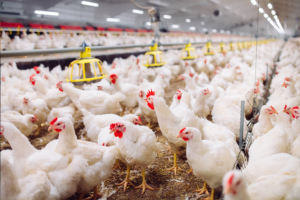
The National Farmers Union (NFU) has called for a streamlining of planning rules to allow for more poultry sheds to be built to meet growing demand for chicken. It says excessive planning delays, inconsistent local decisions and systematic barriers are preventing poultry producers from creating the space needed to look after and house the number of chickens needed. The NFU’s demand highlights a growing tension within the poultry sector between animal welfare on the one hand and market forces on the other. The Better Chicken Commitment requires businesses to source chicken from producers who use slower growing breeds and employ lower stocking densities in order to deliver improved welfare outcomes. Some in the industry argue this requires more poultry production facilities to be built just in order for domestic supply to stand still, however current planning rules are said to be stymieing expansion plans. “Producers are eager to invest, modernise, and future-proof their businesses to help feed the nation, but they are trapped in a planning system of endless delays and obstruction,” said NFU poultry board chair Will Raw. He added that “without urgent change, we risk displacing British production with chicken produced overseas – from countries where food is allowed to be produced in ways that are illegal here”.
Plant prices compare favorably with meat
A surge in meat prices is making plant alternatives increasingly favourable by comparison, according to new analysis. Research by climate advocacy NGO Madre Brava showed average meat prices have soared since 2019, with jumps of 34% in Germany, 29% in Spain, and 42% in the UK. At the same time, prices of plant proteins such as beans, lentils and tofu have not increased as dramatically, according to retail price data provided by Euromonitor International. Beef saw the biggest price increase, rising by £4.44 per kg (56%) in the UK, €4.09 (44%) in Spain and €5.31 (39%) in Germany since 2019. The price difference between processed meat and plant-based meat alternatives (PBMAs) is also moving in favour of plants, according to the study. In Germany and the UK, PBMAs are now cheaper on average than processed meat, a reversal of the situation in 2019. The trend for rising meat prices has been driven by conflict, climate change and dwindling livestock numbers. “The good news for consumers is that the price of healthy, sustainable proteins such as beans, lentils and tofu has not increased as much, so they’ve stayed relatively cheap. In this sense, they’re a buffer against meat price inflation,” said Nico Muzi, chief programme officer for Madre Brava.
Seafood suppliers struggling with sustainability
Investor perceptions of seafood sustainability have to-date been overly positive with global suppliers struggling to manage risks around issues such as modern slavery, pollution and food safety. A new benchmarking study by the FAIRR initiative assessed the maturity of the response of the world’s 20 largest listed seafood companies to environmental and social risks and opportunities. It found that companies scored better on social issues, with an average score of 39/100, than for environmental topics, where they scored 25/100. Companies scored particularly poorly on pollution (19/100), which includes effluent discharge from salmon farms, marine litter from pens and fishing gear chemical contamination. Leading seafood companies are also struggling to identify commercially viable pathways for more sustainable products and remain focused instead on salmon and shrimp farming. This includes missed opportunities to expand portfolios into plant-based and alternative proteins as well as unfed aquaculture, which refers to the farming of species such as mussels and macroalgae that require no external feed input and are among the most ecologically efficient forms of seafood production, according to FAIRR. “Whether it’s IUU [illegal, unreported, and unregulated] fishing, overfishing or issues of disease and pollution management in farmed seafood, it’s clear that there’s a lot of work to do to ensure seafood contributes sustainably to global food security and resilience,” said Max Boucher, head of nature programmes for FAIRR.

Chef’s Special
Summer arrived early this week as UK temperatures smashed previous records for May. Appetites change as the mercury rises meaning hospitality operators need to respond in kind. There’s good news from a healthy eating perspective with bowls of wholefoods near the top of people’s wish-list this summer, according to Bidfood, which has shared research into the trends it believes will shape seasonal menus. ‘Feel-good wholefoods’ make the list, described by the wholesaler as “nourishing dishes full of flavour, colour and texture that feel both wholesome and indulgent”. ‘Sweet heat flavours’ such as hot honey and ‘street food influences’, particularly Korean-inspired dishes, are also set to prove popular in the months ahead. “Seasonality is crucial for operators,” said Rhia Harry, research and insights manager at Bidfood. “It challenges them to craft a unique story around food that delivers an experience that diners can’t easily recreate at home.”
Last Orders
Community-owned pubs are being pitched as a solution for getting young people into work after data showed a surge in youth worklessness. The hospitality sector has traditionally provided a first step into employment for school leavers and students, but opportunities are disappearing as businesses look to cut costs. UKHospitality has said 100,000 jobs were lost in the period following the 2024 budget which saw a rise in employer national insurance contributions. Research by the charity Plunkett UK has found community-owned pubs, cafés and restaurants are stepping in to fill that gap with over half of community businesses employing 16–25-year-olds. The latest Office for National Statistics figures show that nearly one million 16–24-year-olds are currently not in education, employment or training, the highest level in more than a decade. Former health secretary Alan Milburn described youth worklessness as “probably the most significant challenge facing our country” as he launched a government-backed report this week which estimated the cost to the UK economy of young people not in work, training or education at £125bn a year.