Large food businesses should be required to show how they are planning for climate risk, according to a major new report on climate adaptation. In a sweeping summary of the UK’s exposure to climate risk and its ability to adapt, the Climate Change Committee (CCC) also proposed a target be set for at least 60% domestic food production as a share of total food consumed through until 2050, and suggested ministers consider the potential for large-scale national stockpiling to avoid risks of shortages across nutritionally important food groups.
The report, ‘A Well-Adapted UK’, is the fourth independent assessment of UK climate risk to be published by the CCC. Although the UK has reduced greenhouse gas emissions by 42% since the Climate Change Act was passed in 2008, the committee concluded there has been little progress on preparing ourselves for the changing climate with the effects of extreme heat, floods and drought already being felt across the UK.
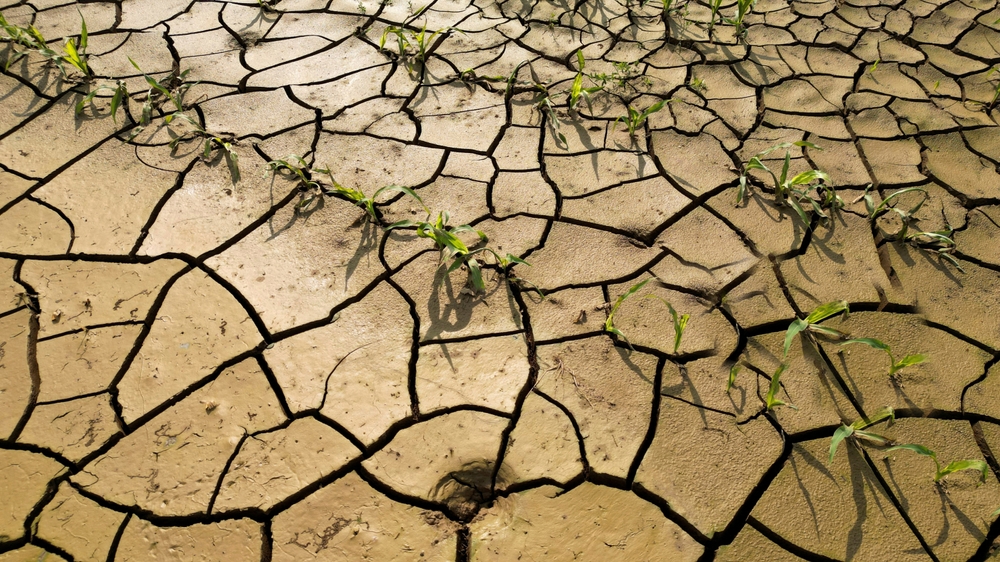
Food and farming systems are among the most exposed to climate risk. Farmers are already grappling with increasingly volatile weather patterns which are reducing yields and disrupting growing cycles. The CCC noted that without adaptation, the amount of high-quality farmland in England and Wales could shrink from 38% to 11% by 2050 if the planet warms by 2°C. It also predicted an extreme year of heat could create agricultural losses of up to £2.3bn in the 2030s.
Crop failures could trigger food price rises, along with supply disruptions. The committee highlighted how around 40% of the food we eat is imported, meaning international climate impacts can be just as important for food prices in the UK as domestic ones. By 2050, under 2°C of global warming, simultaneous crop failures in multiple major producer regions, or significant disruption of food supply chains, could lead to increased food prices and more volatile inflation, hitting lower-income households the hardest.
Unlike previous climate risk assessments, the new report puts a strong emphasis on solutions. Public money should be targeted to support nature and make growing food sustainable in a future climate, the committee said, while farmers must be encouraged and enabled to take adaptation measures.
Food businesses along the entire value chain will need to develop measures to manage climate risks. These could include diversification and investment in resilience across supply chains. The CCC also believes large food companies should be included in the scope of the government’s ‘Adaptation reporting power’ (ARP), which give ministers the authority to direct organisations to produce reports on what they are doing to adapt to climate change.
Across the entire economy, the committee calculated the cost of inaction is far greater than the cost of acting now, noting that its proposals require investment of around £11bn a year, split evenly between public and private funding.
“Our lives, our landscapes and our homes are under increasing pressure from the changing climate,” said Baroness Brown, chair of the CCC’s adaptation committee. “But we are not powerless. In an increasingly unstable world, being well adapted to climate change is fundamental to securing our food, energy and economic security.”
Other experts stressed that adaptation, although vital, is not a substitute for climate mitigation. “The CCC is clear that without reaching net-zero and bringing the climate back into balance, climate impacts may go past the point the UK can adapt to, or risk triggering irreversible tipping points such as the collapse of Atlantic currents that would leave the UK with a much colder climate and struggling to grow food,” said Tom Cantillon, senior land and carbon analyst at the Energy and Climate Intelligence Unit.
“We have all the solutions we need,” added Ruth Westcott, climate and nature emergency campaign manager at Sustain. She urged the government to use its food strategy and other policy levers to “shift the UK in the direction of low-emission farming; more vegetables, pulses and legumes, and less meat and less industrial farming”. Westcott also called for a Good Food Bill to be delivered in this parliament, “putting food security on a statutory footing for the long term”.
Small Bites
Foodservice should prepare for more inflation
A fall in food prices in March is likely to represent momentary respite for businesses rather than sustained relief, analysts have warned. Food and drink prices in the hospitality sector fell by 1.4% month-on-month in March, according to the latest Foodservice Price Index from NIQ and Prestige Purchasing, however ongoing conflicts and energy shocks threaten to drive cost increases in the coming months. In their commentary accompanying the index, the organisations noted how the deflation reported in March has largely been driven by the delayed transmission of costs in UK supply chains, with favourable seasonal transitions for fresh vegetables and effective forward-buying strategies also helping shield the UK market from broader global volatility. However, global prices for major commodity groups like cereals, meat, dairy, vegetable oils and sugar, are now rising simultaneously along with a spike in global crude oil prices. Shaun Allen, CEO of Prestige Purchasing, said operators must not be lulled into a false sense of security by March’s data. “We are currently in the eye of the storm,” he warned. Concern over food inflation is such that the UK Government is seeking to curb price rises. UK supermarkets are being urged by ministers to voluntarily limit food prices in return for an easing of health and environmental regulations, according to media reports.
Food and drink giants align on regenerative agriculture
Forty leading food and drink businesses have agreed to use their collective power to help scale regenerative farming practices. Asahi, Aviko, Carlsberg, Diageo, Mondelez International, McCain, Nestlé and Unilever are among the major players to have signed up to SAI Platform’s ‘Regenerating together programme’, which aims to tackle food system challenges including climate change, biodiversity loss and soil degradation. The programme has been developed with input from farmers, agronomists, NGOs and academics and commits signatories to work collectively towards achieving a more resilient, regenerative and inclusive future for agriculture. In recognition that regenerative agriculture needs a collaborative approach rather than a ‘one size fits all’ solution, the programme establishes a set of shared impact areas, outcomes and indicators, while allowing flexibility for local adaptation. Dionys Forster, director general of the SAI Platform, said securing this level of support represents a “pivotal moment” in moving regenerative agriculture from ambition to action adding that the declaration lays the groundwork for progress that is “collaborative, measurable and scalable”.
PM launches major food redistribution drive
Mandatory food waste reporting could be back on the agenda as part of a new plan to get surplus food to where it is needed. Following the King’s Speech last week, Prime Minister Sir Keir Starmer announced an ambition to treble the amount of surplus food made available from redistribution across the UK. The strategy for a new national programme to redistribute surplus food has been developed over recent months by IGD and the newly merged FareShare and The Felix Project with support from businesses, charities and social enterprises. The goal is to tackle food waste and food insecurity as households continue to face pressure from rising food bills and the wider cost-of-living crisis. IGD said surplus food redistribution is not a substitute for the structural reforms needed to address the root causes of poverty, but added: “It is, however, an unambiguously positive intervention: one that strengthens communities, improves health and builds the local resilience that people increasingly depend on.” WRAP CEO Catherine David stressed that “we cannot afford, economically, environmentally or socially, for wasting food to remain the norm”. The Grocer reported that the plan will also involve a major new effort to revolutionise the collection of food waste and surplus data, including re-igniting plans for mandatory food waste reporting which have been promised but not delivered by successive governments.

Chef’s Special
For the past six years, restaurants setting the standard in sustainability have had their achievements recognised with a Michelin green star, so it has come as a disappointment to many pioneering chefs to hear that the accolade is to be phased out by the Michelin Guide. The green star was launched in 2020 to recognise restaurants combining culinary excellence with environmental responsibility. Currently, 37 restaurants across the UK and Ireland hold the award which will be replaced at the end of this year with a new editorial initiative. “It’s disappointing – one of our dreams was to have one,” Piers Milburn, the owner of Pythouse Kitchen Garden in Wiltshire, which won a green star last year, told The Guardian. In its place, a new ‘Mindful voices’ platform will “highlight and share the stories and pioneering practices of chefs, hoteliers and wine producers”, according to Gwendal Poullennec, international director of the Michelin Guide. Gwendal has said 2026 will be the “transition year” between the two systems.
Last Orders
Diageo has opened a new brewery in Ireland that it claims will avoid up to 15,000 tonnes of carbon emissions annually compared with a similar scale facility. Almost €300m (£260m) has been spent on the Littleconnell Brewery in Co. Kildare, which has been designed with low-carbon brewing in mind. The site will run on 100% renewable energy and incorporates advanced brewing and process technologies to reduce energy and water use, according to the drinks giant. The brewery will produce a range of ales and lagers, including Rockshore, Harp, Smithwick’s and Kilkenny, as well as licensed beers like Carlsberg. Diageo has also confirmed plans to develop a second brewery at Littleconnell over the next three years, which will produce Guinness and Guinness 0.0.