
Under pressure from businesses and campaigners, UK ministers are at last set to crack down on illegal forest loss linked to key food commodities
“The world’s rainforests are to be better protected from deforestation,” read the first line of the Defra press release issued during London Climate Action Week in June.
Campaigners may have suggested the word ‘finally’ be added to the statement, such has been the lag between the UK Government giving itself the powers to tackle illegal deforestation and choosing to deploy them.
The Environment Act 2021 included provisions to make it mandatory for large companies to carry out due diligence checks to ensure there is no illegal deforestation in their supply chains for forest-risk commodities such as soy, beef and palm oil. Yet five years on, successive governments have failed to enact the secondary legislation needed to put the rules into effect.
Spurred on by the imminent introduction of the EU’s deforestation regulation (EUDR), which has been subject to its own set of delays and revisions and is now scheduled to come into force at the end of this year, the UK Government has at last published a policy paper outlining its proposed approach to deforestation regulations, although we still await a full consultation.
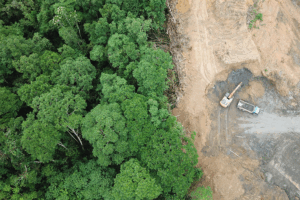
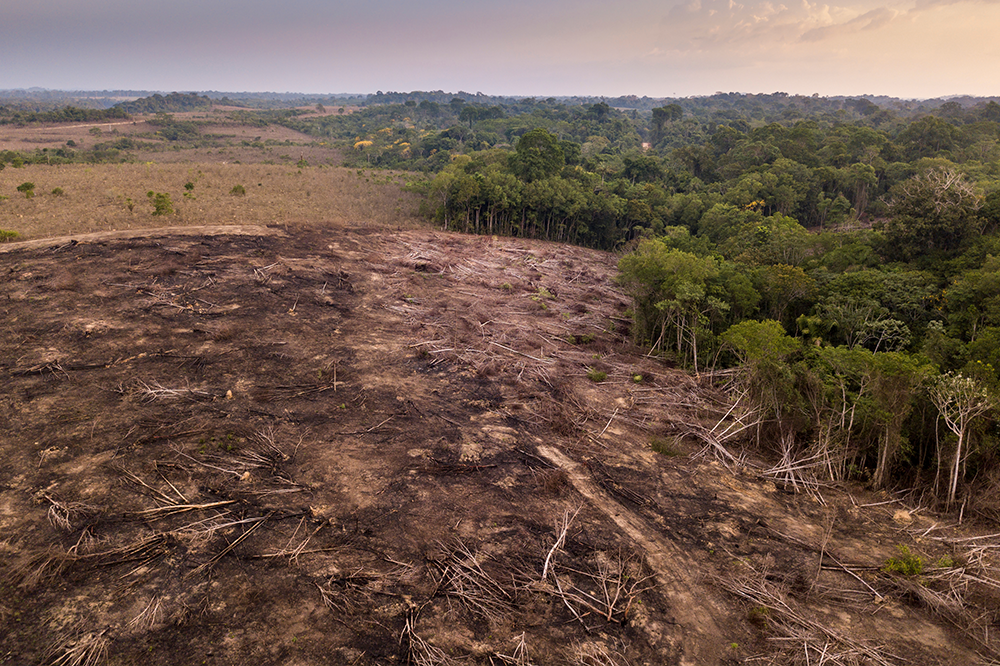
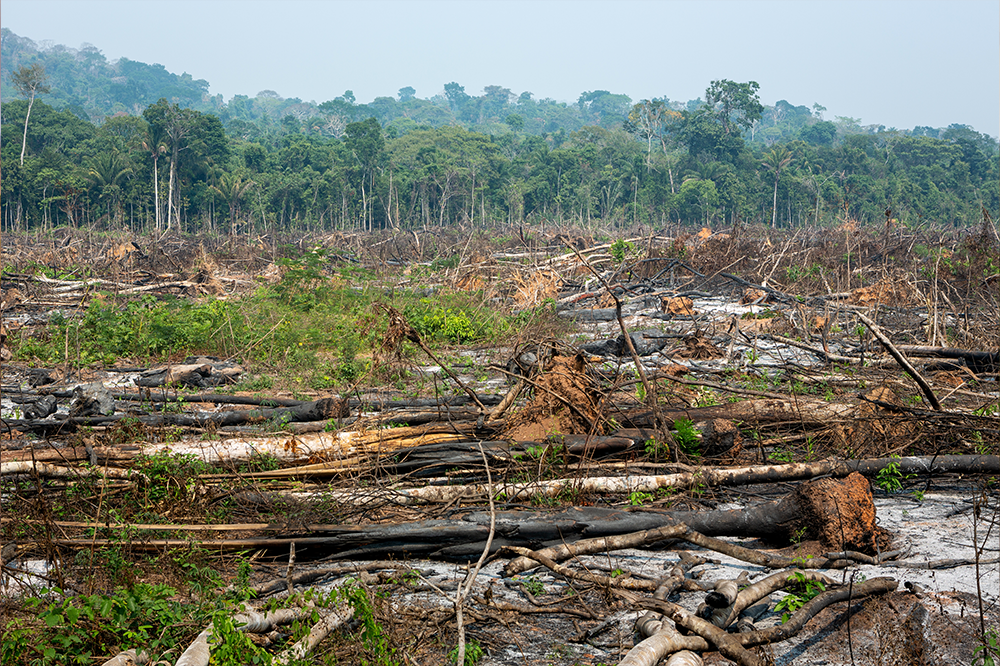
Currently, British companies have no legal duty to check whether commodities and products they import have been produced on illegally deforested land. Experts say this means foods on UK supermarket shelves, and served in foodservice settings, are almost certainly linked to illegal deforestation in places such as the Amazon, West Africa and Indonesia. A lack of transparency and traceability makes it hard to pinpoint exactly which foods these are. “What we can say is that there are commodities that have been grown on deforested land, and the UK supply is linked to those regions,” says Gemma Hoskins, global climate lead and UK director at the NGO, Mighty Earth.

Deadlines for voluntary industry commitments to deliver deforestation- and conversion-free supply chains have frequently come and gone over the past two decades – 2025 being the latest to be missed for soy specifically. Getting the UK forest loss legislation into the statute book is especially urgent for soy with the Amazon Soy Moratorium on the brink of collapse.
So are ministers finally set to take decisive steps to end the use of deforestation-linked food commodities? Or does this long and frustrating journey have numerous twists and turns yet to take?
Business support
What makes deforestation unusual in the regulatory sphere is that food businesses, and the big supermarkets in particular, have been agitating for rules on forest-risk commodities to be introduced. Last July, a group of supermarkets wrote an open letter urging the UK Government to ban illegal deforestation in food supply chains. Members of the Retail Soy Group including Tesco, Sainsbury’s and Aldi said ending global deforestation is critical if we’re to avoid the worst impacts of climate change and biodiversity loss and ensure future food security.
The retailers said voluntary actions, such as the UK Soy Manifesto, have demonstrated that a market shift even among the most committed UK businesses is impossible to achieve without a binding regulatory baseline in place. “Deforestation is a clear example of a market failure that we are unable to address exclusively through voluntary commitments,” they stated.
The government’s plan is to require businesses using forest-risk commodities and wood products to carry out due diligence checks to ensure these are produced in compliance with relevant local laws. The requirements are intended to apply to wood, cattle, cocoa, coffee, palm oil, rubber and soy, as well as certain derived products like chocolate and furniture.
Businesses who use these products would need to ensure they establish a due diligence system, report on their activity and hold proof of their compliance by collecting geolocation data about the farm-level origin of the specific products.
This isn’t without its challenges. Commodity supply chains are notoriously long, complex and opaque, with downstream businesses like restaurants and caterers many steps removed from the ingredient’s origin.
Speaking on a recent episode of Footprint’s The Small Print podcast, Jonathan Gorman from the consultancy Efeca, which heads up the UK Soy Manifesto, explained the journey a soybean grown in Latin America – a key producing region – takes from farm to fork. Crops are grown on very large farms from where they are transported to ports and mixed in silos. Soy used in animal feed is then crushed and shipped as soymeal.
“It’s been through some quite complicated logistics by the time it leaves Latin America, which is part of the issue around traceability,” Gorman explained. “Much further downstream, the retailer or the foodservice company is not likely to see any of that soy. They’ll see the produce of it; they’ll see the pork chop, they’ll see the eggs and other [foods]. So it’s quite invisible in that sense to many supply chains.”
Gorman went on to explain how a small number of large commodity traders sit in the middle of the supply chain controlling the movement of goods. “I think the challenge for individual companies remains, how do I ensure I’m not contributing towards deforestation and how do I use my leverage – a thousand tons, a hundred thousand tons – to change soy production and supply chains? And that’s the challenge with all of these commodities. We’re all tiny parts of big global supply chains. How do I change things and influence things? And I think probably the only way we’re going to change this is [by] acting collectively and at scale.”
Need for transparency
Many campaigners, and businesses, have long argued that regulation is an essential part of that collective action Gorman refers to. The requirement to prove compliance with the law by collecting geolocation data about the origin of specific products puts the onus on key supply chain actors to provide buyers with greater transparency.
Hoskins at Mighty Earth insists it is possible to capture and share information showing that commodities have not been linked to illegal deforestation, with the onus on the big traders to facilitate the flow of information that enables buyers to show compliance.
“Let’s not forget those commodity traders are not supposed to be dealing in deforestation,” she says. “In many circumstances, the deforestation committed is illegal and shouldn’t reach the supply chain, so the traders already have a responsibility, for example in Brazil, to make sure that their systems work.”
Hoskins says the idea that full traceability is impossible is incorrect because for many farmers it’s already happening. “The transparency is lacking from the traders who ultimately, I would argue, are happy to keep the situation as it is. They’re making enormous amounts of profit. Nobody’s really pushing them to clean that supply chain with enough gusto that it really eats into their profit. And so of course they’re going to continue to lobby for the status quo.”
Cocoa go-go

It’s not just supermarkets calling for greater regulation. Major chocolate manufacturers including Barry Callebaut, Ferrero and Tony’s Chocolonely have also been vocal in calling for the UK Government to implement forest risk commodity regulations. The UK is the world’s third biggest importer of chocolate and those imports of cocoa are linked to forest loss in Ivory Coast and Ghana.
The trio form part of the recently-launched UK Cocoa Coalition, which has been working alongside the NGO Forest Coalition to demand the regulations be laid before Parliament. During a launch event held in Parliament in March, Richard Laming, head of public affairs at Ferrero UK & Ireland, said the coalition showed “how the needs of business and protecting the environment are not in competition but go hand in hand”. He added that regulation “will be a vital first step in building a more resilient and sustainable cocoa supply chain”.
EU alignment
Businesses want as far as possible for the UK rules to align with the EUDR to minimise trade barriers and compliance costs. Many have already invested significant time and money to ensure their own systems can assimilate the new traceability data requirements for EUDR and don’t want to have to develop an entirely new system for the UK.
One key difference is that the EUDR covers all kinds of deforestation, including that considered legal in the country of origin. The UK’s primary legislation only covers illegal deforestation, although the government has now said it intends to move towards a “deforestation-free standard” in due course.
Hoskins notes too how the two pieces of legislation as drafted are quite different in how the EUDR is about stopping the import of deforestation-risk commodities into the market, whereas the UK Environment Act currently stipulates a due diligence process “that doesn’t necessarily suggest that deforestation imports will cease, but that mitigating action will be taken to eventually eradicate it”.
In June’s policy statement, the UK Government stated its aim to ensure its own measures operate consistently alongside the EUDR “so as to support the government’s commitment to protect the UK internal market and support export-led growth”.
Hoskins believes the question of how to ensure the free movement of goods between Great Britain and Northern Ireland, which has to conform with the EUDR under the terms of the Windsor Agreement, has been a key motivating factor for the move towards greater alignment. Yet questions remain over how much legislative change will be required to achieve that greater degree of harmonisation. The UK focus on illegal deforestation is written into primary legislation “so the only way that that could be improved would be by going back and amending that primary law”, Hoskins says.
Other changes, for example, to the list of commodities in-scope, the thresholds at which businesses become covered by the law and the mandating of farm level traceability could potentially be addressed via secondary legislation “which would allow them to really align it as close to EUDR as possible”, notes Hoskins.
Businesses trading in both the UK and EU should already be well on the road to ensuring they comply with the EU law which is finally due to come into force for companies on December 30th this year, with an extra six-month grace period for micro and small operators.
After years of delays and dilution, action on deforestation is about to get real. Time will tell whether it has the desired effect.
Further reading
Deforestation law finally lands
As visitors to London Climate Action Week events struggle to keep cool amid record-breaking June temperatures, the UK Government has finally moved to tackle a key driver of global warming – deforestation
Chop and change in deforestation laws creates confusion
Responsible food businesses want to push their commodity sourcing plans forward but are struggling to see the wood for the trees