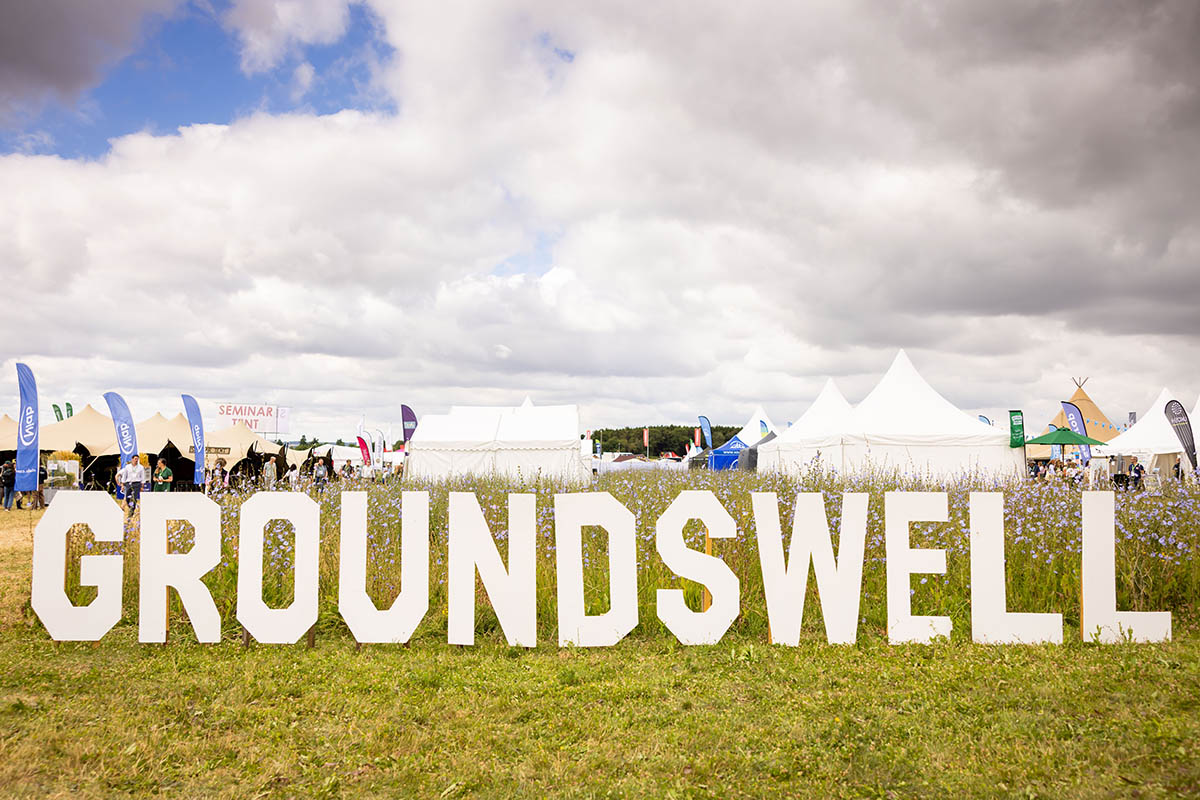
For a festival that began life a decade ago effectively as a knowledge sharing hub for a small group of progressive farmers, Groundswell has evolved into something altogether more sweeping in scope and scale. Those gathering in their thousands at Lannock Farm in Hertfordshire this week were privy to big-picture discussions on the need to frame food security as national security; the threat posed to human and planetary health by ultra-processed food systems; how geopolitics will shape the future of UK agriculture; and many others besides.
A turbulent domestic political scene provided further context to the 10th edition of the event with prime minister-in-waiting Andy Burnham having earlier in the week set out his priorities for government in a major speech in Manchester. Food got a mention in Burnham’s speech during a passage concerned with building a resilient UK economy in the face of global threats. “We need to safeguard sovereign manufacturing and production capability across the country in critical sectors like steel, defence, energy, food and farming – rather than just being prepared to let it just go as we have sadly done in the past,” the former Mayor of Manchester said.
He also pledged to ensure the award of public sector contracts is subject to proper social value weighting. “For too long, UK public procurement policy has been based on chasing cut-price deals around the world rather than helping our own British-based suppliers become more stable and competitive,” said Burnham. The UK Government spends around £5bn a year on food alone.
Daniel Zeichner, the former minister for food security and rural affairs and the architect of the ‘Good food cycle’ food strategy, welcomed Burnham’s explicit nod to the importance of the food and farming sector. Speaking during a session on UK food security, Zeichner admitted that his answer to the question ‘is the UK food secure’ is now more nuanced than during his time as a minister when “I’d have to say yes”. Now, he is free to acknowledge a “range of very substantial challenges we face”.
These have been well-rehearsed: the impact of climate change on agricultural production; the cost of treating diet-related ill health; the risk to food supplies from volatile geopolitics; the need to ensure domestic farming is profitable – the list goes on.
What came through strongly at this year’s Groundswell is that the debate around regenerative agriculture has largely moved on from the ‘why’ and the ‘whether’, and is now more concerned with the ‘what’ and the ‘how’. The case for farming in a way that harnesses nature has been made convincingly over recent years, strengthened by the damage caused to agricultural yields and profits from a succession of extreme weather events during the first half of the decade.
The presence of Defra secretary of state, Emma Reynolds, and climate minister Katie White – the first minister with a climate brief to address the festival – on a blustery Thursday suggested the penny has also started to drop within Whitehall. What remains lacking, according to many conversations held across the farm’s discussion tents, is a clear, consistent plan for supporting the adoption of regenerative food and drink both on-farm and within supply chains.
Look out for Wednesday’s episode of The Small Print podcast which will seek to further decode the key messages and takeaways from this year’s festival.

Small Bites
Wildfarmed partners on regen ag fund
Arable farmers will be able to access private sector funds for improving soil and water health under a newly launched finance scheme. Wildfarmed, the regenerative wheat brand, has partnered with Lloyds Banking Group to launch the ‘Food & nature resilience fund’, which will also pay farmers for improving biodiversity and lowering carbon. The fund has been created with the aim of providing financial support to farmers adopting regenerative practices on food-producing land. Currently in the UK, public payments for environmental services are largely directed towards land that is not being farmed. “Nature and food production are too often seen in opposition, with payment schemes forcing farmers to choose one or the other,” said Wildfarmed co-founder Andy Cato. Utility companies, banks and insurers are among those that will provide payments linked to verifiable environmental improvements with Severn Trent, Affinity Water and AXA XL among the first organisations committed to the scheme. Financial barriers are cited by 92% of farmers as the main obstacle to adopting regenerative practices, according to Wildfarmed and Lloyds.
Food needs to borrow from tobacco playbook – Van Tulleken
Strategic litigation against companies selling unhealthy, ultra processed food (UPF) is going to form the next pillar of the health movement, according to a leading expert on the subject. Addressing this week’s Groundswell Festival, Dr Chris Van Tulleken, author of Ultra Processed People, highlighted the example of a lawsuit launched last year in San Francisco against some of the biggest manufacturers of UPF. The lawsuit cited evidence from a series of papers published by experts in The Lancet last year. One of the papers argued that the response to UPF needs to borrow from the playbook for tackling tobacco consumption, for which litigation is considered to have been crucial in moving the dial. “I think that strategic litigation is going to form the pillar of the next movement,” said Van Tulleken. “If you want big corporations who are answerable to institutional investors to change, the sticks are much more powerful than the carrots.” Van Tulleken also argued that UK efforts to label unhealthy foods have been ineffective and called for the use of black warning signs on products categorised as high in fat, sugar or salt (HFSS), replicating schemes already deployed in certain countries in Latin America.
Government under pressure to consult on healthy food standard
The UK Government has been urged to move ahead with introducing its healthy food standard after new data found 170,000 lives in England are at risk over the next decade from weight-linked cardiovascular disease. The British Heart Foundation (BHF), which carried out the analysis into the risk of early death, noted how one year on from the policy announcement, a formal consultation has yet to be published by the government. The healthy food standard will require businesses to report on the healthiness of their sales and subsequently meet government targets. The BHF is calling for the consultation to start without further delay so that healthy sales targets can be set and met as soon as possible. “The government has promised a ‘healthy food revolution’, but it’s yet to materialise,” said Dr Charmaine Griffiths, chief executive of the BHF. “Pledges must become policy sooner rather than later if we’re to stop heart attacks and strokes robbing thousands of the chance to live a long, healthy life.” The charity said high levels of deprivation across the country and the ubiquity of unhealthy food in everyday life are key drivers of the obesity epidemic in England, with high fat, salt and sugary foods more readily available, affordable and heavily promoted compared with healthier options.
Chef’s Special
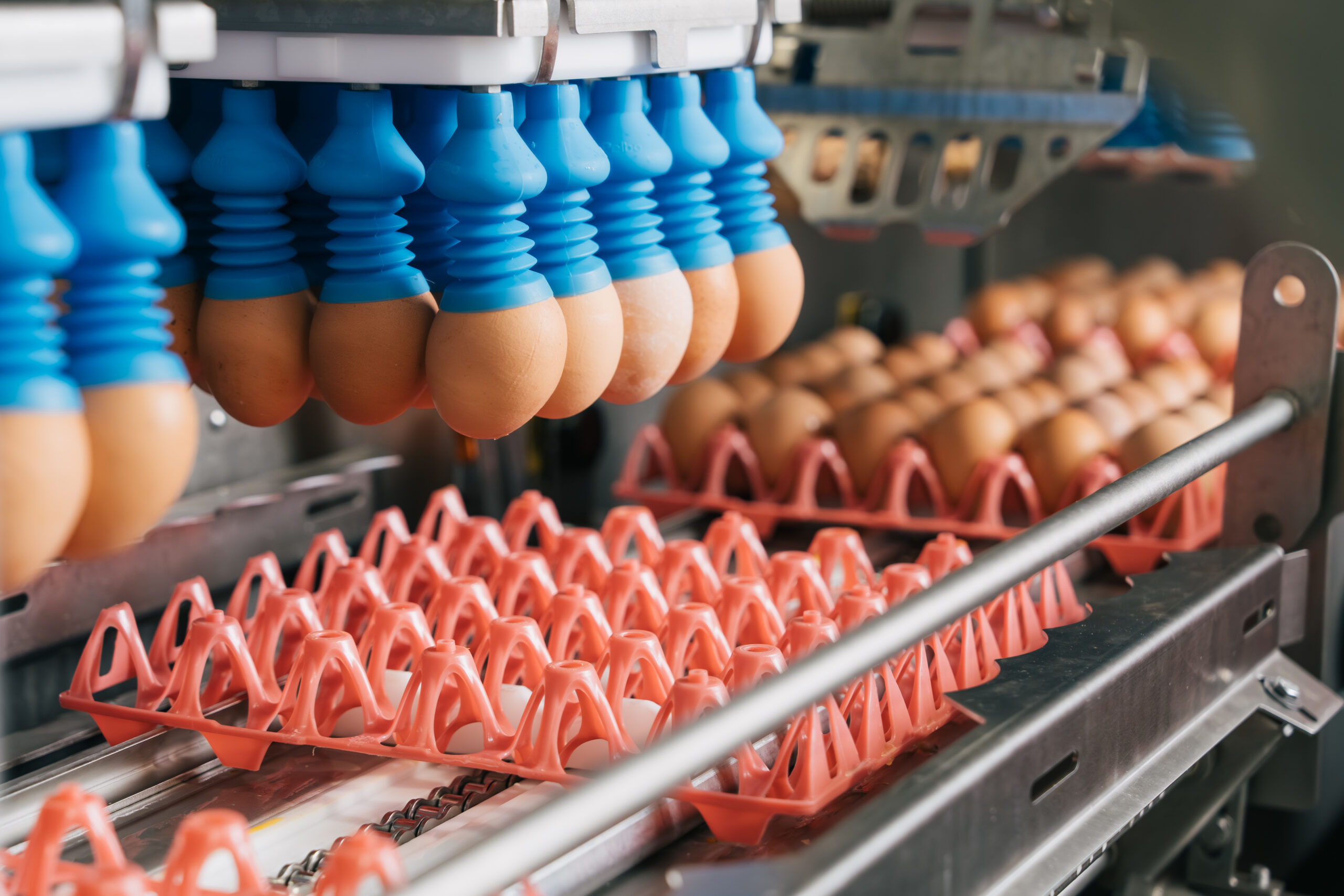
The transition to cage-free eggs is by and large an animal welfare success story. A report published in October 2025 by the Open Wing Alliance of NGOs assessed that 92% of cage-free commitments with deadlines of 2024 or earlier had been fully fulfilled as of July 2025. One sticking point, for the foodservice sector in particular, has historically been liquid or processed eggs which are not always covered by cage-free commitments where the focus is purely on shell eggs. These are the eggs used to make everything from baked goods and pâtisserie to sauces such as hollandaise. Fast-growing Cornish egg brand St Ewe has just introduced a new range of free-range liquid eggs specifically designed for professional kitchens to help operators uphold their welfare commitments while sourcing liquid eggs. The range includes whole egg, egg white and egg yolk formats. “We know that to get the best from our beautiful eggs, we must extend the care we give our hens and shell eggs into pasteurisation and filling,” said Louise Hutton-Bailey of St Ewe Eggs.
Last Orders
Visitors to Wimbledon have been given a taste for what a UK deposit return scheme (DRS) for bottles will look like after event organisers piloted reverse vending machines (RVMs) during qualifying for this year’s championships. The All England Lawn Tennis Club partnered with Danone’s Evian water brand and Exchange for Change, the UK DRS administrator, to test how RVMs would operate in a live event setting ahead of the scheme’s national rollout next year. Spectators purchasing 75cl plastic bottles of Evian on-site had a 20p deposit added at the point of purchase and were encouraged to return their empty bottle via one of two RVM collection points located across the site. Money from the deposits was donated to the Wimbledon Foundation which supports local and national community projects. The aim of the pilot was to boost recycling rates and generate insights on consumer behaviour. Once the UK-wide DRS goes live in October 2027, consumers will be able to reclaim the 20p deposit levied on all single use PET plastic bottles and aluminium and steel drinks cans between 150ml to 3 litres.