
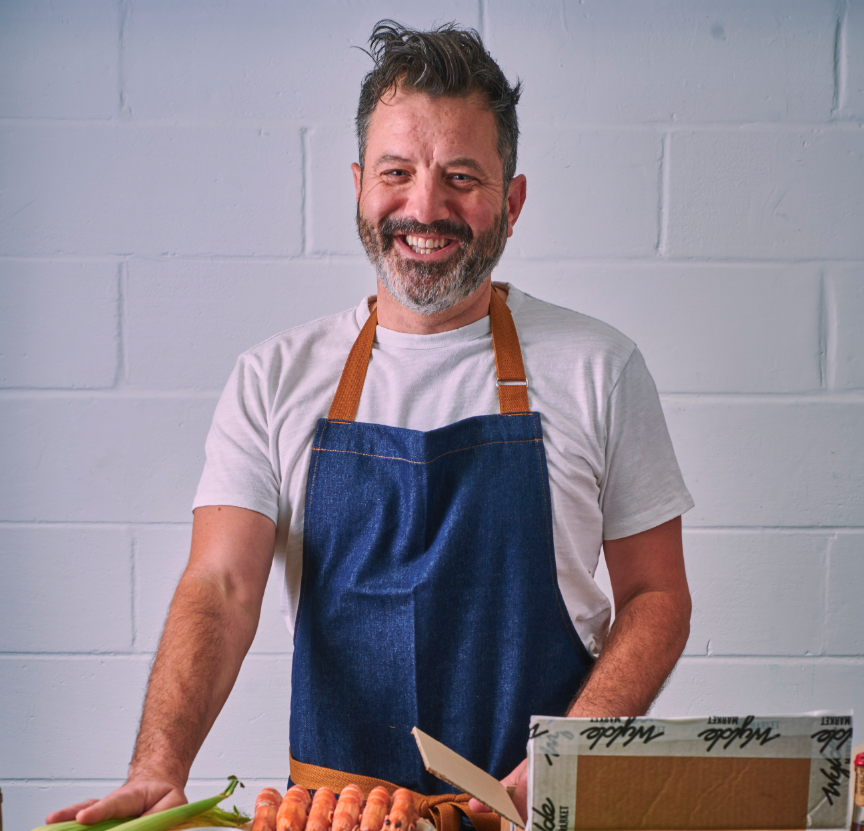
Nick Jefferson is on a mission to disrupt the mainstream food industry. Frustrated at the lack of quality seafood available in UK supermarkets, Nick created an online marketplace, Wylde, that connects small-scale British producers with customers seeking quality, sustainably-produced food and drink. Nick believes the UK’s food system is now at an inflection point which will see a growing number of citizens turn their backs on mass-produced, convenience foods and seek nourishment and joy in the produce they buy. Producers, meanwhile, will embrace new routes to market provided by the likes of Wylde that enable them to regain agency over what they sell and for how much they sell it. In this week’s episode, Nick joins Nick Hughes to talk about his journey with Wylde and why he believes we’re on the cusp of a period of radical food systems change. He also discusses the opportunity for foodservice businesses to differentiate themselves in a challenging market by embracing Wylde’s principles of simplicity, transparency and sustainability.
Subscribe to the podcast



Further reading

The food sector has reached a critical fork in its sustainability journey. Doing ‘less bad’ is no longer a credible strategy for the future

UPF papers expose health divide
A powerful series of papers published in The Lancet have fuelled the debate over how the risk from ultra-processed food should be tackled
Transcript
Nick Hughes: Hello and welcome to the Small Print, a podcast by Footprint Media Group. I’m Nick Hughes, Footprint’s Editorial Director. Each week we delve beneath the headlines of an issue impacting the hospitality and food service sector through our unique lens of environmental and social affairs. Nick Jefferson is on a mission to disrupt the mainstream food industry. Frustrated at the lack of quality seafood available in UK supermarkets, Nick created an online marketplace, wild, that connects small scale British producers with customers seeking quality, sustainably produced food and drink. Nick believes the UK’s food system is now at an inflection point which will see a growing number of citizens turn their backs on mass produced convenience foods and seek nourishment and joy in the produce they buy. Producers, meanwhile, will embrace new routes to market provided by the likes of Wild that enable them to regain agency over what they sell and for how much they sell it for. In this week’s episode, Nick joins me to talk about his journey with Wild and make the case for radical food system change. He also discusses the opportunity for food service businesses to differentiate themselves in a challenging market by embracing Wild’s principles of simplicity, transparency and sustainability. Nick, welcome to the Small Print. Delighted to have you join me. How are you first of all?
Nick Jefferson: I’m good, thank you. Good to be here. We are recording this in early November, so our sites now are firmly set on Christmas and making sure that folk all over the country get their organic turkeys and gammon and beef and all that sort of thing.
Nick Hughes: Super. Well, let’s start there. Let’s start with a bit about you and Wild Kit. Tell us about your own background and what brought you to this point where you decided you wanted to create this online marketplace connecting producers with consumers and creating demand for high quality, sustainably produced food.
Nick Jefferson: Frustration is the. Is the simple answer. I mean, so I don’t come from a food background, which is both good and bad, I think, because when you don’t come from a world, you’re able to kind of disrupt that world a bit and that’s definitely what we are in the course of doing so. I, a long time ago, was a city lawyer. I’m still recovering, but I’ve really spent most of my career running ad agencies and brand agencies. Wild, really, like I said, was born out of personal frustration. So my missus and I took out then two young lads out to live in Spain. We were right down south in, in, in Andalusia. And, you know, we went right down the food rabbit hole there, Nick. We thought we had eaten well in London and then we kind of realized, because, as you know, there is still in Spain, as in other parts of continental Europe, that connection between people and the land and people and the seas. Anyway, fast forward to us returning to London and, you know, I’m looking for decent quality produce. And I know we’ve got it because of course, apart from anything else, all the fish that people eat in Spain comes from the uk. And I’m going to supermarket after supermarket and I can’t get hold of it. And I’m kind of moaning fetching about this at the dinner table each night. And in the end my wife says to me, worse, to the effect of shut up and do something about it then. And that really is how Wild was born.
Nick Hughes: Terrific. Well, talk a little bit about how far you’ve come since you first had that seed of the idea, because we were talking before we started recording about Christmas, Christmas lunch, and how you can essentially provide the full Christmas dinner for your customers. So what’s the product range? How has that evolved over time? And tell us also a little bit about the mechanics of the business and, and the supply chain and how, how your model works.
Nick Jefferson: Yeah, because it is quite an unusual model. So, I mean, we started out just doing fish, Right, Wild fish, hence the name. And the idea was a very simple marketplace, a bit like a kind of Etsy or a Tinder, maybe even. And we, and we’d introduce the two parties and say, right, off you go and get on with it. And we were doing lots and lots of kind of trial, test and learn, iteration with very patient friends and family. This is the first year or so we spent. And what we found very quickly was that, and I’m speaking in generalized terms here, but the theme is, right, producers, by and large, so farmers, fishermen, kimchi makers, whoever they are, they’re great at doing the fishing, the farming, the kimchi making. They are, broadly speaking, terrible and totally disinterested in doing customer service, packaging, dealing with couriers and all that stuff that the consumer quite rightly expects on the same kind of set of Trials, we also learned that the consumer definitely wants to buy direct from the producer. Right. There’s no kind of argument about that. That is where the puck is going, to coin an American phrase. But they don’t want to have to deal with multiple producers because it’s a pain, frankly, and people don’t have the time or the inclination or any of the rest of it. They want everything to arrive in one box. And so we iterated our model to manage marketplace. So very simply now we ask our producers and the range now is huge. So we work with, you know, we, we expanded from wild fish into wild meat in the shape of venison and now, you know, organic, regeneratively farmed meat, dairy, vegetables, you name it, it’s all on there. If you want, if you want Heinz Baked Beans, we’re not your guys. But pretty much everything else, you know, we’re developing a, a kind of credible alternative to the supermarket system. So, so we will ask our producers and they’re all over the UK and they’re all kind of small scale and they’re doing the right thing. Some of them are certified, some of them aren’t, and maybe we’ll talk about that. And they tell us what, if anything, they want to list on our market. It all goes up onto the site, which is also an app now. And then folk again all over the country can come in and decide that, you know, well, I’ll have a bit of this from this person and a bit of that from that person and they’ll put their buy box together, everything. Then the market will close on a, on a Wednesday at 12. Importantly, fresh fish, if they’ve caught any, will come in on a Wednesday morning, market closes and then all the produce makes its way into our distribution center. So we hold no stock. Right. We’re, we’re not a retailer. We really are a marketplace. It passes through us and we do the aggregation, for want of a less ugly word. And it goes out then via DPD or dhl to customers from Edinburgh to Penzance and everywhere in between. And that for me, really, I mean, I’ve learned so much doing this. But one of the things that has surprised me and delighted me the most is that most of our customers are outside the M25. So I’m sitting here doing this podcast with you today from West London, where I live. And I think when I set this up, I thought a lot of people would be around here and they’re not. They are people who want great quality food but just can’t get it where they live, even if they live in the places where the food is actually produced.
Nick Hughes: Yeah.
Nick Jefferson: It doesn’t make its way to the supermarkets.
Nick Hughes: Yeah, well, I was going to ask you about that, Nick, because I think there’s a. There’s a perception perhaps that people who are, who are frequenting marketplaces such as yourselves, selling high quality, sustainably produced, largely fresh produce, tend to be affluent with a high disposable income. But I know from speaking with you in the past, but that’s not strictly the case, is it? And actually you’re attracting people who just, you know, who, who. For whom. This is potentially quite a stretch in terms of how their disposable income is being deployed. But they just want high quality food that they can trust has been produced in the right way.
Nick Jefferson: Absolutely. It is probably the biggest shibboleth that I enjoy destroying, but it’s a, you know, it’s something that comes up whenever I chat to people they know. This is all for people who live in West London, like, you know, and, and it really isn’t. We, we absolutely have customers from all walks of life, some of whom, as you say, are on very modest incomes indeed, but they are making decisions and they’re making priorities, you know, so, so the tech we use means that when customers put their addresses in, you know, there’s a, there’s a functionality where you can click through onto Google Street Maps. Right. And we can see people’s houses. And it is fascinating to see where people live. They are living, lots of them, very modest lives on very modest incomes. But as I say, they’re prioritizing the food that they, and the people they love most in the world are eating because they know the impact that it has on their health and on the environment as well. So, yeah, I’m always keen to kind of correct that. And by the way, there are plenty of people who are affluent, members of the professional classes who eat absolute ****. Just take a look at the recycling boxes in a smart part of town and you’ll soon see that. So it’s, it’s, you know, the. Everyone wants better food. People are at different stages in the journey and that is not about income, actually, interestingly.
Nick Hughes: Well, let’s, let’s start to unpick your philosophy a little bit more and then that might take us into a deeper discussion about the current food system and where you see the fault lines and where you see perhaps change starting to occur. You talk on the website about simplicity, transparency, but also your desire to celebrate food and the people that produce
Nick Jefferson: it,
Nick Hughes: which is quite a noticeable departure from the somewhat clinical language of the mainstream food industry around convenience, efficiency, consumer demand. What shaped that philosophy and what have you observed about the modern food industry that has made you try to. Want to try to disrupt it?
Nick Jefferson: They’ve sucked all the joy out of it. I don’t think there’ll be many people listening to this who recall the last time they went to a supermarket and thought this is a joyful experience, because it’s not. Actually, by and large, you know, you typically gotta drive your car, often as many as 40 minutes away, to a kind of rather crappy outskirt bit of town. Park your car in the corner, walk across the puddle stream, car park, put your pound coins, I don’t even trust you, with a trolley, into the trolley, push it around what’s effectively a brightly lit warehouse full of stuff that you know is not really very good for you, and then check it out yourself. They won’t even do that for you these days. Then take it back to the car and drive it home and unpack it. I mean, that’s not, that’s not a great deal. And the challenge is, I think that the, the, the incumbents, by which I mean the big supermarkets, in which I mean, you know, big food, they have kind of made a world where they dine out on the anonymity of food, if that makes sense. What we’re doing is rehumanizing. So. So when you come onto the Wild website, you, you will see the person, the people who are making your food, and that’s really, really important, and you’re buying directly from them and they are setting the prices. So. So we are not a retailer, we are a marketplace, as I said. But it’s the producers, the people who make the food who. But I want to come back to your point around convenience and efficiency, because for as long as that is, those are the watchwords, and I think they are of the food system. Certainly, as far as consumer food is concerned, then we lose that bit of joy. And food should be a joy. I’m 50 this year, and in all of my lifetime, food that has been seen as healthy for you has always felt like a bit of a chore. You know, I should do this because it’s the right thing to do, or, you know, I know I need this bit of fiber, or I know this is the right thing for the planet. And what we’re about is say you can do all those things and get everything you need to be healthy and for the environment to be in a better state. But you can do it in a joyful way. You know, people who come and eat our producers food say, what if they’re older? They say, oh my God, this is what food used to taste like. And younger people say, oh my God, I didn’t know food could taste this good. And that for me is really important because it is the thing really, I think that marks us out as being different as humans, that we sit down and we break bread together with the people that we love.
Nick Hughes: Yeah, yeah, no, that’s really interesting. And so I guess it begs the question, given what you’re doing and how you’re growing, are we at something of an inflection point, do you think? Because, you know, I’d suggest and feel free to reject this characterization, but you’re quite strident in your views on social media that this model of big food that you’ve described, you know, mass produced, concentrated power just in time, efficiency, value added through processing, is living on borrowed time and that change is on the way. And I don’t know, my own feeling is there’s definitely, I think, a sort of groundswell of public opinion bubbling up that understands some kind of change to the current food system is needed given the costs it puts on health and the environment. But I’m not sure I see it as a mainstream view, and I’m yet to be convinced that radical food systems change is happening anytime soon. What gives you the confidence that we are at this kind of inflection point? If indeed you think we are? Perhaps you don’t.
Nick Jefferson: No, I absolutely do think that we are. And I think the zeitgeist is with businesses like ours, no one is thinking any less about the food dairy team. Right? So I think that is unarguable. Now. We are all at different points in the journey, and admittedly, some of us are further down the rabbit hole than others. But just yesterday, for example, I was driving back from seeing a producer down in Kent and I had the radio on and heard the news that the Soil association finally is no longer certifying farmed salmon, which is a very, very, very good thing and long overdue, frankly, because farmed salmon is an abomination. Now, when I was talking about farmed salmon being an abomination six, seven years ago, this is before wild, no one was interested. I’m not saying I’m a prophet, but I’m saying that there are very, very clear signs that we are moving inexorably in one direction. If you look at the fact that Chris Van Tulleken’s book Ultra Processed People was on the Sunday Times bestseller list. I mean, that would have been unthinkable 20 years ago. And we know that big food is feeling the pressure because they are, they are having to reformulate their processed food offerings and the like. And we also know that the, you know, the Ozempic aftermarket is having an impact as well. Right. So people want nutrient density. You don’t get that from the kind of food that’s been served up in the last 50, 60 years. You get that from fresh food that’s just come out of the ground and is brimming with the stuff. So, yeah, I feel optimistic about now. You know, that is not to say we don’t have an enormously long way to go. We do. And for every world, there’s another chicken shop popping up. But I don’t know if you saw Mo Gilligan’s film about chicken. I mean, you know, that spoke to a whole new generation about what their, what their chicken actually involves. And, and it ain’t good and they know it.
Nick Hughes: Yeah, no, absolutely. No, no, I, I agree with a lot of that. And I think, yeah, I mean, I guess my example would be, and as I shared with you in advance, that we are still seeing demand grow for, for cheap chicken. We’re still seeing chicken shops opening at a rate of knots across the high streets. The big American brands have come in now and, and are looking to grab a slice of that market. But like you say, equally, we are also seeing large food businesses respond to some of those public concerns around UPFs by stripping out UPF ingredients. I know. And paring back ingredient labels. I know, it was in the grocer just yesterday. Hovis has launched a range of three ingredient breads, which, which I’m sure you’d have a view about yourself. But is this the death knell of big food? Or actually a business is just going to pivot to strip out UPF ingredients or take terms like regenerative agriculture and mold them to their own requirements. And if they are doing those kind of things, should we not welcome it somewhat.
Nick Jefferson: So, so just on that last point, I mean, I think that is a very interesting question. So, you know, when regenerative flour gets put into a Kit Kat, it’s still an ultra processed product. Right. And there’s no getting away from that. And we have to be very careful about regen washing and green washing. So. So I think that is a very real concern. But I actually don’t think the big food businesses can pivot because this is what they know how to do. They know how to take relatively low value kind of food items, process the life out of them and sell them at a massive premium. And actually, you know, having this conversation with someone at the weekend, kind of pound for pound or kilo for kilo, gram for gram, the food that our producers sell is significantly cheaper
Nick Hughes: than
Nick Jefferson: the ultra processed food that one sees on the shelves. They just come in kind of smaller quantities and therefore it’s not as noticeable by the consumer. So I think they’ll find it very, very hard to do that. And actually, Chris Van Tulleken, who I mentioned earlier, you know, I don’t know if you’re at Groundswell this year and you probably were, but he talked about these companies being in danger, being stranded assets. And I think that’s right. I mean, I think they are now where tobacco was in the 70s, let’s say. And that is not a comfortable place to be.
Nick Hughes: And I wonder, coming back to what you are doing as well, we often, I think consider that change has to be driven from consumers.
Nick Jefferson: I
Nick Hughes: wonder actually whether we’re going to see the change driven by producers who have increasingly alternative routes to market, such as via wild and which. Which addresses some of those long standing issues around essentially sort of big businesses being gatekeepers to consumers. And it’s about power, isn’t it? And who sets the rules of the game and how that manifests in risk not being shared equally along the supply chain, farmers not being paid a fair price for their produce. If you give them an alternative and you can scale that, actually the producers don’t necessarily need to supply mainstream
Nick Jefferson: 100%. And that is why we have a waiting list of producers who want to come onto our site because they get this agency to set the prices and to sell direct consumer. I mean, at my most pretentious, I’d say we are the Lutherans taking on the Catholic Church because we do allow the producers to talk directly to God. And God in this context is the consumer and the consumer wants it. I mean, the consumer is not in love with the supermarkets, broadly speaking. The consumer wants an alternative, you know, otherwise you wouldn’t be able to explain the massive rise in frankly overpriced farm shops all over the country selling supermarket style stuff at inflated prices. People want something different. There is overwhelming demand for that.
Nick Hughes: Yeah. Okay, so let’s talk a bit more about producers and how you sort of onboard new producers. As you said, you have a range, you have organic certified produce, you have regeneratively farmed produce. Obviously organic has that certification that standard regenerative not so much. So how do you assure yourself that producers are farming in a way that is consistent with your values and your ethos?
Nick Jefferson: Is a very good question. And the short answer is we go and visit them and we spend time with them and it’s part of that process of rehumanizing food. So before I started this business, you know, I was all about organic, and I still am. I mean, you know, probably 80%, 90%, maybe even plus of the produce that you’ll find on our market today is organic. And organics, yeah, that’s pretty good. It’s a certified process, it’s audited, and it is understood by the consumer, or at least the consumer believes that he or she understands it. Organic is, though, imperfect, as you and many other people listening to this podcast will know. And actually the certification of farm salmon is kind of perhaps exhibit A in that. But good on them for changing their minds. And organic is arguably not as good as regen. Right? So Regen is not certified, but Regen is actively putting life back into the soil, the soil on which we all depend that 6 inches around the perimeter of this planet that without which we will all just perish. That said, Regen is, is, is, is tricky because you either got to plow or you got to use a bit of glyphosate. And I don’t have a bit of glyphosate. And so what I’ve learned in doing this business, and I say doing it because it has been all encompassing, it is my kind of raison d’. Etre. It’s what I do. That’s what I think about, it’s what I breathe, it’s what I live, sleep, drink. All the rest of it is that food is nuanced, really nuanced. There are, for example, many, many small scale producers out there in this country and around the world who are doing all the right things, whose practices would delight anyone, but who aren’t certified. And we want to give them a route to market, same as we want to give certified producers a route to market. And so we go meet with them, we spend time with them. Like I said, we’re down on a goose farm in Kent yesterday. They’re not organic certified, but my God, if you were ever going to eat goose, you’d want to eat their geese. They’re amazing. There is no greater love that I’ve seen on a farm than these guys have for their, for their flock. So it is hard yards. It’s a lot of miles in the car. It’s meeting people and it’s really getting a sense of how they do things.
Nick Hughes: Yeah. And I guess from the customer’s point of view, they are putting their faith in you to do that due diligence on their behalf. It’s kind of woven into the fabric of the Wild brand.
Nick Jefferson: Yeah, it is. And you know, in the way that it was woven into the fabric of Whole Foods and then Whole Foods kind of dropped their drawers on quality. And so I’m very conscious of that from a brand point. Yeah, people, people put their trust in us. I think the view is, look, if Wildcat’s okay, we’ll get it. And that is a, an awesome responsibility, I will say. And it leads to, you know, all sorts of conversations inside our office, you know, sometimes quite robust because we need to, we need to have those. You know, does this kind of meet the criteria or not? Because the minute you try and draft guidelines or policy, you know, the, the exception, the, the nuanced exception comes along and you have to think about it again. So we’re con. It’s a very dynamic process thinking about, you know, what, what, what that involves.
Nick Hughes: Yeah, I’m keen to talk a bit about other sort of. I mean obviously you’ve built this marketplace, Nick, and it’s obviously working very well for your producers and your consumers. If we’re to disrupt the current mod dominant model of food supply at scale, there needs to be other routes to market for local producers and I guess more local produce staying within local consumer markets as well. I mean, we’ve been quite interested. I had a fascinating conversation, one of the podcasts a few months ago with a guy called Sid Mehta from On Canadian Food Policy. And Sid was talking about the intention of the Carney government there to invest in infrastructure. The infrastructure that connects producers with local food markets. Stuff that we’ve lost here. I mean there was a. I’m sure you would have seen the open letter that was published around abattoirs and local abattoirs just.
Nick Jefferson: Yeah, you signed it.
Nick Hughes: Exactly. I thought, I thought you might have done. Well, I know you would have seen it and you know, this kind of capacity capabilities has been eroded over time. Do you feel that besides what you’re building with Wild, we need to reinvest in that, that local infrastructure structure and give producers alternative routes to market. Actually hospitality, which is footprints key focus can be, it can be a big opportunity here as well, I think to connect the dots.
Nick Jefferson: Yeah. Hospitality and public procurement as well. I mean that’s a no brainer. Like we should be putting decent quality food straight from Producers into our schools, prisons, hospitals and all the rest of it. And there are many people that have given that a lot more thought than I have, but that seems to me to be something of an open goal. But it requires policy commitment, I think, on, on the local thing. Yeah, absolutely. The abattoirs issue is a disgrace. I don’t know how au fait your listeners will be, but largely driven by regulation, there’s been massive consolidation in the abattoir industry in the uk, meaning that smaller family run affairs have had to close, can’t keep up and have been kind of gobbled up by super abattoirs, which are effectively kind of factory style operations. And it means that producers who are doing all the right things then have to drive their livestock often, many, many hours to be dispatched in a way that doesn’t really kind of sit well with them because of how much love and attention they’re giving their animals to that point. So advertiser is a very big deal and that needs government intervention. I’m very clear on that. More generally, local produce to local people. Absolutely. Our best producer is a producer who already has a local market with, with customers who love what they do, but has additional kind of stock produce that they want to sell nationwide. And that’s really where we come into our own. I think if you live in the uk, all food that’s produced in the UK is local. And I want to be really clear about that because I believe in the local food movement. But let’s just start with the UK first of all, not least because, you know, we regularly send fish that’s caught on the south coast, for example, south coast of England, up to customers in Scotland and they should be able to get that. So, so yes, kind of micro local, but also let’s think about local as being, as being the uk because in the end it is a fairly small country.
Nick Hughes: Yeah, absolutely. And like you touched on at the start, that fish might otherwise be going to Spain or Portugal rather than staying, you know, locally within the south, southwest of the UK.
Nick Jefferson: 80% of what we catch is exported and 80% of what we eat is imported. And we’re importing rubbish, frankly, from Russia and China and we have the best fish in the world.
Nick Hughes: And
Nick Jefferson: the French and the Spanish know this.
Nick Hughes: Yeah,
Nick Jefferson: and, and, and I would say producers, like fishermen are very keen to, to grow a domestic market and that’s about people coming to businesses like ours and others who, who, who sell their produce and voting with their wallets.
Nick Hughes: We’ve taught Nick quite a lot about retailers and sort of Disrupting supermarket supply chains and the take home market. Obviously footprints focused is on the eating out of home sector. So I’m interested to hear what you see as the future for this part of the food industry which has come under a lot of pressure recently as cost basis is soaring and some, some operators would say to an unsustainable level. But how can we bring the principles of quality, sustainability, care, trust into our high streets without creating premium propositions that price most people out? What does that look like in your mind?
Nick Jefferson: Well, first of all I think it’s very hard but I also think it’s absolutely imperative. I mean there are great businesses out there already doing this. Businesses like Shrub for example. I don’t know if you know them. Based down in
Nick Hughes: wholesalers,
Nick Jefferson: aren’t
Nick Hughes: they? Yeah,
Nick Jefferson: right. And so, and, and, and they, their customers, they, you know, we share producers with them. They are taking really first quality, top quality produce into restaurants all over the southeast. And typically chefs want these items and they want the stories that go with them as well. The where the rubber hits the road is on price. And when you are talking about an industry that is kind of beset by headwinds every which way then paying a little extra for the, the produce is, is, is, is tricky. But you know, the rise of apps like Yukka and the seed oils up again, there’s an inexorable trend. So I actually think it’s a real opportunity for the hospitality sector to say no, we only do organic or regen or we only work with a business like Shrub or whatever because over time as people are eating out less than they are at the moment, those are going to be kind of points of differentiation.
Nick Hughes: Yeah, yeah, absolutely. It’s giving people a reason to go out and spend money like you say. I think we’re seeing frequency drop quite considerably but when people are going out, they still want to indulge. And also, you know, I think, I think there is a groundswell that want to know that they are sourcing something that has been sourced with care and, and, and, and something nutritious and sustainable. So yeah, fully on board with that. Look Nick, we’ve, we, we’ve spoken for half an hour already. That’s that the time has disappeared. Let’s close with some thoughts on wild and, and where you’re going next. Christmas obviously on the horizon, which is going to take up a lot of your immediate time. But looking into 20, 27 and below beyond what can we expect?
Nick Jefferson: Yeah, Christmas is going to be a big focus for the next little while. But as we go into 2027, we will be offering up to customers more delivery days. At the moment, we deliver nationwide, as I say, but you can only get your box on a Friday or a Saturday. We’re going to be opening up to have multiple delivery days going forwards. We’re also going to be launching a subscription service so that you can get your essentials from wild, your milk, your butter, your bread, your eggs, etc. And we will also be rewarding those customers who come week after week, which, if I’m honest, we haven’t done enough of a good job on. So. So a loyalty program to reward those great customers who go wild every single week. And we’re incredibly appreciative of them.
Nick Hughes: Super. Well, look, it’s, it’s a great thing you’re doing and great to hear about, you know, the rationale behind it, the principles, and also where you’re going next. Good to dig into some food system issues as well. I always enjoy that very much. Nick, thank you very much for joining us on the Small Print.
Nick Jefferson: Thank you, Nick. And thank you for this great podcast, which I think is important and really interesting. So thank you.
Nick Hughes: We’ll be back next week with another episode of the Small Print. If you like what you’ve heard, please take a moment to rate, share and subscribe.



Leave a Reply