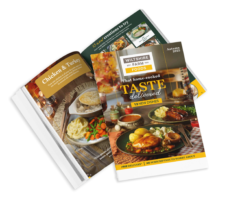
It’s well-evidenced that serving more plant-rich dishes is an effective way for foodservice operators to reduce the climate impact of their food offer. The World Resources Institute works with organisations via its Coolfood initiative to deploy tools and techniques that empower consumers to choose more sustainable meal options. It recently published new guidance that looks beyond the behavioural science and explores the operational challenges operators can face in successfully scaling plant-rich dishes and how these can be overcome. In this week’s episode, WRI’s Edwina Hughes joins Nick to share her key insights for how businesses can make plant-rich dishes the go-to choice for customers.
Subscribe to the podcast



Further reading

Food strategy should support shift to plant-rich diets
Almost 50 organisations from across the food and farming spectrum are calling for the UK Government to support the shift to more plant-rich diets through its food strategy
From sustainability to resilience – but has anything changed?
Jack Thompson explores the context in which food’s latest buzzword is being used and why we need to interrogate what it actually means in practice
Transcript
Nick Hughes: Hello and welcome to the Small Print, a podcast by Footprint Media Group. I’m Nick Hughes, Footprint’s Editorial Director. Each week we delve beneath the headlines of an issue impacting the hospitality and food service sector through our unique lens of environmental and social affairs. It’s well evidenced that serving more plant rich dishes is an effective way for food service operators to reduce the climate impact of their food offering. The World Resources Institute works with organisations via its Cool Food initiative to deploy tools and techniques that empower consumers to choose more sustainable meal options. It recently published new guidance that looks beyond the behavioral science and explores the operational challenges operators can face in successfully scaling plant rich dishes and how these can be overcome. In this week’s episode, Edwina Hughes, head of Partnerships and Engagement for Food Initiatives at wri, joins me to share her key insights for businesses motivated to make plant rich dishes the go to choice for customers. Edwina, welcome to the Small Print. It’s great to have you join us.
Edwina Hughes: Thanks very much. Lovely to be here.
Nick Hughes: So let’s start with some background to WRI’s work on food and sustainable diets in particular. For how long has the organization been working on diets and why do you see it as a key lever for food systems change?
Edwina Hughes: Yeah, absolutely. So I think we’ve probably been working on like food system transformation for about 15 years and we published a seminal report in 2019 called Creating a Sustainable Food Future. And that feels like it was a really big moment for us because it kind of laid out a menu of changes we needed to see in the food system. So it was kind of across production and consumption. And what it showed us is that actually we probably made quite a lot of improvements in production, but it flagged this really big opportunity around consumption and emissions around consumption of food. And it created, I suppose, the pathway for Cool Food. So it gave us the science and the research upon which we could then kind of create this call to action for food service and say, hey, this is what we need to see by 2050. So it was. It was sort of like thinking about, okay, we’re going to have 10 billion people on the planet by 2050. How do we feed them all? How do we ensure that we protect biodiversity so not encroach any further on rainforests or any other kind of natural resources? And then also how do we keep emissions below the threshold of the Paris Agreement? So those kind of three pillars of a WRI people, nature and climate. And so I suppose that 2019 report really gave Cool Food and gave the diets team a clear pathway and a framework, I suppose, for. For the, for the call to action.
Nick Hughes: Yeah, so you mentioned Cool Food there. This is, this is essentially your initiative, initiative for food industry engagement on sustainable diets, is that right?
Edwina Hughes: Yeah, that’s right, yeah. So Cool Food was also launched in 2019. So once we had that kind of seminal report in place, it allowed us to do a number of things, and one of them was around creating this call to action for food service organizations. So we looked at the landscape of what needed to happen by 2050 and the trajectory for the emissions reduction that needed to happen, and we flagged that, you know, by 2030, we needed to see emissions from the food services sector to fall by 25%. The trajectory runs out to 2050. But we wanted to use a target that was near term enough to motivate people to make a change. And so that is the kind of central pillar, I suppose, of Cool Food. There’s a climate target in there. And we think about, I suppose in 2019, then we thought about, okay, well, who can we recruit? Like, what kind of organizations would like to get on board with Cool Food? Who wants to know about their missions? Who wants to track them and understand them? So we had like a group of maybe about 10 organizations in 2019 that was like the World bank, which was kind of, you know, from a leadership point of view. They wanted to get on board ikea, who are massively important to us because they’re so large. We had Harvard University, so very much US focused initially, lots of interest from that side, because the World Resources Institute is an institute that’s known much better in the US I think, so that sort of made sense. And then since then, we’ve kind of grown more to A global program of 90 organizations. So we have in Europe and the UK, we have Tetra Pak, we have ISS, we have a number of European cities as well on board, which I’d really love to talk to you about. Just the opportunity public procurement creates and I know there’s just been a DEFRA report about the, the power of public procurement, so it seems like an interesting sort of strand as well. But we have Milan, Ghent, Copenhagen in the Coolfood membership. So all these 90 organizations, about 2.8 billion meals a year, all tracking their emissions from food and working towards that 25% reduction by 2030.
Nick Hughes: Earlier this year you’ve published a new report, Making Plant Rich Diets Work, which featured practical examples from food service businesses successfully putting the theory into action. What was the intention behind developing this new guidance for food service operators and how does it sort of take the work forward and move the narrative forward on sustainable diets from the previous insight and guidance that you’d published, like the Food Service Playbook, which I know is familiar to a lot of footprint listeners.
Edwina Hughes: Yeah, well it was like a kind of companion to the Playbook. So I think over the last couple of years we’ve had two playbooks for guiding diners towards plant rich dishes and food service. So you have these kind of synthesized documents of the research that’s happened. And I think there was Maybe one in 2020 or 2021 and then there was another in 2024. And what they’re really good at is telling you what the academic literature is suggesting would be really impactful in order to shift people’s consumption habits to warm up towards more plant rich options. The intention of the operators guidance was to say that’s great, turns out that the real world is slightly more complicated. And so what we wanted to do was to really listen to operators from Cool Food membership and beyond and to understand, okay, you know, we’ve sort of identified these levers. We think they work, you think they work, but they’re not happening at the scale or the intensity that we all hoped they could. So what’s going on? And I think through having these kind of consultations, one in the US with food service organizations over there, so some of those original Cool Food members, and then one during Climate Action Week last year with a range of organizations from the UK food service sector to hear what makes it difficult to make these changes happen. So that guidance making Plant Rich Dishes work, it’s available on the Cool Food website and sort of cataloged a set of barriers and opportunities, one set around customers which I think we’re pretty familiar around, which is how do you encourage people to try something different, how do you change the ratios in meals? But then also this colleague set of barriers and opportunities which is about how do you make teams work together if they aren’t incentivized in the same way? Or how do you break down the silos, how do you ensure that your, you know, your senior management understand these targets? And before we were chatting, Nick, you and I were talking about the fact that we actually worked together 10 years ago. You say a little bit more, I say couldn’t be at Sodexo. So some of these concepts around, you know, helping colleagues to work more effectively together are probably things you and I were thinking about when we were trying to get more plant rich and climate friendly food on offer at Sodexo. So I was the corporate responsibility director at Sodexo and you were working for the WWF and we were together trying to crack this. Not.
Nick Hughes: Yeah, I think, and I think it’s fair to say that, you know, there was a lot of goodwill that existed towards the project at the time, but it was quite difficult at times getting buy in from across the business to do the work we wanted to do. And we hit upon sort of numerous operational and commercial barriers to scaling low carbon dishes. Do you feel like those barriers have largely been removed in persuading businesses of the value in serving more plant rich dishes, or do you still rub up against them?
Edwina Hughes: I think those barriers, they still exist. You know, I think that, I think you recently were talking about the idea of resilience being the new way of thinking about sustainability perhaps, and maybe that’s helpful in this context because very commercially minded people, some of whom I’m sure are listening to your podcast, have a lot of pressure on to do a number of things and sometimes sustainability or sustainability objectives are not in the top three, five or seven of those. So I think thinking about sustainability from more of a long term resilience point of view is helpful. I think it’s also true, you know, that actually if businesses and if food service organizations aren’t thinking about a more diversified supply chain of ingredients and food based on the fact that we have finite resources on the planet to grow food, that they’re not really being savvy, you know. So I think there is a level at which maybe the narrative has changed. I think we really struggled with people kind of going, this isn’t important. I don’t know why you’re talking to me about this. I’m not sure it’s that relevant to the way we make money or how we, you know, survive or thrive as a business. And I think we were just maybe a little bit early or, you know, it just felt like maybe this conversation wasn’t something people were ready for. But now I feel like people understand the opportunity that serving more plant rich food presents from a longer term point of view and from a resilience and a kind of diversification of supply chain point of view. But yeah, some of the same stuff comes up again and again. You know, how come you want me to do this? I think my boss wants me to do something different. You know, you’ve got their operators versus procurement. You’ve got, you know, people are incentivized in different directions. You have to bring those, you have to bring that into harmony if you’re going to achieve anything. So, you know, I suppose the other thing is disseminating responsibility and accountability for getting this to happen across different kinds of teams. So a lot of that is kind of covered in the guidance as well under those colleague barriers and opportunities.
Nick Hughes: Yeah, and there’s some nice examples of how some of those barriers in a very practical sense are addressed, you know, in terms of, you know, the alignment of different teams, for example, procurement and operations, which can often pull against each other when they have competing mandates. I like the example of the National Trust creating a central cookbook to help with both easy access to recipes but also consistent execution of plant rich meals. That was a really nice example. I thought, what are the other common pitfalls, Edwina, would you say that operators make as they move from the theory of wanting to serve more plant rich meals to the actual practical deployment of it? Because there can often be a gap between that kind of theory and practical deployment. And how can they avoid some of those?
Edwina Hughes: Yeah, I think treating this like any other kind of commercial imperative, you know, I think when we were starting out kind of in our collaboration between Sodexo and wwf, it was a little bit of a nice to do. And I think in order to kind of make some of this stuff happen, it needs to feel urgent, important and material to people. And if that’s not the case, you know, I think we all need to figure out how to make it the case because otherwise it’s just going to constantly get bumped off the list of things that need to happen. But I see progress, you know, in terms of. We had Sophie Lock from Wagamama speaking about climate targets, you know, and how to actually make those feel real for senior management at Wagamama. And I really enjoyed listening to her talk about that and how you, you know, how you have to present this information in a, in a sort of framework that’s similar to the way other things are reported. So sugar, salt and fat or you know, other kind of targets around nutrition would be pretty normal stuff for people to see. And now, you know, can we add maybe carbon, you know, the quantity of carbon that’s in the meals or carbon reduction targets alongside that on the dashboard. So I think relaying some of this information in an easy to access and maybe consistent way, you know, consistent with some of the other things that the senior management and leadership are given because you don’t get huge amount of time when you’re sitting in those meetings. You have to make it land quite quickly. And I think that you’re much, much more likely to get that to happen if you can relay this message in a way that really resonates with those people and with the things that they are responsible for.
Nick Hughes: Yeah, and we hear similar talking to businesses about their efforts in reducing scope 3 emissions and how often the traction comes when you can demonstrate alignment between carbon reduction but also cost efficiency, consumer demand as well. Yeah, and I guess that sort of plays into some of the ideas around what, you know, what are the drivers of adoption of plant rich meals. You mustn’t make this feel worthy and something that people should do because it’s good for the environment. Actually you need to make these meals the default by being attractive and tasty and visually appealing and also potentially attractive in a cost sense as well. So, so what are your, what have all your insights told you about? What are, what are some of the most scalable, impactful techniques that food service operators can deploy for encouraging and empowering consumers to choose more plant rich options?
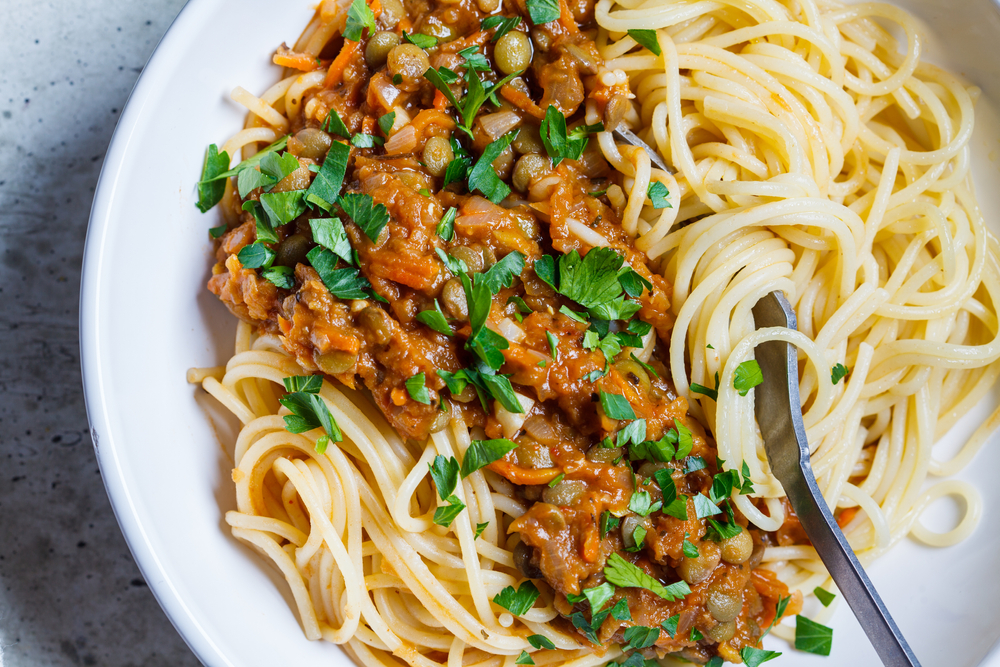
Edwina Hughes: Yeah, I think, I think this kind of maybe brings me back to thinking about when we work together we looked, you know, when we, when I was working at Sodexa, we looked at a range of these plant richer plant based meals and we tried to get them all sort of to line up. They were already healthy, so they were in a healthy range and we, we looked at their carbon footprint and we kind of put them all in a bunch and I think that that was an interesting exercise. I think I’ve moved away from thinking about kind of maybe fabulous plant based options as the most impactful thing to do. I think you’ve got to have a good range and I think you should have some options on there. But the biggest bang for your buck will be looking at your really meat heavy Dishes and thinking about, well, you know, why am I serving them that often and why do they turn up the way they do, how come I promote them like this versus other things and what is the ratio in those meals? You know, so does it have to be that quantity of meat in that dish? Can it be a different ratio? And I think that’s where we’ll actually get the most move. It’s not the kind of glamorous part of the equation, but it is where we’ll get the most material impact. So one of the examples in the guidance is from iss and it’s around their minced meat or ground beef kind of dishes. And so the example is just where they, you know, added quick freeze lentils at the last 20 minutes of cooking. And they made it really easy, really simple, really clear. 30% cheaper per dish, like, bingo. And then, you know, also emissions reductions follow because you’re serving a far lower proportion. You, you go from like 100% ground beef to 70% ground beef, 30% lentils, you know, you, you see an automatic return on your emissions reduction. And it’s far more significant if you can change a dish that loads of people love than changing or offering a new dish that only a few people will love and celebrate. So I think it’s just being really pragmat and thinking about some of those big hitters and not trying to move people away from eating those big hitters, but changing what they experience when they get them.
Nick Hughes: Yes. And the other thing that struck me about the ISS example was the fact that they’d done the taste testing up front before they’d rolled out the meals, which, which overcomes the, the, the question that went, you know, well, how do we know that people are going to like this? How do we know that they’re not going to crave their original spag bowl or cottage pie? And they’d already done the work up front and that feels like an important point for sure.
Edwina Hughes: Absolutely. They really wanted to do that very well and they, you know, they went through a lot of testing so that they could be satisfied themselves before they put it in front of anyone else.
Nick Hughes: This year sees the launch of the first ever Footprint Festival, a two day experiential and immersive sustainability festival set on a working flight farm in the heart of the Hampshire countryside. Created for senior leaders across food service and hospitality, this one of a kind annual event takes place on September 17th and 18th. Will blend sensory experiences, transformative content, powerful networking and unforgettable food, drink and entertainment. Tickets are now on sale visit footprintfestival.com for more details. Just thinking about some of the other techniques that certainly I’ve come across from the research in terms of how you shift, you know, shift diets and encourage a shift in diet. So we’ve touched on blended products. Feels like a big one for delivering impact at scale positioning of plant rich dishes in more prominent locations, making them the default or featuring them in promotions. We talked about using attractive language to describe plant rich dishes like vegan and vegetarians seem to be on the way out in terms of descriptors because you’re pigeon holing them. As for people who identify as vegetarian or, or vegan, I mean, are those still, are those still the main ones in, in your, in your view and in your research or there are any kind of less obvious techniques that are proving effective for some businesses?
Edwina Hughes: I think we are in a space now where people aren’t necessarily interested in climate messaging. So I think if, you know, you align your more, you know, climate friendly options under your health messaging, you’ll probably get more traction. I think there’s an element that we’ve all swallowed the message that we’re protein poor. So whether that’s a fact, I don’t think it’s a fact. I know it’s not a fact or not. It’s, it’s sort of kind of gone into the consciousness that, that we all need more protein. And so there is a kind of a bit of a shortcut then in people’s brains that says meat equals protein. So I think that in order to kind of face into that, we need to be thinking about how we make sure people feel confident there’s enough protein if we are serving something that has very little or no meat in it. So I think that there’s something about just facing into some of these trends. You know, you’ll notice that Beganuary is totally gone. I pretty much reached its heyday in 2021 and is kind of on the slide since that’s fine. You know, that was a campaign. I think we need to be thinking about more permanent shifts that don’t, you know, possibly don’t have the same sort of, you know, marketing kind of sparkle, if you like that just are more kind of. Yeah. Long standing, if you like. So, you know, I think you’ve hit most of the most important ones there. I think that the point of the guidance was just to say you could try a number of these and some of them work for you and other ones may not. And you might have tried a couple already, but it’s it is about execution, you know, it’s about excellent execution. So the examples we’ve used in the guidance are trying to showcase that. And you know, that’s what you see with some of the examples in there, that it’s, it’s so important to do it well because people are very risk averse, you know, if you have a bad experience as an operator, you know, well, I tried that and people didn’t like it and we threw that food out, you know, and that really annoys and upsets people whose kind of job it is to take pride in making delicious food. So they hate it when they have to throw stuff out. And I think there is something about making sure that you don’t overlook the fact that they’re an audience as well. You know, it’s not just the customer, it’s your colleagues that need to be on side when you’re trying to get these things to happen and listening to their concerns and making sure they don’t feel like this is another, you know, stab in the dark and it isn’t going to work. So, yeah, just, I guess engaging people along the way, making sure they’re helping to shape it so that everyone feels invested in the success of whatever it is, the set of things that you decide to go for.
Nick Hughes: Yes. What struck me from reading the report is that there were so many different operational contexts in which this is working. It’s not just, you know, a contract caterer in a university setting. You’ve got in there, you’ve got a fast food chain, Max Burger, I think it was, you know, which is quite a difficult, I would suggest, quite a difficult context in which to shift diets. We’ve certainly seen some of the bigger fast food chains, I think, struggle with integrating more plant based, plant rich options onto menus. Whereas they’ve now, this is a Swedish fast food chain, they’ve now got to the point where something like a quarter of their menu items are plant based. So, you know, you’ve got that context. You touched on public procurement earlier as well as a, as a leave that and how you’re working at a city level to embed plant rich meals within institutions. I know you’re working with the hospitals and NHS trusts, for example, like Great Norman street and Bradford District Care. I believe you’re working with London boroughs, the likes of Hackney, Newham, Hounslow and Barking and Dagenham. Perhaps you could just expand on that a little bit as well and what potential there is for cities and regions to deliver more plant rich meals through public procurement and what are the levers for achieving that?
Edwina Hughes: I mean, I think that the really interesting thing for me about Cool Food and our Cool Food members, so as I said, like 90 organizations across the world and they’re all sort of working towards this target. But we’ve seen cities do really, really well. So cities are actually ahead of the target. They’ve already hit that 25% by 2030 or 38% per plate. So they’re flying it. And I suppose there’s a question as to what are they doing that’s making it so successful. I think it’s about execution, you know, I think it is about having that centralized, those centralized services of centralized procurement, centralized kind of command and control, if you like. That, I think has worked really well.
Nick Hughes: Are you working with any cities in the uk? Because my sense with the UK is that, you know, actually we’re in a period now where we’ve got a Prime minister in waiting talking a lot about devolution. Whereas at the moment it feels like if you were, let’s say, London or Manchester, I’m not sure whether you’d have the levers at a city level to change the way you do public procurement across institutions such as schools and hospitals and government departments, because the governance of these organizations is not really necessarily regional as such. I suppose it can be for a hospital trust. But are you working at a UK level? And do you see examples of good practice? There are.
Edwina Hughes: We are, and we want to do more, you know, so we’re working with Relondon and we have, I think, three or four London boroughs who have signed up to the Cool Food Pledge and are reporting on their emissions from food. I think at a borough level, you know, you can look at what’s happening across the borough. I think in terms of a larger place. We’re talking to Birmingham and so they, again, have a centralized food procurement function, so it’s possible to track and measure their emissions from food. So we are advising them and then we are talking to some of the hospitals, some of the NHS hospitals. So, again, there is that opportunity. I think there’s an investment up front. You know, honestly, I think that that can sometimes feel like it’s a lot of work and maybe this comes back to prioritization and kind of whose job is it? But I think once you put that initial effort in and you gather the insight as to, well, what food are we procuring? And I think, you know, people are already doing it for nutrition, so I don’t think it’s massively different, you know, because actually, When I look at the landscape of cities and regions in Europe and I think, okay, well where, where could we be working? And I see a lot of places that are tracking, they’re tracking fatty foods or they’re tracking salt. So they are doing some measurement of what food is being consumed in schools, in hospitals and elsewhere. I think it’s only a hop, skip and a jump then to be able to categorize foods by their climate emissions and then, you know, calculate what those, what that food actually equates to from a climate point of view. So loads of opportunity, you know, and the, the resources and the tool is free. You know, membership for our cities is free for cool food. We have a nominal fee for private sector, so we kind of subsidize across from the public sector, you know, so we make sure the public sector organizations can join for free so that we can make sure we’re supporting that move. Because public procurement is a massive lever, you know, and I think that then you can see big changes and you know, there’s this whole thing around schools. Then if you can influence what children are experiencing in school, then they take that with them, they take it home, you know, but also they take it on into, you know, when they go to university or when they go to workplace. So I think that there is an argument that says public institutions are feeding a lot of people, but also, you know, people will then move on in their lives and there will be a kind of ripple effect of thinking about how we’re eating and eating more sustainably.
Nick Hughes: And schools is a good example, I suppose, of where there is potential for local authorities, local regions to act within the framework of national standards. We’ve had, just recently had an update to school food standards in England being proposed and they actually give a degree of flexibility for what schools can do to meet those standards. Very. And we’re talking about plant rich diets, obviously. And the proposal is that now plant based protein sources can form the requirement for. I think it’s currently three portions of animal protein per week. You’re now going to be able to use plant based protein. Protein to account for some of that. So actually there is flexibility like this. Yeah.
Edwina Hughes: Which is great news because it wasn’t for a while, you know, and it sort of felt like we were kind of spiting ourselves a little bit. It just sort of, it felt counterintuitive, you know, if we’re kind of trying to move to this situation where we are going to eat within the bounds of the, you know, the capacity that we have on the land that we have and you know, reduce greenhouse gas emissions but keep on feeding people. You know, schools need to be, you know, offering these plant based proteins as viable alternatives to the meat based, you know, cause we were sort of fallen at the first hurdle if the guidance says, oh, you can’t do that, it has to be, you have to serve children meat three times a week.
Nick Hughes: Yes, yes, absolutely. I want to close Edwina, by talking a little bit about sustainable diets in the round because we’ve come at this through the lens of climate and greenhouse gas emissions. And I think that’s, yeah, that’s always been the entry point into conversations around sustainable diets, certainly from an environmental point of view, but burden equally, I feel that more businesses want to try and widen the number of indicators they use to measure the sustainability of meals beyond just carbon. So incorporating water biodiversity, soil health metrics, and you know, there’s a, there is a group of people who would say that actually when you do that, certain types of meat come back into the equation and we could, we could argue about that, excuse the pun, till the cows come home. But, but more to the point around broadening the metrics we use to measure sustainable diets, how do you see that at Cool Food? Is it something you look to integrate into the initiative moving forward, or do you still see carbon as the best proxy for a sustainable diet?
Edwina Hughes: Yeah, well, I think it’s a great question and it’s been on our minds for a while. So the original methodology for Cool Food looked at emissions, but also looked at land use change. So there was a carbon opportunity cost built into the modeling, which basically said if you use land in agriculture, it was used as something else before. And so you need to understand that if that was a forest before that actually there’s an opportunity cost for what has happened to that land. So we, we did feel confident that Cool Food was giving us a biodiversity loss indicator and a climate indicator from the emissions. But we did feel that there was a gap from a water point of view. And so we are, and we have just launched a new calculator for Cool Food, which first of all it updates the emissions targets. So it sort of says, okay, well now 2030 is very close, so let’s think about 2035. So now our target is 30% absolute reduction in emissions by 2035 or 40% relative. Now you’ll notice if you’re very eagle eyed, that that is harder than the original because we haven’t made as much progress as we needed to so that that line becomes steeper. Because we haven’t made as much progress as we hoped we would by now. The other thing we’ve done is, you know, integrated water footprinting into the calculation. So if an organization signed up to the Cool Food pledge, they would be shown what the land use is of the food that they’re buying. They would be shown what the carbon emissions are food they’re buying. And then they’ll also see the water usage. And that’s really helpful if you’re thinking about different kinds of plant based milk and you know, other plant based proteins versus and meat based proteins. And then the other final thing we’ve done is look at health metrics. Cause that’s the other thing that was on our mind. So now we are also tracking the share of food purchased by weight and what we want to see is that reaching 6% for legumes, nuts and seeds and 15% for veg by 2035. So yeah, expanding the cool food indicators to include health metrics and water footprinting. And we hope that creates a broader picture and a kind of more complete picture of what the, what the implications are of, of serving and buying particular kinds of foods over other ones. And I think that will help people understand more. And you know, there is a correlation like you, they don’t vast, you know, they don’t go in wildly different directions. I think that even if you, if you pursue the health metrics, you might get good climate outcomes too. If you pursue the climate, you know, climate metrics, you’ll get good health outcomes. So they, they all sort of track in the same direction. But this gives you more nuance and insight so you can, you can see more, make more intelligent decisions around different substitutions if you want to make those substitutions in your food procurement.
Nick Hughes: Yes, yeah. And, and you’re right, that alignment of health and planet is something that dates back to the, going back to WWF, the original LiveWell plates.
Edwina Hughes: Yeah.
Nick Hughes: Back in the day shows a very close correlation, like you say, between nutrition and environment there. So to wrap things up, I would urge people to go away and read the guide to making plant rich dishes work because it’s really insightful and accessible. I think the line that you know, perhaps sums up the guidance best is that success is achieved not by changing customer values, but by changing operational execution. I think that’s a really critical point. You know, you can’t just throw a load of new plant rich meals at the business and at customers and expect to deliver success overnight. So yeah, lots of insight to take away. And thank you very much for joining us on the Small Print.
Edwina Hughes: My pleasure. Thanks for having me, Nick.
Nick Hughes: We’ll be back next week with another episode of the Small Print. If you like what you’ve heard, please take a moment to rate share and subscribe sa.