When a group of leading hospitality brands quit the Better Chicken Commitment (BCC) in February and established their own Sustainable Chicken Forum, one of the reasons given was a tension between a requirement to shift to slower growing breeds and the need for businesses to reduce greenhouse gas emissions as part of their net-zero commitments (slower-growing breeds generate more emissions over their lifetime).
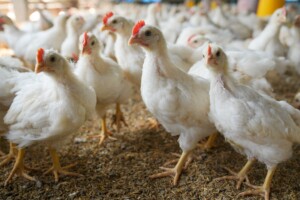
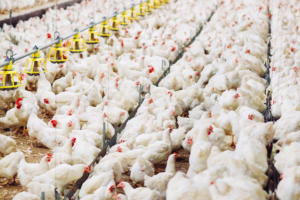
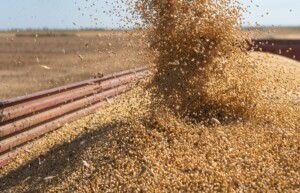
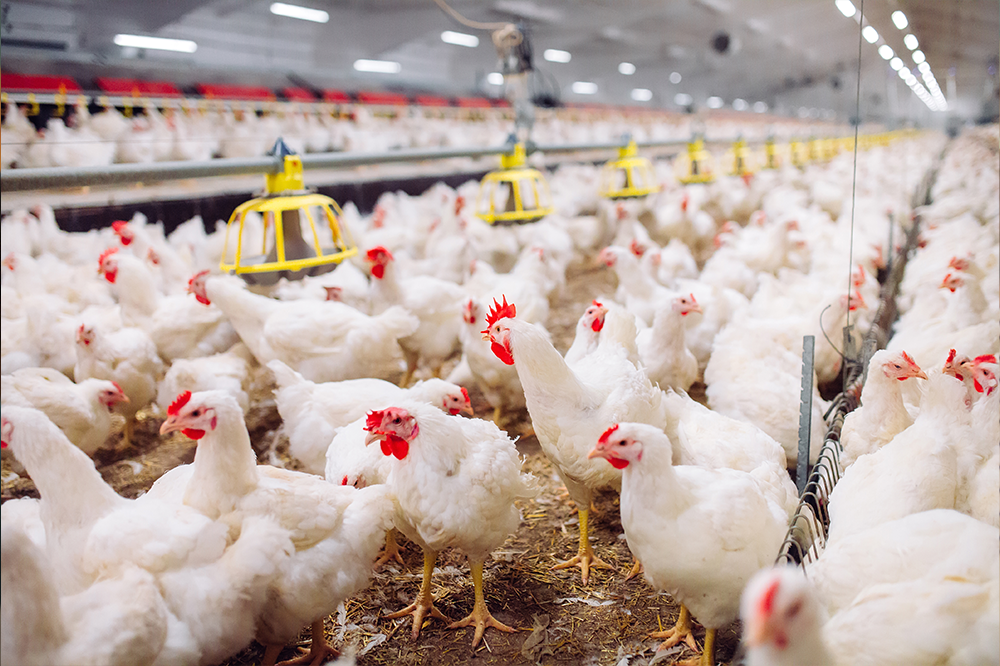
This week, one of Europe’s biggest chicken producers brought a fresh dimension to the debate by unveiling new measures that will have the effect of partially decoupling higher welfare outcomes from higher emissions. 2 Sisters Food Group (2SFG) announced a scaling up of its sourcing of British-grown protein in poultry feed as a substitute for the imported soymeal which currently forms the lion’s share of feed for birds reared for meat (and the lion’s share of emissions). Over recent years the company has redeveloped its chicken feed to replace 23% of imported soymeal with British-grown oilseed rape and beans. It now plans to purchase 150,000 tonnes annually from British farmers and by the end of 2027 will have completely removed soymeal from the diet of chickens at its Coupar Angus facility in Scotland, replacing it with British-grown peas, seeds and beans. The overall effect is a reduction of over 20% in scope 3 emissions from feed, according to the company.
Additionally, 2SFG has announced an expansion of its deforestation-free commitment which will see it extend premium payments to South American soymeal farmers to cover all land conversion – not just deforestation. It said the move would help protect vital ecosystems such as native grasslands and support biodiversity beyond standard industry pledges. 2SFG claimed the move would reduce the carbon footprint of soymeal for its chicken feed by up to 70% from July 2026 given the low emissions associated with land use change where deforestation or land conversion has not occurred for over 18 years.
2SFG is a major supplier of both standard and higher welfare chicken to retailers and foodservice operators with 80% at lower stocking densities and a significant amount grown to BCC requirements, which includes the use of a slower growing breed. Its group director of quality, sustainability and agriculture, Kate Stein, described the announcement as a “transformation moment” for British poultry. “By going beyond deforestation-free standards and backing British farmers, we’re making a meaningful commitment to both the environment and animal welfare – building a sustainable, resilient food system for the future as part of our NextGen Strategy,” she said.
The move has been welcomed by campaigners with Compassion in World Farming, a driving force behind the BCC, describing it as “a great step forward” that shows higher welfare chicken and sustainability can go hand-in-hand. “This demonstrates truly disruptive leadership, showing it is possible to make significant progress with speed,” said Philip Lymbery, global CEO of the animal welfare charity.
The announcement by 2SFG comes hot on the heels of a call by a coalition of European national soy initiatives for urgent action to protect the Amazon rainforest following the decision by major global traders to withdraw from the Amazon Soy Moratorium (ASM). Members of seven initiatives, including the UK Soy Manifesto, have called for international soy traders to publicly reaffirm and maintain their commitment to the 2008 cut-off date for all soy purchases – direct and indirect – in the Amazon biome, and for all stakeholders across the soy supply chain – including governments, financial institutions, farmer representatives, buyers of soy and civil society – to engage in constructive dialogue. In January, the Brazilian Association of Vegetable Oil Industries (Abiove), which represents major soy traders like Cargill, Bunge and ADM, said it planned to quit the moratorium. The decision is linked to the removal of tax breaks for companies adhering to the ASM in the Brazilian state of Mato Grosso, a major soy-producing region. Campaigners have called on businesses like McDonald’s and Burger King to cut ties with suppliers that choose to abandon the ASM.
Small Bites
Plastics Pact successor launches
WRAP has officially launched a new industry collaboration to tackle problem food and drink packaging. The UK Packaging Pact is the successor to the UK Plastics Pact which achieved mixed results in tackling problem packaging and driving reuse and recycling. Unlike the previous pact which focused solely on plastics, the new version encompasses every packaging material placed on the market including glass, paper, card, metal, as well as plastics and biobased materials. The ten-year programme has four interconnected goals: to optimise packaging, including the reduction of single-use packaging, removal of problematic packaging and switch to more recyclable packaging; scale reuse and refill (a key workstream for year one); support infrastructure investment; and harmonise data. Major foodservice and hospitality brands are notably absent from the current list of signatories which is dominated by retailers, food and drink suppliers and waste service providers. WRAP noted the new collaboration comes at a time of major regulatory change with the EU Packaging and Packaging Waste Regulation and UK extended producer responsibility, deposit return scheme and simpler recycling all either up and running or due for introduction over the next 18 months. “Policies are essential, but they alone cannot deliver and the Packaging Pact will deliver the practical change necessary through a flexible framework allowing signatories to focus on the actions most important to them,” said WRAP CEO Catherine David.
Schools feel the pressure of food provision
Schools are suffering under the strain of having to balance sustained food inflation, higher labour costs, staffing pressures, tighter budgets and evolving expectations around nutrition, sustainability and pupil experience, according to new research. The report from Juniper Ventures, which delivers catering, cleaning and safety services to schools and public sector organisations, concludes there is no ‘one-size-fits-all’ delivery model for school food and calls for an honest, practical conversation about the future of school food and how to deliver a catering provision that works. Among several key findings of the report, titled ‘School catering at a crossroads’, is that whilst catering is generally dependable, it is often sustained through significant behind-the-scenes effort which is becoming increasingly difficult to manage. Funding, meanwhile, does not always reflect the real cost of food, labour and compliance. The report highlights how stable teams are essential to consistency, service flow and pupil experience, and how better pupil insight can help reduce waste and support smarter decisions. New school food standards for England are currently out for consultation with a focus on improving the nutritional profile of school meals in both primary and secondary schools and ensuring better monitoring of standards.
Coca-Cola ramps up water stewardship support
Coca-Cola Europacific Partners and The Coca-Cola Company have announced a fresh round of funding to scale up river restoration and flood resilience work across West Yorkshire. The three-year programme will create wetlands and restore habitats across Calderdale, Kirklees and Wakefield, helping hold water in the landscape thereby reducing flood risk, while also improving water quality and supporting biodiversity. The £2.55m investment is part of the companies’ partnership with Calder Rivers Trust and builds on existing projects above Hebden Bridge. CCEP said the investment is strategically significant for its Wakefield site, Europe’s largest soft drinks facility by volume, which achieved a 32 million litre reduction in water use during 2024 through operational optimisation. It also supports the company’s commitment to return at least 100% of the water used in its finished drinks to nature and communities by 2030. “Water is fundamental to our business, both for our operations and the communities we serve, so we take our responsibility to protect it seriously,” said Sam Jones, director, sustainability and policy at CCEP GB. Nick Simms, chair of Calder Rivers Trust, added: “By working with landholders and businesses, and by restoring and looking after the catchment’s natural features and processes, we can help nature recover, reduce the excess nutrients and pollutants reaching our rivers, and help the catchment hold more water in times of both flood and drought.”
Chef’s Special

Fish mightn’t be the first food that springs to mind for gym bunnies seeking a pre- or post-workout protein boost, but that’s about to change if the Norwegian Seafood Council (NSC) has its way. The organisation is eyeing a significant opportunity for seafood to capitalise on the protein boom by promoting its natural nutritional strengths. In a new report, the NSC, which represents the interests of the Norwegian seafood industry, suggests that despite offering complete protein alongside key nutrients such as omega-3, vitamin D and B12, seafood remains underleveraged compared to other categories like sports nutrition and dairy. It believes future growth can be unlocked by meeting consumer demand for convenience formats, through the development of ready-to-eat, snackable and on-the-go products and dishes that position seafood alongside other protein-rich options. “Seafood has a very strong protein story, but it isn’t always being told in a way that resonates with today’s consumer,” said NSC UK Country Director Bjørn-Erik Stabell.
Last Orders
British farmers producing barley for Asahi UK will introduce regenerative practices such as cover cropping, reduced tillage and crop rotation as part of a new collaboration between the brewing giant and malt supplier Boormalt. The initiative will cover barley production equivalent to 100% of the pale malt used to brew Asahi’s local British beers, such as Fuller’s London Pride, Meantime Prime Pale, and Dark Star Hophead, delivered on a mass-balance basis. Pale malt accounts for around 90% of the brewery’s annual malt use of 3,050 metric tonnes at the Griffin Brewery in Chiswick, home to all of Asahi’s local beer production. The aim is to lower greenhouse gas emissions from barley as part of Asahi UK’s ongoing efforts to address the environmental impact of its ingredients. Third parties Cefetra Ecosystem Services and Soil Capital will carry out the measurement, reporting and verification of emissions reductions using a combination of detailed farm-level input data and soil samples.