How can government and businesses help farms reduce their climate impact, while balancing other priorities like profitability, resilience, food production and nature? This question was at the heart of a series of conversations held with farmers across England over the summer by the Food, Farming & Countryside Commission – a piece of work commissioned by Defra to help inform the government’s forthcoming Food and Farming Decarbonisation Plan. The discussions highlighted a loss of trust in government around climate policy and the emissions data that informs it, and a demand from farmers for policy makers and businesses to look beyond emissions and take a whole systems approach to farm sustainability. In this week’s episode, the FFCC’s Charlie Taverner joins Nick to share key insights from conversations with the farmers tasked with decarbonising agriculture, whose opinions are often marginalised in policy discourse around food and climate.
Subscribe to the podcast



Further reading
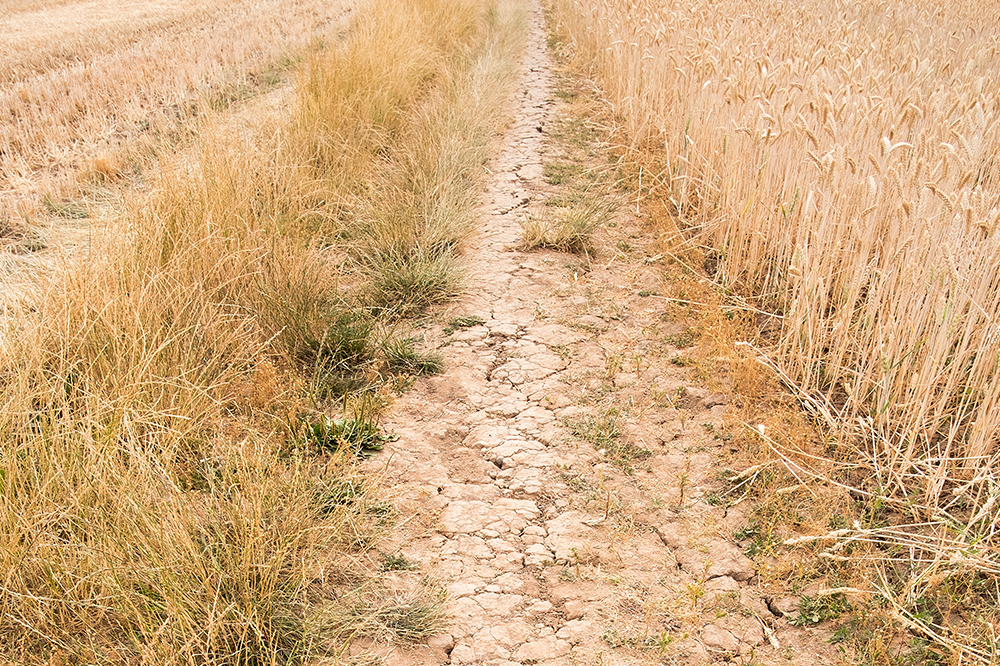
Farming enters ‘climate doop loop’
The brown fields and dry rivers have told their own story, but the data crunchers at the Met Office have now confirmed what we can see with our own eyes
England’s first ever land use framework aims to maintain domestic food production while freeing land for nature, development and energy. Can it carry off such a delicate balancing act?
Transcript
Charlie Taverner: One of the overriding messages from the farmers in the conversations was, bring us into the room, Bring us into the room early. Don’t just listen to our representatives and our trade associations, but talk to a range of us on the ground about the practical challenges we’re facing in our business. And we will help you design things that work and make change.
Nick Hughes: Hello and welcome to the Small Print, a podcast by Footprint Media Group. I’m Nick Hughes, Footprint’s Editorial director. Each week we delve beneath the headlines of an issue impacting the hospitality and food service sector through our unique lens of environmental and social affairs. How can government and businesses help farms reduce their climate impact while balancing priorities like profitability and resilience, food production and nature? This question was at the heart of a series of conversations held with farmers across England over the summer by the Food Farming and Countryside Commission, which was commissioned by DEFRA to help inform the Government’s forthcoming food and farming decarbonisation plan. The discussions highlighted a loss of trust in government around climate policy and the emissions data that informs it, and a demand from farmers for policymakers and businesses to look beyond emissions and take a whole systems approach to farm sustainability. In this week’s episode, I’m joined by the FFCC’s Charlie Taverner to hear key insights from conversations with the farmers tasked with decarbonising agriculture, whose opinions are often marginalised in policy discourse around food and climate. Charlie, welcome. I’m delighted to have you join me on the small print.
Charlie Taverner: It’s great to be here.
Nick Hughes: So we’re here to talk essentially about how farmers feel about UK climate policy, which, as I’m sure we’ll come on to discuss, has certainly, in the context of net zero, become rather a polarizing topic in recent times, both politically and, I guess, within wider society too. But first up, set the scene, if you will, by giving us an overview of the research you carried out with farmers over the summer, why you did it, how you did it and how it’s intended to be used.
Charlie Taverner: It was in the spring, early part of spring this year. At the Food Farming Countryside Commission, we’re involved in different government forums and different conversations, particularly around climate and net zero. And one of the things that emerged from some of those discussions was the need to really understand much better where farmers are at on particularly reducing their climate impact. The government, the Climate Change Committee, quite concerned about the pace of progress around reducing greenhouse gas emissions from agri food, but particularly within agri food, it’s farming we’re talking about that’s the dominant source of Emissions within the sector and keen to move progress on. There are different roadmaps, different plans being developed. So DEFRA is developing a agri food decarbonisation strategy at the moment. That’s work that’s ongoing. And through those conversations we were asked, and we were commissioned ultimately to do some work, going out to speak to a wide range of farmers across England, because this was a desperate piece of work about what they thought broadly about reducing their greenhouse gas emissions, reducing their climate impact, but also balancing that with all the other things we know they’re trying to do on farms across the country and ultimately provide food is really important to that. But also balancing it with all the other national priorities that we need to do, we need to achieve out of farming and land use. So we’re working at quite a pace because we were trying to kind of feed into the work that DEFRA developing at the moment, with some form of publication, hopefully coming in the autumn. So we put together a program where we’d speak to around 100 farmers in different parts of the country in kind of semi loosely structured conversations, where we wanted to understand exactly these questions, how do we reduce farming’s climate impact while keeping these other things in mind and keeping that kind of keeping that front and center as well. And the way we constructed these was not like a narrow consultation where you say, right, we’ve got a proposal now, what do you think of it? Which is often the way consultation that emerges from government can happen. It was more of an early stage conversation, taking this back to first principles, in some ways, thinking about how is climate change and reducing your climate impact showing up in your business at the moment, what are you doing about it, what challenges have you found, what’s worked really well, and then building that upwards towards policy suggestions, policy areas they thought was promising, and then once we’re kind of drawn towards different policy areas they thought were promising, or in some cases unpromising, thinking about how you’d make some of that stuff work, you know, what are the conditions, what are the ways that you design a policy in order to make it effective, both in terms of delivery, but also in terms of broader reception. So it was very exciting to be given the opportunity to have these kind of slightly broader conversations around this. And also these conversations took place, these 10 conversations that we had over a few hours in each place. They took place in June and July and obviously we’ve got quite short memories. So it was very hot just a matter of weeks ago. We were all talking about climate crisis. It was right up the agenda and Actually, it felt very positive to be having constructive conversations about, within our bit of society, within our bit of the economy, how can we all make some real progress on this? Because what was really striking was that it desperately matters to farmers. They’re not just worried about the adaptation of the challenge right now, but they’re also thinking long term, like, how do we. How do we play our part in reducing some of these disastrous effects of starting to see.
Nick Hughes: Yes, absolutely. And so it sounds as though it’s sort of got echoes of the kind of citizen engagement that FFCC has been doing through the food strategy and trying to reach those parts of the food system and those people within the food system who might not contribute to a formal policy consultation, who might not attend conferences, who might not have the other opportunities to share their views, despite being fully immersed in, you know, in these issues within their working lives. I mean, you talked about, obviously you were doing this in the middle of the hottest summer ever recorded. Did you feel that the fact those farmers you spoke to were living through this kind of very physical, concrete manifestation of climate change in real time was shaping their opinions towards the subject, or did you feel that they actually had a very fixed set of views on what climate change and policy means to them?

Charlie Taverner: That’s a good question, because we’re obviously responding in our context, particularly when you meet people on quite a human level, as you do when you do so. We do a lot of this kind of seed as an engagement, engagement with farmers trying to. What we talk about is kind of putting these voices, putting these perspectives at the center of the policy conversation as much as possible. And the point is, when you approach a conversation like that, you end up having a different kind of view. You know, people are coming at it from a different perspective, different set of values. So a farmer approaching this conversation is approaching it not just as a business owner or operator, but they’re also thinking about it as a person, person with family, kind of friends, people who live within our landscape as well. So I think you interestingly get a broader range of responses than like a narrow stakeholder consultation might then end up kind of achieving. I found that what’s really positive is that you spend a little more time in these conversations and you get past the, what I think of as knee jerk reactions, the stereotypical responses to particularly particular policy questions that people expect to say because it’s their role or their position to say them. And actually you start moving into a more constructive and positive and pragmatic case. I think the extreme drought and the extreme heat of the summer no doubt has focused minds, it’s focused mind on particular issues. Water has been very salient this year and people are starting to talk a lot more about that. People are also talking a lot more about shade tree planting within farming businesses and looking at those options. Animal welfare was really, really high priority. So yes, people are thinking about those immediate concerns they’re dealing with on a daily basis and bringing those into the room. But they’re also, as the conversation goes on, starting to understand and raise the implications of choices that we make now and their longer term impact. Because we can invest in infrastructure now that might help us in the short term, that help us deal with things very quickly, we can make policy choices that can affect things very quickly. But actually farming, as most people involved in it will often point to, say, is a long term business and they’re actually very used to thinking about those much longer cycles and are keen to keep their eye on the, on the long, long game too. At the same time, I think what’s interesting is that while farmers are very good at thinking long term and thinking seasonally and across multiple years, we have to be a bit wary of all of us involved in climate related stuff in this as we’re quite good at talking about long term targets and carbon budgets which are set decades and many years ahead when people are facing very acute short term problems as well, which are really challenging. So I was quite struck by how people are able to keep both things in mind at the same time. That’s quite a quite a mental load what people are carrying. I think a lot of people involved in business probably are at the moment as well. We are trying to think long term, that’s what we want to do. But when things are really tight in terms of coping with weather, coping with probability, that’s a hard ask.
Nick Hughes: Yeah, absolutely. And that is a difficult balance, isn’t it? And you touched on at the start agriculture’s lack of significant contribution to date towards national greenhouse gas reduction targets under the Climate Change act, compared with other sectors like transport and construction and energy for example. And of course there are reasons for that, right? I mean, for a start, calculating agricultural emissions is a complex business, but there’s also a much sharper set of trade offs, isn’t there, where food production is concerned? It’s not a straightforward narrative like you have in the energy sector, for example, where renewables equals good, fossil fuel based equals bad. Broadly speaking with food it’s, you know, emissions have to be seen for a start in conjunction with animal and soil health, biodiversity affordability profitability. So you know, were, were farmers generally accepting, would you say, of the need for agriculture to decarbonize to the point that some of these projections require it to? Or was even the very premise of decarbonization contested?
Charlie Taverner: First reaction we often got in these conversations wherever we went was why are you talking to us about decarbonization and greenhouse gas emissions? Not because they didn’t care about those things, it was because they didn’t see the question as so narrowly framed. They weren’t just looking at greenhouse gas emissions in isolation as a government backed piece of engagement on consultation wants you to do, or a policy that’s designed for a particular purpose. They were saying, okay, but this is connected to supporting biodiversity on my farm. It’s connected to business productivity and profitability. It’s connected to our kind of longer term business planning, succession planning, all these things that they see these things inherently bound up together and didn’t really want to have a narrow conversation around this area. Everyone in farming is also, I think, deeply aware of the fact that agriculture is unlike other sectors of the economy, particularly when it comes to greenhouse gas emissions. It’s got a quite distinct greenhouse gas profile in which most of the emissions are coming from methane and nitrous oxide, two very potent, but you know, different greenhouse gases behave differently. Particularly methane is part of, has a particular kind of cycle in terms of its emission and then the way it breaks down into CO2 in the atmosphere over a period of time. Farming is also interesting within the agri food sector in that it is overwhelmingly comprised of these or what probably in employment terms are micro businesses really, most of them family run people who are generalists for the most part, quite limited resources to, to affect a lot of the changes that they need to do and do a lot of the kind of management of these things. And also as we know, profitability is very, very tight, right? It’s tight across the food chain. Margins are slim generally as a whole, but if you just look at the absolute level of profits, it’s very, very difficult in agriculture because within a value chain farming is in a relatively weak position because of those structural factors. So everyone is aware of these challenges and I think there is a sense that maybe decarbonization or net zero are the wrong framing for encouraging farmers to take action in this area. Firstly, because you won’t ever reduce the emissions to zero entirely in farming, there’s going to be a lot of offsets involved. Farming is also going to have to deal as a land based sector, have to do a Lot of offsetting the rest of the economy as well. But also because decarbonization or net zero framing as a whole does have that narrow emissions focus that people were struggling with to begin with and felt was quite an unhelpful way into the conversation.
Nick Hughes: Yes. So this is. I mean, and we’ve seen this play out across the supply chain, haven’t we, this idea of carbon tunnel vision. And when businesses further downstream are looking at their own environmental impact, one of the key proxies they use for that is carbon. And I guess what farmers were saying, and this comes out quite strongly in the briefing paper that you’ve produced, is that that’s one thing, but it’s by far the only thing. Even when we’re only taking environmental impacts into consideration. Emissions sit alongside soil health, biodiversity. You talked about water, water holding capacity, animal welfare, and that’s before you get into profitability and productivity and how actually they can often be. They can often run counter to one another. So greenhouse gas, a narrow focus on GHG emissions might push you towards more intensification, for example, particularly where livestock production is concerned. So. So did you feel that as much as anything, it was a rejection, not of decarbonization as a goal, but in the framing of it as a goal in isolation almost?
Charlie Taverner: Yeah, absolutely. I think on lots of different levels as well, because I think where the conversation often went to was, is hard to. It’s hard to kind of separate greenhouse gas emissions, not only because, you know, all these things are entangled, but it feels in some ways the least tangible of these goals. It’s based on modeling, it’s based on data a lot of the time. And farming businesses, you know, UK has tens of thousands of these small, small businesses. Every single one of them is unique. They are a family business on a different bit of land, which might have some common characteristics, but these are all have slight differences with US soil type and location, you know, the exact shape of their business, the fact, the history of that. There are more tangible things within those businesses too. Right. So the natural capital is a great example. The food production, pretty tangible. You can see how many tons of wheat you’re producing, you can see how large your animals are. Right. You can see how many sheep are in your flock. So the benefit of connecting carbon and other emissions to these other things is not just one in terms of how people understand things. I think it really helps actually unlock progress because many as. Because we know these things are connected and if you make progress in one area, that can really, really help was also striking. Worth raising about the carbon tunnel syndrome as an issue and the area around intensification, for example, is what are we measuring? Are we measuring emissions intensity from the food we’re producing? Are we looking at overall emissions? What’s challenging is that government has these buckets of emissions that it locks to different parts of the economy. So we have an agriculture bucket, an agriculture and land use bucket. We have kind of chemicals here, we have energy here, building and construction, transport. Obviously, in an industry, in a value chain, actually, you’re drawing on all different sorts of these buckets. In reality, that’s our lived reality, and that’s counting the amount of emissions overall, which we do need to drive down. But a lot of the focus within the industry is driving down emissions intensity between. In the food that we’re producing, which will inevitably push you down a certain route if you’re focusing on carbon there, because that’s our aim. But it might not be achieving the kind of the goals that we need to as a country, particularly because it’s not connecting that critical thing, which is the emissions of the food to the land use change as well, which is at the heart of this. And actually, that’s quite a hard conversation to have. Yeah, these aren’t easy conversations. And that’s why there’s a big role, as much as the industry does need to lead and get on with a lot of stuff here. I think government has a really important leadership role in this, in joining these different approaches together. So we’re all pulling in the right direction as a country too.
Nick Hughes: Yeah. Okay. And I guess one of the mechanisms for that might be this forthcoming decarbonization plan. I mean, one of the key themes that came across to me from reading the briefing was just a sort of loss of trust, actually, from farmers, not just in terms of policy. And obviously there’s been quite a lot of controversial policy where farming is concerned of late, you know, dating back to, I guess, the inheritance changes to the inheritance tax regime, but also sort of soundings about reducing livestock numbers, tackling meat consumption. Not necessarily coming from central government, but certainly coming from advisory bodies like the Climate Change Committee. And this is all sort of stacked up to create this, this, this lack of trust in policy, but also in the data, as you alluded to as well, about how greenhouse gas emissions are being calculated. What, what calculations are we using to calculate methane, for example, which is another area that I know farmers get agitated about. How do you think we can rebuild some of this trust? What do farmers want to hear from policymakers to make them feel like the decarbonization journey is one that they can approach positively rather than something to be feared almost.
Charlie Taverner: I think one of the overriding messages from the farmers in the conversations was bring us into the room, bring us into the room early. Don’t just listen to our representatives and our trade associations, but talk to a range of us on the ground about the practical challenges we’re facing in our business and we will help you design things that work and make change. Farmers through decades since the Second World War and through years of common agricultural policies and even up to now with the development of the environmental land management schemes in England and all the different post Brexit schemes across the country, are quite used to responding to policy signals, particularly economic signals. You know, getting on board with schemes, dealing with all the complexity that often comes with them and all the codes and all the different grants and subsidy and support schemes that become available and making change in that direction. I think that’s become something people are used to. There’s a lot of grumbling around it. People have to cope with regulation in every industry and everyone will often talk in business about reducing red tape. It’s just, you want to get on, do your work. But I think there’s a willingness here to make some real positive progress if people are involved at early stage in the real design of this. I think what I hope we’ve conveyed, and that’s what’s nice to talk about this work afterwards, is that you can’t just go and do a little bit of conversation with people. You can’t go and do a market survey, can’t go and do a few workshops and say, that’s the end of the, that’s the end of discussion, we’ll go up and do our thing now. That’s the engagement box hit. It’s about saying, right, this was a really positive start to the conversation, let’s invest in doing more of this. And look, we’re designing this thing now, so why don’t a bunch of you come and get involved in this discussion? It was really heartening at the end of a lot of these conversations for people to say, I actually really enjoyed that. That was really positive and refreshing to have a quite open and broad conversation around that. But, you know, if you want to keep this going, pay my expenses and I will come down to London or there are different DEFRA satellite offices now within England. Keep us involved. That’s a critical step as well. That thing is getting missed out a lot as well, is value people’s time and expertise in this Process properly. What we have learned a lot through the engagement we do with citizens and farmers is that there’s an awful lot of this stuff going on that people are not often appreciated for the time in particular that they’re putting in. Maybe farmers, right, they’re, they’re business owners, they’re self employed, you know, they’re stretched as it is. Just think about covering people’s time to get involved in some of this. It’s a small thing, but it does matter. If you’re spending three or four hours reading something, going and having a conversation, value it. That should be part of the process. I also think that should go for people within industry too because there’s almost an assumption, I think that, okay, you’re, you’re our customer, your, your client and there’s going to be some relationship here because we’re buying stuff off you. So you can get involved in this workshop or tell us what you think about X or Y, but are you really valuing someone’s expertise here? Are you extracting it? And I think we need to be wary of that and that might be a route to some better conversation. So keep the conversation going, start early and value people’s expertise.
Nick Hughes: Yes, and that point from an industry perspective feels especially relevant around data as well. And we’ve seen a growing demand from businesses down the supply chain to farmers to provide environmental data, whether that’s carbon footprint data or data on other key environmental indicators. And I don’t get a great sense necessarily for how the time and resource required to capture that data and it’s not always consistent. You know, there will be different asks from different organizations how farmers are being compensated for that time. And it comes back to questions, I guess, of control, doesn’t it? An agency and, and we’re seeing this in the sort of burgeoning regenerative farming movement as well. And the push among some large food businesses to incentivize regenerative practices within their supply chains. But again, who is driving that? Who is paying for it? Who, who’s providing the reassurance that farmers aren’t taking on all the risk in this transition? Do farmers. Did you feel that, that recognition for farmers, but also giving them more agency and control to be driving these conversations and part of these conversations and not just passive recipients of demands sent up the supply chain is really important here as well.
Charlie Taverner: Yeah. One of the areas of interest for people, an approach that farmers think quite distinctively drawn towards, is these supply chain based schemes, particularly those that are involved in them already. So we know that sustainability Payments or bonuses or premiums are quite well embedded in sectors like dairy for example. They are perhaps less well developed in the arable and some of the kind of meat, meat based sectors. And that’s. Yeah, it makes sense where you’ve got, you know, standing contractual relationships where you can build in building mechanisms. That’s, that’s seems sensible. I think the reason that people gave often was that it felt like as a business you had a choice because you know, to get involved with a, with a supplier, with a customer that was going to have some element within this. If you don’t like it, you can potentially go to someone else that’s going got a more stripped down system, you have a bit more flexibility. That’s certainly the argument a lot of people gave. It felt like a business decision to get involved in and a business kind of relationship and that’s completely fine. And also another an area of strong interest for people was insetting as an approach within sector. People felt instinctively that this feels right. We shouldn’t just be, you know, doing offsets for other parts of the economy, but our priority should be within a supply chain. You know, if you are a big kind of wholesaler or a retailer or a manufacturer, you should be looking within right down to your, you know, one remove suppliers and looking for real positive change that you can invest in there in the first case before looking for offsets there. And again people felt that was really positive I think because people are often looking through a food based lens most of the time. At the same time, having said that, there is deep awareness and skepticism of the power dynamics, to be frank, within the supply chain who is really kind of pushing you to do some of this? Is someone achieving a premium for this and is therefore getting that value being pulled elsewhere? And importantly is risk being push down the supply chain potentially. We know that it’s part of the business model of certainly the biggest retailers in the country to make sure they are not kind of carrying kind of too much in terms of risk, both kind of financial and kind of stock risk. That’s what we have a quite a fast moving supply chain. We’ve got a wide network of kind of suppliers. But a lot of the risk potentially ends up falling on these micro and small businesses further down the chain, both in terms of the risk and the production risk. And we talked about that. But also they weren’t necessarily making the investment in changing their businesses and infrastructure to reduce their greenhouse and fascination. And the other burden that can get passed on around this is the work, the sheer work we know we kind of, the way we write a lot of these reports that you know, are about kind of raising people’s voices. We try and capture a few interesting quotes from the room and there were several that came out about just the, just the kind of mind boggling kind of paperwork and effort that’s required. People talking about, you know, one day one supplier will come through an audit and I’ve got to hold you another and one customer will come and do an audit and a whole bunch of paperwork. The next day people say, look, I’m a spreadsheet person, I run my business, I’m really tight shift. But I’m even struggling with this and they’re struggling with the calculators and the way they’ve got to kind of count all these things altogether as well. So it can feel quite challenging. I think something I throw in the mix around this as well is I’m not sure that carbon is necessarily being premiumized in the same way though at the moment people are not necessarily staring at things on the basis of their climate impact. It might feature a tent like occasionally within marketing materials, it will feature within the annual report when you’re talking about your sustainability credentials. But we have things like animal welfare, you might have things like nature friendly kind of related kind of schemes, a label on a pack or on a menu or on some marketing materials where there’s something being sold off the back of that. I’m not sure there’s enough salience in emissions for that to be achieved at the moment. As one arable farmer said, who’s producing barley. I’m not sure that while I’m getting some kind of premium for my barley for, you know, not, not adding some sprays or reducing my, my nitrogen applications, I don’t think they’re selling that as climate friendly beer for the most part. It might be a claim somewhere here or there, but that’s not where the premium is. So that’s an interesting challenge as we’re talking about where the investment for some of this change comes from because it’s not the selling point that we might imagine it is.
Nick Hughes: Yes, I think that sounds right to me and I think feel that historically, perhaps from a business perspective, the focus on carbon has been partly because it’s something tangible that they can measure and report against publicly and it looks good in a sustainability report. And I think we had a push particularly around sort of turn of this decade around the Glasgow Climate Summit, where lots of businesses made very ambitious net zero commitments and suddenly thought we’ve actually got to Go and deliver against these. And carbon became the number one focus I think more recently and be interesting to get your view on this, that some of the narrative is moving in the direction towards a more holistic view of farm sustainability framed around this notion of resilience and the ability to guarantee long term security of your supplies. I think carbon within that is still perhaps used as a bit of a proxy for sustainability. But I know businesses are looking to capture a wider range of indicators. So do you think that there is a case or there is momentum building behind a slightly more nuanced view of farming’s net environmental impacts that can align with how farmers see their business sort of, you know, balancing profitability, environmental sustainability, social sustainability and that we should encourage businesses to keep moving in that more holistic direction and away from this narrow carbon focus?
Charlie Taverner: I’d hope so. I mean, that’s the message coming very strongly through from people who are running farming businesses where these things are being kind of mixed all together. I think it’s really hard to make claims on the basis of kind of low emissions for a lot of the food products. I mean it’s, you might do it in a relative way. So you might say, you know, our tofu is going to have a lower carbon footprint than our beef, for example. Because within different, you know, food stuff that’s quite, quite clear the case. It ends up being quite challenging, varying different beef production systems as possible. And we can do it, but there’s a lot of, you know, within supply chains, unless you’re completely segregating, you know, that’s extremely challenging. Lots of these things vary, they’re modeled, it’s very, very difficult to measure. So. And also it does vary in other ways between sectors. We’ve got people we spoke to in horticulture, for example, in fact, prodigies who are saying, I think it’s great you’re having this conversation. And some of our retail customers are talking about it, but they’re also saying out of the side of their mouth, this really is not a priority for you guys. We really care about our meat and dairy. When we’re talking about emissions, that’s the thing we’ve got to prioritize. It’s going to vary between sectors. There are claims you could make if you developed a supply chain in a particular way. So beef and sheep meat, for example, you could talk about a production system where you’ve reduced the amount of fossil fuels going into that you might not reduce the overall emissions, but that’s a farming system change that you can make a Clear claim for. But I think at that point you’re already getting into this bigger point around maybe we do need to bundle things up more clearly. The more I’ve gone through this process, I think, though, it didn’t emerge something that people are saying as a clear recommendation. I don’t think we’re at this stage with this work. I think people are interested in perhaps certification, accreditation that does bring some of these things together. And we’ve got schemes that do that already, leaf organic schemes that are offering a more holistic view, potentially supply chain businesses with supply chain can develop their own versions of that to give themselves some, you know, connect to their building around a particular sustainability brand. But I think more generally, I wouldn’t be surprised if those, those broader metrics become valuable. What you’d have to watch out for, I guess, is why the claims get made is. Is muddying of the waters, greenwashing. I don’t want to be negative or cynical around this, but you can see that happening quite quickly if you’re trying to make too many claims and you’re talking about a generalized version of sustainability that isn’t necessarily making really urgent progress on the ways that we all need to do. But I think it feels like this has to be the. This has to be. This feels like the sensible approach, if we can do it. It’s tricky, it’s not easy. And this is where you’d hope again that a strong state involvement, not to necessarily fund things, but take a leadership role in terms of coordination, standard setting and being strategic about where it wants investment and where it wants things to go, has to be the right approach.
Nick Hughes: Yes, absolutely. And just to. Before we finish, Charlie, there’s one observation that came out of the report I’d like to touch on, which is this idea about the risk of offshoring farming’s climate impact, which feels, I mean, I think it’s particularly relevant to the livestock debate because you’ve got farmers, know, cattle, sheep farmers, saying that’s, you know, if you want to reduce UK numbers and have a target to cut consumption, that’s fine, but it’s kind of meaningless if demand doesn’t fall and we just end up importing those emissions from overseas. It might look great on a government balance sheet because the Climate Change act only accounts for national nationally produced emissions, but actually it doesn’t move the dial at all in terms of overall climate change. I mean, it feels to me that those arguments are absolutely legitimate. Do you feel that policymakers hear those arguments clearly enough or are engaged with them or does there tend to be a very kind of narrow UK focus where farming decarbonization policies are concerned?
Charlie Taverner: I think the question I’d ask is who’s holding that bit of policy any one time? Because the nature of government is these things are done by different teams often. You know, so there is a fantastic. We’ve worked with them a lot, you know, net zero agri, Net zero team within destroyer who are looking after their bit of policy, they’re looking after their bit of emissions. And then you’ve got other teams that are looking at. You’ve got that which is separate from the farming countryside program, which is looking after kind of farming, farming as a whole. So there’s a question mark I’d ask about who’s still holding all this together. You know, who is the point of leadership around this? And you’d hope at senior level, within departments, you’d hope ministers are actively involved in saying, I’m not going to look at these things in isolation, but it’s my job, it’s my responsibility to do the linking up and do the things, bring things together. Farmers brought this up all the time. It’s a real strong visceral response. The feeling that the easiest thing to do to get farming to reduce its climate impact is to stop farming. Because the sad thing really in terms of climate policy is, yes, farming in the UK has reduced its emissions by, I think, 12% since 1990. It’s not really on the basis of a active climate policy. That’s because livestock numbers have fallen and we’ve been applying nitrogen more efficiently for the most part. That’s what’s driven it. So if we’re going to make progress beyond that, we need to be much stronger in terms of what we’re, what we’re doing. But it’s difficult. You know, the, the diet change conversation feels quite detached. It feels very difficult to raise. I think there’s a hope with my reading of things that, you know, maybe this will happen naturally anyway and people for different reasons will reduce their. The consumption of food, of high knitting foods. It’s probably not what’s happened. If you look over the last few years, actually what you’ve seen is that move from beef in particular towards, towards poultry meat, which is part of what’s driving this kind of push for expansion in production at the moment, because there’s demand there. I also really understand that from a business perspective who, you know, you’re dealing with the world as it is, you’re trying to look for opportunities to service demand that’s there and everyone’s telling us that food security is national security and vice versa, and then we’ve got to play our part in maintaining the status quo at the moment. So it’s tricky. But there are levers that can be really positive levers that can be pulled. I think as much as possible, leaders within industry and government need to be very responsible, looking wherever they can to join up what they’re encouraging around consumption to what we’re producing and being frank and honest about a lot of this stuff, about how these things are very much connected.
Nick Hughes: Well, I’m not sure how much hope I hold out for the discussion becoming frank and honest where dietary change is concerned. We started off talking about polarization of net zero. I guess we’ve ended talking on quite another polarized subject in terms of the need for dietary change, and it’s something politicians can continue to avoid confronting as far as I can see. But like you say, the opportunity to have an honest, frank conversation is there. And I think a key takeaway from today’s podcast is that let’s include farmers within that conversation and let’s give them the opportunity to contribute towards it in a forum or fora that work for them. So Charlie, thank you very much for sharing your insights and thanks again for joining us on the Small Print.
Charlie Taverner: Thanks Nick. Really enjoyed it.
Nick Hughes: We’ll be back next week with another episode of the Small Print. If you like what you’ve heard, please take a moment to rate, share and subscribe.